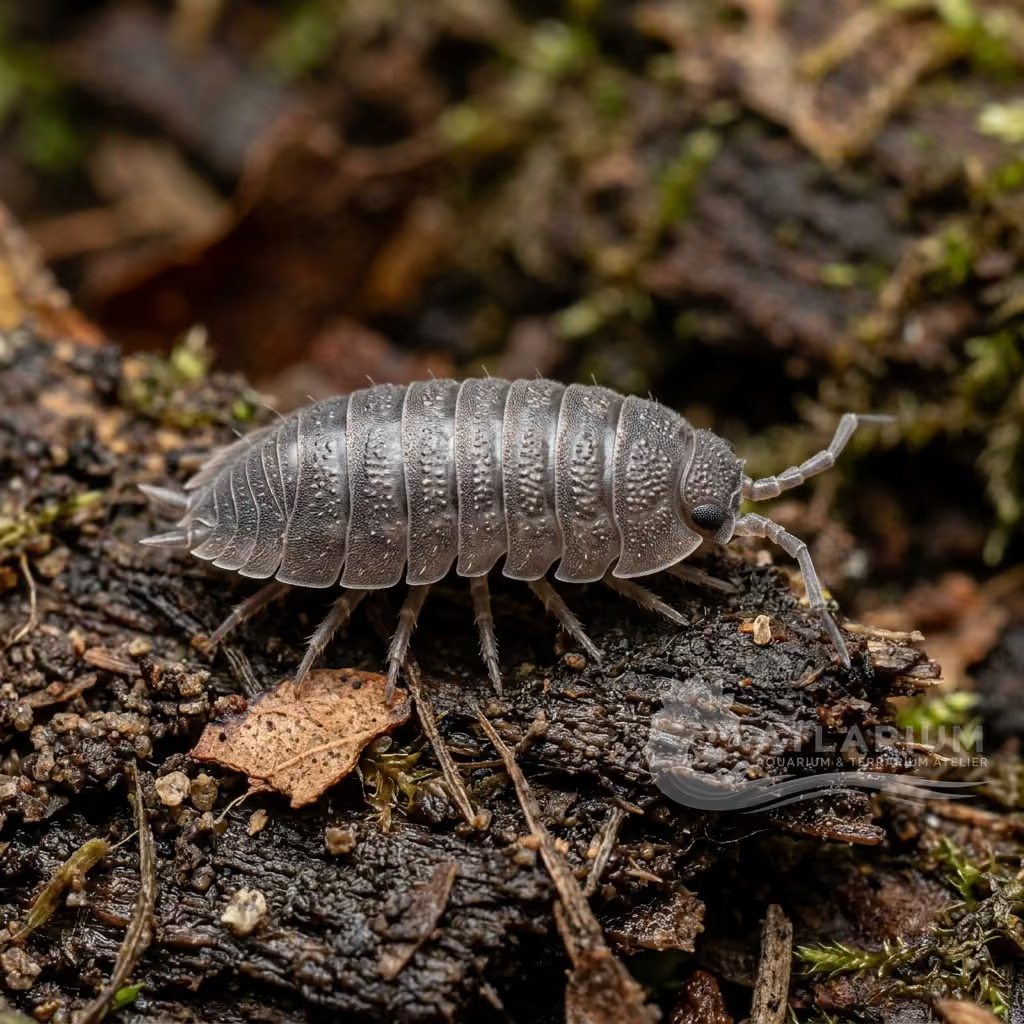
Zebra Pillbug (A. maculatum)
Armadillidium maculatum
The Zebra Isopod (Armadillidium maculatum). Absolutely one of the most iconic, showy and famous 'conglobating' (pill) isopods in the terrarium keeping world (0.7 - 0.8 inches). The stunning contrast of the sharp snow white longitudinal stripes on a glossy black background literally makes it look like a zebra or an exotic candy. Perfect for semi-humid or dense bioactive terrariums, very active and resistant, but not excessively prolific.
Ambiente
Terrestre
Umidade
50 - 70 %
Temperatura diurna
20 - 26 °C
Temperatura noturna
18 - 22 °C

Descrição da espécie
Geographical Origin and Habitat: Exclusive to the humid deciduous forests with chalky/calcareous soil of southern France (Provence).
Taxonomy and Genetics: Family Armadillidiidae. (European Zebra Isopods). The nominal species has the famous perfect bands to warn predators like birds (aposematic coloration, 'maculatum' means spotted), but fabulous mutations like the 'Zebra Chocolate' (Brown and fluorescent cream) have been isolated in captivity.
Behavior and Habits: Nervous and showy tennis balls. Unlike the passivity of the common underground Vulgare, the Zebra isopod is much more confident. During the day it will swarm en masse and very visibly on food or raised twigs, without seeking the deepest darkness. If very bothered it will close into an impenetrable 'Pillbug' slipping away from the fingers, remaining a very hard black/white smooth candy.
Morphology: Total perfect smooth enameled dome (Up to 0.8 inches / 2 cm for colossal females). Unmistakable. Very glossy oil/black smooth carapace surgically cut by 3 to 5 longitudinal pearl/yellowish white stripes along the entire curved abdomen. Very fleshy.

Cuidado, criação e companheiros de tanque
Terrarium Setup: STANDARD BINS OR MIXED/FRENCH BIOACTIVE TERRARIUMS. Resistant species for beginners, but slightly more demanding on horizontal 'solid' woods/barks and superficial dry foliage on which to walk on parade. Standard soil mixed with crumbled limestone.
Lighting and Heating: ABSENCE OF DIRECT LIGHT. They easily survive at 64-75°F (18-24°C). Better not to constantly exceed 79°F (26°C) in closed boxes to prevent lethargy. They can go into a slight reproductive block in the cold winter months.
Humidity and Hydration: TOLERANT MEDIUM-FRENCH GRADIENT (50-80%). They tolerate lower levels of humidity than many tropical isopods. Asphyxiating Asian condensation would drown them. Create a corner dripping with moss (fundamental) where the females will lay the tiny transparent Zebras (mancae), and a large ventilated moderate central area.
Feeding and Supplementation: Ravenous Detritivores. They go crazy (Literally create swarming masses impressive to see) for protein flakes of spirulina/krill (Fish food). They consume slices of carrots at an exhausting pace. Essential basal consumption of pure rotten white wood (fundamental for microbiome) dusted with plaster/calcium powder everywhere.
Compatibility: Exceptional Show Clean-Up Crew. Incredibly useful and harmless. Thanks to the rounded shell that can be closed in case of bites (from crested geckos, large frogs or non-lethal millipedes), they guarantee excellent survival in community tanks where they shine for their flashy livery as real bioactive inhabitants not harmful to amphibian eggs.
Health and Common Diseases: Slowed Decay (Silent 'Death Collapse' from too much humidity ). A lethal mistake of newbies is to consider them 'Zebras from humid Jungle' keeping them drowned in stagnant boxes of dart frog style swamp without air. You will find them all open in a row and motionless for a rapid-course viral asphyxia that crystallizes the black and white carapace.

Origem e distribuição geográfica
Exclusive to the humid deciduous forests with chalky/calcareous soil of southern France (Provence).
Origem
Melhoramento seletivo e cultivaresEuropa, Mediterrâneo e Ásia Ocidental

Perfil de invertebrados terrestres
- Dieta
- Detritivore
- The diet of Armadillidium maculatum consists of specific nutrients. It forages for a variety of food sources. A well-balanced feeding regimen is essential.
- Tamanho adulto
- 1.8 cm
- Estilo de vida/Microhabitat
- Terrestrial
- Armadillidium maculatum leads a lifestyle adapted to its niche. It utilizes various elements of its habitat. Providing a complex enclosure is crucial for its enrichment.
- Ciclo de atividades
- Nocturnal
- The activity pattern of Armadillidium maculatum dictates when it is most active. It exhibits periods of rest aligned with light cycles. Understanding these rhythms helps create a suitable schedule.
- Socialidade
- Gregarious
- Highly social and gregarious creatures that thrive when housed in large colonies. They interact peacefully and cluster together naturally, contributing to a healthy, bustling micro-ecosystem within the terrarium.
- Reprodução
- Marsupial
- Reproduction for Armadillidium maculatum involves specific mating behaviors. Females seek out appropriate nesting sites. Successful breeding requires mimicking natural conditions.
- Venenoso
- No
- Tolerância de tratamento
- Tolerant
- Handling Armadillidium maculatum should be done with care. It is recommended to allow the animal to adjust first. Gentle movements are key when handling is necessary.
- Brumação
- Não obrigatório
- Brumation for Armadillidium maculatum is triggered by temperature changes. During this period, its metabolism slows down. Proper preparation is essential to ensure a healthy emergence.
- Muda
- Periodic
- The molting process of Armadillidium maculatum allows it to shed old layers. Adequate humidity is vital for facilitating a smooth shed. Caretakers must regularly check for retained pieces.

Galeria de imagens
Imagens licenciadas vinculadas à espécie ou, quando marcadas, ao táxon representativo mais próximo.

Espécies relacionadas
Recomendações agrupadas por parentes próximos, escolhas de acompanhantes e cuidados semelhantes.