Red-banded Rubber Frog
Phrynomantis bifasciatus
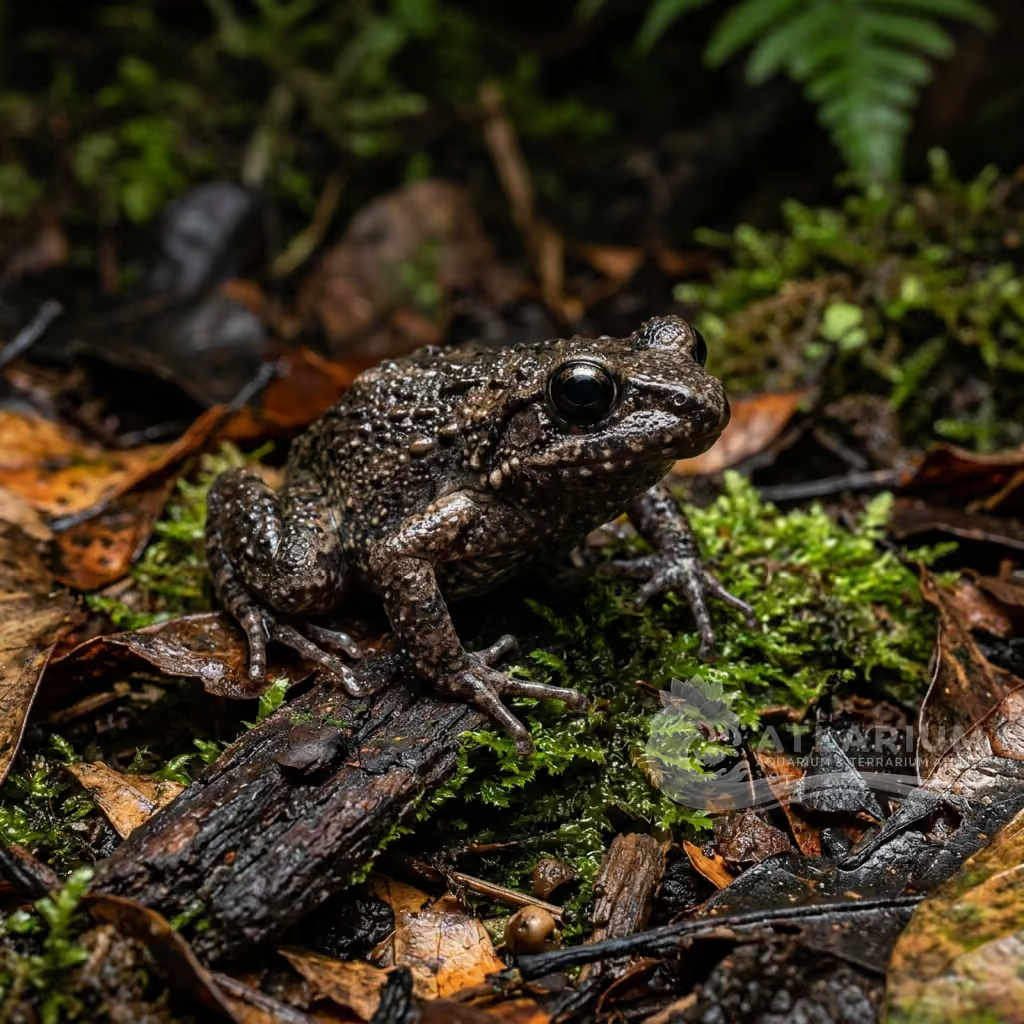
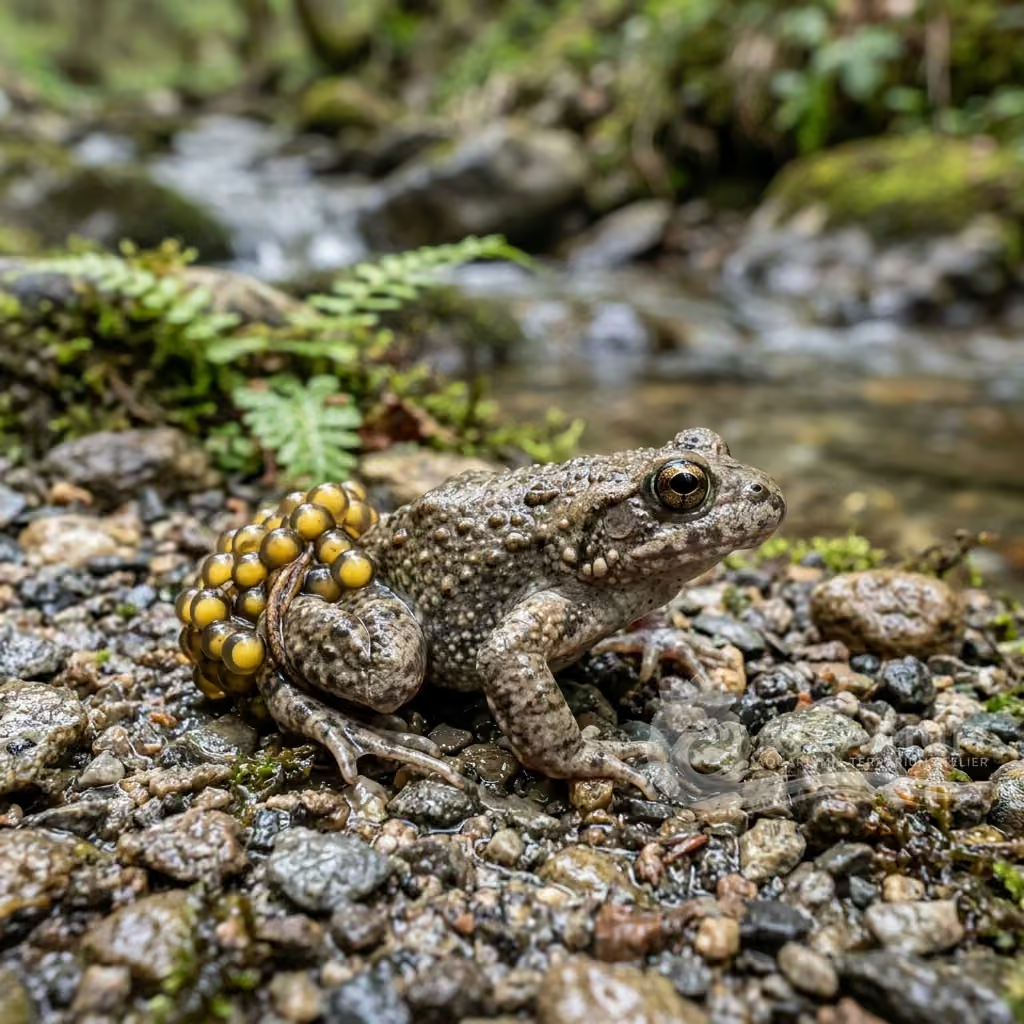
The Banded Rubber Frog is a beautiful African terrestrial species distinguished by glossy black skin and vivid pinkish-red stripes. Instead of hopping, it prefers a deliberate walking and crawling gait.
Ambiente
Terrestre
Umidade
50 - 70 %
Temperatura diurna
25 - 28 °C
Temperatura noturna
21 °C
Temperatura ambiente
25 - 28 °C
Gabinete mínimo
>= 45 L

Descrição da espécie
Geographical Origin and Habitat: Widely distributed across eastern and southern Africa. They inhabit dry savannas, grasslands, and rocky shrublands, sheltering in termite mounds, rock crevices, or hollow logs to survive dry periods.
Taxonomy and Genetics: Belonging to the family Microhylidae. Commonly known as the Banded Rubber Frog or Red-banded Rubber Frog. Its skin secretions contain highly irritating chemicals as a chemical defense mechanism.
Behavior and Habits: Strictly nocturnal and terrestrial. They rarely hop; instead, they crawl or walk with slow, deliberate steps. They are proficient burrowers, spending the day hidden in damp substrate.
Morphology: Reaches 5–6.5 cm in length. Females are larger and heavier than males. Males are identified by a dark, wrinkled throat area (vocal sac) and territorial calling.

Cuidado, criação e companheiros de tanque
Terrarium Setup: A horizontal terrarium (minimum 60x45x30 cm) is suitable. Provide a deep, damp burrowing substrate (8–10 cm) of coco fiber and soil. Furnish with flat cork bark hides, smooth rocks, and a shallow water bowl.
Lighting and Heating: Keep daytime temperatures at 25–28°C, dropping to 20–22°C at night. Provide gentle, indirect lighting. A low-output (2%) UVB source can be beneficial.
Humidity and Hydration: Maintain moderate humidity between 60% and 80%. Mist the enclosure daily with dechlorinated water to keep the substrate damp but not soggy. Keep the water bowl clean.
Feeding and Supplementation: Feed on appropriately sized insects, such as crickets, small roaches, and termites. Dust insects with calcium and vitamin D3 twice a week.
Compatibility: Peaceful with conspecifics. Can be kept in small groups of similarly sized individuals. Never house with other species due to its toxic skin secretions.
Health and Common Diseases: Their skin secretions are toxic to other amphibians and highly irritating to human eyes and mucous membranes. Always wash hands thoroughly after maintenance and wear gloves when handling.

Origem e distribuição geográfica
Widely distributed across eastern and southern Africa. They inhabit dry savannas, grasslands, and rocky shrublands, sheltering in termite mounds, rock crevices, or hollow logs to survive dry periods.
Origem
África e MadagascarEuropa, Mediterrâneo e Ásia Ocidental

Perfil anfíbio
- Dieta
- Insectivore
- The Red-banded Rubber Frog feeds primarily on a variety of small terrestrial insects, including ants, termites, and small beetles. They utilize their specialized, extendable tongues to catch fast-moving prey from the forest floor and savannah grasses. In captivity, a steady diet of appropriately sized crickets and fruit flies is typically sufficient for their nutritional needs.
- Expectativa de vida
- 8-10 years
- Tamanho adulto
- 7.5 cm
- Estilo de vida/Microhabitat
- Terrestrial
- They are predominantly terrestrial but possess unwebbed fingers with slight discs, allowing them to climb surprisingly well into low shrubs.
- Ciclo de atividades
- Nocturnal
- Red-banded Rubber Frogs are nocturnal, emerging from underground or tree crevices after dark to slowly walk (rather than jump) in search of prey.
- Socialidade
- Solitary
- This frog is primarily terrestrial and nocturnal, walking slowly rather than hopping, which gives it a somewhat robotic or creeping gait. They are exceptional climbers despite lacking adhesive toe pads, often wedging themselves into crevices or climbing into low bushes. During dry periods, they aestivate in burrows or under deep cover to conserve moisture.
- Reprodução
- Oviparous
- Breeding typically commences with the onset of heavy seasonal rains, prompting the frogs to migrate to temporary pools and flooded pans. Males call from the water's edge or while floating, producing a distinct, high-pitched trill. The female deposits small, free-floating clusters of eggs that hatch rapidly into uniquely shaped tadpoles.
- Toxicidade
- Highly toxic
- The bright red bands on its dark body act as a clear aposematic warning to potential predators about its toxic nature. When stressed, it secretes a highly toxic fluid from its skin that can cause severe irritation, burning, and even death to small predators. Humans should handle this frog with extreme caution, as the secretions can cause painful skin and eye irritation.
- Estágio de vida
- Metamorphosis
- The aquatic tadpoles are filter feeders, suspending themselves in the water column while consuming microscopic organisms and algae. They undergo a relatively swift metamorphosis to avoid being stranded in evaporating temporary pools. The newly emerged froglets closely resemble the adults, immediately exhibiting the striking red and black warning coloration.
- Tolerância de tratamento
- Display only
- Absolutely display only. Their skin secretes highly toxic, cardiotoxic compounds that can be lethal to other frogs and very irritating to humans.
- Brumação
- They aestivate during the dry season in their native African savannahs, retreating deep underground until the rainy season begins.
- Muda
- Regular
- They possess an unusual, rubbery skin that sheds relatively infrequently. Maintaining moderate humidity ensures this process goes uninterrupted.

Espécies relacionadas
Recomendações agrupadas por parentes próximos, escolhas de acompanhantes e cuidados semelhantes.