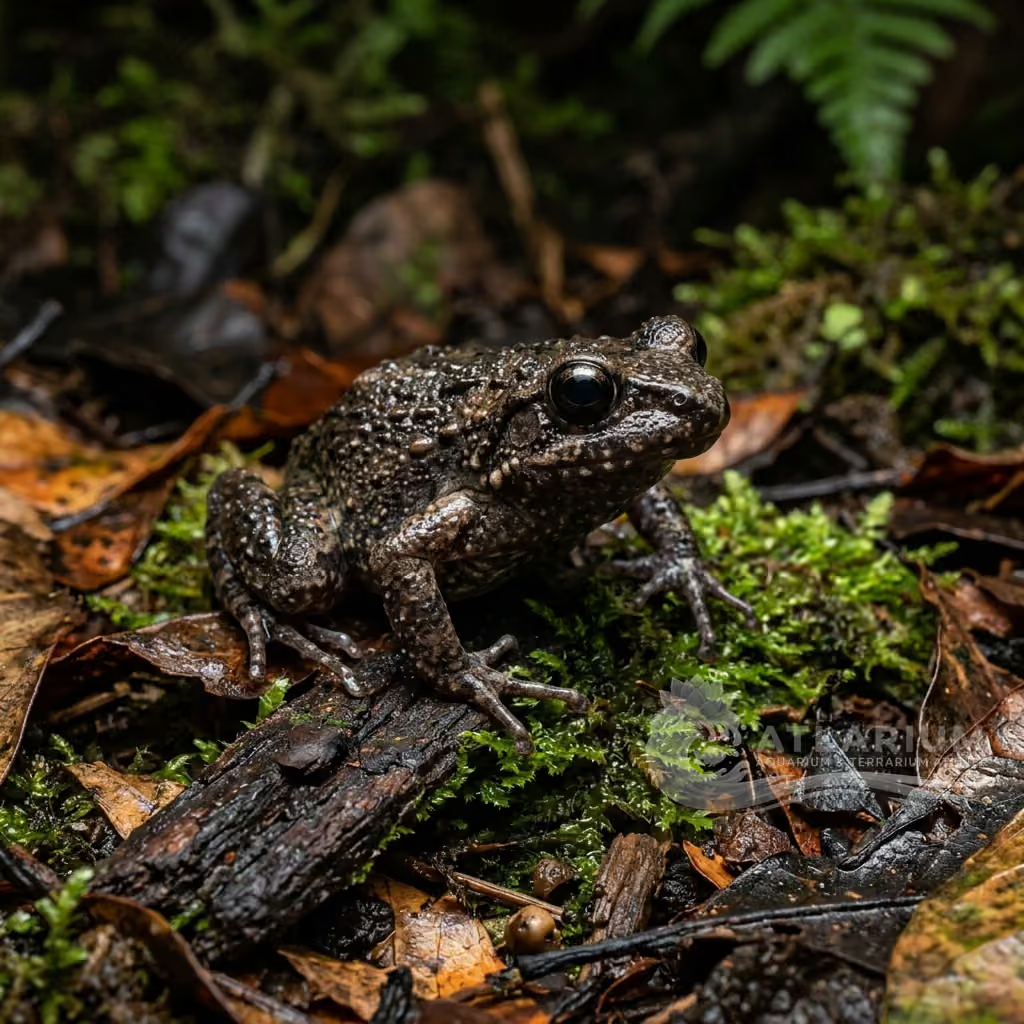
Spotted rubber frog
Phrynomantis affinis
A fossorial African amphibian known for its rubbery skin and bright red or orange spots. Produces toxic skin secretions and requires warm, humid setups.
Ambiente
Terrestre
Umidade
55 - 75 %
Temperatura diurna
24 - 26 °C
Temperatura noturna
20 °C
Temperatura ambiente
24 - 26 °C
Gabinete mínimo
>= 45 L

Descrição da espécie
Geographical Origin and Habitat: Native to central-southern Africa, with documented populations in Angola, the Democratic Republic of the Congo, Zambia, and Namibia, and potential occurrences in Botswana, Zimbabwe, and Tanzania. It inhabits humid and dry savannas, open grasslands, and seasonal scrublands, hiding under rocks, in rotted logs, or soil crevices.
Taxonomy and Genetics: Phrynomantis affinis is a member of the Microhylidae family, genus Phrynomantis. Commonly known as the spotted rubber frog or Pweto snake-necked frog. Phylogenetic studies are sparse due to the secretive nature of the species, confirming its lineage specialization to cope with seasonal drought environments.
Behavior and Habits: Terrestrial and fossorial, active mostly at night or during heavy rains. Instead of jumping, it walks or runs with a distinct gait. When threatened, it inflates its body and secretes a toxic, sticky mucus from its skin, which is highly irritating to the eyes and mucous membranes of predators (and humans).
Morphology: Features an elongated body and a small head with a flexible neck, allowing it to turn its head slightly. The limbs are short and lack webbing. The skin is smooth, glossy, and rubbery. The base color is dark grey, brown, or black, patterned with prominent round red, orange, or pink spots on its back and legs.

Cuidado, criação e companheiros de tanque
Terrarium Setup: Requires a horizontal terrarium of at least 60x40x40 cm (24x16x16 inches) for a pair or small group. The substrate is critical: provide a 8-10 cm deep mix of peat moss, coco coir, and leaf litter to support burrowing. Include multiple dark hiding spaces such as cork bark tubes and flat slate stones.
Lighting and Heating: Low-intensity LED lighting is sufficient to simulate a 12-hour day cycle. Heating should be provided via a side-mounted heat mat controlled by a thermostat, keeping the warm side at 24-26°C (75-79°F) and the cool side around 21-22°C (70-72°F). Avoid under-tank heating to prevent drying out burrowed frogs.
Humidity and Hydration: Maintain relative humidity at 60-70%, boosting to 80% with warm water spraying once or twice daily. Provide a very shallow water dish filled with dechlorinated water. The frog drinks and absorbs moisture through its skin and cannot cope with deep water due to lack of swimming adaptations.
Feeding and Supplementation: Insectivorous, feeding on small live prey like crickets, small roaches, mealworms, and fruit flies. Feeders must be dusted with calcium and vitamin D3 twice a week for juveniles and once a week for adults to prevent metabolic bone disease. Feed during the evening hours.
Compatibility: Strictly a species-only tank animal. Due to its toxic skin secretions, it must not be housed with other amphibians or reptiles. Avoid direct skin contact; use disposable nitrile gloves during maintenance to protect the frog's skin barrier and prevent skin irritation on your hands.
Health and Common Diseases: Susceptible to bacterial and fungal skin infections (chytrid) from dirty or waterlogged substrates. Metabolic bone disease is a threat if calcium is omitted. Ensure adequate cross-ventilation in the terrarium to prevent stagnant air, and spot-clean waste regularly.

Origem e distribuição geográfica
Native to central-southern Africa, with documented populations in Angola, the Democratic Republic of the Congo, Zambia, and Namibia, and potential occurrences in Botswana, Zimbabwe, and Tanzania. It inhabits humid and dry savannas, open grasslands, and seasonal scrublands, hiding under rocks, in rotted logs, or soil crevices.
Origem
América do NorteÁfrica e Madagascar

Perfil anfíbio
- Dieta
- Insectivore
- This species is primarily insectivorous in the wild, feeding on a wide variety of small forest invertebrates. In captivity, their diet should consist of appropriately sized crickets, fruit flies, and small worms. It is important to dust the feeder insects with calcium and vitamin supplements to ensure proper nutrition. Feeding them every other day is usually sufficient for adult frogs. Clean, fresh water must be available at all times.
- Expectativa de vida
- 8-10 years
- Tamanho adulto
- 7.5 cm
- Estilo de vida/Microhabitat
- Terrestrial
- These amphibians lead a primarily terrestrial and scansorial lifestyle within tropical forest ecosystems. They navigate the complex structure of the forest floor, frequently climbing on small shrubs, roots, and rocks. A heavily planted terrarium with a deep substrate layer best replicates their natural habitat. They thrive in environments with very high humidity and dense vegetation. Consistent environmental conditions are key to keeping them healthy.
- Ciclo de atividades
- Nocturnal
- They are predominantly nocturnal animals, becoming most active after the sun goes down. During the day, they remain well hidden in the damp, shaded parts of the forest floor to avoid desiccation and predators. Once night falls, they emerge to actively forage for small insect prey. Captive environments should mimic this cycle with appropriate lighting periods. A strict day and night cycle is crucial for their overall well-being.
- Socialidade
- Solitary
- As small forest dwellers, these frogs are generally quite shy and reclusive by nature. They spend the majority of their time hidden among leaf litter, under decaying logs, or in the crevices of low-hanging vegetation. When threatened, they rely heavily on their natural camouflage to blend into the forest floor. They may vocalize during the breeding season with distinct calls to attract mates. Providing ample hiding spots in captivity helps reduce their stress levels.
- Reprodução
- Oviparous
- These frogs are known for their unique reproductive strategy, often involving direct development in moist terrestrial environments. Rather than having a free-swimming tadpole stage, females lay eggs in damp leaf litter. Inside the egg capsules, the embryos develop fully and hatch as miniature, fully formed froglets. This adaptation allows them to reproduce without relying on standing bodies of water. Maintaining adequate moisture in the breeding enclosure is strictly required.
- Toxicidade
- Mildly toxic
- Exudes a highly toxic and irritating skin secretion when threatened or handled roughly. This milky substance can be lethal to other frogs kept in the same enclosure and causes severe burning if it contacts human eyes.
- Estágio de vida
- Neotenic
- Progresses through an aquatic larval (tadpole) phase before emerging as fully terrestrial adults.
- Tolerância de tratamento
- Display only
- Handling should be strictly avoided. These frogs secrete highly toxic skin secretions that can cause intense pain, swelling, and respiratory distress if they come into contact with cuts or mucous membranes.
- Brumação
- Não obrigatório
- They aestivate during the dry, cool winter months in their native African habitats, often retreating deep into crevices or termite mounds where they wait for the seasonal rains to stimulate emergence.
- Muda
- Regular
- Shedding is facilitated by an environment with appropriate humidity, especially post-aestivation. The process is quick, and like most anurans, they consume their sloughed skin to recycle valuable nutrients.

Espécies relacionadas
Recomendações agrupadas por parentes próximos, escolhas de acompanhantes e cuidados semelhantes.