Miranda's Disc Frog
Synapturanus mirandaribeiroi
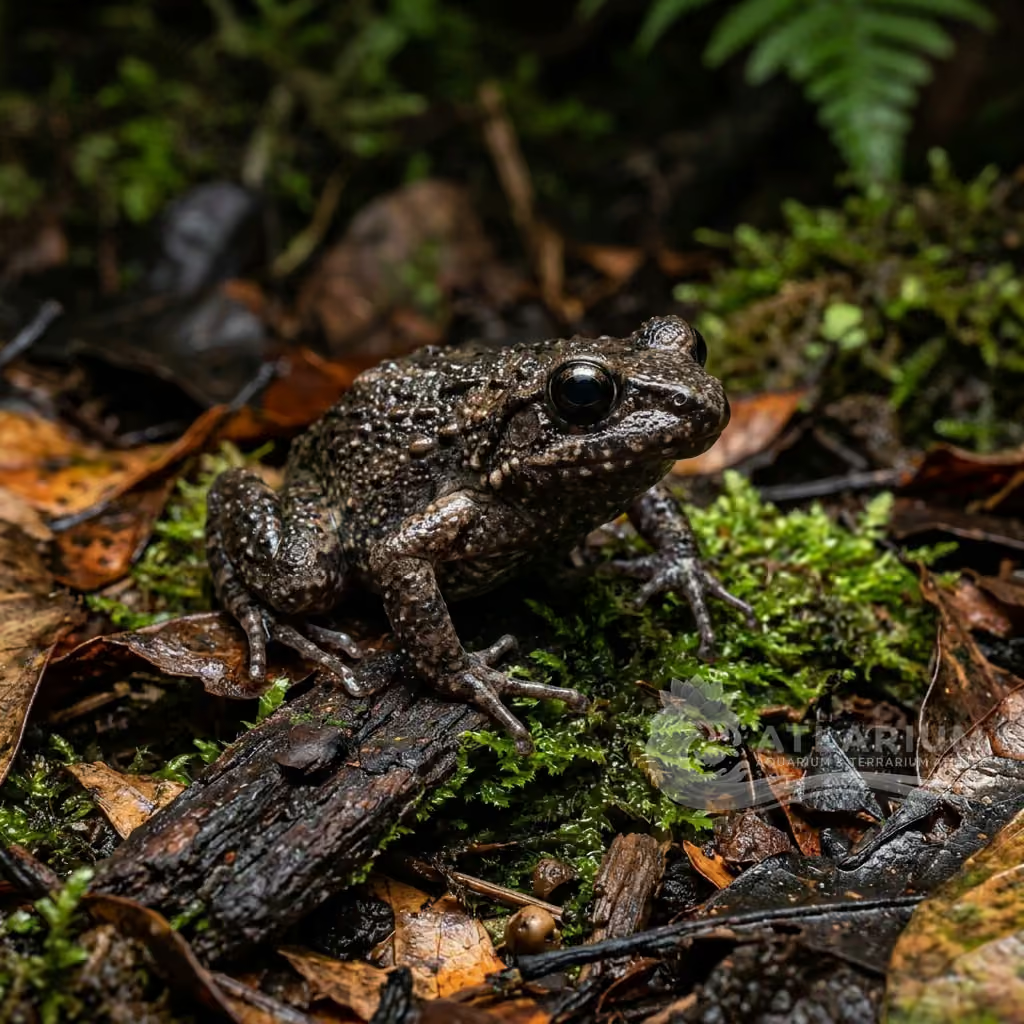
A tiny fossorial disc frog (2.8 cm) endemic to the leaf litter and soils of Northern Amazon (Guiana, Brazil). Highly adapted to underground foraging with its pointed snout and reduced eyes.
Ambiente
Terrestre
Umidade
60 - 80 %
Temperatura diurna
24 - 28 °C
Temperatura noturna
20 - 24 °C

Descrição da espécie
Geographical Origin and Habitat: This species is distributed in the northern Amazon basin, including Guyana, Suriname, French Guiana, and northern Brazil. It inhabits pristine lowland tropical rainforests (terra firme), where it lives a strictly fossorial life, burrowed in clay-rich soils or under deep layers of decaying leaf litter.
Taxonomy and Genetics: Belongs to the family Microhylidae, subfamily Otophryninae, and genus Synapturanus. First described by Miranda-Ribeiro. It is part of a highly specialized group of fossorial microhylid frogs. Molecular studies confirm its evolutionary distinctness within the northern Amazonian clades.
Behavior and Habits: Almost entirely fossorial. It spends its life buried in moist soil, emerging only during or immediately after heavy tropical rainstorms. Males call from within their underground chambers, making them extremely difficult to locate. They are shy, solitary, and cryptically active.
Morphology: A tiny frog, with adults reaching an average length of 2.5 to 2.8 cm (approx. 1 inch). The body is robust and pear-shaped, with short, powerful limbs adapted for digging backwards. It features a highly pointed, protruding snout used for burrowing, and small, reduced eyes, which is a classic adaptation to subterranean life.

Cuidado, criação e companheiros de tanque
Terrarium Setup: Requires a specialized fossorial terrarium of at least 40x30x30 cm (15x12x12 inches). The substrate is critical: provide a deep layer (10-15 cm) of organic soil, peat moss, and coconut fiber, kept constantly moist. Top the substrate with a thick layer of sterile leaf litter (such as oak or catappa leaves).
Lighting and Heating: Because of their underground lifestyle, they do not require high-intensity lighting; a low-wattage LED to simulate day/night cycles is sufficient. Maintain temperature between 24°C and 26°C (75-79°F) using a heating mat or cable attached to the side of the tank. Night drop to 20°C (68°F).
Humidity and Hydration: Relative humidity must be kept exceptionally high, between 80% and 95%. Mist the terrarium twice daily with dechlorinated water. A very shallow water dish should be provided, though they absorb most of their moisture directly through their skin from the damp soil.
Feeding and Supplementation: Feeds on microscopic soil invertebrates. In captivity, feed them springtails, dwarf isopods, fruit flies (Drosophila), and pinhead crickets. Preys must be dusted with high-quality calcium powder at every feeding and a multivitamin supplement containing D3 twice a week.
Compatibility: Strictly a single-species display animal. Do not house with other amphibians, reptiles, or active terrestrial animals. A small group can be kept together if the terrarium is large enough to allow each frog to establish its own burrowing territory.
Health and Common Diseases: Highly susceptible to bacterial and fungal skin infections (chytridiomycosis) if the substrate becomes waterlogged and stagnant. Soil should be kept damp, not soggy. Dehydration is a rapid and fatal risk if humidity levels drop. Avoid handling, as their skin is extremely sensitive.

Origem e distribuição geográfica
This species is distributed in the northern Amazon basin, including Guyana, Suriname, French Guiana, and northern Brazil. It inhabits pristine lowland tropical rainforests (terra firme), where it lives a strictly fossorial life, burrowed in clay-rich soils or under deep layers of decaying leaf litter.
Origem
Amazônia, Orinoco e GuianasEuropa, Mediterrâneo e Ásia Ocidental

Perfil anfíbio
- Dieta
- Insectivore
- Synapturanus mirandaribeiroi has a specialized diet consisting primarily of small insects and invertebrates found in its natural habitat. It actively hunts for prey during its peak activity hours, utilizing its agile movements to capture food. Nutritional supplementation is often required in captivity to maintain its health and vitality. Caretakers should ensure a varied diet to prevent nutritional deficiencies and promote natural feeding behaviors.
- Expectativa de vida
- 5-10 years
- Tamanho adulto
- 3.7 cm
- Estilo de vida/Microhabitat
- Fossorial
- Synapturanus mirandaribeiroi leads a specialized lifestyle adapted to the unique challenges of its native ecosystem. Its daily routine revolves around securing adequate nutrition, avoiding natural predators, and maintaining optimal body temperature. The species has evolved specific morphological traits that aid in its distinct way of living, whether arboreal, terrestrial, or aquatic. Understanding its lifestyle is fundamental to providing a suitable and enriching captive environment.
- Ciclo de atividades
- Nocturnal
- The activity pattern of Synapturanus mirandaribeiroi is distinctly regulated by its circadian rhythm and the ambient temperature of its environment. It may exhibit nocturnal, diurnal, or crepuscular habits depending on its specific evolutionary adaptations. These patterns are essential for thermoregulation, predator avoidance, and efficient foraging within its habitat. Caretakers should carefully provide appropriate lighting and heating cycles to match these natural rhythms.
- Socialidade
- Gregarious
- Synapturanus mirandaribeiroi exhibits a fascinating array of behaviors that are closely tied to its ecological niche and survival strategies. It is known to display territorial behaviors, especially during the breeding season or when competing for limited resources. Social interactions can vary significantly, ranging from solitary habits to complex group dynamics depending on the context. Observing these behaviors provides valuable insights into its overall well-being and environmental suitability.
- Reprodução
- Oviparous
- The reproductive cycle of Synapturanus mirandaribeiroi is highly dependent on environmental cues such as temperature and humidity changes. Mating typically occurs during specific seasons when environmental conditions are optimal for the survival of offspring. Courtship behaviors are distinct and play a crucial role in successful mating and fertilization. Breeders must replicate these natural conditions carefully to encourage reproduction in a captive setting.
- Toxicidade
- Toxic
- No known toxicity to humans, but extremely sensitive to chemical residues on the skin.
- Estágio de vida
- Direct development
- Eggs undergo direct or partially terrestrial development inside underground burrows.
- Tolerância de tratamento
- Display only
- As a delicate amphibian with permeable skin, it is best kept as a display-only animal to prevent stress and exposure to toxins.
- Brumação
- Não obrigatório
- No true brumation is required, though it may become inactive during dry periods, waiting for seasonal rains to stimulate breeding behavior.
- Muda
- Periodic
- Shedding occurs periodically. High humidity must be maintained in the substrate to facilitate proper shedding; the skin is typically consumed.

Espécies relacionadas
Recomendações agrupadas por parentes próximos, escolhas de acompanhantes e cuidados semelhantes.