Red-tailed pit viper
Trimeresurus erythrurus
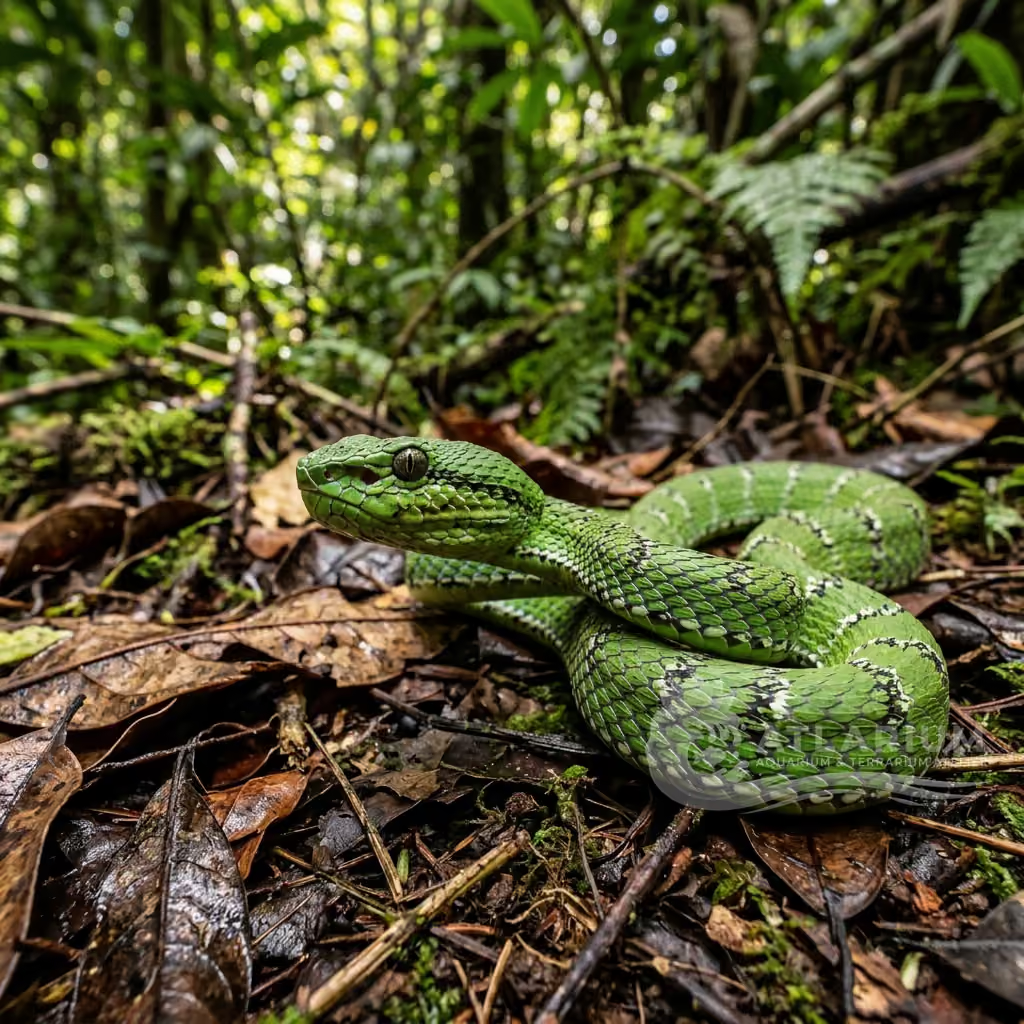
A venomous Asian arboreal pit viper visually defined by a radiant green body terminating in a reddish-brown tail. Native to India, Bangladesh, and Myanmar, kept only by experts.
Ambiente
Terrestre
Umidade
70 - 90 %
Temperatura diurna
23 - 27 °C
Temperatura ambiente
23 - 27 °C
Temperatura noturna
19 - 21 °C
Local para se aquecer
26 - 28 °C
Tamanho adulto
70 cm
Gabinete mínimo
>= 150 L

Descrição da espécie
Geographical Origin and Habitat: Trimeresurus erythrurus is native to South Asia, specifically distributed across northeastern India, Bangladesh, and Myanmar. It inhabits coastal mangrove forests, alluvial plains, primary and secondary lowland rainforests, and dense riverine scrub. This arboreal snake is commonly found at low heights on shrubs, bamboo thickets, and low branches near water, adapting well to agricultural areas.
Taxonomy and Genetics: Belonging to the family Viperidae and subfamily Crotalinae (pit vipers). Scientifically classified as Trimeresurus erythrurus, it is part of the complex of species related to Trimeresurus albolabris. Its genetics encode a potent hemotoxic venom apparatus adapted for capturing vertebrate prey. No commercial genetic color morphs exist due to safety and legal restrictions.
Behavior and Habits: An ambush predator with strictly nocturnal habits. During the day, it remains perfectly still coiled in dense vegetation. It has a defensive and easily agitated temperament; when threatened, it will flatten its body, vibrate its tail, and strike with mouth agape. Its hemotoxic venom causes severe pain, swelling, and necrosis, requiring extreme caution.
Morphology: Features a triangular head distinct from the neck, covered with small scales, and large eyes with vertical pupils. Loreal pits are present on the side of the head. The body is stout with keeled scales and a short prehensile tail colored reddish-brown or orange. The dorsum is uniform light green, with a white lateral stripe running along the lower flanks.

Cuidado, criação e companheiros de tanque
Terrarium Setup: Requires a vertically oriented terrarium measuring at least 80x50x80 cm, fitted with a secure lock. Decor must feature multiple secure horizontal and vertical climbing branches and dense foliage to provide hides. Substrate should be a moisture-retaining material such as cypress mulch or coconut husk, keeping the enclosure clean and mold-free.
Lighting and Heating: Provide a 12-hour light cycle using a low-output (2%) UVB bulb to encourage natural behavior. Heating must be provided from above using a ceramic emitter or spot lamp enclosed in a protective mesh cage to prevent thermal burns. Basking spot temperature: 26-28°C, cool side: 22-23°C, and night drops to 20°C.
Humidity and Hydration: Maintain high humidity levels between 70% and 80%, using daily manual or automatic misting systems with warm water. These arboreal snakes rarely drink from water bowls on the floor; they rely on drinking water droplets from leaves and branches. A water dish should still be kept in the enclosure.
Feeding and Supplementation: Feeds on lizards, frogs, and small mammals in the wild. In captivity, feed appropriately sized thawed mice using long safety tongs. Adult snakes should be fed every 12-14 days. Do not overfeed, as they have a slow metabolism and are prone to obesity. Vitamin supplementation is generally unnecessary.
Compatibility: Strictly solitary animals. They must be housed individually. Keeping multiple specimens together causes high stress and carries a risk of territorial combat or feeding accidents. Cohabitation is only permitted for breeding purposes under the strict supervision of professional keepers.
Health and Common Diseases: Susceptible to respiratory infections (RIs) if kept too cold, wet, or in stagnant conditions with poor air circulation. Stuck shed on the tail or eyes occurs when humidity levels are too low. Because of their venomous nature, all veterinary procedures require specialized containment tubes and protocols.

Origem e distribuição geográfica
Trimeresurus erythrurus is native to South Asia, specifically distributed across northeastern India, Bangladesh, and Myanmar. It inhabits coastal mangrove forests, alluvial plains, primary and secondary lowland rainforests, and dense riverine scrub. This arboreal snake is commonly found at low heights on shrubs, bamboo thickets, and low branches near water, adapting well to agricultural areas.
Origem
Melhoramento seletivo e cultivaresAmérica do NorteSul e Sudeste Asiático

Perfil de réptil
- Dieta
- Carnivore
- The red-tailed pit viper is primarily an ambush predator that feeds on small mammals, birds, frogs, and lizards. It patiently waits on branches or within dense foliage, relying on its striking green camouflage and heat-sensing pits to detect warm-blooded prey in the dark. Once a target is within reach, it strikes rapidly, injecting potent hemotoxic venom to immobilize the animal. It then holds onto the prey or tracks it down after the venom takes effect before swallowing it whole.
- Tamanho adulto
- 70 cm
- Estilo de vida/Microhabitat
- Arboreal
- Being predominantly arboreal, this pit viper spends its life in the canopy of trees, shrubs, and bamboo thickets. They possess a prehensile tail that aids in navigating branches and striking prey from elevated positions. The terrarium must be vertically oriented, equipped with numerous climbing branches and dense foliage to satisfy their climbing instincts.
- Ciclo de atividades
- Nocturnal
- This species is primarily nocturnal, remaining hidden during the daylight hours to avoid extreme heat and predators. As dusk approaches, the Trimeresurus erythrurus becomes active, emerging from its diurnal retreat to forage and hunt. Enclosure lighting should reflect a natural day-night cycle, but the snake will exhibit its most natural active behaviors after the lights go out.
- Socialidade
- Solitary
- It is a strictly arboreal and nocturnal snake, spending almost its entire life in trees and shrubs of tropical forests and mangroves. During the day, it is usually found coiled sluggishly among branches, perfectly blending in with the green leaves to avoid predators. When night falls, it becomes highly alert, positioning itself strategically to ambush passing prey. Though generally non-aggressive, it will not hesitate to deliver a fast, defensive strike if handled or closely approached.
- Reprodução
- Viviparous
- This pit viper species is viviparous, giving birth to live young instead of laying eggs. Females undergo a long gestation period, typically bearing a litter of up to a dozen fully formed, independent neonates. The young are born with their characteristic reddish-brown tails, which they may use to lure small prey items during their early months. They receive no maternal care and must immediately navigate their arboreal environment to find food.
- Tolerância de tratamento
- Display only
- Due to its highly potent and medically significant venom, the Trimeresurus erythrurus is strictly a display-only species. Under no circumstances should this snake be free-handled. All interactions, enclosure maintenance, and feeding must be performed using professional snake hooks, secure lockable terrariums, and strict safety protocols to prevent life-threatening envenomation.
- Brumação
- Não obrigatório
- Originating from relatively stable, warm climates, this species does not require a true winter brumation period. Maintaining consistent ambient temperatures year-round is ideal for their health. However, slight nocturnal temperature drops and seasonal changes in rainfall or humidity can be provided to mimic their native environment and stimulate natural behaviors.
- Muda
- Periodic
- Originating from highly humid tropical environments, this snake requires consistently elevated ambient humidity to shed its skin properly. Frequent daily misting or a rain system should be utilized when the snake goes into blue. A properly humidified enclosure prevents dysecdysis (abnormal shedding), which can lead to restricted blood flow or infection.

Espécies relacionadas
Recomendações agrupadas por parentes próximos, escolhas de acompanhantes e cuidados semelhantes.