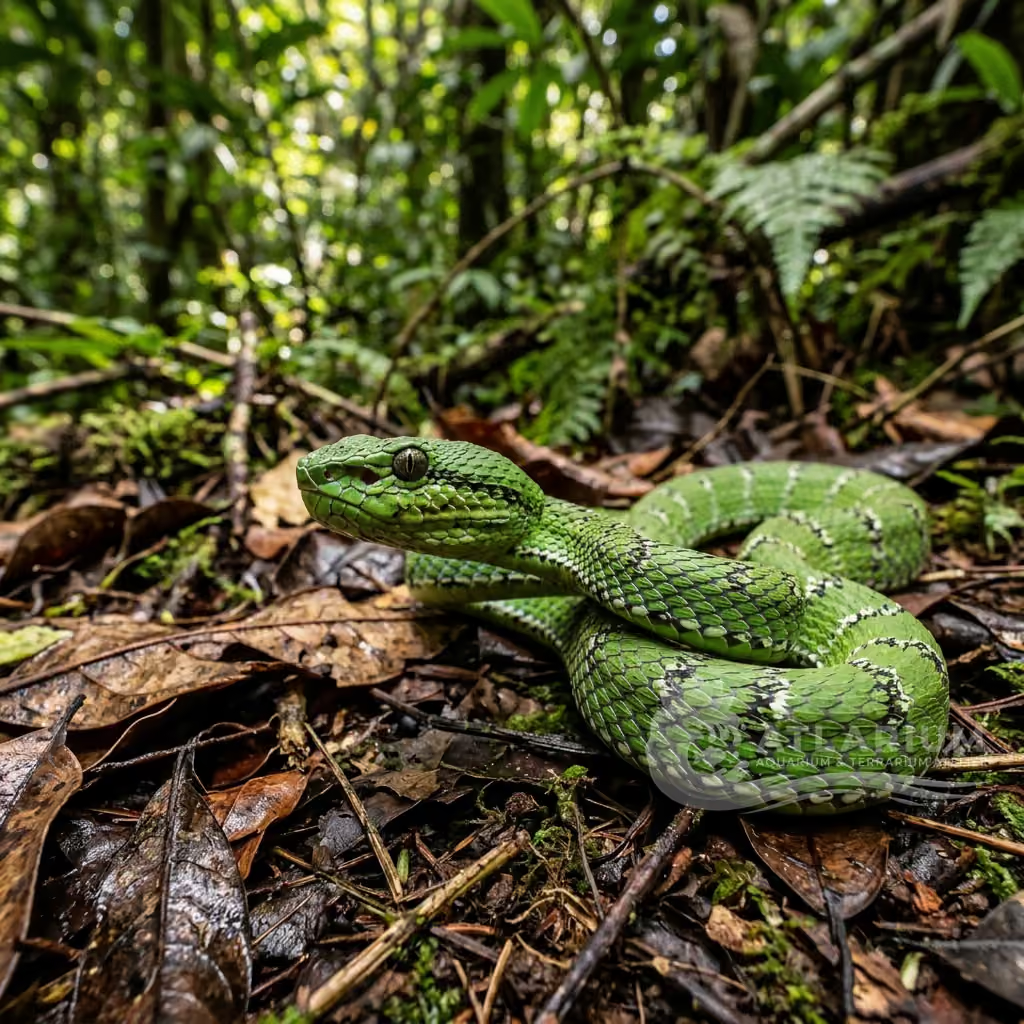
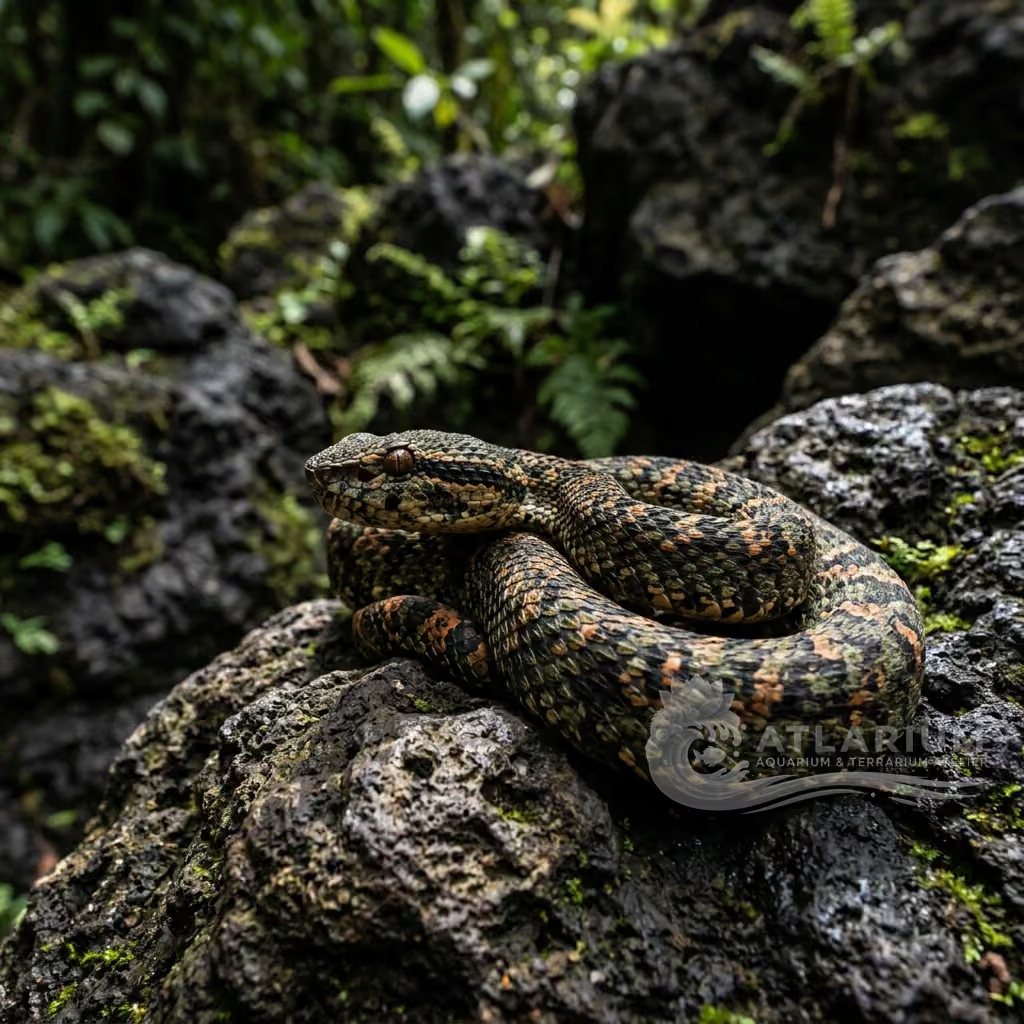
Porras' hog-nosed pitviper
Porthidium porrasi
A rare Costa Rican venomous pit viper, endemic to the Osa Peninsula, known for its upturned snout and a light-colored tail tip used for caudal luring.
Ambiente
Terrestre
Umidade
75 - 90 %
Temperatura diurna
22 - 28 °C
Temperatura ambiente
22 - 28 °C
Temperatura noturna
22 - 24 °C
Local para se aquecer
28 - 29 °C
Tamanho adulto
45 cm
Gabinete mínimo
>= 80 L

Descrição da espécie
Geographical Origin and Habitat: Porthidium porrasi is a venomous pit viper endemic to the Osa Peninsula in southwestern Costa Rica. It inhabits wet lowland tropical rainforests and humid forested margins. Unlike many of its desert-dwelling relatives, this species has adapted to hot, humid rainforest ecosystems, living on forest floors rich in decomposing leaf litter, humus, and mosses.
Taxonomy and Genetics: Belonging to the family Viperidae, subfamily Crotalinae, and the genus Porthidium. Described as a distinct species in 2003, it was previously considered a geographic variant of Porthidium nasutum. Its genetics show evolutionary isolation within the Osa Peninsula, making it a species of high conservation and scientific value.
Behavior and Habits: Strictly terrestrial, solitary, and nocturnal. During the day, it stays hidden, blending perfectly with wet leaves and roots. It is famous for 'caudal luring'—twitching its pale yellow or cream tail tip to mimic a worm, attracting lizards, frogs, or small rodents within range of its sudden, venomous strike.
Morphology: Typically grows between 35 and 45 centimeters in length, with females being significantly larger than males. It features a triangular head with a moderately upturned snout due to a modified rostral scale. The color pattern consists of dark brown, reddish-brown, or greyish-purple tones with dark rectangular blotches and a distinct pale tail tip.

Cuidado, criação e companheiros de tanque
Terrarium Setup: Requires an escape-proof terrarium (secured with a locking mechanism) of at least 70x40x40 cm for an adult. The substrate must reflect its rainforest habitat; use a mix of soil and coco coir kept damp, topped with sterile damp leaves and sphagnum moss. Provide low-level branches and cork bark hideouts.
Lighting and Heating: Requires moderate, stable temperatures: keep the cool side at 23-24 °C, the warm side at 26-27 °C, and a basking area at 28-29 °C using protected heating devices. Temperatures above 30 °C are highly dangerous. Low-output UVB (2.0) lighting is recommended to provide a natural night/day cycle.
Humidity and Hydration: Demands high relative humidity levels between 75% and 85%. Mist the enclosure daily with lukewarm water and ensure parts of the substrate remain moist while providing adequate ventilation to prevent stagnant air. Keep a clean, shallow water dish on the cool side of the terrarium.
Feeding and Supplementation: Consumes frogs, lizards, and small mammals in the wild. In captivity, they accept frozen-thawed mice of appropriate size, offered only with long feeding tongs to prevent accidental bites. Feed young snakes every 7-10 days and adults every 14-18 days. No supplements are needed if prey is healthy.
Compatibility: Must be housed individually. Due to its dangerous venom (DANGEROUS VENOMOUS), it cannot be kept with other pets or snakes. Handling should be restricted to essential maintenance and done only by experienced keepers using erpetological hooks, protective gloves, and secure shift boxes.
Health and Common Diseases: Prone to dehydration if humidity levels drop below 70%, which leads to incomplete shedding (dysecdysis) and renal stress. Conversely, soggy substrate with poor airflow triggers blister disease and skin rot. Regular spot cleaning and substrate rotation are necessary to prevent bacterial growth.

Origem e distribuição geográfica
Porthidium porrasi is a venomous pit viper endemic to the Osa Peninsula in southwestern Costa Rica. It inhabits wet lowland tropical rainforests and humid forested margins. Unlike many of its desert-dwelling relatives, this species has adapted to hot, humid rainforest ecosystems, living on forest floors rich in decomposing leaf litter, humus, and mosses.
Origem
América Central e Caribe

Perfil de réptil
- Dieta
- Carnivore
- Porras' hog-nosed pitviper feeds primarily on a selection of forest-floor vertebrates found within its restricted range. Small rodents and lizards make up the vast majority of its diet, which it ambushes from concealed positions. The snake's camouflage allows it to blend seamlessly into the leaf litter, waiting patiently until prey passes nearby. Younger individuals tend to consume more amphibians and small skinks.
- Tamanho adulto
- 45 cm
- Estilo de vida/Microhabitat
- Terrestrial
- It is exclusively terrestrial, perfectly adapted to the damp, shaded floors of Central American rainforests where it blends flawlessly with the wet leaf litter.
- Ciclo de atividades
- Nocturnal
- A strictly nocturnal hunter, this pitviper remains curled and motionless under debris throughout the day, initiating its search for small prey only after total darkness has fallen.
- Socialidade
- Solitary
- Being a terrestrial pitviper, it spends the majority of its life hidden on the forest floor among leaf litter and root systems. It is primarily nocturnal, emerging to hunt when temperatures drop and the forest activity changes. This viper is typically solitary and highly cryptic, relying on its disruptive patterning to evade notice. When confronted, its first line of defense is remaining still, only striking as a last resort.
- Reprodução
- Viviparous
- This species exhibits viviparity, giving birth to live, fully independent young. Reproductive cycles are likely tied to the seasonal rains when food for the neonates is most plentiful. A female produces small litters, contributing to the slow population growth typical of the genus. The newborn vipers are equipped to hunt and defend themselves immediately upon birth.
- Tolerância de tratamento
- Expert only
- Owing to its venomous nature and camouflaged ambush tactics, interactions are fraught with risk. It requires absolute respect, no free-handling, and the use of dedicated hooks by professionals.
- Brumação
- Não obrigatório
- Being native to warm, tropical rainforest environments with little temperature fluctuation, this species does not undergo brumation and requires stable, warm temperatures year-round.
- Muda
- Periodic
- High ambient humidity is essential for this rainforest native. Without a consistently damp environment and a saturated humid hide, they are very likely to suffer from complicated, fragmented sheds.

Espécies relacionadas
Recomendações agrupadas por parentes próximos, escolhas de acompanhantes e cuidados semelhantes.