Sira Poison Frog
Ranitomeya sirensis
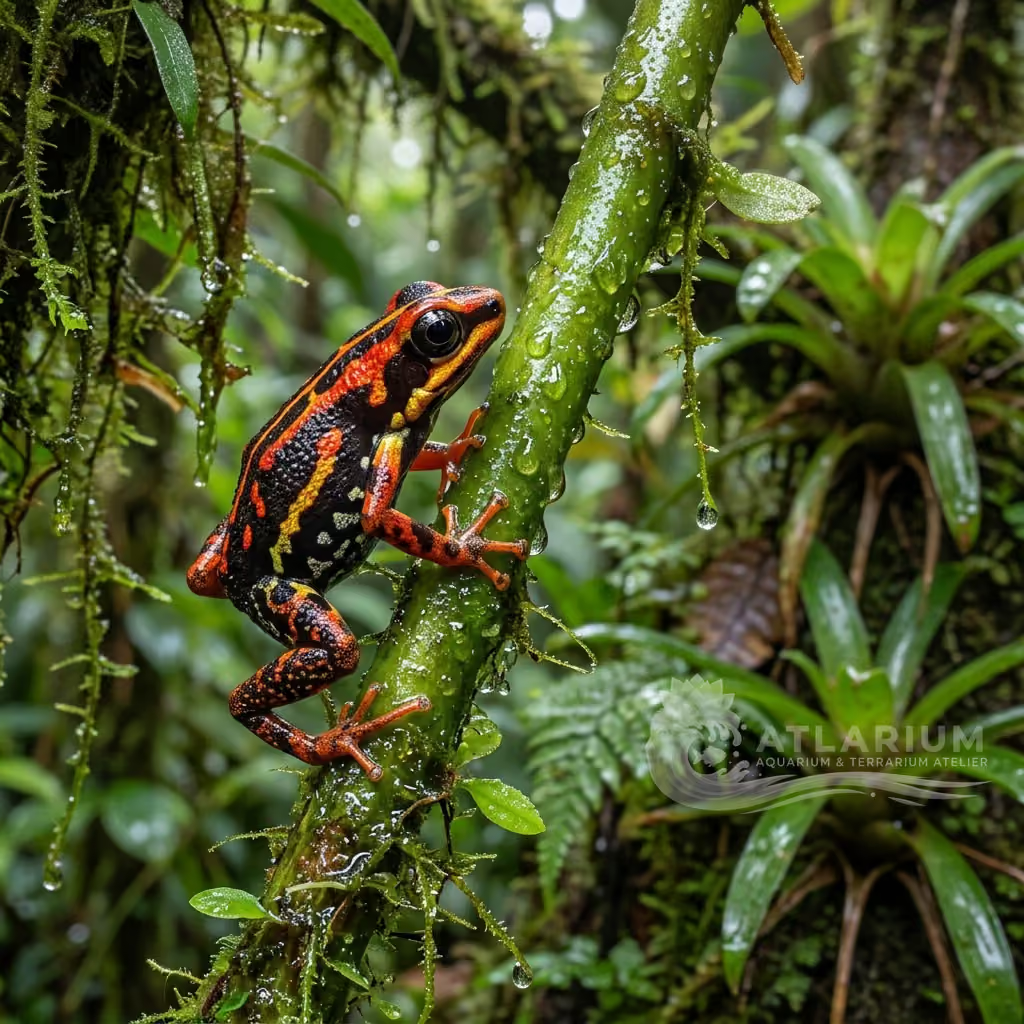
The Sira Poison Frog is an exquisite, highly active jewel from the Peruvian Andes. Dressed in striking colors, this tiny arboreal climber flourishes in dense, humid terrariums loaded with bromeliads.
Ambiente
Terrestre
Umidade
80 - 95 %
Temperatura diurna
22 - 26 °C
Temperatura noturna
18 - 20 °C
Temperatura ambiente
22 - 26 °C
Gabinete mínimo
>= 30 L

Descrição da espécie
Geographical Origin and Habitat: Native to the wet tropical forests and lower Andean slopes of Peru and western Brazil. They inhabit the damp understory and lower canopy, utilizing epiphytic bromeliads and Heliconia plants.
Taxonomy and Genetics: Belonging to the family Dendrobatidae. Commonly known as the Siren Poison Frog. It has several distinct color phases across its range, but the classic form shows a bright red-orange back and blue legs.
Behavior and Habits: Diurnal and semi-arboreal. They are agile climbers, jumping between vertical leaves. Males produce a soft trilling call. They are somewhat shy, retreating to bromeliads or leaf axils when disturbed.
Morphology: A tiny frog measuring only 1.5–1.8 cm. Females are slightly larger and wider than males. Males are identified by their vocal sac and calling behavior.

Cuidado, criação e companheiros de tanque
Terrarium Setup: A vertical rainforest terrarium (minimum 45x45x60 cm) is required. Furnish with small live bromeliads (Neoregelia) and vertical hollow bamboo tubes. Use a bioactive substrate topped with leaf litter.
Lighting and Heating: Keep daytime temperatures at 24–26°C, with a night drop to 20–22°C. Avoid temperatures exceeding 27°C. Provide bright lighting for live plants and a low-intensity (2–5%) UVB source.
Humidity and Hydration: Maintain high humidity levels of 80–95%. Mist the enclosure daily with dechlorinated water. Central cups of bromeliads must always be filled with water.
Feeding and Supplementation: Strictly feed micro-prey, primarily springtails and small fruit flies (Drosophila melanogaster). Dust food with a high-quality calcium, vitamin A, and D3 supplement three times a week.
Compatibility: Moderate territoriality. Best kept in single compatible pairs (1.1) or trios (1 male, 2 females) in a spacious setup. Do not mix with other poison frog species.
Health and Common Diseases: Extremely vulnerable to dehydration and heat stress. Maintain clean conditions to prevent skin infections (red leg). Handle only with wet, powder-free gloves.

Origem e distribuição geográfica
Native to the wet tropical forests and lower Andean slopes of Peru and western Brazil. They inhabit the damp understory and lower canopy, utilizing epiphytic bromeliads and Heliconia plants.
Origem
Melhoramento seletivo e cultivaresExtra-Amazônica América do Sul

Perfil anfíbio
- Dieta
- Insectivore
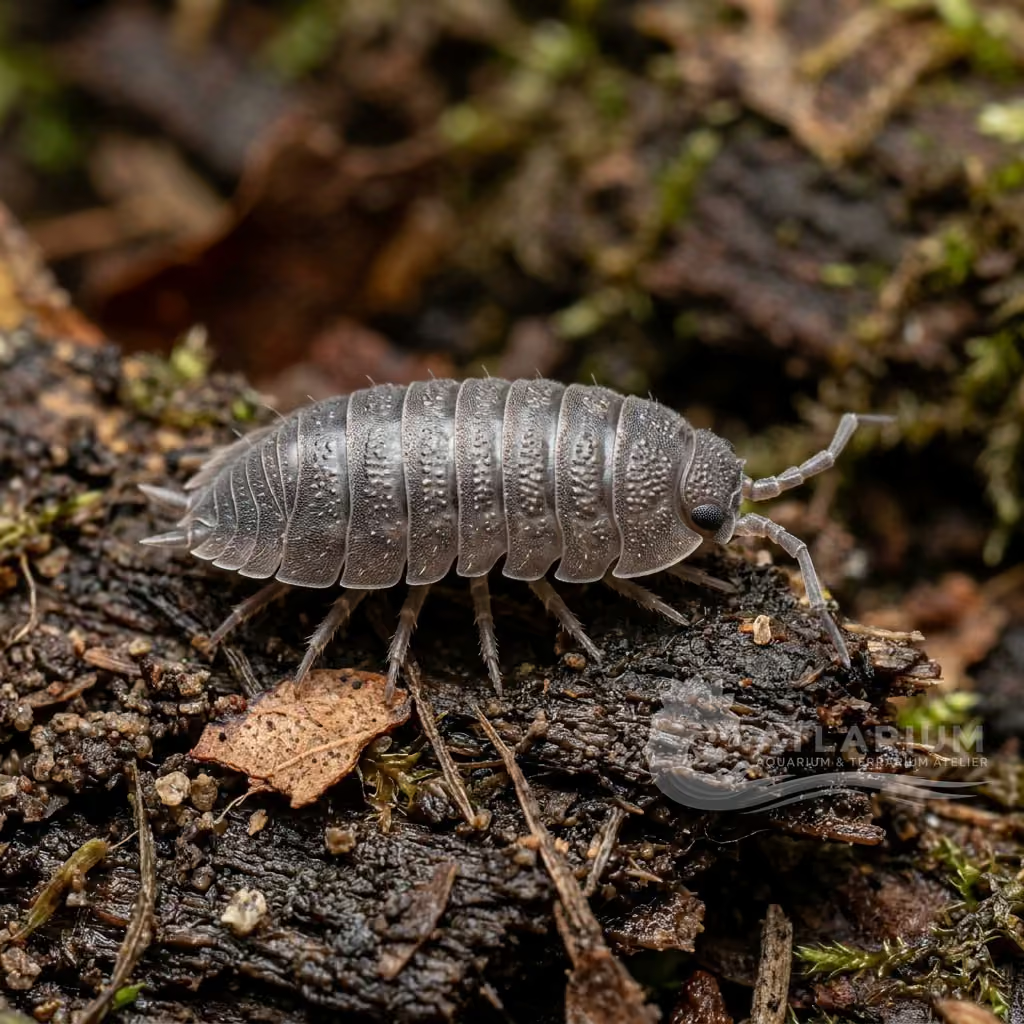
- The Sira Poison Frog is a micro-predator, actively hunting small arthropods like springtails, aphids, and mites in its native habitat. When kept as a pet, they thrive on a varied diet of flightless fruit flies and bean beetles, suitably dusted with essential supplements. A bioactive enclosure seeded with isopods and springtails allows them to exhibit natural foraging behaviors.
- Expectativa de vida
- 10-15 years
- Tamanho adulto
- 1.8 cm
- Estilo de vida/Microhabitat
- Arboreal
- Highly adapted to an arboreal lifestyle, the Sira Poison Frog spends the vast majority of its time in the upper canopy, climbing branches and leaves with specialized adaptations.
- Ciclo de atividades
- Diurnal
- The Sira Poison Frog is primarily active during the day, typical of diurnal species that rely on light to navigate, forage, and interact.
- Socialidade
- Solitary
- This agile amphibian is semi-arboreal, comfortably moving between the moist leaf litter and elevated plant structures. They are diurnal and constantly on the move, searching for food and patrolling their territory. Males possess a distinctive, bird-like trill used extensively to attract females and ward off competing males.
- Reprodução
- Oviparous
- Courtship involves the male leading the female to a suitable egg-laying site, usually a smooth leaf situated above a small body of water. Following external fertilization, the female lays a clutch of up to 10 eggs, which the male guards diligently. Once the eggs hatch, the male engages in tadpole transport, moving them to temporary water pools in plants to mature.
- Toxicidade
- Harmless
- Their bright, contrasting colors act as a visual deterrent, signaling the presence of potent toxic alkaloids secreted from their skin. These toxins are biosynthesized from the specific mites and ants they ingest in the wild. As with all poison frogs in captivity, they lose this toxicity when fed a standard, non-toxic insect diet.
- Estágio de vida
- Metamorphosis
- The development from fertilized egg to hatching takes about 14 days, contingent on high ambient humidity. The aquatic tadpoles are omnivorous scavengers that take up to 90 days to fully develop their limbs and lungs. Once metamorphosis is complete, they emerge from the water as fully formed, miniature adults.
- Tolerância de tratamento
- Display only
- As a highly sensitive or fragile species, the Sira Poison Frog should be considered a display-only animal. Handling causes immense stress and should only occur during emergencies.
- Brumação
- The Sira Poison Frog originates from stable tropical environments and does not require or tolerate a winter brumation period; temperatures must remain consistently warm year-round.
- Muda
- Periodic
- Shedding for the Sira Poison Frog heavily relies on high ambient humidity. A humid hide or frequent misting is crucial to prevent stuck shed and ensure a smooth, complete molt.

Espécies relacionadas
Recomendações agrupadas por parentes próximos, escolhas de acompanhantes e cuidados semelhantes.