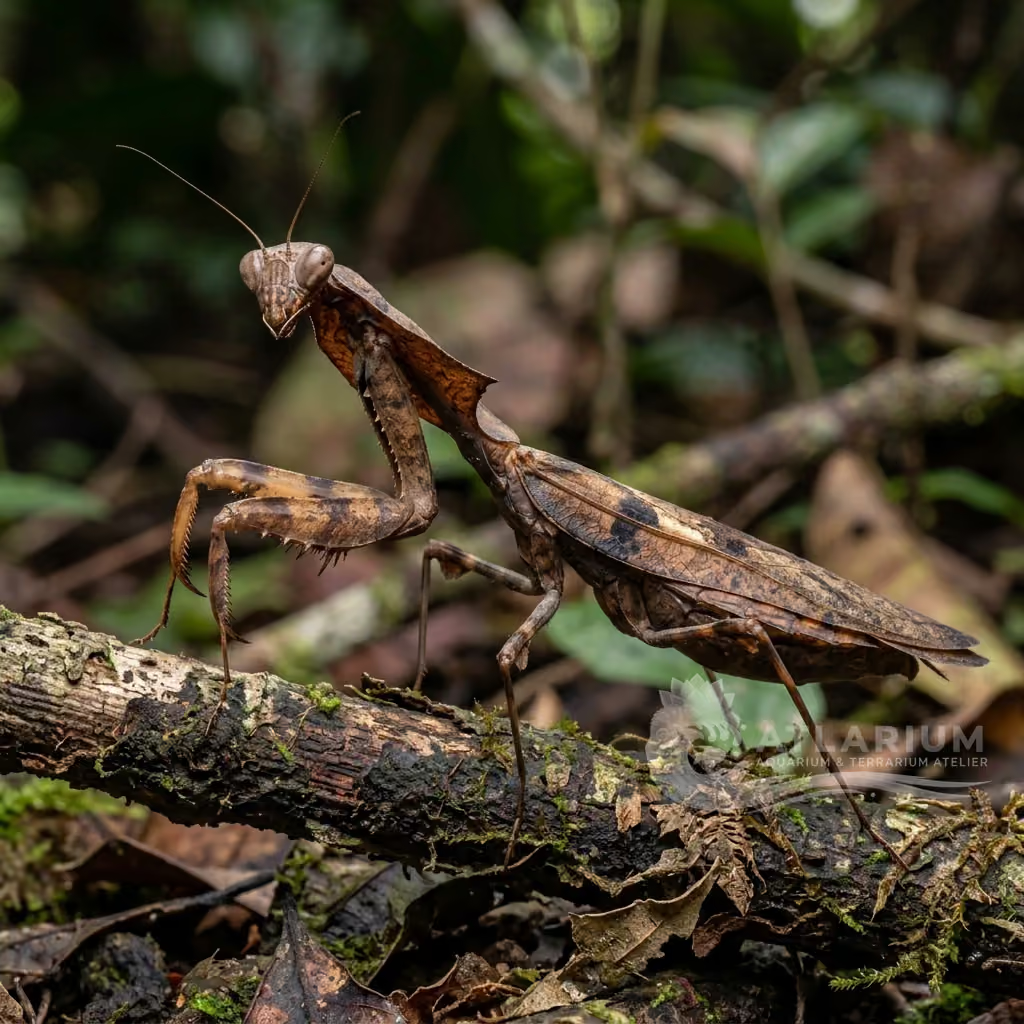
Tricolor Isopod (Merulanella sp.)
Merulanella sp. 'Tricolor'
The Merulanella sp. 'Tricolor'. One of the most surprising and acrobatic arboreal Asian isopods (0.6 - 0.7 inches). Its smooth and translucent carapace is a breathtaking canvas of art: it shows off a dazzling mix of bright dark red, neon yellow and ink black, fragmented into symmetrical blocks or streaks. Frantic, demanding and intolerant to high temperatures, it lives exclusively in hyper-ventilated vertical terrariums dripping with fresh fog, feeding on microalgae and arboreal lichens.
Ambiente
Terrestre
Umidade
75 - 90 %
Temperatura diurna
22 - 26 °C
Temperatura noturna
20 - 23 °C

Descrição da espécie
Geographic Origin and Habitat: No additional source-verified editorial notes are available about geographic origin and habitat for Merulanella sp. 'Tricolor'. Consult this record's parameters and sources.
Taxonomy and Genetics: No additional source-verified editorial notes are available about taxonomy and genetics for Merulanella sp. 'Tricolor'. Consult this record's parameters and sources.
Behaviour and Habits: No additional source-verified editorial notes are available about behaviour and habits for Merulanella sp. 'Tricolor'. Consult this record's parameters and sources.
Morphology and Sexual Dimorphism: No additional source-verified editorial notes are available about morphology and sexual dimorphism for Merulanella sp. 'Tricolor'. Consult this record's parameters and sources.

Cuidado, criação e companheiros de tanque
Terrarium Setup: Guidance about terrarium setup for Merulanella sp. 'Tricolor' must rely exclusively on the parameters and sources listed on this record.
Lighting and Heating: Guidance about lighting and heating for Merulanella sp. 'Tricolor' must rely exclusively on the parameters and sources listed on this record.
Humidity and Hydration: Guidance about humidity and hydration for Merulanella sp. 'Tricolor' must rely exclusively on the parameters and sources listed on this record.
Feeding and Supplementation: Guidance about feeding and supplementation for Merulanella sp. 'Tricolor' must rely exclusively on the parameters and sources listed on this record.
Compatibility and Coexistence: Guidance about compatibility and coexistence for Merulanella sp. 'Tricolor' must rely exclusively on the parameters and sources listed on this record.
Health and Common Diseases: Guidance about health and common diseases for Merulanella sp. 'Tricolor' must rely exclusively on the parameters and sources listed on this record.

Origem e distribuição geográfica
Esta espécie é originária de: Vietnam (Foreste pluviali montane asiatiche).
Origem
América Central e CaribeSul e Sudeste Asiático

Perfil de invertebrados terrestres
- Dieta
- Detritivore
- Merulanella sp. 'Tricolor' primarily feeds on decomposing organic matter such as leaf litter and rotting wood. They require a constant supply of calcium, which can be provided through cuttlebone or specialized supplements. Supplemental foods like vegetables, fish flakes, or commercial isopod diets should be offered regularly. Ensuring a varied diet will promote healthy growth and vibrant coloration. Always remove uneaten food to prevent mold growth and maintain a clean environment.
- Tamanho adulto
- 1.3 cm
- Estilo de vida/Microhabitat
- Arboreal
- Merulanella sp. 'Tricolor' leads a terrestrial and fossorial lifestyle, spending much of its time on or slightly below the forest floor. They play a crucial role in their ecosystem by recycling nutrients through the consumption of decaying plant matter. A proper enclosure should offer a deep, moisture-retaining substrate gradient to allow for natural burrowing. They thrive in environments that mimic the damp, rich soil of a temperate or tropical forest. Consistent microclimates within the habitat are essential for their long-term health.
- Ciclo de atividades
- Diurnal
- This species is primarily nocturnal and crepuscular, becoming most active during the evening and night. During the day, Merulanella sp. 'Tricolor' typically remains hidden under debris to conserve moisture and avoid predators. In terrariums with lower light levels or high humidity, they may occasionally venture out during daylight hours. Their activity level is highly dependent on environmental moisture; if it becomes too dry, they will burrow deeper. Providing a distinct day-night light cycle helps maintain their natural rhythm.
- Socialidade
- Solitary
- They are fundamentally social and do best within the context of a large, established colony structure. While they are active climbers and explorers, they will consistently retreat to communal clustering spots in the most humid areas to rest, which helps regulate colony moisture and facilitates necessary reproductive interactions.
- Reprodução
- Marsupial
- Reproduction in Merulanella sp. 'Tricolor' occurs when environmental conditions like temperature and humidity are optimal. Females carry the developing eggs in a specialized brood pouch called a marsupium on their underside. Once fully developed, the young emerge as fully formed miniature versions of the adults, known as mancae. The breeding rate can be quite prolific under ideal captive conditions. Providing ample hiding spots and proper nutrition will encourage successful breeding colonies.
- Venenoso
- No
- Tolerância de tratamento
- Display only
- Handling Merulanella sp. 'Tricolor' should be done with extreme care due to their delicate exoskeleton. It is generally best to observe them rather than handle them frequently, as the oils and salts on human skin can be harmful. If they must be moved, gently coax them into a small container using a soft brush or a piece of leaf litter. Avoid dropping them, as a fall from even a small height can cause fatal injuries. Their fast movements or tendency to roll up can also make secure handling difficult.
- Brumação
- Não obrigatório
- Depending on their native climate, Merulanella sp. 'Tricolor' may experience a period of reduced activity or diapause during cooler months. In captivity, true brumation is usually unnecessary if temperatures are kept stable year-round. However, slight seasonal temperature drops can occasionally stimulate breeding in some temperate species. Ensure that the enclosure does not freeze and maintains adequate moisture even during cooler periods. Always monitor the colony closely if attempting to cycle their environmental temperatures.
- Muda
- Periodic
- As they grow, Merulanella sp. 'Tricolor' must shed their exoskeleton in a process called molting. Interestingly, isopods molt in two separate stages: first shedding the posterior half, and then the anterior half a few days later. During this time, they are highly vulnerable and require elevated humidity to shed successfully. They will typically consume their old exoskeleton to reclaim valuable calcium and nutrients. It is crucial to provide adequate hiding spots so they can molt safely away from colony mates.

Espécies relacionadas
Recomendações agrupadas por parentes próximos, escolhas de acompanhantes e cuidados semelhantes.