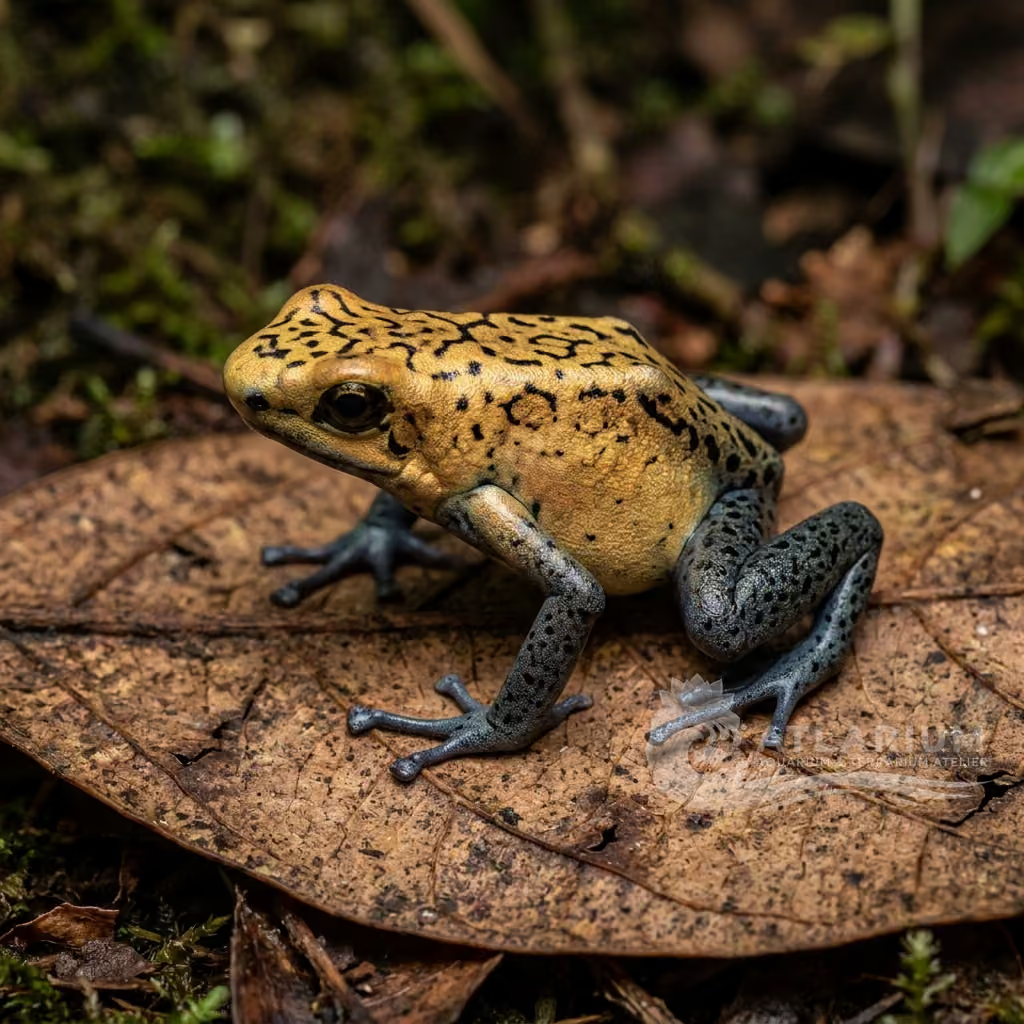
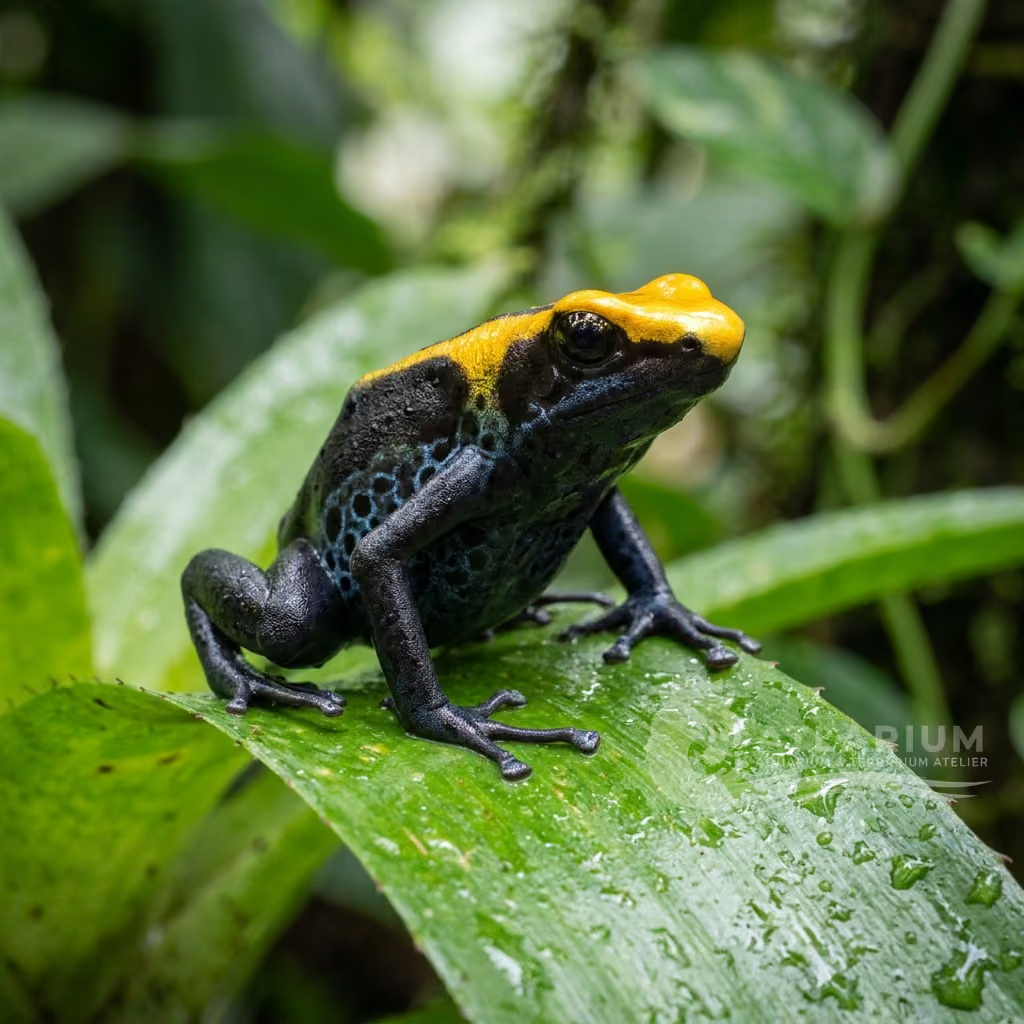
Yellow-banded Poison Dart Frog (Green Leg)
Dendrobates leucomelas
Green Leg morph. A rare variety of the yellow-banded poison dart frog where the lower legs exhibit a metallic green or aqua-blue coloration instead of solid black.
Ambiente
Terrestre
Umidade
70 - 100 %
Temperatura diurna
22 - 26 °C
Temperatura noturna
18 - 20 °C
UVB
Ferguson 1-2
UVI
0 - 1 UVI

Descrição da espécie
Geographical Origin and Habitat: Native to northern South America, including southern Venezuela, Guyana, northern Brazil, and eastern Colombia. They inhabit humid rainforest floors but are highly resilient to drier forest margins and gallery forests, often climbing low trees.
Taxonomy and Genetics: Reach a size of 3.5–4.0 cm. Features a striking warning coloration of bright yellow-orange and jet-black bands. In this rare "Green Leg" morph, the lower limbs display a metallic green or aqua-blue hue rather than solid black.
Behavior and Habits: Active, bold, and highly visible. They actively climb plants and glass surfaces. Males are famous for their loud, musical, canary-like mating trill, which is often stimulated by misting or rain.
Morphology: Sexual dimorphism is subtle: adult females are typically larger and rounder, while adult males have a darker vocal sac under the chin that becomes wrinkled during calling.

Cuidado, criação e companheiros de tanque
Terrarium Setup: Provide a vertically-oriented terrarium of at least 45x45x60 cm for a small group. Furnish with climbing branches, 3D backgrounds, elevated cork bark tubes, and broad-leafed plants (bromeliads). Maintain a bioactive base of leaf litter at the bottom.
Lighting and Heating: Prefer slightly warmer conditions than other dart frogs. Maintain a daytime range of 24–27°C. Do not exceed 28°C. Provide low-level UVB lighting to mimic sunlit forest patches and support active diurnal foraging. Keep night temperatures around 20–22°C.
Humidity and Hydration: Maintain target humidity of 75–85%. Drier periods during winter simulate their natural seasonal cycle; increasing misting in spring acts as a strong breeding trigger. Never keep the substrate soggy.
Feeding and Supplementation: Voracious diurnal hunters. Feed daily with Drosophila fruit flies, aphids, and small pinhead crickets. Dust all prey with high-quality calcium powder at each feeding, and add a multivitamin with D3 once a week.
Compatibility: Excellent choice for social colonies. They can easily coexist in groups of 4–6 individuals in a spacious terrarium. Both males and females show minimal intraspecific aggression.
Health and Common Diseases: Very robust, but monitor for obesity as dominant females may overeat. Distribute food across different spots in the terrarium to ensure equal access. Avoid handling to prevent stress and toxic absorption through the skin.

Origem e distribuição geográfica
Native to northern South America, including southern Venezuela, Guyana, northern Brazil, and eastern Colombia. They inhabit humid rainforest floors but are highly resilient to drier forest margins and gallery forests, often climbing low trees.
Origem
Melhoramento seletivo e cultivaresAmazônia, Orinoco e Guianas

Perfil anfíbio
- Dieta
- Insectivore
- The Green Leg morph thrives on a strictly insectivorous diet of micro-invertebrates. Flightless fruit flies are the cornerstone of their daily nutrition. Their diet must be supplemented with a variety of other small prey.
- Expectativa de vida
- 10-15 years
- Tamanho adulto
- 4 cm
- Estilo de vida/Microhabitat
- Terrestrial
- They are primarily a tropical, terrestrial species that utilizes the lower canopy. A suitable vivarium must reflect a humid, rainforest floor. Environmental parameters must be strictly maintained.
- Ciclo de atividades
- Diurnal
- This morph is highly active during daylight hours. They demonstrate peaks in activity during the early morning. When night falls, they climb to secure sleeping positions.
- Socialidade
- Gregarious
- The Green Leg morph exhibits active diurnal foraging and surprising boldness. They are avid climbers and utilize vertical structures. Males are highly territorial and vocal to court females.
- Reprodução
- Oviparous
- Successful reproduction is frequently observed following a simulated seasonal shift. Males will call from elevated perches to invite females. The female lays a small clutch of eggs which the male guards.
- Toxicidade
- Harmless
- Captive-bred specimens do not possess toxic skin secretions. In their native habitat, the frogs absorb alkaloid compounds from arthropods. In captivity, they are completely harmless to humans.
- Estágio de vida
- Metamorphosis
- The life stages begin as eggs laid in moist, terrestrial locations. Upon hatching, the tadpoles are transported by the male to water bodies. Froglets emerge onto land after a period of aquatic development.
- Tolerância de tratamento
- Display only
- Handling the Green Leg leucomelas is not recommended. Their skin serves as a vital organ for respiration and moisture regulation. Direct contact can cause significant physiological stress.
- Brumação
- Não obrigatório
- True brumation is not a part of the natural life cycle due to tropical origins. They require consistently warm temperatures year-round. Exposure to cold temperatures will rapidly lead to a compromised immune system.
- Muda
- Periodic
- These dart frogs shed their epidermal layer on a regular basis. The molting event is rapid and is almost never witnessed. This behavior allows the frog to recycle valuable proteins.

Espécies relacionadas
Recomendações agrupadas por parentes próximos, escolhas de acompanhantes e cuidados semelhantes.