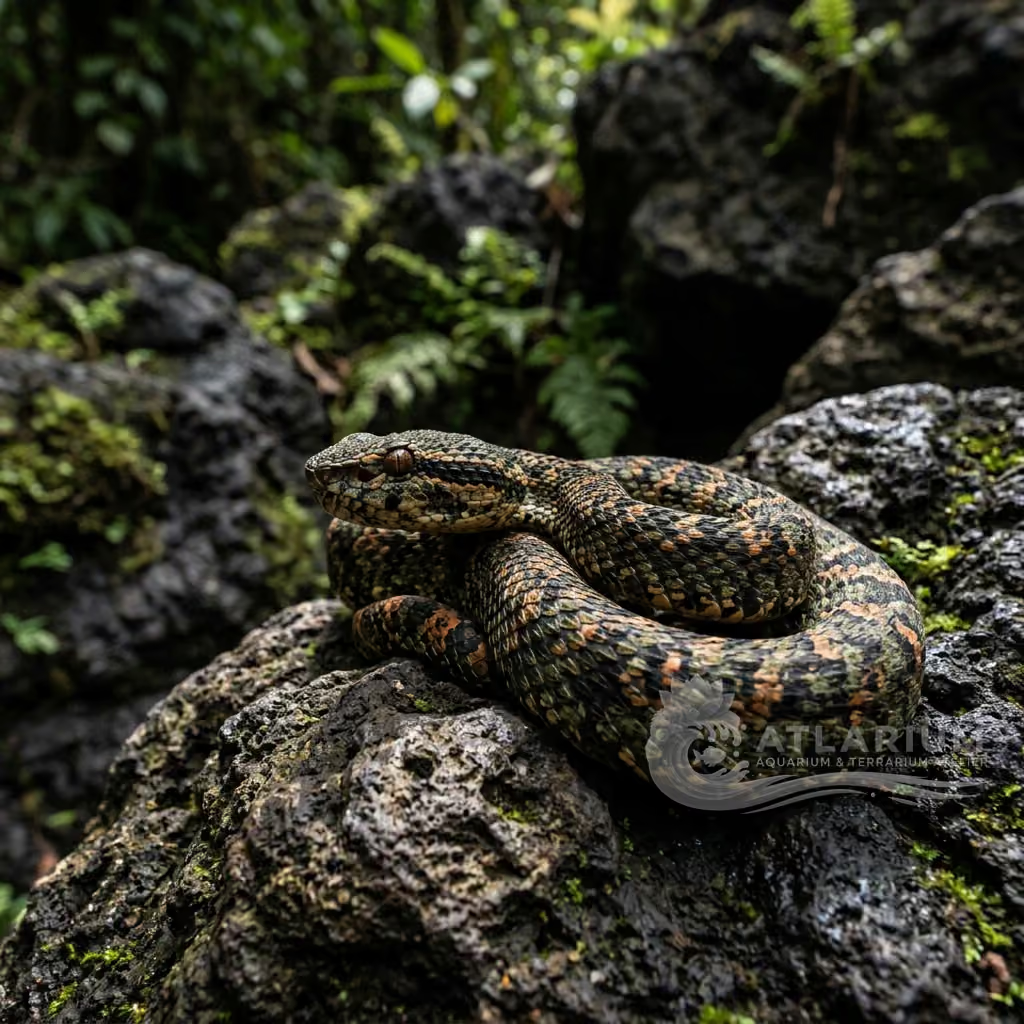
Nosy Hara leaf chameleon
Brookesia micra
One of the smallest reptiles in the world, this tiny leaf chameleon from Madagascar requires extremely specialized care in a bioactive terrarium.
Ambiente
Terrestre
Umidade
70 - 90 %
Temperatura diurna
22 - 26 °C
Temperatura noturna
18 - 20 °C
Tamanho adulto
2,5 cm

Descrição da espécie
Geographical Origin and Habitat: This species is endemic to the limestone islet of Nosy Hara in northern Madagascar. It inhabits the dry leaf litter layer on the floor of dry deciduous forests and the crevices of karst limestone formations (tsingy) typical of the island, staying within centimeters of the ground.
Taxonomy and Genetics: Belongs to the Chamaeleonidae family, genus Brookesia. Formally described in 2012, it represents one of the most genetically and morphologically divergent chameleon species in Madagascar, exhibiting extreme insular dwarfism driven by the geographical confinement of its native islet.
Behavior and Habits: A diurnal, slow-moving, and incredibly cryptic animal. It spends daylight hours crawling slowly through leaf litter foraging for microscopic prey. At night, it climbs onto low twigs or grass blades just 5-10 cm above the ground to sleep, avoiding terrestrial predators.
Morphology: One of the smallest reptiles in the world, with adults reaching a total length of only 23 to 29 mm, tail included. It has a laterally compressed body resembling a dead leaf, a boxy head without prominent crests, and, in mature individuals, a characteristic orange-to-yellowish tail.

Cuidado, criação e companheiros de tanque
Terrarium Setup: Requires a small bioactive terrarium (e.g., 30x30x30 cm) arranged with extreme precision. The substrate must consist of natural organic soil covered by a thick layer of dried oak or catappa leaf litter. Add very thin twigs, moss, and small live plants to provide essential nocturnal roosting spots.
Lighting and Heating: Demands moderate and stable temperatures, as overheating is quickly fatal. The ideal daytime temperature is 22-24 °C, with a slight drop at night to 18-20 °C. Provide a very low-output UVB light source (e.g., shaded 2.0 or 5.0) alongside standard LED fixtures for plant growth.
Humidity and Hydration: Humidity levels must be kept high, between 70% and 85%. Fine misting with reverse osmosis water is required daily. The chameleon drinks only water droplets that form on leaves and twigs; due to its micro size, heavy water droplets can actually pose a physical hazard.
Feeding and Supplementation: Extremely complex diet consisting of microscopic live prey. They accept springtails, flightless fruit flies (Drosophila melanogaster), pinhead crickets, and aphids. Dust prey with pure calcium twice a week and a high-quality multivitamin with D3 once a month.
Compatibility: Must be housed strictly solitary (one individual per enclosure) or at most in a well-established breeding pair in larger setups, with close monitoring. The presence of any other animal (including small geckos or predatory insects) poses a direct and fatal threat.
Health and Common Diseases: Highly delicate and sensitive to handling stress (must never be handled unless absolutely necessary). Dehydration and overheating are the leading causes of rapid death. Maintain strict climate control and ensure excellent ventilation to prevent stagnant air buildup.

Origem e distribuição geográfica
This species is endemic to the limestone islet of Nosy Hara in northern Madagascar. It inhabits the dry leaf litter layer on the floor of dry deciduous forests and the crevices of karst limestone formations (tsingy) typical of the island, staying within centimeters of the ground.
Origem
África e MadagascarEuropa, Mediterrâneo e Ásia Ocidental

Perfil de réptil
- Dieta
- Insectivore
- Their diet is strictly insectivorous, requiring a diverse array of live feeder insects such as crickets, dubia roaches, and hornworms. Gut-loading the feeder insects with nutritious vegetables is essential prior to feeding. Additionally, all prey items must be properly dusted with calcium and multivitamin powders to prevent metabolic bone disease.
- Tamanho adulto
- 2.5 cm
- Estilo de vida/Microhabitat
- Terrestrial
- Adapted for an arboreal lifestyle, their enclosure must be vertically oriented and heavily planted to provide security. Excellent ventilation is a strict requirement; therefore, screen cages are generally preferred over glass terrariums. They do not recognize standing water and require a dripping or misting system to drink from leaves.
- Ciclo de atividades
- Diurnal
- These reptiles are strictly diurnal, becoming active soon after the lights turn on or the sun rises to bask and warm up. Most of their day is spent slowly patrolling their territory and hunting for insects. As evening approaches, they seek out a secure roosting spot in the foliage to sleep.
- Socialidade
- Gregarious
- They are renowned for their ability to change color, which is primarily used for communication and thermoregulation rather than camouflage. Their eyes move independently, giving them a 360-degree field of vision to spot prey and predators. They hunt using a specialized, rapidly extensible tongue to capture prey from a distance.
- Reprodução
- Oviparous
- Breeding chameleons requires precision, as females can easily become stressed or egg-bound if conditions are not ideal. Following a successful mating, females require a deep container of damp substrate to lay their eggs. Incubation periods can be lengthy, and temperature fluctuations are often needed to break diapause in the eggs.
- Tolerância de tratamento
- Display only
- Chameleons are easily stressed by human interaction and should be considered display animals rather than pets to be handled. Frequent handling can lead to chronic stress, weakened immune systems, and overall health decline. If they must be moved, it is best to let them voluntarily walk onto a stick or hand.
- Brumação
- Não obrigatório
- Tropical chameleons do not brumate and require stable, warm basking temperatures throughout the year. However, montane species require a significant drop in nighttime temperatures to maintain their metabolism and longevity. Keepers must closely research their specific species' microclimate needs to ensure proper care.
- Muda
- Periodic
- Shedding is a sign of growth in juveniles and general health maintenance in adults. Unlike snakes, chameleons shed their skin in large, flaky patches over the course of a few hours to a day. Maintaining appropriate ambient humidity is crucial during this time to prevent the skin from sticking and restricting blood flow.

Espécies relacionadas
Recomendações agrupadas por parentes próximos, escolhas de acompanhantes e cuidados semelhantes.