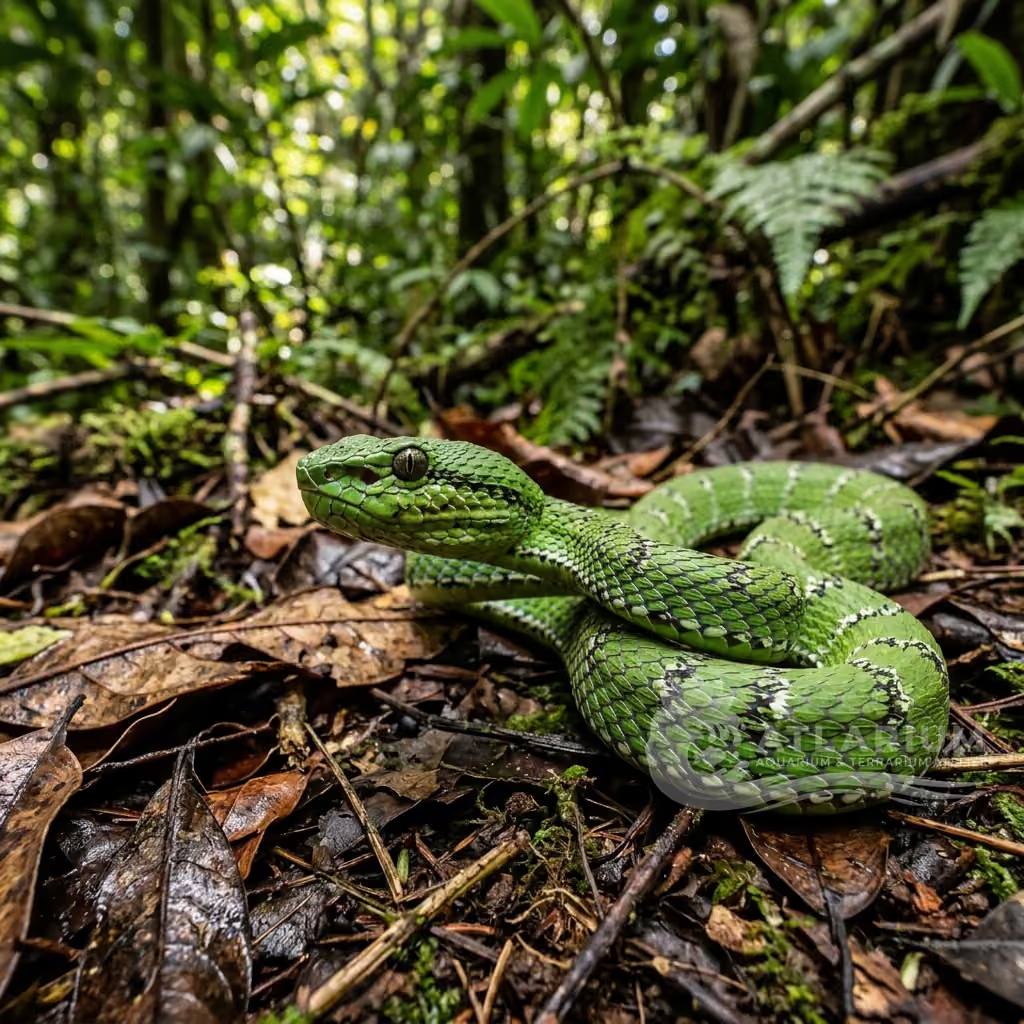
Yellow-spotted Night Lizard
Lepidophyma flavimaculatum
A highly secretive, nocturnal Central American night lizard featuring distinctive tuberculated skin and striking rows of bright yellow spots, preferring damp, deeply shaded woodland habitats.
Ambiente
Terrestre
Umidade
70 - 90 %
Temperatura diurna
24 - 28 °C
Temperatura noturna
20 - 22 °C
Tamanho adulto
11 cm

Descrição da espécie
Geographical Origin and Habitat: Lepidophyma flavimaculatum is native to Central America, ranging from southern Mexico through Belize, Guatemala, Honduras, Costa Rica, and Panama. It inhabits wet tropical rainforests, micro-habitats like rotting logs, crevices, and caves.
Taxonomy and Genetics: Belongs to the night lizard family Xantusiidae. Some northern populations of this species are known to be parthenogenetic, consisting entirely of females that reproduce without fertilization, while southern populations reproduce sexually.
Behavior and Habits: Strictly nocturnal, secretive, and terrestrial. It spends daylight hours concealed in dark, damp retreats. Due to its cryptic nature, it rarely basks in the open and exhibits low-movement activity, relying on camouflage for safety.
Morphology: Features a lizard-like body but with a flat head and large plates similar to a snake, and rough, bead-like scales. The dorsal color is black or dark brown, contrasted by distinctive rows of yellow spots on its sides. Adult length is about 5 to 6 inches (12-15 cm).

Cuidado, criação e companheiros de tanque
Terrarium Setup: A terrarium measuring at least 30x12x12 inches (80x40x40 cm) is required. Use a humid substrate like coconut coir or peat moss mixed with leaf litter. Provide multiple cork bark slabs, hollow logs, and flat stones to create plenty of dark hiding spots.
Lighting and Heating: Keep daytime temperatures moderate at 24-27°C (75-80°F), with a slight drop at night to around 20°C (68°F). Heating should be provided via a heat mat. Provide low-strength UVB lighting (2.0 or 5.0) on a 12-hour cycle to simulate daylight.
Humidity and Hydration: Maintain high humidity levels between 70-85%. Spray the terrarium daily with clean water. A shallow water dish must always be present, providing drinking water and helping maintain the ambient humidity of the enclosure.
Feeding and Supplementation: Insectivorous. Feed a variety of live gut-loaded insects like crickets, small roaches, and mealworms. Dust the insects with high-quality calcium and vitamin D3 supplements twice a week to avoid Metabolic Bone Disease.
Compatibility: Best housed individually due to territorial behaviors. Keeping multiple males together will result in stress and fighting. Harem groups (one male and multiple females) can sometimes work in large, heavily decorated terrariums.
Health and Common Diseases: Prone to dehydration and dysecdysis (incomplete shedding) if the enclosure is allowed to dry out. Lack of cage hygiene coupled with stagnant wet conditions can lead to respiratory infections and skin blister disease.

Origem e distribuição geográfica
Lepidophyma flavimaculatum is native to Central America, ranging from southern Mexico through Belize, Guatemala, Honduras, Costa Rica, and Panama. It inhabits wet tropical rainforests, micro-habitats like rotting logs, crevices, and caves.
Origem
América Central e Caribe

Perfil de réptil
- Dieta
- Insectivore
- The Yellow-spotted Night Lizard is a specialized insectivore, predominantly hunting at night or in the deep shade of tropical forest floors. Its diet centers heavily around termites, which constitute a large portion of its caloric intake, along with ants, small beetles, and various soft-bodied arthropods. It utilizes its secretive nature to ambush these invertebrates from the safety of decaying logs or rocky crevices.
- Tamanho adulto
- 11 cm
- Estilo de vida/Microhabitat
- Terrestrial
- It is a terrestrial, secretive species that relies on tight crevices and deep, moist leaf litter to feel secure.
- Ciclo de atividades
- Nocturnal
- Being a true night lizard, it is almost entirely nocturnal, remaining hidden under debris during the day and becoming active at night.
- Socialidade
- Gregarious
- Highly secretive and nocturnal, the Yellow-spotted Night Lizard is primarily solitary and spends the majority of its life hidden within decaying logs, under tree bark, or in rock fissures. While multiple individuals might occasionally be found utilizing the same large fallen tree due to ideal microhabitat conditions, they do not form true social groups and typically avoid direct interaction with conspecifics outside of necessary mating encounters in sexual populations.
- Reprodução
- Viviparous
- This species exhibits a remarkable reproductive strategy: while northern populations reproduce sexually and are viviparous (giving birth to live young), southern populations are entirely female and reproduce via parthenogenesis. In these unisexual populations, females produce genetic clones of themselves without the need for male fertilization. The live-born young are precocial and fully capable of surviving on their own immediately upon birth.
- Tolerância de tratamento
- Display only
- Very delicate and prone to tail-dropping. They are incredibly fast and squirmy, making handling impractical and stressful for the animal.
- Brumação
- Não obrigatório
- No brumation is observed. They hail from tropical microclimates and require stable warmth and humidity year-round.
- Muda
- Periodic
- High humidity inside their hiding spots is crucial. They often shed discreetly, and an overly dry environment quickly leads to retained shed on their toes.

Espécies relacionadas
Recomendações agrupadas por parentes próximos, escolhas de acompanhantes e cuidados semelhantes.