Elongated Tortoise
Indotestudo elongata
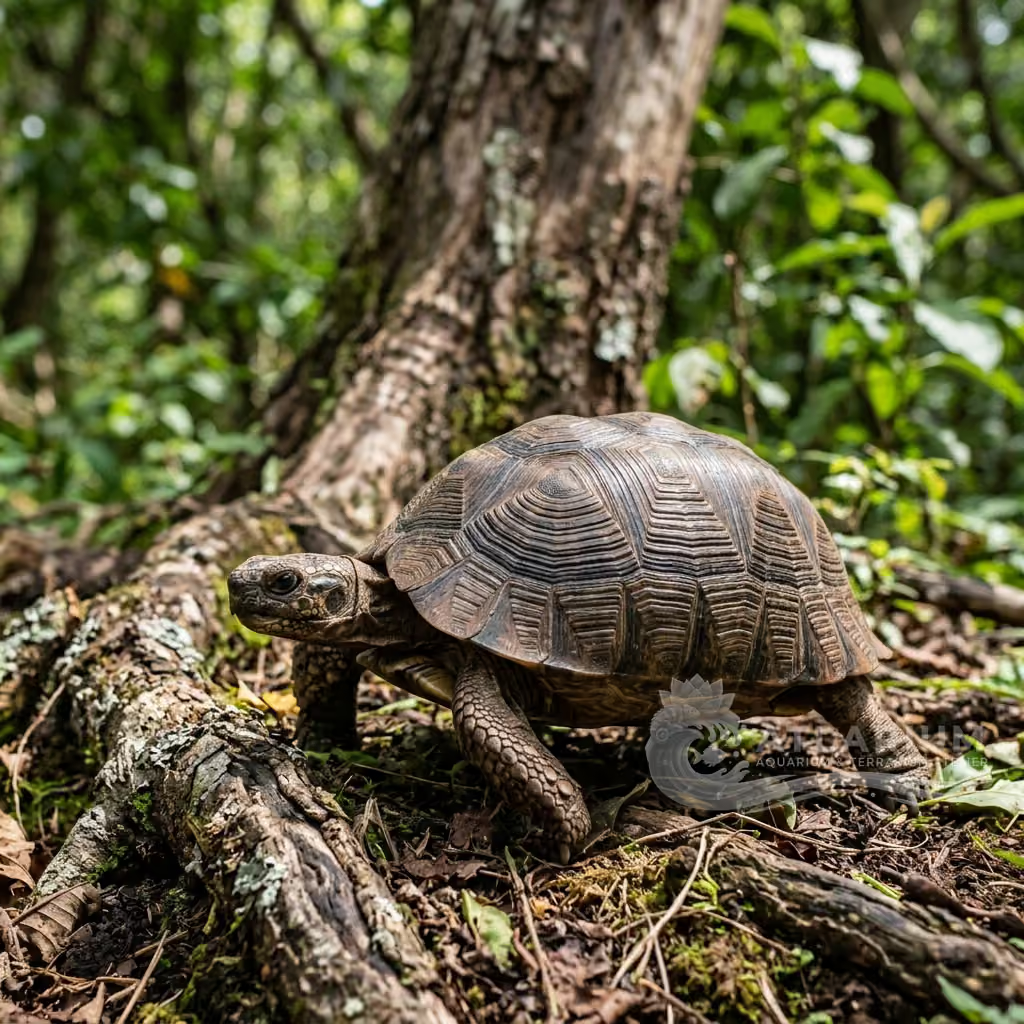
This medium-sized Asian land tortoise is wonderfully adapted to humid forest environments, characterized by its remarkably elongated shell, crepuscular habits, and preference for dense cover.
Ambiente
Terrestre
Umidade
60 - 80 %
Temperatura diurna
24 - 29 °C
Temperatura ambiente
24 - 29 °C
Temperatura noturna
20 - 22 °C
Local para se aquecer
30 - 32 °C
Tamanho adulto
30 cm
Gabinete mínimo
>= 600 L
UVB
Ferguson 2
UVI
0,7 - 1 UVI

Descrição da espécie
Geographical Origin and Habitat: Indotestudo elongata is native to Southeast Asia, with a geographical range spanning Nepal, northeastern India, Bangladesh, Myanmar, Thailand, Cambodia, Laos, Vietnam, northern Malaysia, and southern China. It primarily inhabits dry and humid deciduous forests, hilly woodlands, and wooded savannas, preferring shaded habitats with thick leaf litter and high relative humidity.
Taxonomy and Genetics: Belonging to the family Testudinidae and the genus Indotestudo, its genetic makeup reflects adaptations to forest environments with seasonal temperature variations. It features a characteristically elongated and narrow carapace, which is yellow-greenish to pale brown, with large black patches on each scute. Adults reach a carapace length of about 30 centimeters and weigh 3-4 kg.
Behavior and Habits: A primarily crepuscular and terrestrial species. It is active during the early morning and dusk hours, while spending the hottest parts of the day hidden under leaf litter, fallen logs, or dense vegetation. Their activity levels increase significantly during the monsoon season. They have a shy but curious temperament once acclimated.
Morphology: Beyond the elongated carapace, it features a pale yellow or cream head that turns pinkish-red around the eyes and nostrils during the breeding season in both sexes. The limbs are robust and covered in thick scales, adapted for walking through dense undergrowth. Males have a concave plastron and a longer, thicker tail than females.

Cuidado, criação e companheiros de tanque
Terrarium Setup: Requires a spacious indoor enclosure or a large outdoor pen (during warm months) of at least 2.5 x 1.5 meters for a single adult. The ideal substrate is a moisture-retaining mix of peat moss, coconut coir, and cypress mulch, topped with dry leaves. Provide multiple hiding shelters (bark caves, robust plants) and a shallow, wide water dish to allow the tortoise to soak and hydrate.
Lighting and Heating: Requires high-quality UVB lighting (5.0 or 10.0 UVB bulb) active for 10-12 hours daily to promote vitamin D3 synthesis. Provide a thermal gradient with a cool side of 24°C and a basking spot of 30-32°C. Nighttime temperatures can drop to 20-22°C. Heating should be supplied via overhead heating lamps connected to a reliable thermostat.
Humidity and Hydration: As a forest-dwelling species, they require a constant relative humidity level between 60% and 80%. This is achieved by regularly misting the substrate and keeping the water dish filled. Hydration is critical; in addition to the water bowl, weekly lukewarm water soaks are highly recommended to aid digestion and prevent dehydration.
Feeding and Supplementation: Omnivorous with a strong herbivorous preference. The diet should consist of 80% leafy greens (dandelion, chicory, endive, clover), flowers, and weeds, 15% fruits (figs, berries, apple), and 5% protein (earthworms, snails). Supplement food with calcium powder 2-3 times weekly, and calcium with D3 once a week.
Compatibility: A solitary species. Keeping multiple specimens together requires very large enclosures with visual barriers to prevent stress from persistent male courtship or territorial fighting between males. Never house them with other tortoise species to prevent the transmission of exotic pathogens.
Health and Common Diseases: Prone to respiratory infections (pneumonia) if kept in cool, damp conditions without proper heating, and metabolic bone disease (MBD) from lack of UVB or calcium. Intestinal parasites and dehydration in juveniles are also common. Annual veterinary check-ups including fecal tests are recommended.

Origem e distribuição geográfica
Indotestudo elongata is native to Southeast Asia, with a geographical range spanning Nepal, northeastern India, Bangladesh, Myanmar, Thailand, Cambodia, Laos, Vietnam, northern Malaysia, and southern China. It primarily inhabits dry and humid deciduous forests, hilly woodlands, and wooded savannas, preferring shaded habitats with thick leaf litter and high relative humidity.
Origem
Sul e Sudeste AsiáticoLeste Asiático

Perfil de réptil
- Dieta
- Herbivore
- The Elongated Tortoise is predominantly an omnivore, enjoying a wide variety of plant and animal matter in its diet. They consume large amounts of leafy greens, flowers, fallen fruits, and vegetation, which should make up the bulk of their captive meals. In addition to plant matter, they actively forage for protein sources like earthworms, snails, and even carrion in the wild. A well-rounded captive diet must carefully balance high-fiber greens with occasional fruit treats and moderate protein supplements to ensure proper shell growth.
- Tamanho adulto
- 30 cm
- Estilo de vida/Microhabitat
- Terrestrial
- A terrestrial forest dweller, they require a humid, shaded enclosure with deep substrate to mimic the forest floor.
- Ciclo de atividades
- Crepuscular
- Unlike many tortoises, they avoid bright midday sun and are most active during the dim light of dawn and dusk.
- Socialidade
- Solitary
- These tortoises are crepuscular, meaning they are most active during the cooler, humid hours of dawn and dusk. Unlike arid-climate tortoises, they inhabit humid forests and rely heavily on the cover of dense underbrush to avoid overheating and dehydration. When conditions become excessively hot or dry, they exhibit a behavior called aestivation, remaining completely inactive until the rainy season returns. They are curious and gentle in captivity but require a spacious, high-humidity environment to thrive properly.
- Reprodução
- Oviparous
- Courtship in Elongated Tortoises can be quite vigorous, with males often ramming and biting the females to assert dominance. Following successful mating, the female will excavate a shallow nest in soft, damp soil to deposit her eggs. A typical clutch consists of 2 to 7 eggs, and a healthy female may lay multiple clutches during a single breeding season. The incubation period is relatively long and temperature-dependent, with hatchlings emerging fully independent and ready to forage.
- Tolerância de tratamento
- Tolerant
- They are quite docile and tolerate handling well, though like all tortoises, they prefer to keep their feet firmly on the ground.
- Brumação
- Não obrigatório
- They do not brumate. They come from tropical and subtropical forests and need warm, humid conditions year-round.
- Muda
- Regular
- As a tortoise, they do not molt their skin all at once. Skin sheds continuously in small, dry flakes, while shell scutes grow continuously.

Espécies relacionadas
Recomendações agrupadas por parentes próximos, escolhas de acompanhantes e cuidados semelhantes.