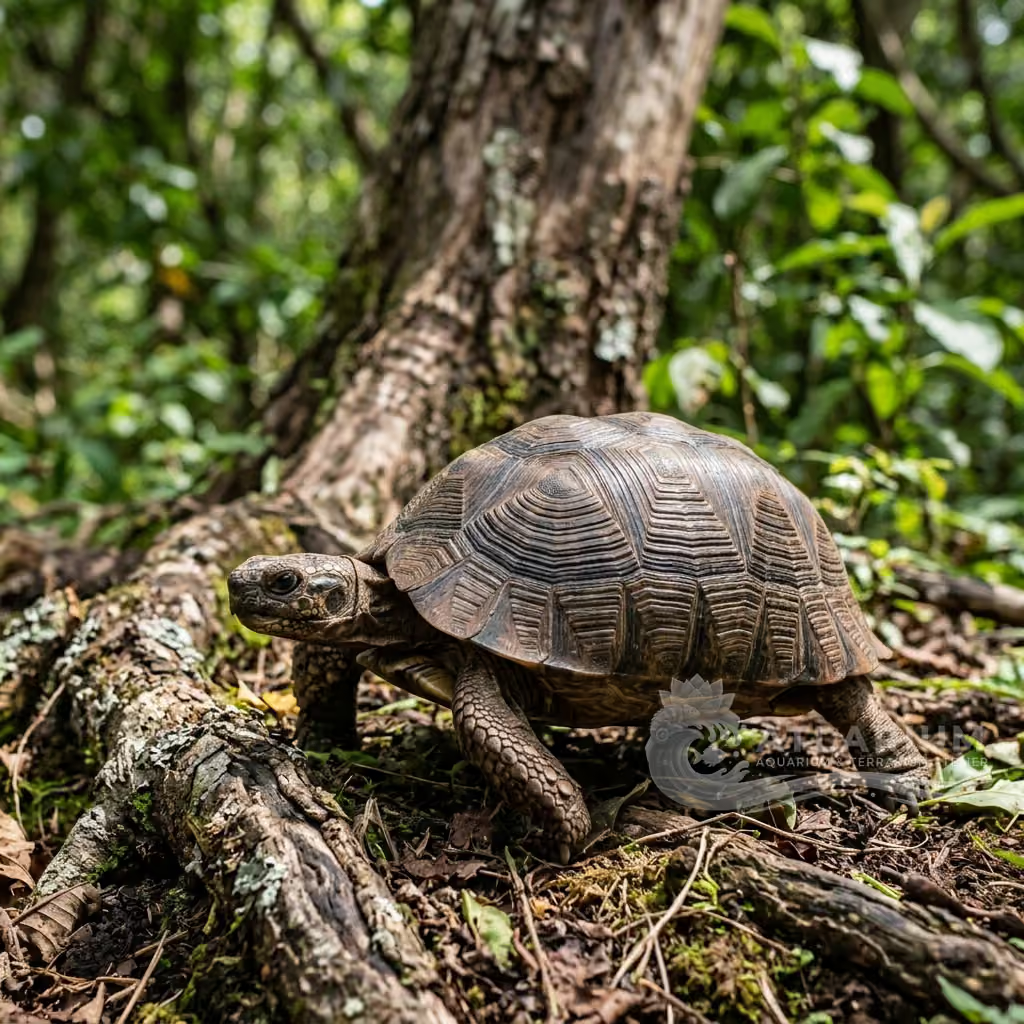
Red-footed Tortoise (Cherry Head)
Chelonoidis carbonarius
Morph Cherry Head. The 'Red-footed Tortoise'. Spectacular tropical South American tortoise (14 inches). Famous for its explosive cherry colored scales on head and legs ('Cherry Head') against a very black shell. Unlike the arid European or African tortoises, it demands the jungle: suffocating humidity, no scorching sun and a crazy omnivorous diet (ripe fruit, mushrooms, even carrion and worms).
Ambiente
Terrestre
Umidade
70 - 90 %
Temperatura diurna
24 - 35 °C
Temperatura noturna
21 - 24 °C
Tamanho adulto
25 cm

Descrição da espécie
Geographical Origin and Habitat: Very dense rainforests, dark and humid undergrowths, on the edges of rivers and Amazon swamps.
Taxonomy and Genetics: Family Testudinidae. CITES Appendix B. The genetic variant 'Cherry Head' from eastern Brazil is very popular, it keeps the fluorescent blood colored head for life and stays much smaller, showing off crazily marbled plastrons.
Behavior and Habits: Omnivorous and sociable shadows. They do not tolerate the very strong sunlight, taking refuge in the dark spots of the forest. They love to be watered intensely. Much more curious and intelligent than European tortoises, they follow the owner for food. They never go into hibernation (fatal brumation).
Morphology: Opaque coal black shell shaped like an elongated loaf (Males 14-16 inches / 35-40 cm, females 12 inches / 30 cm with very evident lateral 'hourglass' narrowing in old males). Each black scute (areola) has a lively yellow/orange spot in the center. Massive scales on the legs colored ruby or bright orange.
Note on Morph (Cherry Head): Una variante cromatica o fenotipo specifico estremamente ricercato dagli appassionati per i suoi colori particolari.

Cuidado, criação e companheiros de tanque
Terrarium Setup: SHADED OUTDOOR CAGES AND INDOOR TROPICAL TERRARIUMS (Minimum 72x36 inches indoor for winter). THEY DO NOT LOVE arid lawns in the sun. They need a dense cover of bushes, rotting foliage to root in (Cypress bark, sphagnum) and gigantic warm and muddy pools to spend whole hours bathing.
Lighting and Heating: THEY MUST NOT BAKE IN THE SUN. Mild basking at only 88°F (31°C) covered by leaves. Jungle ambient 79-82°F (26-28°C). UVB radiation only 5% or diffused (not the scorching desert light of Sulcatas). Below 68°F (20°C) they collapse irreparably.
Humidity and Hydration: Suffocating and Foggy Humidity (70-90%). They love sprays and rains. 'Dry-Out' (domestic drying of the winter terrarium) is fatal, creating horrible shell pyramiding or eye inflammations leading to blindness.
Feeding and Supplementation: JUNGLE SCAVENGERS (100% Omnivores). The only tortoise that must eat a lot of rotting tropical FRUIT (Mango, Papaya, Melon), wild weeds AND 10% of REAL ANIMAL PROTEIN every week (Neonatal pink mice, fat earthworms, snails). If you feed them only hay, they will die wasted.
Compatibility: Hyper-sociable and docile. Tamable and tame, they rarely bite or hiss, they enjoy 'scratches' on the shell (sensitive) and tolerate peaceful coexistence even among males.
Health and Common Diseases: Decay from genetic misunderstanding (Chronic Shell Pyramiding ). If kept like arid 'little desert tortoises', with salad and dry heat, they will grow with shattered lungs, spire-deformed shell, and broken kidneys from the absence of prolonged hydration and protein-free diets.

Origem e distribuição geográfica
Very dense rainforests, dark and humid undergrowths, on the edges of rivers and Amazon swamps.
Origem
Melhoramento seletivo e cultivaresAmazônia, Orinoco e GuianasÁfrica e MadagascarEuropa, Mediterrâneo e Ásia Ocidental

Perfil de réptil
- Dieta
- Omnivore
- The Cherry Head Red-footed Tortoise is a versatile omnivore that thrives on a varied diet mimicking its natural tropical habitat. In the wild, it primarily consumes a rich mixture of broadleaf weeds, grasses, fallen fruits, and blossoms, alongside occasional animal protein such as carrion, snails, and insects. In captivity, a balanced regimen should consist of high-calcium leafy greens, diverse fruits like papaya and berries, and periodic protein supplementation. Ensuring the correct calcium-to-phosphorus ratio is critical to prevent metabolic bone disease and promote healthy shell development.
- Tamanho adulto
- 25 cm
- Estilo de vida/Microhabitat
- Terrestrial
- This is a distinctly terrestrial species that thrives on the forest floor of South American rainforests and humid savannas. They do not burrow deeply like arid tortoises but instead seek shelter under dense vegetation, fallen logs, and leaf litter. Captive environments must reflect this by providing a complex, heavily planted setup with deep, moisture-retaining substrate like cypress mulch to mimic the damp forest floor.
- Ciclo de atividades
- Diurnal
- Red-footed Tortoises are primarily diurnal, active during the daylight hours when they forage for a mixed diet of fruits, vegetation, and occasional protein. Unlike arid tortoise species, they inhabit shaded tropical forests and prefer dappled sunlight over intensely bright basking spots. Their enclosure should feature a gradient of moderate heat and UVB lighting, avoiding blindingly bright, overexposed environments.
- Socialidade
- Gregarious
- Renowned for their docile and curious temperament, Cherry Head Tortoises are remarkably social compared to many other tortoise species. While they can lead solitary lives, they often coexist peacefully in small communal groups, provided they have ample space and resources. However, males can exhibit territorial behavior during the breeding season, occasionally engaging in head-butting or ramming contests to establish dominance. Overall, their interactive nature and calm disposition make them highly rewarding to observe and manage in properly sized enclosures.
- Reprodução
- Oviparous
- Reproduction in this oviparous species involves elaborate courtship rituals where males exhibit rhythmic head-bobbing and emit distinctive, chicken-like vocalizations to attract females. After successful mating, the female seeks a warm, slightly moist area with loose soil to dig her nest, typically laying a clutch of 2 to 15 spherical, hard-shelled eggs. Incubation requires consistent temperatures and high humidity, usually lasting between 115 and 150 days before the fully formed hatchlings emerge, completely independent and ready to forage.
- Tolerância de tratamento
- Tolerant
- Red-footed Tortoises have a very mild and docile temperament, rarely exhibiting aggressive behavior towards humans. While they are more tolerant of interaction than many smaller tortoise species, they are still reptiles that can experience significant stress from constant handling or being picked up. It is best to interact with them on their level, observing them forage or hand-feeding them occasional fruit treats.
- Brumação
- Não obrigatório
- As a tropical species native to the warm, consistent climates of South America, the Red-footed Tortoise does not brumate or hibernate. They lack the biological ability to survive freezing or even cool temperatures. Keepers must provide a stable, warm environment year-round, never allowing ambient temperatures to drop below 65°F (18°C), and utilizing heated indoor enclosures during winter in temperate climates.
- Muda
- Periodic
- Like other tortoises, they shed skin in small flakes rather than all at once. Because they are a tropical rainforest species, maintaining extremely high ambient humidity (70-80%+) is absolutely critical for healthy skin shedding and smooth shell growth. Dehydration or overly dry air will lead to severe skin issues and permanent shell pyramiding. They should be provided with a shallow soaking dish large enough to accommodate their entire body.

Espécies relacionadas
Recomendações agrupadas por parentes próximos, escolhas de acompanhantes e cuidados semelhantes.