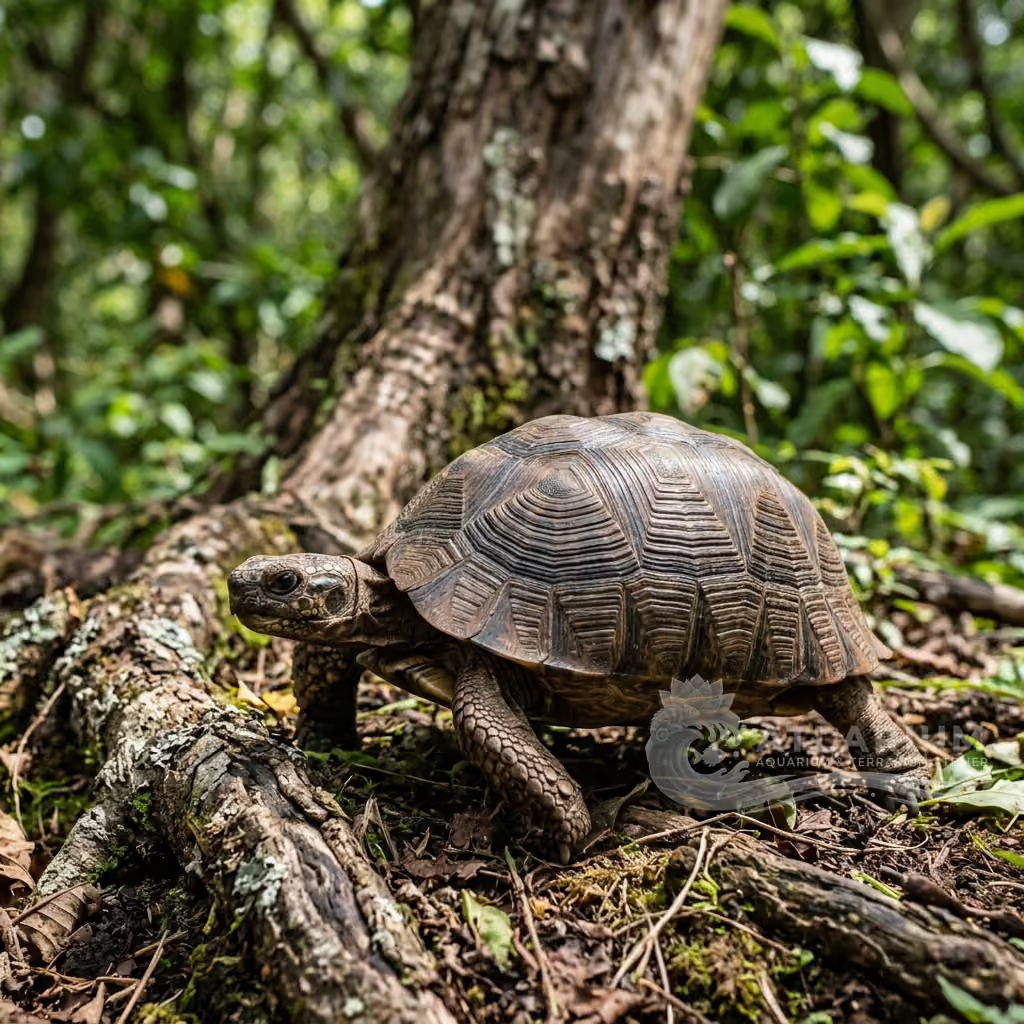
Spur-Thighed Tortoise — T. g. ibera / Asia Minor
Testudo graeca
Morph T. g. ibera (Asia Minor Tortoise). The 'Greek Tortoise'. Extraordinary and very common terrestrial tortoise (8 inches), notorious for its monstrous resistance to the arid heat of North Africa and the Middle East. There are dozens of different subspecies (Ibera, Nabeulensis), each adapted to a slightly different climate. Less tolerant of humidity than Hermann's, it is a perfect desert herbivorous machine for very dry climates.
Ambiente
Terrestre
Umidade
40 - 60 %
Temperatura diurna
24 - 38 °C
Temperatura noturna
18 - 24 °C
Tamanho adulto
20 cm

Descrição da espécie
Geographical Origin and Habitat: From arid North African deserts (Tunisia, Morocco), to dry scrublands in Turkey and mountains up to the Caucasus.
Taxonomy and Genetics: Family Testudinidae. CITES Appendix A. A taxonomic disaster divided into at least 20 subspecies, with very different habits (T.g. ibera goes into cold winter hibernation; T.g. nabeulensis from North Africa DOES NOT tolerate cold and dies below 50°F / 10°C). MANDATORILY IDENTIFIABLE by a spur (horny tubercle) visible behind each thigh, and the absence of the rigid spur on the tip of the tail.
Behavior and Habits: Solar calculators. They love to bask all day to 'charge' the black shells in the heat of the sun. Unlike Hermann's, they tend to be slightly less active in spring but more resilient in dry summer.
Morphology: High and posteriorly 'square' carapace (6-8 inches / 15-20 cm). Very vast colors depending on the locality: from bright yellow to soot, anthracite black or washed-out mud green. Single plate above the tail (while Hermann's often have it divided in two).
Nota sul Morph (*T. g. ibera* (Asia Minor Tortoise)): Una variante cromatica o fenotipo specifico estremamente ricercato dagli appassionati per i suoi colori particolari.

Cuidado, criação e companheiros de tanque
Terrarium Setup: ARID OUTDOOR ENCLOSURES. Extreme attention to the origin of the tortoise: if it is a Graeca from North Africa (Tunisian), IT MUST SPEND THE WINTER INDOORS in a heated terrarium. The Graeca Ibera (Turkey) instead strictly require hibernation outside in deep graves covered with dry leaves.
Lighting and Heating: DIRECT SUN or monstrous Basking at 95°F (35°C) (Halogen + UVB 12% in winter tanks). They suffer atrociously from humid cold (fulminant respiratory flus).
Humidity and Hydration: Arid Oven (30-50%). Well-drained areas (sand and mixed potting soil) to avoid puddles in which they would freeze.
Feeding and Supplementation: Dry lawnmowers. Dry hay, prickly pear pads without spines, hibiscus, mallow. In nature they spend months in summer eating totally barren and dry grass due to drought, evolving very efficient kidneys against dehydration.
Compatibility: Docile or violent (Males are brutal shell mounters, strictly separate them or they will smash the poor female's shell in bloody sexual brawls).
Health and Common Diseases: Lethal RUNNY NOSE SYNDROME: mycoplasmic respiratory syndrome ('Runny nose') destroys and kills almost all African Graeca imported into Europe if they are left outside in the rainy autumn humidity without radiant heat to warm their small lungs.

Origem e distribuição geográfica
From arid North African deserts (Tunisia, Morocco), to dry scrublands in Turkey and mountains up to the Caucasus.
Origem
Melhoramento seletivo e cultivaresÁfrica e MadagascarEuropa, Mediterrâneo e Ásia Ocidental

Perfil de réptil
- Dieta
- Herbivore
- Testudo graeca ibera is a strictly herbivorous tortoise whose optimal diet mimics the sparse, high-fiber, and low-protein vegetation found in its natural Mediterranean and Middle Eastern habitats. In a captive environment, their nutritional intake should consist almost entirely of broadleaf weeds, grasses, and edible flowers such as dandelion, plantain, clover, and hibiscus. Providing a calcium-rich diet is paramount for healthy shell development; thus, dusting meals with a high-quality calcium supplement and providing a cuttlebone are essential practices. Fruits and high-protein vegetables must be strictly avoided, as they can cause severe gastrointestinal distress and shell pyramiding.
- Tamanho adulto
- 20 cm
- Estilo de vida/Microhabitat
- Terrestrial
- They lead a strictly terrestrial lifestyle, roaming across grasslands, scrublands, and rocky hillsides in their natural habitat across Asia Minor. They require a spacious, flat enclosure with a deep, earthy substrate that allows them to dig shallow pallets for resting. They are poor climbers and swimmers, meaning their environment should focus on horizontal space and physical barriers rather than vertical enrichment.
- Ciclo de atividades
- Diurnal
- This subspecies of Greek Tortoise is diurnal, exhibiting high activity levels during daylight hours. They rely heavily on the sun for thermoregulation, spending their mornings basking under a heat source to raise their core body temperature before foraging for vegetation. A strong, high-quality UVB light and a dedicated basking spot are absolutely essential in indoor enclosures to simulate natural sunlight.
- Socialidade
- Gregarious
- Testudo graeca ibera is generally a solitary species that does not require social interaction for its well-being. However, they can be housed communally in spacious outdoor enclosures, provided that the male-to-female ratio is carefully managed (ideally one male to multiple females) to disperse male breeding aggression. Males are highly territorial and can be exceptionally combative with one another, often causing serious injury if confined to small spaces. Adequate visual barriers, ample hiding spots, and significant floor space are absolute necessities if keeping a group to ensure subordinate individuals can retreat and reduce stress.
- Reprodução
- Oviparous
- This subspecies is oviparous, with a reproductive cycle heavily influenced by seasonal temperature variations. Following emergence from winter brumation, males become highly active and pursue females aggressively, often engaging in shell-ramming and biting behaviors to immobilize them for copulation. A gravid female will actively seek a sun-drenched, well-drained nesting site where she will meticulously excavate a flask-shaped chamber using her hind legs. She typically deposits a clutch of 4 to 8 hard-shelled eggs, which she carefully buries; the incubation period spans 60 to 90 days depending on ambient soil temperatures.
- Tolerância de tratamento
- Display only
- Tortoises, in general, are best treated as 'display only' animals that should be observed rather than frequently handled. While the Ibera Greek tortoise is generally calm and unaggressive, frequent handling can cause significant stress, leading to a compromised immune system. Handling should be restricted to necessary health checks, soaking routines, or moving the animal to an outdoor enclosure during warmer weather.
- Brumação
- Obrigatório
- The Ibera Greek tortoise originates from a climate with distinct seasonal changes and naturally undergoes a period of winter dormancy. Brumation is a critical part of their biological cycle; healthy, well-weight adults should be brumated for 8 to 12 weeks at temperatures between 35°F and 50°F (2°C - 10°C) after a careful preparatory fasting period. Failing to provide this resting phase for a healthy individual can disrupt their metabolism and reproductive cycle.
- Muda
- Regular
- Unlike snakes, tortoises do not shed their skin in one entire piece. Instead, they continually shed and replace the skin on their neck, legs, and tail in small, flaky patches. Their shell (carapace and plastron) is made of living tissue covered by keratin scutes, which do not shed but grow gradually over time. Adequate hydration and regular shallow soaks are necessary to keep their skin and shell healthy and to aid in natural sloughing.

Espécies relacionadas
Recomendações agrupadas por parentes próximos, escolhas de acompanhantes e cuidados semelhantes.