Giant Spanish Isopod (Expansus) (Orange)
Porcellio expansus
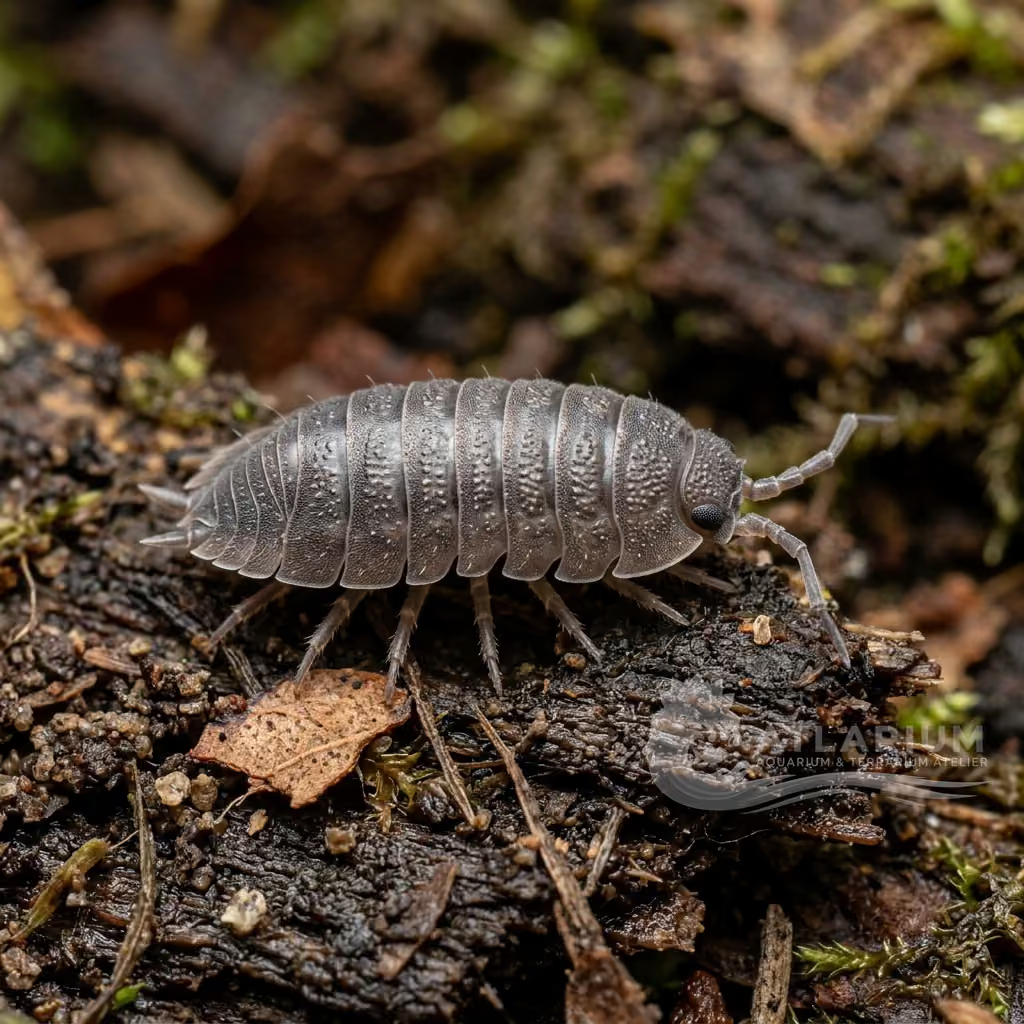
Morph Orange. The Giant Spanish Isopod (Porcellio expansus). The Holy Grail of Isopod keepers. A gigantic prehistoric creature (up to 1.5 inches), famous for its enormous, flattened and disproportionately wide carapace (Expansus = expanded). It boasts kilometric antennae and a faded chalk white color bordered with flame orange, and lateral 'skirts' so wide as to make it resemble a battle shield. A display animal, incredibly expensive, vulnerable to stagnant humidity and difficult to breed.
Ambiente
Terrestre
Umidade
40 - 60 %
Temperatura diurna
20 - 26 °C
Temperatura noturna
18 - 22 °C

Descrição da espécie
Geographic Origin and Habitat: No additional source-verified editorial notes are available about geographic origin and habitat for Porcellio expansus "Orange". Consult this record's parameters and sources.
Taxonomy and Genetics: No additional source-verified editorial notes are available about taxonomy and genetics for Porcellio expansus "Orange". Consult this record's parameters and sources.
Behaviour and Habits: No additional source-verified editorial notes are available about behaviour and habits for Porcellio expansus "Orange". Consult this record's parameters and sources.
Morphology and Sexual Dimorphism: No additional source-verified editorial notes are available about morphology and sexual dimorphism for Porcellio expansus "Orange". Consult this record's parameters and sources.

Cuidado, criação e companheiros de tanque
Terrarium Setup: GIANT BINS, SUPER-VENTILATED (Dedicated dry terrariums). Spanish giants DEMAND MASSIVE AIRFLOW: lids cut to 70% and replaced with very fine wire mesh. Substrate of sandy soil 90% dry, mixed with massive calcareous powder calcium and pristine whole dry oak leaves. Cork bark forests for flat hiding places.
Lighting and Heating: ABSENCE OF DIRECT LIGHT. But COOL MEDIUM-LOW temperatures: 68-75°F (20-24°C). They suffer atrociously from tropical humid heat. Never heat the tank from below. They are very delicate to rapid thermal changes.
Humidity and Hydration: EXTREME AND ARID VENTILATION (40-60% MAX). ABSOLUTE CRITICAL: the bin MUST BE 80% BONE DRY. Stagnant humidity, stale air from a tropical terrarium and condensation will literally melt them in two days. They only need ONE TINY ball of wet sphagnum moss in a corner of the tank to be able to moisten their ventral gills when they decide to. NEVER spray over them.
Feeding and Supplementation: Elite Calcareous Detritivores. They consume huge quantities of immaculate very dry leaves (not decomposed), dry moss (Oak lichen is a MUST), carrots and hard pumpkin. VERY IMPORTANT: Whole cuttlefish bone always available. Without tons of calcium, the giants will not be able to slide off the old hard shell during molting and will suffocate halfway.
Compatibility: Hyper-Delicate, Single Species Keeping. Handle as little as possible with bare hands: human skin fat can glue their pleopods (gills). They stress mortally if disturbed. Reproduction is very slow (up to 1 year to mature, and tiny broods of 15 babies).
Health and Common Diseases: Decay from lethal fungal asphyxia (Wet-Rot and Failed Molt ). Beginner keepers buy them for their weight in gold and put them in the mud of frog terrariums: they all die in 48 hours covered in a fulminating white mold because the very wide 'Skirt' traps the wet air under the belly, putrefying them.

Origem e distribuição geográfica
Esta espécie é originária de: Spagna (Endemico delle zone montuose e aride).
Origem
Melhoramento seletivo e cultivaresEuropa, Mediterrâneo e Ásia OcidentalOceanos tropicais e recifes

Perfil de invertebrados terrestres
- Dieta
- Detritivore
- Their primary food source is copious amounts of hardwood leaf litter and decaying white wood, which must be constantly available. They also highly appreciate supplemental protein sources like freeze-dried shrimp or fish flakes, as well as a continuous supply of calcium to support their massive, expanding exoskeletons.
- Tamanho adulto
- 3.2 cm
- Estilo de vida/Microhabitat
- Terrestrial
- These are large, flat, epigean isopods that roam across the surface of the forest floor rather than burrowing into the substrate. They rely heavily on a well-ventilated environment with distinct moisture gradients, allowing them to thermoregulate and control their hydration levels by moving between wet and dry zones.
- Ciclo de atividades
- Crepuscular
- This impressive isopod species is predominantly nocturnal, preferring to explore its environment and forage under the cover of darkness. During the daytime, they typically retreat to the underside of broad pieces of cork bark or deep within the leaf litter to maintain optimal hydration and hide.
- Socialidade
- Solitary
- They are social detritivores that do exceptionally well when housed in moderately sized to large colonies. While they do not display advanced cooperative behaviors, they often aggregate together in the most favorable microclimates within their enclosure, relying on group proximity to help stabilize local humidity levels.
- Reprodução
- Marsupial
- Breeding can be somewhat slower compared to smaller species, but mature females will eventually carry a large number of developing eggs in their ventral marsupium. The resulting mancae are born fully formed but are extremely small and delicate, requiring high-quality food and calcium to reach their impressive adult size.
- Venenoso
- No
- Tolerância de tratamento
- Display only
- Due to their larger size and somewhat fragile, wide bodies, handling must be done with extreme care. It is highly recommended to let them willingly walk onto a piece of bark or your hand, rather than pinching or picking them up, which could easily damage their broad, flared exoskeleton.
- Brumação
- Não obrigatório
- They do not undergo a state of true brumation, but a minor drop in seasonal temperatures can trigger a resting phase with reduced activity and breeding. To maintain a continuously thriving and reproducing colony in captivity, it is best to provide stable, warm temperatures throughout the entire year.
- Muda
- Periodic
- Like other isopods, they molt in two distinct stages, shedding the back half first and then the front half a few days later. Because of their large surface area, maintaining a properly hydrated micro-environment is absolutely critical during this process to prevent fatal molting issues or dehydration.

Espécies relacionadas
Recomendações agrupadas por parentes próximos, escolhas de acompanhantes e cuidados semelhantes.