Ornate Isopod (Porcellio ornatus) (Chocolate)
Porcellio ornatus
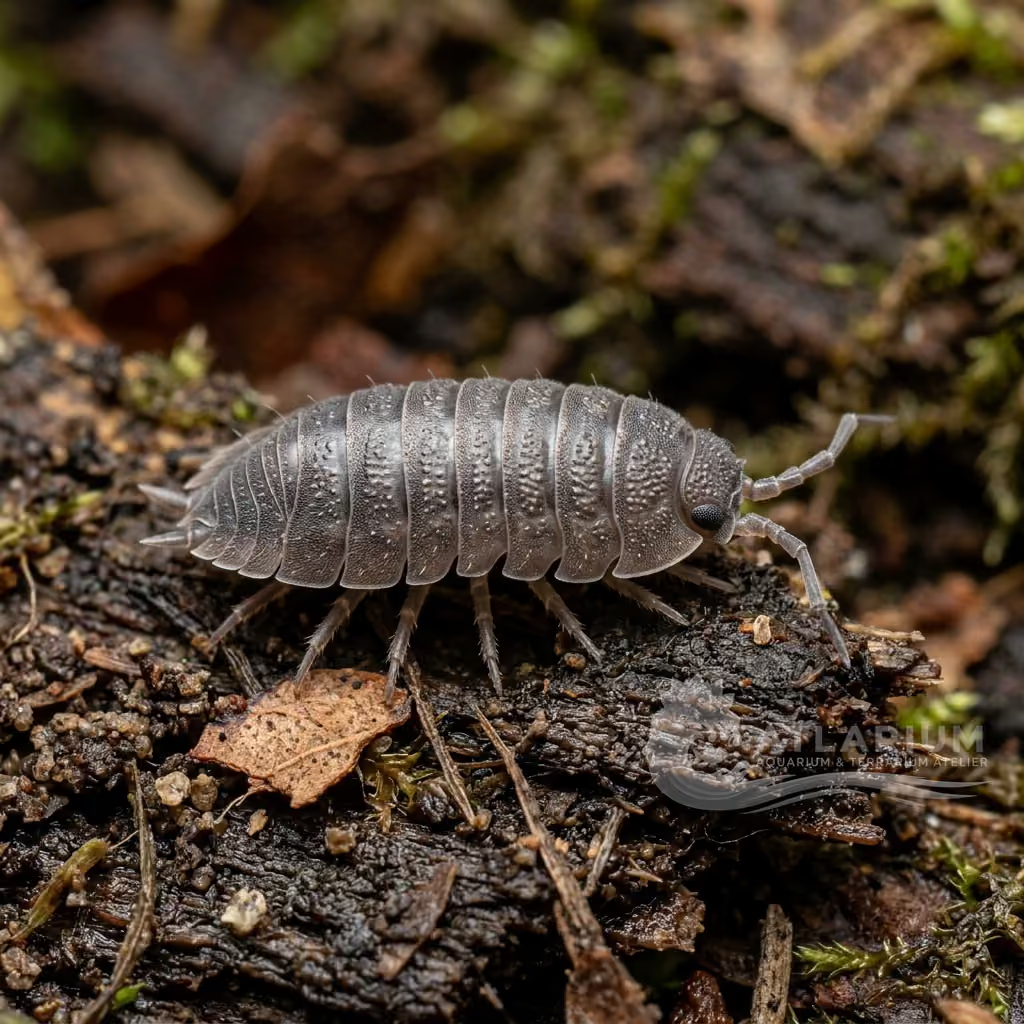
Morph Chocolate. The Ornate Isopod ('Ornatus'). An extremely fast and tapered giant Iberian isopod (1 - 1.2 inches) known for its lively and contrasting giant patch colors (High Yellow morph, Chocolate, Witches Brew). Much more active, bold in broad daylight and prolific than the other 'Monsters of Spain', it represents a fantastic balance between the spectacular Spanish size and a slightly more forgiving care for those approaching giant isopods.
Ambiente
Terrestre
Umidade
40 - 60 %
Temperatura diurna
20 - 26 °C
Temperatura noturna
18 - 22 °C

Descrição da espécie
Geographical Origin and Habitat: Semi-arid rocky areas, open woodlands and scattered dry debris on the ground of the Spanish Andalusian hills.
Taxonomy and Genetics: Family Porcellionidae. Belongs to the clade of giant Iberian isopods, but strongly deviates from the Hoff/Expansus group: its genetics is incredibly unstable and mutable, leading to neon colors ('High Yellow') unfindable in the more primitive and very flat isopods.
Behavior and Habits: Fearless explorer sprinters. Unlike the motionless and slow giants that glue themselves to the cork (Expansus), the Ornatus dart at ridiculous speeds around the terrarium in the sunlight as soon as they smell food. They run on glass, climb inclined rocks and swarm frantically, making them the ultimate display isopods (always visible). Very voracious.
Morphology: Long, missile-tapered and less flattened (Up to 1 - 1.2 inches / 2.5 - 3 cm). They do not possess the immense expanded lateral skirts (flares), but have aerodynamic cylindrical bodies covered with blinding neon yellow longitudinal stripes on black backgrounds (High Yellow) or three-banded striated colorations on mud brown shell (Chocolate). Very long black antennae.
Note on Morph (Chocolate): Variante cromatica 'Chocolate', caratterizzata da tinte molto scure o marroni al posto dei pattern chiari.

Cuidado, criação e companheiros de tanque
Terrarium Setup: STANDARD BINS OR MEDITERRANEAN BIOACTIVE TERRARIUMS. They tolerate smaller spaces and more classic set-ups compared to the enormous Hoffmansegii. They require a thick layer of soil mixed with sand (at least 2.5 inches). They love oak bark, but also heavily use the entire upper volume if intricate woods are inserted vertically where they will climb to dry out.
Lighting and Heating: ABSENCE OF DIRECT LIGHT. Warm domestic heat 72-79°F (22-26°C). If kept constantly at 79°F (26°C) they will explode demographically churning out babies on repeat; they tolerate winter cold entering partial hibernation below 64°F (18°C).
Humidity and Hydration: MEDIUM VENTILATION AND GRADIENT (40-60%). Unlike the other untouchable Spaniards, the Ornatus forgive humidity errors and can survive in more closed tanks, provided the sacred gradient is maintained: one side 70% wet always (moss), one side of the box completely parched with dust. They cannot stand boxes saturated with fog (tropical).
Feeding and Supplementation: Massive Omnivorous Vacuum Cleaners. They demand frequent animal proteins (Fish food, dried insects, meat). If lacking, their crazy speed and appetite will make them extremely aggressive towards smaller or molting isopods. Provide vital cuttlefish bone broken into large blocks to gnaw brutally and obviously an infinite dead leaf base.
Compatibility: Voracious Invaders in small tanks. Excellent cleaning crew for large semi-arid reptiles (Ball Pythons, Uromastyx), but due to the massive size and explosive speed, not recommended with frogs and small saurians. Among themselves they are sociable and not lethally territorial like the Hoffs.
Health and Common Diseases: Decay from explosive protein deficiency (Acute cannibalism ). If you raise a thick colony forgetting to insert krill or dried chicken, the angry crowd of Ornatus will devour every single mancha (transparent newborn baby) totally blocking the growth of the group. Tolerant to deadly Spanish fungi if ventilated enough.

Origem e distribuição geográfica
Semi-arid rocky areas, open woodlands and scattered dry debris on the ground of the Spanish Andalusian hills.
Origem
Melhoramento seletivo e cultivaresEuropa, Mediterrâneo e Ásia Ocidental

Perfil de invertebrados terrestres
- Dieta
- Detritivore
- Their voracious appetite demands a constant supply of leaf litter, decaying wood, and significantly more protein than many other isopod species. Offering frequent protein supplements like dried insects or fish food, along with abundant calcium for exoskeleton development, is critical to prevent cannibalism within the active colony.
- Tamanho adulto
- 3 cm
- Estilo de vida/Microhabitat
- Terrestrial
- They are incredibly fast, surface-dwelling isopods with a strong preference for drier environments than typical species, originating from arid regions in Spain. They require significant ventilation and a substantial dry zone within their habitat, retreating to a smaller, slightly moist area only when they specifically need hydration.
- Ciclo de atividades
- Crepuscular
- Highly active and surprisingly diurnal compared to many other isopods, they are frequently seen bustling about their enclosure during the day. They have a very high metabolism and spend much of their waking hours relentlessly foraging for food across the surface of the substrate and exploring their habitat.
- Socialidade
- Gregarious
- They are a highly gregarious species that benefits from being kept in large numbers, often seen actively roaming together and feeding in groups. However, their high protein requirements mean that if a colony becomes overcrowded or underfed, larger individuals may occasionally prey on freshly molted or smaller members.
- Reprodução
- Marsupial
- They are prolific and incredibly fast breeders once established, with females frequently carrying prominent broods in their marsupium. The juveniles, or mancae, mature surprisingly quickly compared to other large Porcellio species, rapidly adding to the colony's population and requiring frequent upgrades in enclosure size.
- Venenoso
- No
- Tolerância de tratamento
- Display only
- Handle gently; they are relatively fast but can be stressed by frequent handling.
- Brumação
- Não obrigatório
- In their natural habitat, they may experience periods of reduced activity during extreme weather fluctuations, but they do not require brumation. In captivity, maintaining consistent, warm temperatures year-round will ensure they remain highly active, display their vibrant colors, and continue to breed at a robust, steady pace.
- Muda
- Regular
- The biphasic molting process is typical for this species, but due to their preference for lower humidity, providing a dedicated, slightly moist microclimate is essential. If their entire environment is kept too dry, they will struggle to shed their exoskeleton completely, leading to potentially fatal complications.

Espécies relacionadas
Recomendações agrupadas por parentes próximos, escolhas de acompanhantes e cuidados semelhantes.