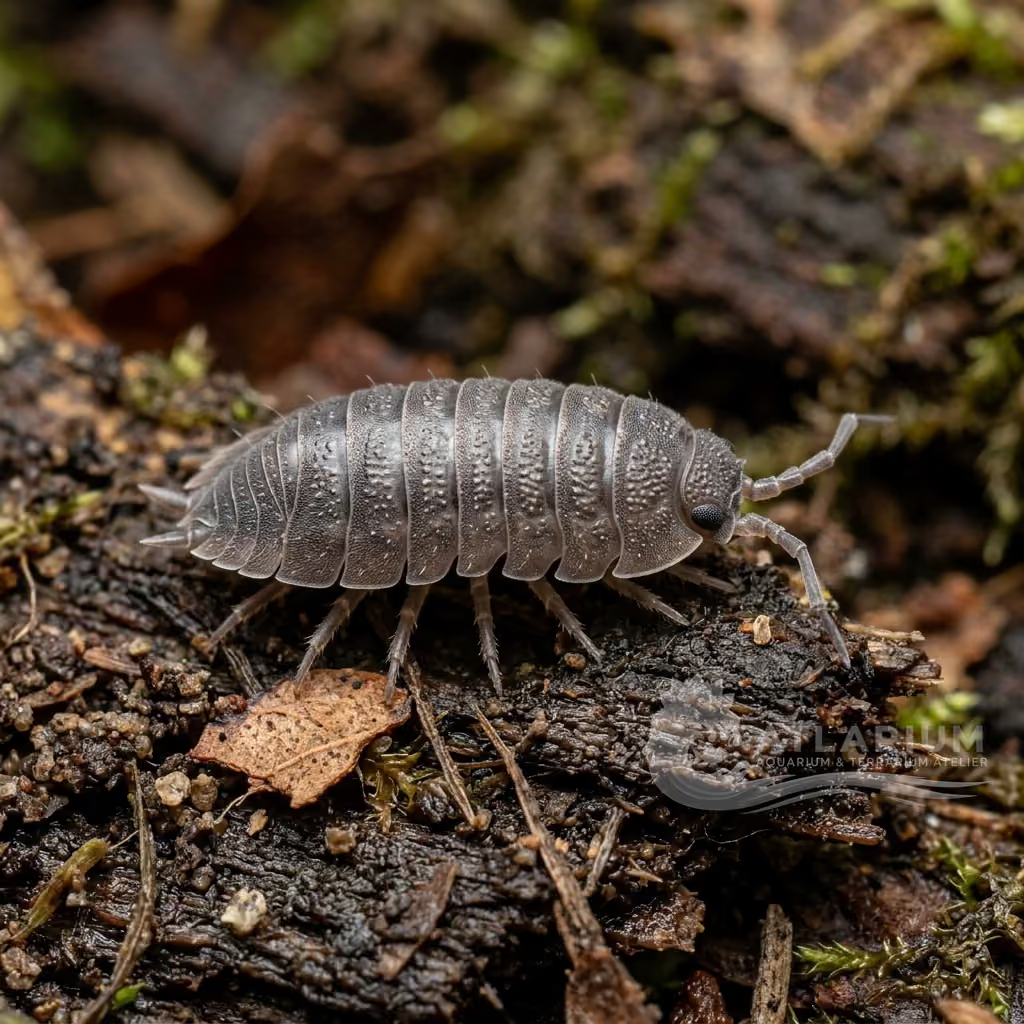
Magnificent Isopod (Magnificus)
Porcellio magnificus
The Magnificent Spanish Isopod (Porcellio magnificus). One of the largest, widest and most incredible Spanish giants (up to 1.6 inches). Similar to the Expansus and Hoffmannseggii, but distinguished by the aberrant and shocking neon rust orange coloration ('Radiant Orange') and the very extensive whitish 'skirts'. Demands surgical care: a highly ventilated terrarium that is a dry wind tunnel (if one dies, it smells of rotten shrimp indescribably). Very expensive and only for masters.
Ambiente
Terrestre
Umidade
40 - 60 %
Temperatura diurna
20 - 26 °C
Temperatura noturna
18 - 22 °C

Descrição da espécie
Geographical Origin and Habitat: Arid wind-swept calcareous escarpments, dry gorges and roots of secular olive trees of eastern Andalusia (extreme Spain).
Taxonomy and Genetics: Family Porcellionidae. (The Fourth Horseman of the Iberian Apocalypse). Together with Hoff, Expansus and Bolivari, it closes the circle of the giant Spanish super-isopods. It shares the wide flying saucer shape (flaring skirts) but boasts the brightest and most uniform coloration of all (no black or lead gray, only fire orange). Slow gestation, small broods.
Behavior and Habits: Orange battleships. The Magnificus are incredibly territorial pachyderms (especially adult males equipped with huge tails to fight with blind whips). They stay motionless for days clinging upside down to the thick barks. They demand enormous space: in cramped boxes the alpha males will decimate the subordinates biting their pleopods (gills).
Morphology: Titanic and flattened (1.6 inches / 4 cm). The morphology is a perfect fusion between the Expansus (for the flat spatula width) and the colors of the Ornatus: the whole body shines with a fluorescent Rust Orange (Pumpkin Orange) framed by pearl white or butter lateral skirts (White borders). Antennae as thick as trunks, smooth and dusty looking armor.

Cuidado, criação e companheiros de tanque
Terrarium Setup: Guidance about terrarium setup for Porcellio magnificus must rely exclusively on the parameters and sources listed on this record.
Lighting and Heating: Guidance about lighting and heating for Porcellio magnificus must rely exclusively on the parameters and sources listed on this record.
Humidity and Hydration: Guidance about humidity and hydration for Porcellio magnificus must rely exclusively on the parameters and sources listed on this record.
Feeding and Supplementation: Guidance about feeding and supplementation for Porcellio magnificus must rely exclusively on the parameters and sources listed on this record.
Compatibility and Coexistence: Guidance about compatibility and coexistence for Porcellio magnificus must rely exclusively on the parameters and sources listed on this record.
Health and Common Diseases: Guidance about health and common diseases for Porcellio magnificus must rely exclusively on the parameters and sources listed on this record.

Origem e distribuição geográfica
Arid wind-swept calcareous escarpments, dry gorges and roots of secular olive trees of eastern Andalusia (extreme Spain).
Origem
Europa, Mediterrâneo e Ásia Ocidental

Perfil de invertebrados terrestres
- Dieta
- Detritivore
- The diet of Porcellio magnificus consists of specific nutrients. It forages for a variety of food sources. A well-balanced feeding regimen is essential.
- Tamanho adulto
- 4 cm
- Estilo de vida/Microhabitat
- Terrestrial
- Porcellio magnificus leads a lifestyle adapted to its niche. It utilizes various elements of its habitat. Providing a complex enclosure is crucial for its enrichment.
- Ciclo de atividades
- Nocturnal
- The activity pattern of Porcellio magnificus dictates when it is most active. It exhibits periods of rest aligned with light cycles. Understanding these rhythms helps create a suitable schedule.
- Socialidade
- Solitary
- They are social and need to be kept in groups, but their large size and high food demands mean that overcrowding can quickly lead to stress and colony collapse. Provide immense space and food.
- Reprodução
- Marsupial
- Reproduction for Porcellio magnificus involves specific mating behaviors. Females seek out appropriate nesting sites. Successful breeding requires mimicking natural conditions.
- Venenoso
- No
- Tolerância de tratamento
- Tolerant
- Handling Porcellio magnificus should be done with care. It is recommended to allow the animal to adjust first. Gentle movements are key when handling is necessary.
- Brumação
- Não obrigatório
- Brumation for Porcellio magnificus is triggered by temperature changes. During this period, its metabolism slows down. Proper preparation is essential to ensure a healthy emergence.
- Muda
- Periodic
- The molting process of Porcellio magnificus allows it to shed old layers. Adequate humidity is vital for facilitating a smooth shed. Caretakers must regularly check for retained pieces.

Espécies relacionadas
Recomendações agrupadas por parentes próximos, escolhas de acompanhantes e cuidados semelhantes.