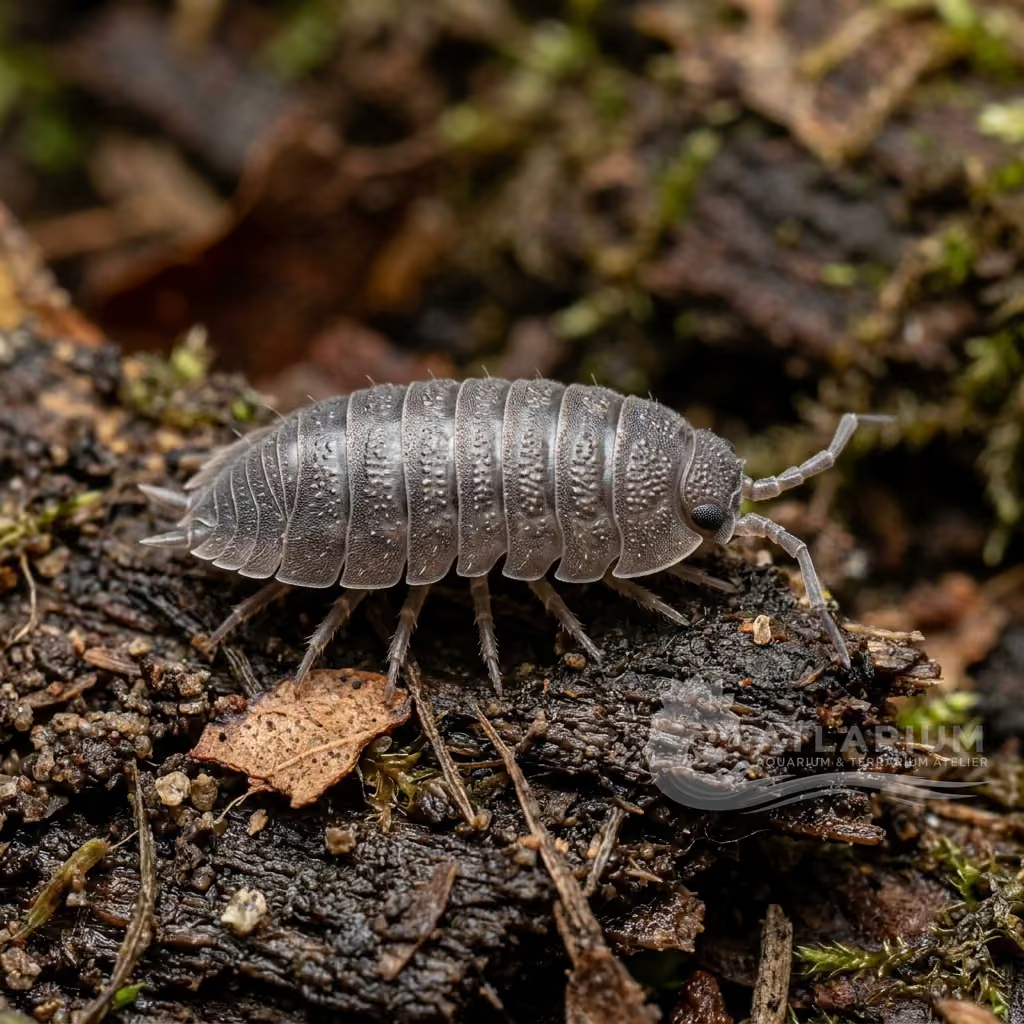
Orange swift woodlouse
Porcellio laevis
A vibrant, bright orange color morph of Porcellio laevis, highly active and prolific, widely used as a clean-up crew in bio-active setups.
Ambiente
Terrestre
Umidade
50 - 70 %
Temperatura diurna
20 - 26 °C
Temperatura noturna
18 - 22 °C

Descrição da espécie
Geographical Origin and Habitat: Porcellio laevis "Orange" is a captive-bred color morph of the cosmopolitan terrestrial isopod Porcellio laevis. The wild ancestor is native to Europe and the Mediterranean region, but has been introduced worldwide. It occupies damp, organic-rich environments such as leaf litter, gardens, and decaying logs. The "Orange" morph was selectively isolated by breeders to preserve its bright, pumpkin-orange coloration.
Taxonomy and Genetics: Belonging to the class Malacostraca, order Isopoda, family Porcellionidae, and genus Porcellio. The "Orange" mutation is recessive, inhibiting the production of dark melanin pigments while allowing the red and yellow erythrophores to be expressed. This trait breeds true when individuals are housed exclusively with other "Orange" specimens.
Behavior and Habits: Just like the wild type, this morph is exceptionally fast-moving and active. It is primarily nocturnal but will forage during the day in shaded, established colonies. They are social decomposers, aggregating under bark hides to retain moisture. They play an important ecological role by accelerating the breakdown of organic waste in soil.
Morphology: Features a smooth, glossy, and flattened oval body reaching 2.0 to 2.5 cm in length at maturity. The dorsal carapace lacks the rough tubercles found in other Porcellio species. The "Orange" morph exhibits a uniform, vibrant orange coloration across its body, antennae, and uropods. The eyes remain dark, providing a striking contrast to the orange carapace.

Cuidado, criação e companheiros de tanque
Terrarium Setup: Can be easily kept in plastic or glass enclosures of at least 30x20x20 cm. The substrate should be 5-8 cm deep, consisting of coconut coir, peat moss, crushed rotten wood, and a large quantity of dry hardwood leaves (oak, beech). Place pieces of cork bark on top and provide a cuttlebone as a continuous calcium source.
Lighting and Heating: No specialized lighting is required; ambient, indirect room light is ideal. The preferred temperature range is 20°C to 26°C (68-79°F). Avoid direct sunlight, which can overheat the enclosure. No supplementary heating is needed if kept in a standard heated home environment.
Humidity and Hydration: A moisture gradient is crucial. Dampen one side of the enclosure containing sphagnum moss to maintain 70-80% humidity, while keeping the other side dry with dry leaf litter. This allows the isopods to access moisture for their pleopodal lungs without risk of desiccation or drowning.
Feeding and Supplementation: A varied detritivorous diet is essential. They feed continuously on the decaying leaves and wood in the substrate. Supplement 2-3 times weekly with fresh vegetables (carrots, squash), fish flakes, or dry pet food for protein. Keep cuttlebone or crushed eggshells available at all times for calcium.
Compatibility: Can cohabitate with other Porcellio laevis morphs, but they will cross-breed, resulting in wild-type grey offspring in subsequent generations. Excellent clean-up crew (CUC) for bioactive terrariums housing larger reptiles and amphibians. Do not house with tiny, delicate species that could be stressed by their activity.
Health and Common Diseases: Desiccation is the primary threat; a completely dry enclosure will kill the colony overnight. Lack of ventilation leads to toxic mold and stagnant conditions. Remove uneaten fresh food within 24 hours to prevent infestation by mites or fungus gnats.

Origem e distribuição geográfica
Porcellio laevis "Orange" is a captive-bred color morph of the cosmopolitan terrestrial isopod Porcellio laevis. The wild ancestor is native to Europe and the Mediterranean region, but has been introduced worldwide. It occupies damp, organic-rich environments such as leaf litter, gardens, and decaying logs. The "Orange" morph was selectively isolated by breeders to preserve its bright, pumpkin-orange coloration.
Origem
Melhoramento seletivo e cultivaresEuropa, Mediterrâneo e Ásia OcidentalCosmopolita ou apresentado

Perfil de invertebrados terrestres
- Dieta
- Detritivore
- They are voracious detritivores with an incredibly high demand for protein. Alongside a staple diet of decaying leaves and white wood, they will rapidly consume massive amounts of fish flakes, dried shrimp, and fresh vegetables. A permanent, robust calcium source like cuttlebone is mandatory to support their rapid growth.
- Tamanho adulto
- 2 cm
- Estilo de vida/Microhabitat
- Terrestrial
- They boast a highly active, surface-oriented terrestrial lifestyle. They do not burrow deeply into the soil, preferring instead to run rapidly over leaf litter and hide beneath wide, flat pieces of cork bark. They require a distinct moisture gradient with a well-ventilated dry side and a specific damp hydration station.
- Ciclo de atividades
- Crepuscular
- They are exceptionally active, boldly exploring their enclosure regardless of the time of day, though their activity peaks noticeably during the evening and night. Their bright orange coloration makes them highly visible as they constantly scurry over the substrate searching for food.
- Socialidade
- Gregarious
- They are exceptionally social and thrive when housed in dense, highly active colonies. They are completely peaceful toward conspecifics, and a large population often results in intense, chaotic feeding frenzies when fresh high-protein food is introduced to the terrarium.
- Reprodução
- Marsupial
- They are famous within the hobby for being incredibly prolific and remarkably fast breeders. Females carry massive broods in their ventral pouch, and under optimal conditions of warmth and abundant food, a small starter colony can explode into hundreds of individuals in a surprisingly short amount of time.
- Venenoso
- No
- Tolerância de tratamento
- Display only
- While they are quite hardy and tolerate handling well without perishing, they are incredibly fast and flighty. If placed on a hand, they will often sprint immediately for the nearest edge. Handling should always be done carefully over a soft container to prevent them from suffering a fatal fall.
- Brumação
- Não obrigatório
- This highly adaptable and resilient species does not require any form of brumation in captivity. They will continue to thrive and breed prolifically year-round when maintained at consistent, warm room temperatures. Prolonged exposure to extreme cold will slow their metabolism and halt their impressive reproductive rates.
- Muda
- Periodic
- Molting occurs in the standard two-part process common to all isopods. Ensuring constant access to the damp side of their enclosure is crucial, as the increased humidity is required for the old exoskeleton to separate smoothly. They will eagerly consume their shed skin to recycle its valuable calcium content.

Espécies relacionadas
Recomendações agrupadas por parentes próximos, escolhas de acompanhantes e cuidados semelhantes.