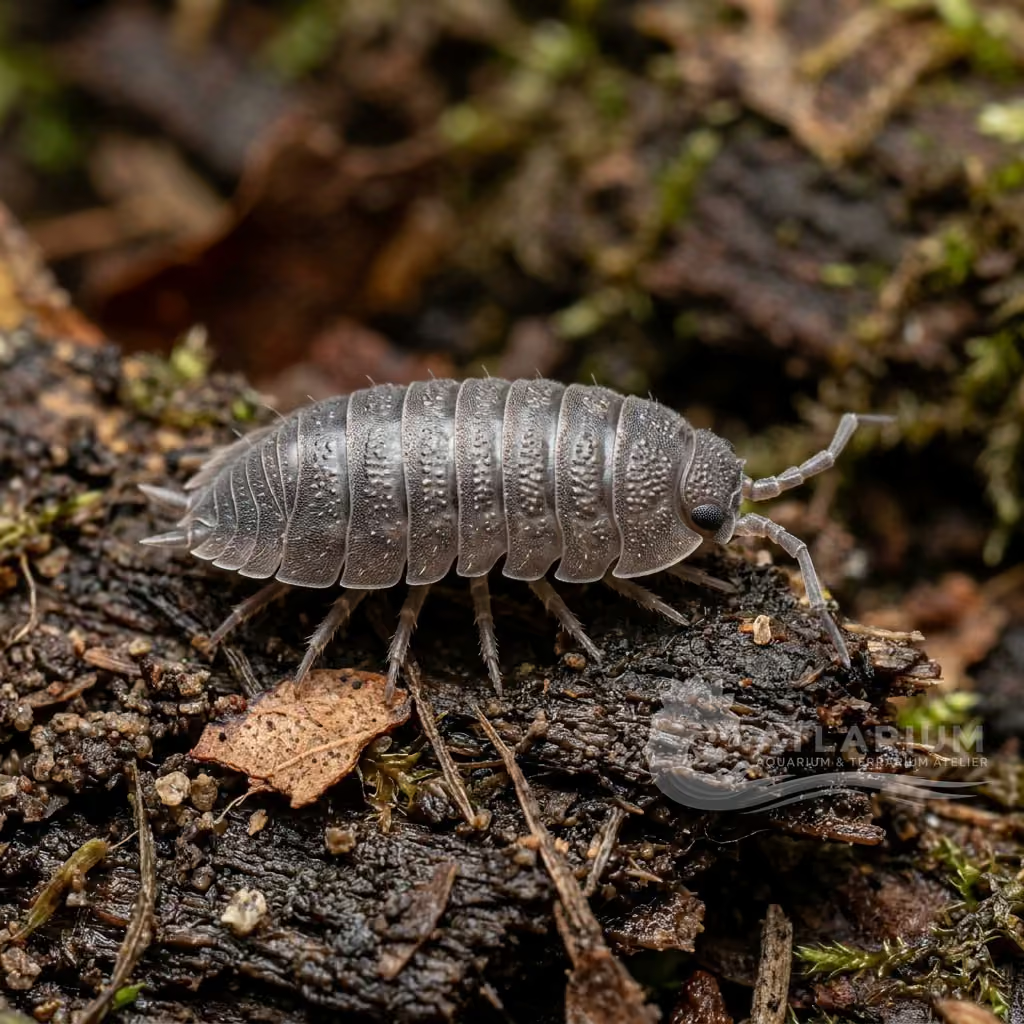
Titan Isopod (Hoffmannseggii)
Porcellio hoffmannseggii
The 'Titan of Spain' or Titan Isopod. Probably the most gigantic, stubby and imposing terrestrial isopod with a rigid body ever kept in captivity (exceeds 1.6-1.8 inches). It belongs to the elite Iberian group and is an absolute display monster. More massive and rounded than P. expansus, it boasts a lead black or armored gray color with white edges (White skirt morph) and titanic antennae, territorially dominating the dry Spanish barks and mortally hating humid and stale air.
Ambiente
Terrestre
Umidade
30 - 50 %
Temperatura diurna
20 - 26 °C
Temperatura noturna
18 - 22 °C

Descrição da espécie
Geographical Origin and Habitat: Arid rocky mountain systems, dry calcareous valleys and cavities under gigantic granite blocks or cork oaks endemic to southern Spain.
Taxonomy and Genetics: Family Porcellionidae. (The King of Iberian isopods). While the Expansus is huge but thin and flat (pancake), the Hoffmannseggii ('Hoff' in slang) is mastodontic in every dimension: length, width and dome thickness. Very slow reproduction with very long female gestations.
Behavior and Habits: Intimidating historical prey. In nature they have almost no terrestrial natural predators due to the impervious armor. They stand tall on their powerful legs and brandish their huge and thick antennae ('Whips') like whips to feel the ground and warn conspecifics. Adult males literally fight for bark crevices and to protect their harem of pregnant females.
Morphology: Stubby and heavy monsters (Over 1.8 inches / 4.5 cm of pure opaque gray or graphite black armor). The lateral edges (skirts) are not as wide as those of the expansus, but the total volume (Bulk) of the body is double. Uropods (twin appendages on the tail) shaped like very long hands in males, which they use as posterior tactile shields.

Cuidado, criação e companheiros de tanque
Terrarium Setup: GIANT BINS, ARID WITH 'HIGH FLOW' (Hyper-Ventilated Setup). The 'Titans' CANNOT BE KEPT IN CLOSED TERRARIUMS. The box must be immense to avoid territorial aggression between lethal males, and have a gigantic wire mesh that replaces 80% of the lid. Deep layer of sandy soil mixed with calcareous gravel, full of stacked cork oak blocks.
Lighting and Heating: ABSENCE OF DIRECT LIGHT. They need the Spanish 'Coolness': 72-77°F (22-25°C). Prolonged temperatures above 82°F (28°C), combined with humidity, lead to fatal collapse and metabolic arrest.
Humidity and Hydration: EXTREME TEMPERATE DESERT VENTILATION (30-50% MAX). CRITICAL: 80% ARID Terrarium. As with expansus, spraying water on this giant isopod is a death sentence (water stagnates between the plates asphyxiating the gills). Only water deeply the darkest corner of the soil under a distant moss and let it dry.
Feeding and Supplementation: Grinders of Calcium and Arid Herbs. They demand dozens of huge dried holm oak leaves intact (not powdered). VERY IMPORTANT: Strangely HIGH protein requirement for a dry isopod (Dried minnows or large Krill) AND whole mountains of cuttlefish bone in pieces to support the colossal exoskeletons that will have to molt.
Compatibility: Absolute and Aggressive Elite Keeping. Titan males are lethally aggressive and territorial with each other. If the box is small or there are few dry cork shelters, the males will fight brutally using their antennae and will devour each other's bellies chasing each other from the reproductive zone. Only for dedicated expert keepers.
Health and Common Diseases: Decay from stale air mold (Stagnant Air Death ). If you ventilate the box poorly, the very smell of urine and massive feces produced by 1.6 inch beasts will inhibit their receptors: the condensation on the lid will turn into lethal bacterial poisoned drops for their belly as soon as they fall on it.

Origem e distribuição geográfica
Arid rocky mountain systems, dry calcareous valleys and cavities under gigantic granite blocks or cork oaks endemic to southern Spain.
Origem
Melhoramento seletivo e cultivaresAmérica do NorteEuropa, Mediterrâneo e Ásia Ocidental

Perfil de invertebrados terrestres
- Dieta
- Detritivore
- The diet of Porcellio hoffmannseggii consists of specific nutrients. It forages for a variety of food sources. A well-balanced feeding regimen is essential.
- Tamanho adulto
- 4 cm
- Estilo de vida/Microhabitat
- Terrestrial
- Porcellio hoffmannseggii leads a lifestyle adapted to its niche. It utilizes various elements of its habitat. Providing a complex enclosure is crucial for its enrichment.
- Ciclo de atividades
- Nocturnal
- The activity pattern of Porcellio hoffmannseggii dictates when it is most active. It exhibits periods of rest aligned with light cycles. Understanding these rhythms helps create a suitable schedule.
- Socialidade
- Solitary
- They are a social species and should be kept in colonies. However, due to their large size and high protein demands, ensuring adequate space and food is vital to prevent any potential competition or stress within the group.
- Reprodução
- Marsupial
- Reproduction for Porcellio hoffmannseggii involves specific mating behaviors. Females seek out appropriate nesting sites. Successful breeding requires mimicking natural conditions.
- Venenoso
- No
- Tolerância de tratamento
- Tolerant
- Handling Porcellio hoffmannseggii should be done with care. It is recommended to allow the animal to adjust first. Gentle movements are key when handling is necessary.
- Brumação
- Não obrigatório
- Brumation for Porcellio hoffmannseggii is triggered by temperature changes. During this period, its metabolism slows down. Proper preparation is essential to ensure a healthy emergence.
- Muda
- Periodic
- The molting process of Porcellio hoffmannseggii allows it to shed old layers. Adequate humidity is vital for facilitating a smooth shed. Caretakers must regularly check for retained pieces.

Espécies relacionadas
Recomendações agrupadas por parentes próximos, escolhas de acompanhantes e cuidados semelhantes.