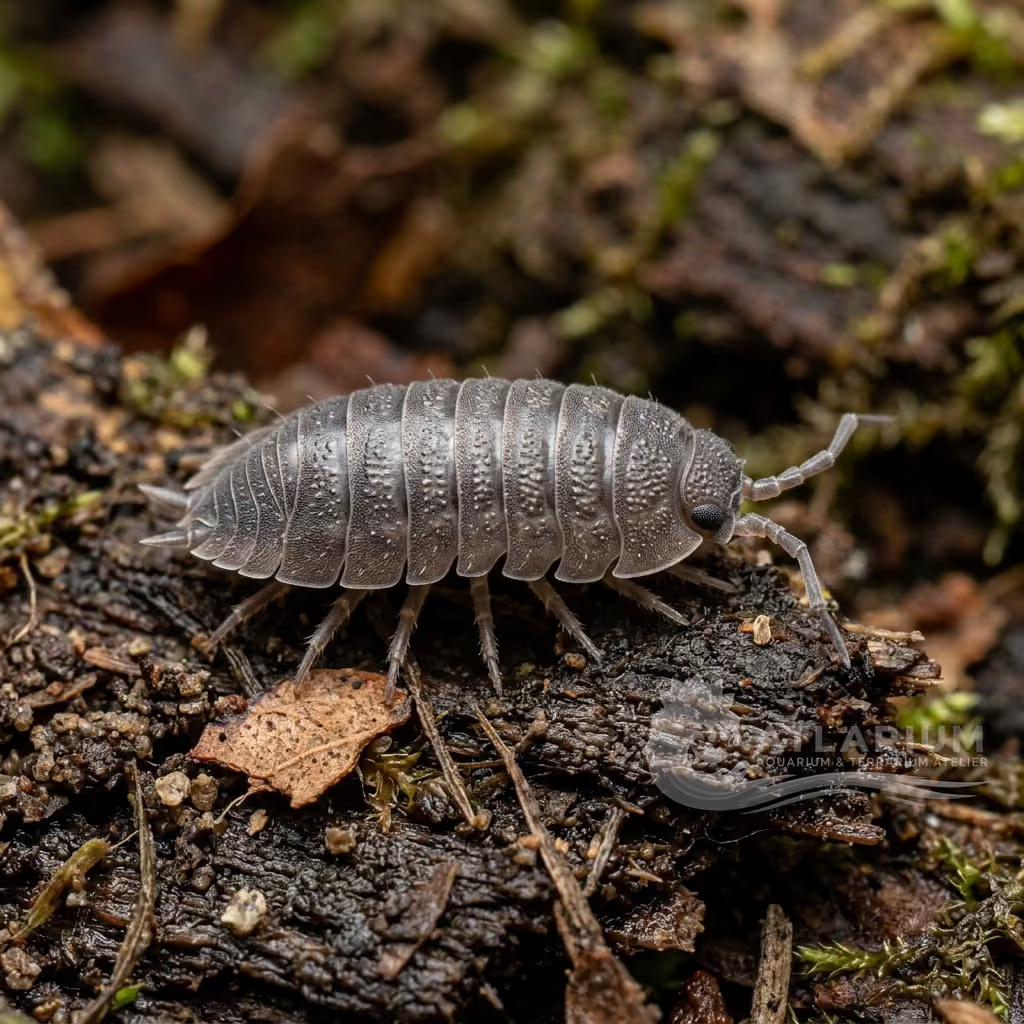
Lava Isopod
Porcellio scaber
A colorful terrestrial isopod characterized by a dark body mottled with bright orange spots resembling volcanic lava. Ideal as a clean-up crew in bioactive terrariums or as a pet due to its ease of care.
Ambiente
Terrestre
Umidade
50 - 70 %
Temperatura diurna
20 - 25 °C
Temperatura noturna
18 - 22 °C

Descrição da espécie
Geographical Origin and Habitat: Porcellio scaber is a species originally native to western and northern Europe, but it has been introduced worldwide, adapting to various temperate and subtropical climates. The "Lava" color morph was developed selectively in captivity. In their natural range, these isopods live in deciduous forests, gardens, parks, agricultural areas, and any microhabitat rich in organic decaying matter, leaf litter, and under damp logs or bark.
Taxonomy and Genetics: Belonging to the class Malacostraca, order Isopoda, and family Porcellionidae. The "Lava" phenotype is a recessive genetic mutation that disrupts melanin production. Instead of a solid dark grey body, this mutation produces a calico-like distribution where patches lacking melanin display vibrant orange, red, and yellow pigments, resembling flowing molten lava.
Behavior and Habits: They are terrestrial detritivores, active primarily at night when the relative humidity of the air increases, reducing the risk of desiccation. They exhibit gregarious behavior, clustering together in damp, dark crevices. They do not display territoriality or aggression and are essential decomposers that recycle organic nutrients back into the soil.
Morphology: The body is oval-shaped and dorso-ventrally flattened, composed of chitinous segments (pereon and pleon) with a distinctly rough, granulated cuticle. The "Lava" coloration consists of a highly variable, mottled pattern of bright orange, yellow, and dark slate grey. Adults reach lengths of 15 to 20 mm. Sexual dimorphism is visible ventrally; mature females possess a brood pouch (marsupium) for incubating eggs, while males have modified pleopods for copulation.

Cuidado, criação e companheiros de tanque
Terrarium Setup: A small glass or plastic enclosure measuring 30x20x20 cm is perfect to start a colony. The substrate should be at least 5-8 cm deep, consisting of a mix of peat moss, coco coir, crushed leaf litter (oak or beech), and decayed wood. A generous top layer of whole dried leaves and cork bark flats is essential to provide adequate hiding spaces and foraging material.
Lighting and Heating: Being photophobic, they do not require any specialized lighting. Ambient room light is sufficient. They tolerate a wide range of temperatures, but the optimal range for growth and reproduction is between 18°C and 24°C. Avoid direct sunlight and temperatures exceeding 28°C, which can cause mass mortality within the colony.
Humidity and Hydration: Establishing a moisture gradient is crucial. One-third of the enclosure must be kept consistently damp by placing wet sphagnum moss and misting regularly, while the remaining two-thirds should remain dry. This allows the isopods to self-regulate their moisture levels via their modified gills (pleopodal lungs) located under their abdomen.
Feeding and Supplementation: Their primary diet consists of the leaf litter and rotting wood within their substrate. Supplement their feeding twice a week with fresh vegetables (carrots, squash, zucchini), alfalfa pellets, fish flakes, and protein sources like dried shrimp or yeast. A constant source of calcium, such as cuttlebone or powdered calcium carbonate, is mandatory for successful molting.
Compatibility: Completely peaceful. They are widely kept as a clean-up crew (CUC) in bioactive terrariums containing geckos, dart frogs, and small lizards. They should not be kept with large insectivores that will easily wipe out the colony. Coexistence with other isopod species is possible, but the faster-breeding species will eventually outcompete the other.
Health and Common Diseases: The single biggest threat is desiccation due to dry conditions. Conversely, an over-saturated substrate without proper ventilation can foster toxic mold growth and anaerobic bacteria. Mite infestations can be prevented by ensuring that uneaten fresh food is removed from the enclosure within 24 hours.

Origem e distribuição geográfica
Porcellio scaber is a species originally native to western and northern Europe, but it has been introduced worldwide, adapting to various temperate and subtropical climates. The "Lava" color morph was developed selectively in captivity. In their natural range, these isopods live in deciduous forests, gardens, parks, agricultural areas, and any microhabitat rich in organic decaying matter, leaf litter, and under damp logs or bark.
Origem
Melhoramento seletivo e cultivaresEuropa, Mediterrâneo e Ásia OcidentalCosmopolita ou apresentado

Perfil de invertebrados terrestres
- Dieta
- Detritivore
- They are ravenous detritivores with a high demand for a varied diet. While their staple consists of decaying hardwood leaves and white rotting wood, they aggressively consume supplemental calcium and protein sources, such as dried shrimp, fish flakes, and fresh vegetable scraps.
- Tamanho adulto
- 1.7 cm
- Estilo de vida/Microhabitat
- Terrestrial
- They possess a strictly terrestrial, heavily surface-oriented lifestyle. They prefer to rapidly navigate the upper layers of leaf litter and aggressively climb over cork bark structures rather than burrowing into the substrate. They require a distinct moisture gradient and excellent ventilation to prevent stagnant air.
- Ciclo de atividades
- Crepuscular
- These strikingly patterned isopods are exceptionally active, exhibiting persistent diurnal wandering alongside heavy nocturnal foraging. Their mottled red, orange, and black coloration makes them highly conspicuous as they continuously scour the terrarium surface, rarely staying hidden for extended periods during the day.
- Socialidade
- Gregarious
- They are a highly social, gregarious species that thrives in large, bustling colonies. They exhibit zero aggression toward conspecifics, and a high population density often triggers intense, communal feeding frenzies whenever fresh, high-value food items are introduced into the terrarium.
- Reprodução
- Marsupial
- They are incredibly prolific breeders, capable of expanding a colony's size very rapidly under optimal conditions. Females incubate large broods of developing mancae in their ventral pouch. A healthy starter colony will quickly explode in population, making them an excellent choice for a vibrant display.
- Venenoso
- No
- Tolerância de tratamento
- Display only
- While they are a hardy species that can technically be handled, they are prone to sudden bursts of speed. When startled, they will quickly sprint away rather than curling up. Handling should always be performed carefully over a soft surface to prevent lethal falls.
- Brumação
- Não obrigatório
- This highly adaptable morph does not require any form of brumation. They will actively feed, grow, and reproduce continuously year-round when maintained at comfortable, stable room temperatures. Prolonged exposure to very cold temperatures will unnecessarily stress the colony and completely halt their impressive reproductive cycles.
- Muda
- Periodic
- Like all true woodlice, they shed their exoskeleton in two distinct stages, shedding the posterior half first. Maintaining a localized humid hide is absolutely crucial during this process to ensure the old skin sheds cleanly. They must be allowed to consume their discarded exuviae.

Espécies relacionadas
Recomendações agrupadas por parentes próximos, escolhas de acompanhantes e cuidados semelhantes.