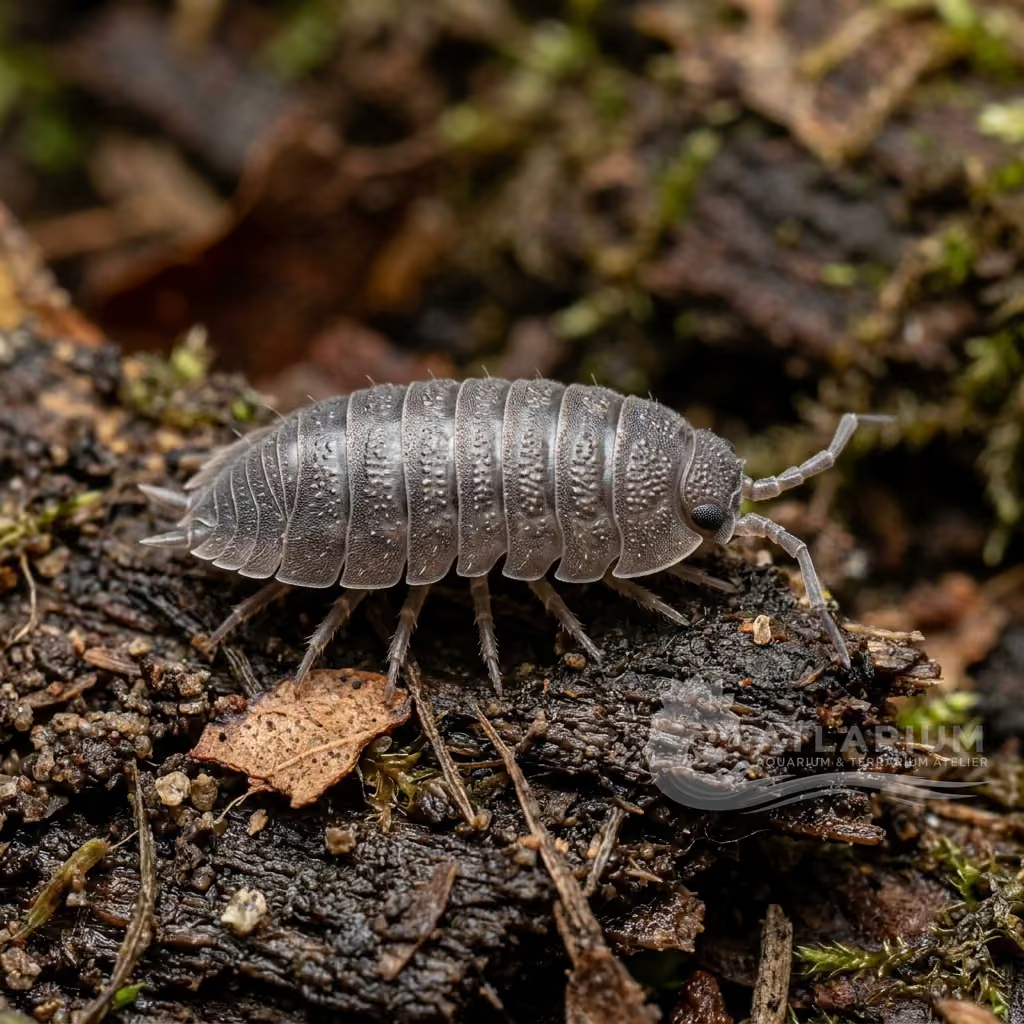
Milkback swift woodlouse
Porcellio laevis
A popular, striking two-toned color morph of Porcellio laevis, featuring a dark grey body with a broad, milky-white stripe down its back.
Ambiente
Terrestre
Umidade
50 - 70 %
Temperatura diurna
20 - 26 °C
Temperatura noturna
18 - 22 °C

Descrição da espécie
Geographical Origin and Habitat: Porcellio laevis "Milkback" is a stable captive-bred color morph of the cosmopolitan isopod Porcellio laevis. The wild ancestor originates from Europe and the Mediterranean basin. In nature, the species inhabits moist, organic-rich microhabitats under rotting wood, leaf litter, rocks, and in compost. The "Milkback" morph was isolated and selectively bred by hobbyists to preserve its unique bicolored pattern.
Taxonomy and Genetics: Belonging to the class Malacostraca, order Isopoda, family Porcellionidae, and genus Porcellio. The "Milkback" mutation is recessive, affecting melanin distribution. It restricts dark grey pigmentation to the sides of the carapace while leaving a wide longitudinal band down the center of the back clean white. This genetic trait is highly stable.
Behavior and Habits: Like all Porcellio laevis, this morph is highly active, fast, and prolific. It is mostly nocturnal, but will display daytime activity in established, densely populated colonies. They aggregate socially under hides to conserve moisture. As efficient detritivores, they play an active role in decomposing decaying plant matter and recycling nutrients.
Morphology: Features a flattened, oval body reaching 2.0 to 2.5 cm in length as adults, with a smooth, glossy carapace. The distinguishing feature is the two-tone color pattern: a broad, creamy-white longitudinal stripe runs down the center of the dorsum (resembling spilled milk), while the lateral margins and the head are dark slate grey. Eyes and antennae remain dark.

Cuidado, criação e companheiros de tanque
Terrarium Setup: Can be easily housed in plastic tubs or glass tanks of at least 30x20x20 cm. The substrate should be 5-8 cm deep, consisting of coconut coir, peat moss, crushed rotten wood, and plenty of decaying hardwood leaves (oak, beech). Cork bark flats should be placed on the surface to provide cover and a cuttlebone for calcium.
Lighting and Heating: No specialized lighting is needed; ambient, indirect room light is sufficient. The ideal temperature range is 20°C to 26°C (68-79°F). Protect the enclosure from direct sunlight. Standard home temperatures are perfect, and no supplemental heating is required under normal conditions.
Humidity and Hydration: Establishing a moisture gradient is crucial. Dampen one side of the substrate with sphagnum moss to maintain 70-80% humidity, while leaving the other side dry with dry leaf litter. This allows the isopods to breathe through their pleopodal lungs without drying out or drowning in soggy soil.
Feeding and Supplementation: A varied detritivorous diet is required. Decaying wood and leaves are the staple. Supplement 2-3 times a week with fresh vegetables (carrots, squash), fish flakes, or dry pet food for protein. Keep cuttlebone or crushed eggshells available at all times to supply the calcium needed for shedding.
Compatibility: Can be kept with other Porcellio laevis morphs, but they will cross-breed, resulting in wild-type grey offspring. Excellent clean-up crew (CUC) in bioactive terrariums housing larger, non-insectivorous reptiles and amphibians. Avoid placing with tiny, delicate species that could be stressed by their activity.
Health and Common Diseases: Desiccation is the primary threat; a completely dry enclosure will crash the colony quickly. Poor ventilation causes stagnant conditions and toxic mold growth. Remove uneaten fresh food within 24-48 hours to prevent outbreaks of pest mites or fungus gnats.

Origem e distribuição geográfica
Porcellio laevis "Milkback" is a stable captive-bred color morph of the cosmopolitan isopod Porcellio laevis. The wild ancestor originates from Europe and the Mediterranean basin. In nature, the species inhabits moist, organic-rich microhabitats under rotting wood, leaf litter, rocks, and in compost. The "Milkback" morph was isolated and selectively bred by hobbyists to preserve its unique bicolored pattern.
Origem
Melhoramento seletivo e cultivaresEuropa, Mediterrâneo e Ásia OcidentalCosmopolita ou apresentado

Perfil de invertebrados terrestres
- Dieta
- Detritivore
- They are aggressive detritivores with an exceptionally high protein requirement. A staple diet of rotting hardwood leaves and white wood must be supplemented with a permanent calcium source and frequent, large offerings of protein like fish pellets or freeze-dried shrimp to prevent them from eating their own young.
- Tamanho adulto
- 2 cm
- Estilo de vida/Microhabitat
- Terrestrial
- They thrive with a strongly surface-oriented, completely terrestrial lifestyle. They heavily favor hiding under flat pieces of cork bark or exploring the upper layer of leaf litter rather than burrowing deep into the substrate. They require excellent ventilation and a clearly defined damp zone for hydration.
- Ciclo de atividades
- Crepuscular
- They are highly active, exhibiting bold diurnal behavior alongside their nocturnal foraging. Their striking pattern—a dark body contrasting with a broad, creamy-white dorsal stripe—makes them easily visible as they constantly scour the terrarium surface for decaying organic matter and protein sources.
- Socialidade
- Gregarious
- They are highly social and perform best when kept in large, active communal setups. They live peacefully with conspecifics, and housing a high density of individuals often encourages bolder behavior and spectacular feeding frenzies when fresh, high-protein foods are introduced.
- Reprodução
- Marsupial
- They are renowned for their incredibly fast and prolific breeding capabilities. Mature females frequently carry large broods in their ventral pouch. Under optimal conditions, a colony can experience a rapid population explosion, often requiring the keeper to upgrade their enclosure size relatively quickly.
- Venenoso
- No
- Tolerância de tratamento
- Display only
- While they are robust and can technically be handled, their incredible speed makes it risky. They are prone to sudden, rapid bursts of movement and will quickly scurry off a hand or surface. Any handling should be done close to the floor to prevent severe injury from accidental drops.
- Brumação
- Não obrigatório
- This resilient species does not necessitate a brumation period in captivity. They will actively feed, grow, and reproduce continuously throughout the year when maintained at consistently warm temperatures. A sudden or prolonged drop in temperature will drastically slow their breeding rate and overall activity.
- Muda
- Periodic
- Like other isopods, they molt in two distinct sections to minimize water loss and vulnerability. Access to a dedicated moist area within the enclosure is absolutely critical during this phase to ensure a clean shed. The discarded exuviae must be left in the enclosure for them to consume.

Espécies relacionadas
Recomendações agrupadas por parentes próximos, escolhas de acompanhantes e cuidados semelhantes.