Cupboard Spider
Steatoda grossa
A cosmopolitan and extremely hardy cobweb spider, frequently called the False Black Widow due to its striking physical appearance, commonly found thriving in dark, undisturbed indoor corners.
Ambiente
Terrestre
Umidade
40 - 60 %
Temperatura ambiente
18 - 24 °C
Temperatura diurna
22 °C
Temperatura noturna
18 °C
Profundidade do substrato
>= 2 cm

Descrição da espécie
Geographical Origin and Habitat: A cosmopolitan species native to Eurasia but now found globally. It commonly inhabits indoor environments such as dark corners in closets, basements, wall crevices, and garages, as well as outdoor habitats under rocks and woodpiles.
Taxonomy and Genetics: Belongs to the family Theridiidae and the genus Steatoda. Frequently referred to as the Cupboard Spider or False Black Widow due to its close morphological similarity to the true black widow spiders (Latrodectus), though it lacks the red hourglass markings.
Behavior and Habits: Spins a chaotic, tangled three-dimensional cobweb in dark, sheltered areas. The spider spends daylight hours hidden inside a silk retreat at the edge of the web, emerging at night to capture walking insects triggered by the silk lines.
Morphology: Features a bulbous, glossy abdomen ranging in color from dark purple-brown to shiny black, often adorned with pale crescent-shaped markings on the front. Mature females measure 6 to 10 mm in body length; males are smaller and more slender.

Cuidado, criação e companheiros de tanque
Terrarium Setup: A small, vertically oriented terrarium (minimum 20x20x25 cm) is required. Place dry twigs, cork bark, or synthetic decorations in the upper corners to serve as anchoring points for its web; use a dry 2 cm peat or coco-coir substrate.
Lighting and Heating: Thrives at standard room temperature (18-24 °C) and does not require specialized lighting. Protect the enclosure from direct sunlight and avoid heat sources exceeding 26 °C, which can cause lethal overheating.
Humidity and Hydration: Prefers low humidity levels (40-60%). Do not mist the substrate directly; instead, lightly spray a few small droplets of water onto the outer edge of the web once every two weeks for drinking purposes.
Feeding and Supplementation: Strictly insectivorous. Feed live crickets, flies, or mealworms once a week or every 10 days by tossing the prey directly into the web. Remove uneaten prey or insect remains to maintain enclosure hygiene.
Compatibility: Strictly solitary. Exhibiting high levels of cannibalism, these spiders cannot be housed together; females will attack and consume any tankmates, including males outside of controlled breeding attempts.
Health and Common Diseases: An exceptionally resilient species with few health problems. Their venom is of low medical significance to humans, causing only localized pain and mild swelling if bitten; handle using collection cups rather than bare hands.

Origem e distribuição geográfica
A cosmopolitan species native to Eurasia but now found globally. It commonly inhabits indoor environments such as dark corners in closets, basements, wall crevices, and garages, as well as outdoor habitats under rocks and woodpiles.
Origem
Cosmopolita ou apresentadoAmérica do Norte

Perfil de invertebrados terrestres
- Dieta
- Carnivore
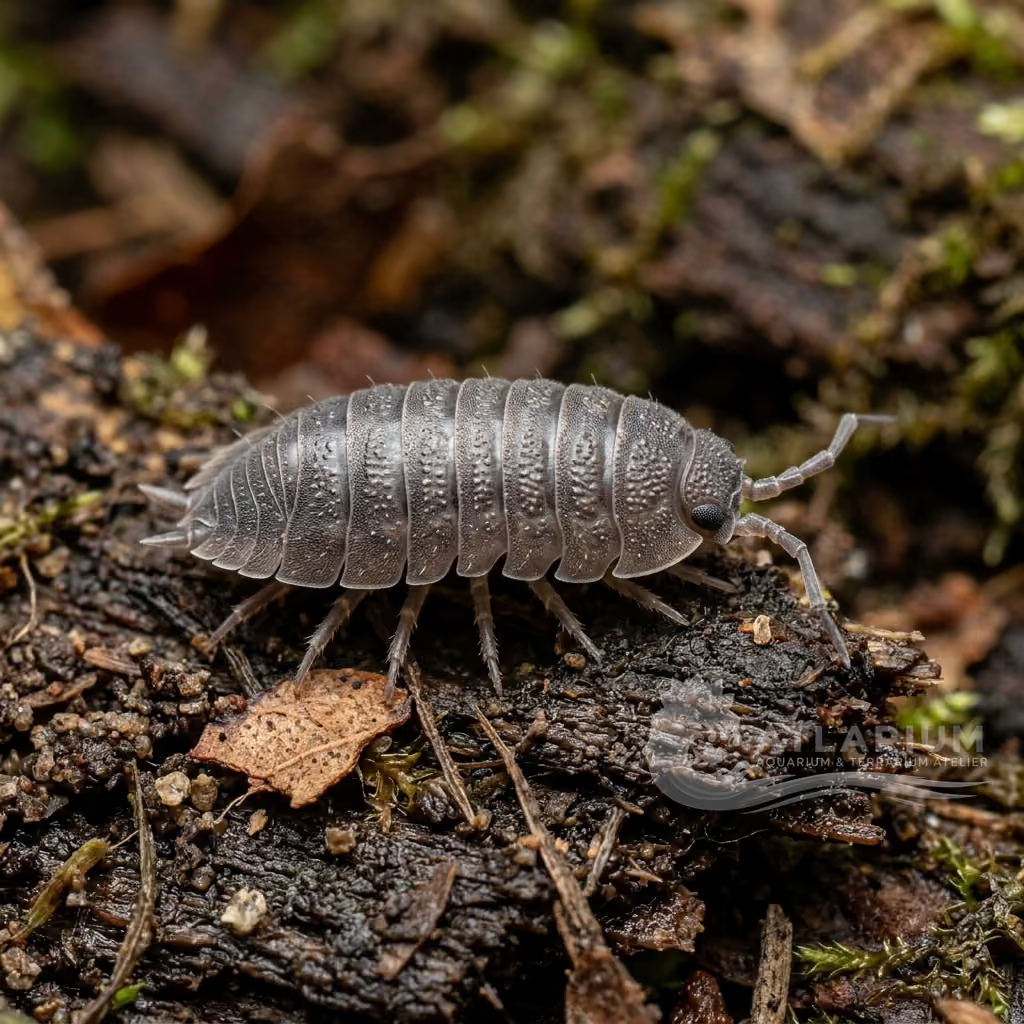
- Insectivorous, spinning irregular, tangled cobwebs to ensnare passing prey. They feed on flies, beetles, woodlice, and occasionally other spiders that stumble into their webs.
- Tamanho adulto
- 1 cm
- Estilo de vida/Microhabitat
- Terrestrial
- Typically a terrestrial or low-level web-weaver, it sets up its domain in hidden, sheltered areas close to the ground or within dark structural crevices.
- Ciclo de atividades
- Nocturnal
- The Cupboard Spider is strictly nocturnal, utilizing the cover of darkness to hunt. It remains motionless in crevices or webs during the day and relies on its extraordinary sensory adaptations to detect the vibrations of passing prey at night.
- Socialidade
- Solitary
- Solitary and sedentary, rarely leaving their established webs unless heavily disturbed. They prefer dark, secluded corners in buildings, sheds, or rocky crevices.
- Reprodução
- Oviparous
- Females spin several round, pale silk egg sacs over their lifetime, suspending them safely within the web. The tiny spiderlings remain in the mother's web for a short time before ballooning away.
- Venenoso
- Yes
- Tolerância de tratamento
- Display only
- This species is delicate and prone to stress, making it a display-only pet. Handling can easily result in the loss of legs or severe stress, and though generally reclusive, they can move with startling speed if disturbed.
- Brumação
- Não obrigatório
- It does not undergo brumation, as its natural environment is relatively stable throughout the year. It should be kept at steady, species-appropriate temperatures to maintain a healthy metabolism.
- Muda
- Regular
- It sheds its exoskeleton periodically as it grows. The process requires a secure, undisturbed location and adequate ambient humidity to complete successfully.

Espécies relacionadas
Recomendações agrupadas por parentes próximos, escolhas de acompanhantes e cuidados semelhantes.