Mt. Rungwe bush viper
Atheris rungweensis
A venomous, arboreal viper native to the highland forests of East Africa, known for its green coloration. Requires expert maintenance in humid, tall enclosures.
Ambiente
Terrestre
Umidade
65 - 85 %
Temperatura diurna
19 - 23 °C
Temperatura ambiente
19 - 23 °C
Temperatura noturna
15 - 17 °C
Local para se aquecer
26 - 27 °C
Tamanho adulto
60 cm
Gabinete mínimo
>= 120 L

Descrição da espécie
Geographical Origin and Habitat: Native to the mountainous regions and high-altitude plateaus of East Africa, specifically southwestern Tanzania, northeastern Zambia, and northern Malawi. It inhabits montane rainforests, high-altitude swamps, and dense grasslands near watercourses, occurring at elevations between 800 and 2,000 meters above sea level.
Taxonomy and Genetics: Belongs to the family Viperidae, subfamily Viperinae, and the genus Atheris. Originally classified as a subspecies of Atheris nitschei, it was later elevated to a distinct species status based on genetic and morphological analyses showing distinct lineage differentiation and venom composition.
Behavior and Habits: Primarily arboreal and active during the day and twilight. It spends most of its time climbing on tall grass, papyrus, reeds, or low shrubs. It is an ambush predator feeding on frogs and small mammals. If threatened, it relies on camouflage, remaining motionless, but can strike defensively with highly active venom.
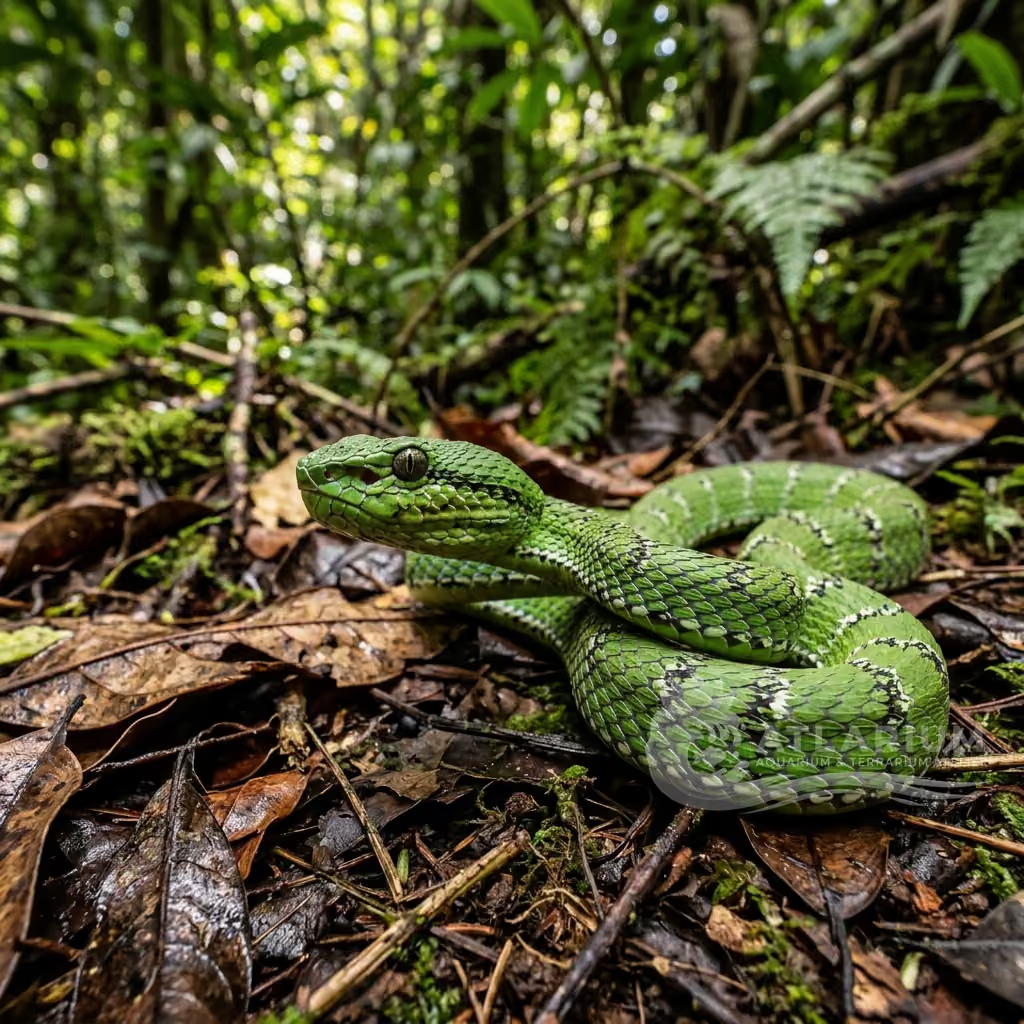
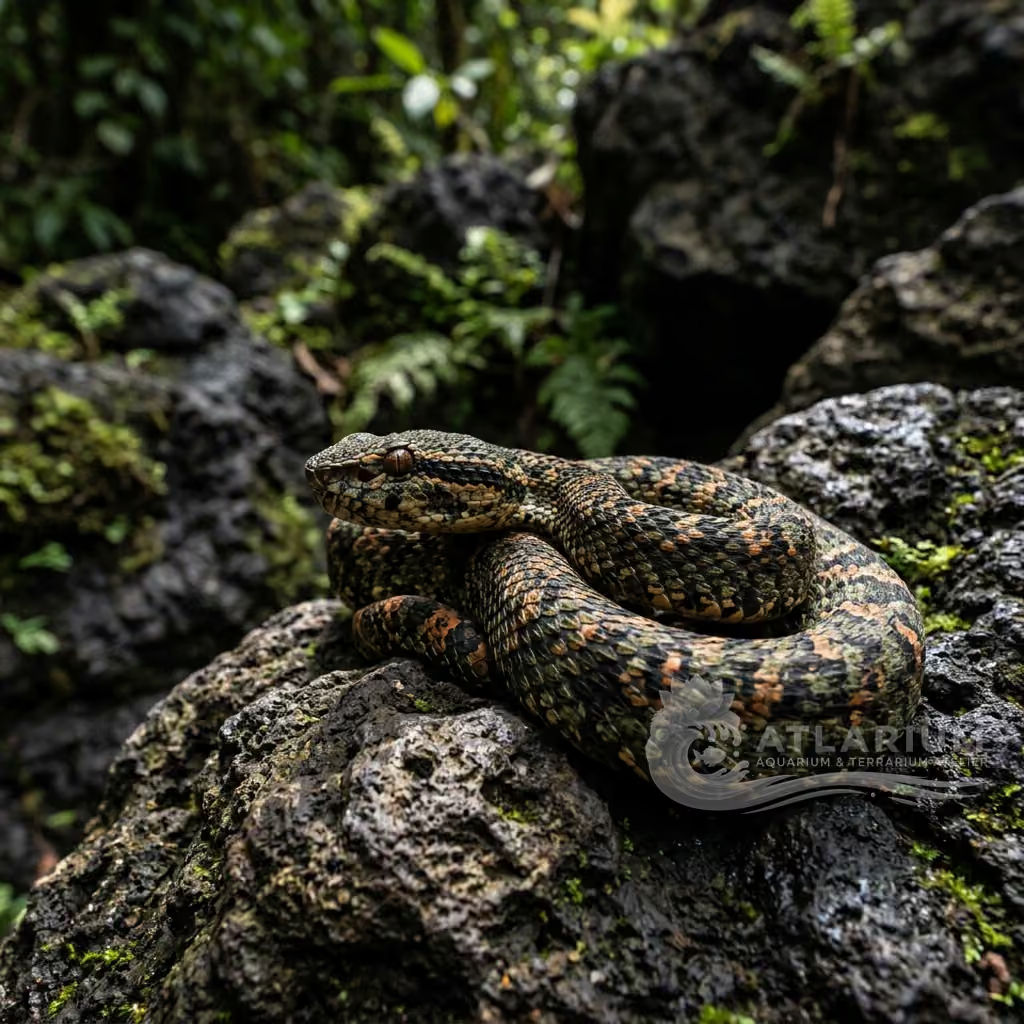
Morphology: Features a striking bright green or yellow-green coloration, often with black markings or zigzag stripes on the dorsum. Scales are heavily keeled, giving it a rough texture. The head is large, triangular, and distinct from the neck. Adults reach about 50 to 65 cm in length and possess a highly functional prehensile tail.

Cuidado, criação e companheiros de tanque
Terrarium Setup: Requires a tall, vertically oriented terrarium (minimum 60x45x60 cm). The layout should feature thin climbing branches, live plants (such as Pothos or Sansevieria) to create resting perches, and dense foliage for security. Use a moisture-retaining substrate such as coconut coir or peat moss topped with damp sphagnum moss.
Lighting and Heating: A low-output UVB bulb (5.0) is recommended to simulate a natural 12-hour day cycle. Heating should be provided from above with a ceramic heater or basking lamp (always guarded) to create a warm spot of 26-27°C (79-81°F). The bottom area should remain cooler at 21-22°C (70-72°F) with a slight drop at night.
Humidity and Hydration: Humidity must be kept high, between 70% and 80%. Mist the enclosure twice daily with dechlorinated water. The snake drinks water droplets from leaves rather than from a water dish. Ensure the terrarium has good cross-ventilation through mesh panels to prevent mold and bacterial growth.
Feeding and Supplementation: Feeds on small rodents, frogs, and lizards in the wild. In captivity, they adapt to feeding on appropriately sized frozen-thawed mice, offered via long safety tongs every 10-12 days. Dust the prey with a calcium and multivitamin supplement once a month.
Compatibility: This is a strictly solitary and dangerously venomous species. It must be kept individually in a secure, locked cage. Cohabitation is highly dangerous and is only acceptable during controlled breeding attempts by experienced keepers.
Health and Common Diseases: The primary risk is the handling hazard of a venomous snake. The reptile can suffer from respiratory infections due to cold drafts, shedding difficulties (dysecdysis) from insufficient humidity, and skin infections. Keep the terrarium clean and remove waste promptly.

Origem e distribuição geográfica
Native to the mountainous regions and high-altitude plateaus of East Africa, specifically southwestern Tanzania, northeastern Zambia, and northern Malawi. It inhabits montane rainforests, high-altitude swamps, and dense grasslands near watercourses, occurring at elevations between 800 and 2,000 meters above sea level.
Origem
América do NorteÁfrica e Madagascar

Perfil de réptil
- Dieta
- Carnivore
- These vipers are ambush predators that feed mainly on small mammals, frogs, and lizards in the wild. In captivity, they can usually be transitioned to a diet of appropriately sized rodents, such as mice or small rats. Feeding should occur every one to two weeks depending on the age and size of the snake.
- Tamanho adulto
- 60 cm
- Estilo de vida/Microhabitat
- Arboreal
- Arboreal species spend the majority of their lives in trees and shrubs, requiring vertically oriented enclosures with climbing branches. Terrestrial species need ample floor space with hiding spots among the leaf litter. Both require specific temperature and humidity gradients to thrive.
- Ciclo de atividades
- Nocturnal
- These snakes are primarily nocturnal or crepuscular, becoming most active during the evening and night. During the day, they often rest coiled on branches or concealed in vegetation. Their activity levels can increase significantly after a period of rain or during the breeding season.
- Socialidade
- Solitary
- They are typically ambush hunters, relying on their camouflage to remain undetected by both prey and predators. When threatened, they may adopt a defensive posture, hiss, or strike rapidly. They are generally not aggressive but will defend themselves fiercely if provoked.
- Reprodução
- Viviparous
- Most of these species are viviparous, giving birth to live young after a gestation period of several months. The neonates are fully independent and venomous from birth. Breeding often requires a cooling period or specific environmental cues to simulate natural seasonal changes.
- Tolerância de tratamento
- Display only
- Handling must be strictly avoided except when absolutely necessary for husbandry or medical reasons. Always use appropriate tools such as snake hooks or tongs to move the animal safely. These are highly venomous species, and a bite can result in severe medical consequences.
- Brumação
- Não obrigatório
- Depending on their natural range, some may undergo a mild winter cooling period to stimulate breeding. This is not a deep brumation but rather a slight drop in temperature accompanied by reduced feeding. Tropical species may not require any significant seasonal changes in captivity.
- Muda
- Periodic
- Shedding occurs periodically as the snake grows, heralded by the eyes turning a milky blue color. During this time, they should be left undisturbed and humidity should be slightly increased to facilitate a clean shed. A healthy snake will shed its skin in one complete, unbroken piece.

Espécies relacionadas
Recomendações agrupadas por parentes próximos, escolhas de acompanhantes e cuidados semelhantes.