Kaulback's lancehead
Protobothrops kaulbacki
An extremely rare, formidable venomous reptile native to rugged Asian montane forests. It is deeply characterized by potent cytotoxic venom and highly cryptic nocturnal habits.
Ambiente
Terrestre
Umidade
70 - 85 %
Temperatura diurna
19 - 23 °C
Temperatura ambiente
19 - 23 °C
Temperatura noturna
15 - 17 °C
Local para se aquecer
27 - 28 °C
Tamanho adulto
130 cm
Gabinete mínimo
>= 250 L
Temperatura de brumação
10 - 14 °C

Descrição da espécie
Geographical Origin and Habitat: Protobothrops kaulbacki is native to the mountainous regions of Southern and Eastern Asia, with populations localized primarily in northern Myanmar (Burma), southeastern Tibet, and southwestern provinces of China. Its preferred habitat consists of cool, humid montane rainforests, dense bamboo stands, and rocky areas near fast-flowing mountain streams at elevations ranging between 1,000 and 2,500 meters above sea level. This environment features cool temperatures, constant fog, and a high relative humidity throughout the year.
Taxonomy and Genetics: It belongs to the family Viperidae, subfamily Crotalinae (pit vipers), and genus Protobothrops. It is a large-bodied species closely related to other Asian lanceheads. Genetically, it displays specialized adaptations to survive in montane climates that are significantly cooler than those inhabited by most other tropical pit vipers. It possesses heat-sensing loreal pits located between the eyes and nostrils to detect warm-blooded prey in darkness.
Behavior and Habits: This snake is a solitary, nocturnal, and crepuscular species that spends the daytime hidden in deep leaf litter, rock crevices, or animal burrows. It is an ambush predator, waiting motionlessly for hours for prey to pass within striking distance. Although predominantly terrestrial, it is an agile climber and can be found in low bushes or bamboo stalks. It has a defensive and irritable temperament; when threatened, it coils into an S-shape, ready to strike rapidly.
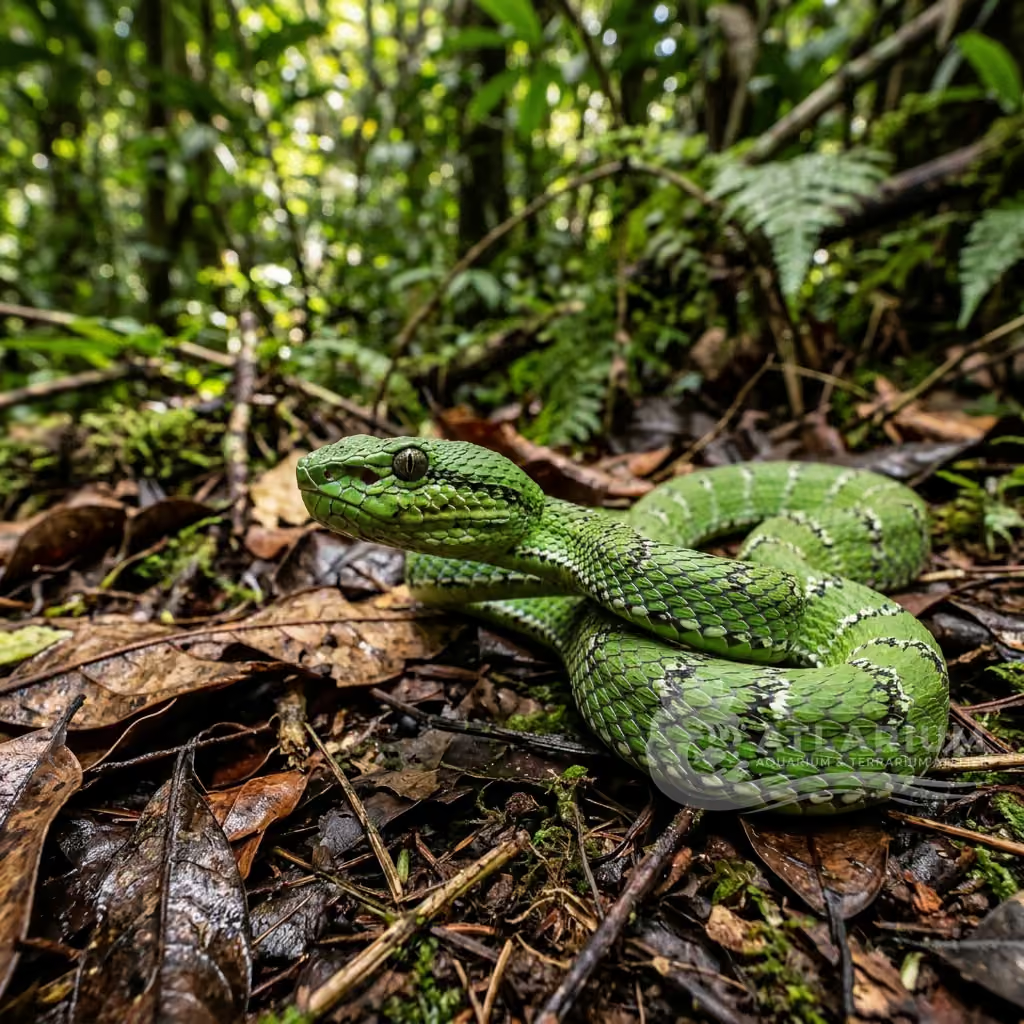
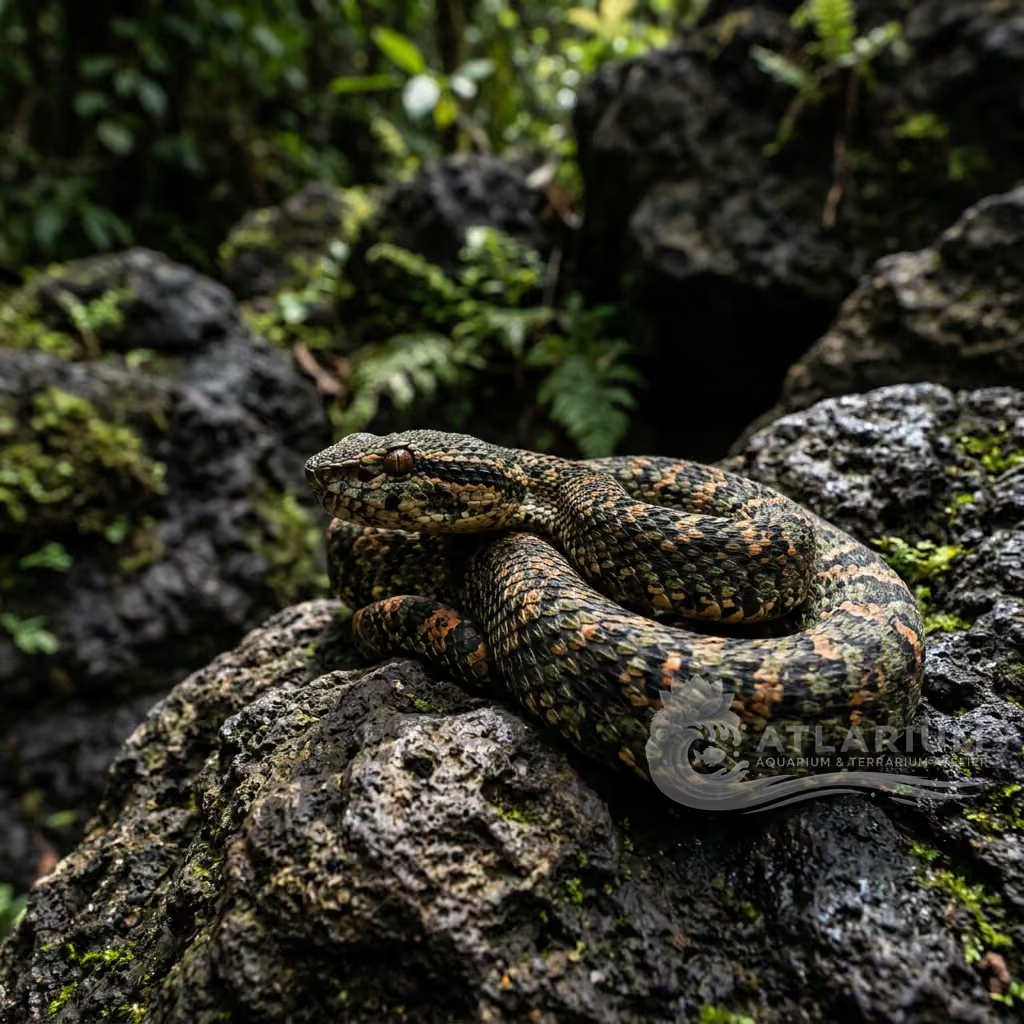
Morphology: It is a large viper that can reach and exceed a total length of 1.5 to 2 meters. It features a distinct triangular head well-demarcated from the neck, covered with small, irregular scales. The body is robust yet slender, with strongly keeled dorsal scales. The coloration is highly cryptic, with an olive-green, greyish, or dark brown background marked with irregular black or dark brown blotches along the spine, providing perfect camouflage on the forest floor.

Cuidado, criação e companheiros de tanque
Terrarium Setup: Requires an exceptionally large and secure enclosure, with minimum dimensions of 150x60x80 cm for a single adult. Because this is a highly venomous species, the terrarium must be equipped with secure, key-operated safety locks and tempered glass panels to prevent escapes. The substrate should consist of a thick layer of damp peat moss and coconut fiber, topped with dry leaf litter. Provide sturdy climbing branches, artificial or robust live plants, and at least two hide boxes (one in the warm zone and one in the cool zone).
Lighting and Heating: Lighting should be moderate and active for 10-12 hours a day. Use a low-output UVB bulb (2% or 5% T5) to replicate sunlight filtering through the dense forest canopy. Heating must establish a precise thermal gradient: daytime temperatures should range from 18-20 °C in the cool zone to 24-25 °C in the warm zone, with a localized basking spot of 27-28 °C created by a guarded ceramic heat emitter. Night temperatures should drop to 16-18 °C.
Humidity and Hydration: Relative humidity is a critical factor and must be maintained high, between 70% and 80%, with higher peaks at night. This is achieved by misting the enclosure once or twice daily with lukewarm water and keeping the substrate damp but never soggy to prevent blister disease. A large, heavy water bowl must always be available for drinking and soaking, which is especially important during the shedding process.
Feeding and Supplementation: In the wild, it feeds on small mammals, birds, frogs, and occasionally other reptiles. In captivity, they should be fed frozen-thawed rodents (mice or rats) appropriate for the snake's size, offered once every 10-14 days for adults. Juveniles may require smaller prey items fed more frequently. Vitamin and calcium supplementation is generally unnecessary when feeding whole rodents but can be used occasionally.
Compatibility: Due to its solitary, territorial nature and the extreme danger of its venomous bite, this species must be housed strictly alone. Co-housing is not tolerated and will lead to stress, fighting, or cannibalism. Handling must be kept to an absolute minimum and performed only by experienced keepers trained in the use of snake hooks, tongs, and secure shift boxes.
Health and Common Diseases: Main health risks include respiratory infections resulting from stagnant air combined with high humidity, and scale rot (dermatitis) caused by constantly wet substrate. Internal and external parasite infestations can cause lethargy and loss of appetite. Monitor the shedding process closely: retained eye caps or tail tips indicate that the relative humidity in the enclosure is too low.

Origem e distribuição geográfica
Protobothrops kaulbacki is native to the mountainous regions of Southern and Eastern Asia, with populations localized primarily in northern Myanmar (Burma), southeastern Tibet, and southwestern provinces of China. Its preferred habitat consists of cool, humid montane rainforests, dense bamboo stands, and rocky areas near fast-flowing mountain streams at elevations ranging between 1,000 and 2,500 meters above sea level. This environment features cool temperatures, constant fog, and a high relative humidity throughout the year.
Origem
Sul e Sudeste AsiáticoLeste Asiático

Perfil de réptil
- Dieta
- Carnivore
- Kaulback's lancehead feeds primarily on a diet of small mammals, birds, and occasional amphibians found in its mountainous forest habitat. As an adept ambush predator, it uses its heat-sensing pits to accurately target warm-blooded prey, even in low-light conditions. It often positions itself near rodent trails or low branches to strike unsuspecting animals. The snake's potent hemotoxic venom rapidly incapacitates the prey before it can escape.
- Tamanho adulto
- 130 cm
- Estilo de vida/Microhabitat
- Terrestrial
- A terrestrial to semi-terrestrial snake, it typically dwells on the forest floor, utilizing leaf litter, root systems, and low-lying vegetation for camouflage and ambush hunting. While they may occasionally ascend low shrubs, their enclosure should prioritize maximum floor space with abundant terrestrial hideouts to foster a sense of security.
- Ciclo de atividades
- Nocturnal
- This species is primarily nocturnal, remaining hidden during the daylight hours to avoid extreme heat and predators. As dusk approaches, the Protobothrops kaulbacki becomes active, emerging from its diurnal retreat to forage and hunt. Enclosure lighting should reflect a natural day-night cycle, but the snake will exhibit its most natural active behaviors after the lights go out.
- Socialidade
- Solitary
- This lancehead is mainly nocturnal, venturing out from its daytime hiding spots under rocks or dense vegetation after dusk. It is semi-arboreal, frequently climbing low shrubs and trees to forage or establish ambush positions. Although its natural camouflage helps it remain unseen, it can be highly defensive if disturbed. When threatened, it readily vibrates its tail and will strike repeatedly if an intruder fails to retreat.
- Reprodução
- Viviparous
- The reproductive biology of Kaulback's lancehead is characterized by oviparity, setting it apart from many other live-bearing pit vipers. Females lay clutches of eggs in concealed, humid environments such as deep leaf litter or hollow rotting logs. The mother may stay near the clutch to guard it against predators during the initial incubation phase. Upon hatching, the fully independent juveniles disperse into the forest to hunt small frogs and invertebrates.
- Tolerância de tratamento
- Display only
- Due to its highly potent and medically significant venom, the Protobothrops kaulbacki is strictly a display-only species. Under no circumstances should this snake be free-handled. All interactions, enclosure maintenance, and feeding must be performed using professional snake hooks, secure lockable terrariums, and strict safety protocols to prevent life-threatening envenomation.
- Brumação
- Obrigatório
- To replicate its natural seasonal cycles, a winter brumation period is highly recommended, especially if breeding is desired. Temperatures should be gradually reduced to roughly 12-15°C (53-59°F) over several weeks, during which feeding is completely halted to prevent rotting of undigested food in the gut. This cooling period typically lasts 2 to 3 months.
- Muda
- Periodic
- Originating from highly humid tropical environments, this snake requires consistently elevated ambient humidity to shed its skin properly. Frequent daily misting or a rain system should be utilized when the snake goes into blue. A properly humidified enclosure prevents dysecdysis (abnormal shedding), which can lead to restricted blood flow or infection.

Espécies relacionadas
Recomendações agrupadas por parentes próximos, escolhas de acompanhantes e cuidados semelhantes.