Rainforest Hognosed Pitviper
Porthidium nasutum
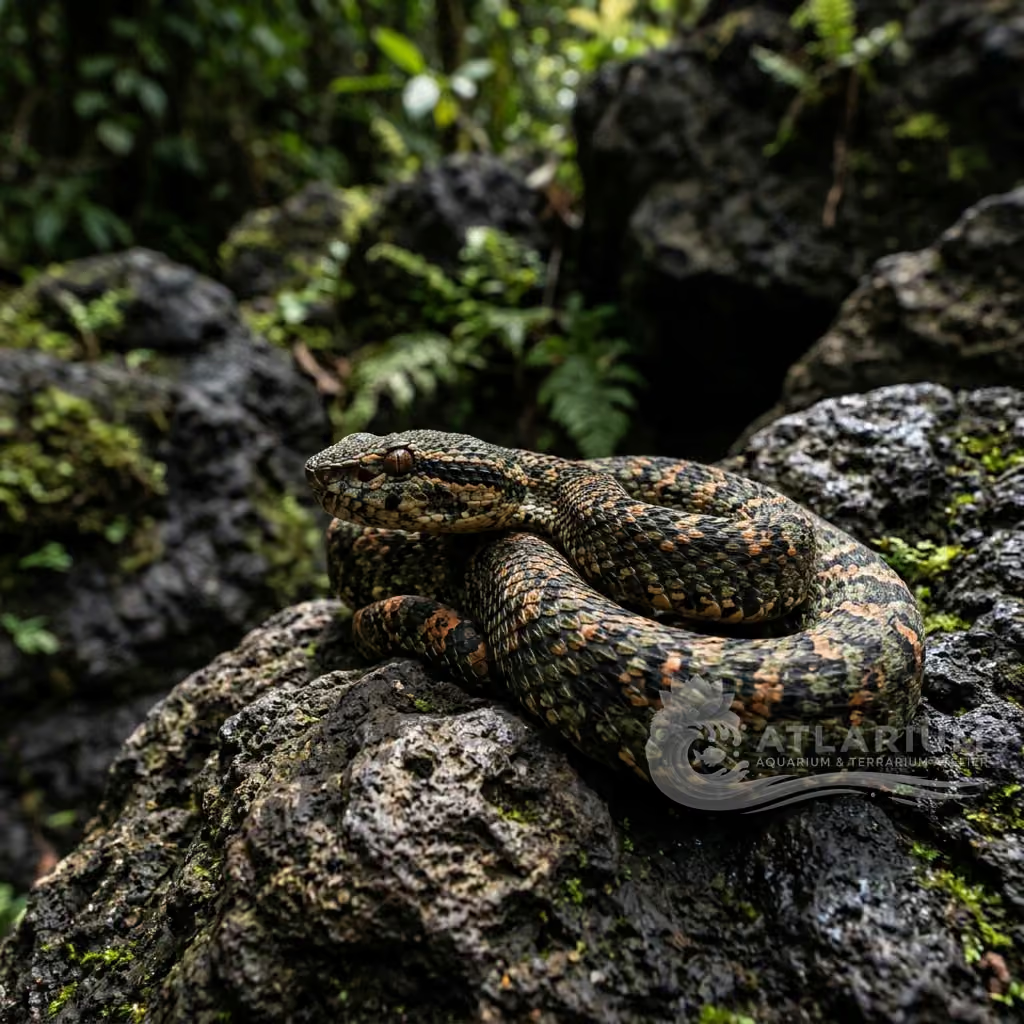
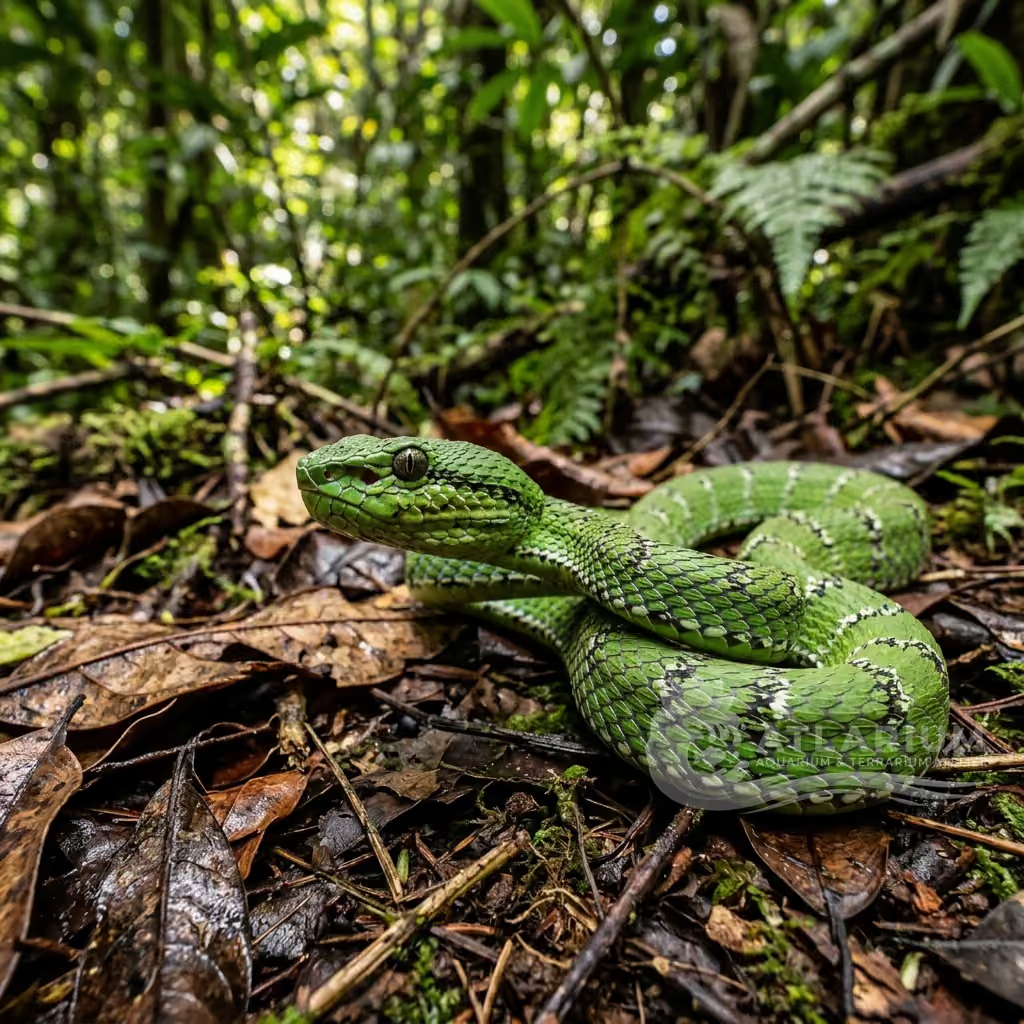
The rainforest hognosed pitviper (Porthidium nasutum) is a small venomous snake native to Central and northern South America, named for its upturned snout.
Ambiente
Terrestre
Umidade
75 - 90 %
Temperatura diurna
22 - 28 °C
Temperatura ambiente
22 - 28 °C
Temperatura noturna
22 - 24 °C
Local para se aquecer
28 °C
Tamanho adulto
40 cm
Gabinete mínimo
>= 80 L

Descrição da espécie
Geographical Origin and Habitat: This species is widely distributed throughout the tropical humid lowland rainforests of southern Mexico, extending through Central America (including Belize, Guatemala, Honduras, Nicaragua, Costa Rica, and Panama) to northern South America, specifically coastal Colombia and Ecuador. It predominantly dwells in the leaf litter of the forest floor, relying on the high ambient humidity and shade provided by the dense canopy.
Taxonomy and Genetics: Porthidium nasutum is classified under the family Viperidae, subfamily Crotalinae (pit vipers). The genus Porthidium contains small, terrestrially adapted pit vipers characterized by cryptic coloration. Genetic studies focus on the molecular makeup of its venom, which contains proteins of interest for biomedical research. No subspecies are currently recognized.
Behavior and Habits: It is a terrestrial, solitary, and largely nocturnal or crepuscular predator. During the day, it remains completely stationary on the ground, blending seamlessly with dry leaves and root systems to ambush small vertebrates like lizards, frogs, and rodents. It is a docile but venomous snake, relying on camouflage for defense and only biting when directly threatened or trodden upon.
Morphology: The most prominent morphological feature of this snake is its distinctively upturned snout, formed by an elongated rostral scale that mimics a curled leaf. The body is short and stout, with adults averaging between 30 and 40 cm, rarely exceeding 55 cm. The head is large, triangular, and distinct from the neck. Coloration consists of a grey, brown, or gold background with dark rectangular blotches.

Cuidado, criação e companheiros de tanque
Terrarium Setup: Requires an escape-proof, securely locked enclosure of at least 60x40x40 cm (about 20 gallons) for an adult. The substrate should consist of coconut fiber, peat moss, or cypress mulch, covered with a thick layer of sterilized leaf litter to encourage natural camouflaging behaviors. Provide multiple tight, dark hiding spots like hollow cork bark, humid hide boxes, and fake plants to reduce stress.
Lighting and Heating: Being nocturnal, it does not require intense lighting. A simple 12-hour light cycle using low-intensity LEDs is sufficient. Heating must provide a distinct thermal gradient: maintain ambient temperatures between 24°C and 27°C, with a localized basking spot of 28°C created by a regulated heat mat or deep heat projector. Nighttime temperatures can drop to 21-22°C. A low-output UVB bulb (2-5%) is recommended for physiological health.
Humidity and Hydration: High humidity is essential, ideally between 75% and 90%. Mist the enclosure daily with purified or RO water to maintain humidity without saturating the substrate. A sturdy, heavy water bowl filled with fresh, clean water must be present at all times on the cooler side of the enclosure, allowing the snake to drink and soak if needed, especially during shedding.
Feeding and Supplementation: Strictly carnivorous. Feed appropriate-sized mice every 14 to 20 days for adults, and every 7 to 10 days for juveniles. Always use long feeding tongs to present food to minimize the risk of feeding bites. Avoid overfeeding, as this species has a slow metabolism and is prone to obesity in captivity. Dust prey items with a high-quality multivitamin once a month.
Compatibility: Due to its solitary nature, venomous status, and risk of cannibalism, this species must be housed individually. Cohabitation with other snakes, whether conspecifics or other species, is highly stressful and dangerous, often leading to severe territorial combat, injuries, or death.
Health and Common Diseases: Improper husbandry is the main cause of disease. Low humidity levels lead to incomplete sheds (dysecdysis) and retained eye caps. Excessively wet substrate combined with poor ventilation leads to respiratory infections and scale rot (blister disease). As a venomous reptile, all handling must be kept to a minimum and performed with appropriate snake hooks and safety protocols.

Origem e distribuição geográfica
This species is widely distributed throughout the tropical humid lowland rainforests of southern Mexico, extending through Central America (including Belize, Guatemala, Honduras, Nicaragua, Costa Rica, and Panama) to northern South America, specifically coastal Colombia and Ecuador. It predominantly dwells in the leaf litter of the forest floor, relying on the high ambient humidity and shade provided by the dense canopy.
Origem
Extra-Amazônica América do SulAmérica Central e Caribe

Perfil de réptil
- Dieta
- Carnivore
- The Rainforest Hognosed Pitviper is an ambush predator that primarily feeds on small vertebrates found on the forest floor. Its diet consists largely of small rodents, lizards, and ground-dwelling frogs that cross its path. Juvenile vipers often rely more heavily on amphibians and small lizards before transitioning to a mammalian diet as they mature. They use their excellent camouflage to remain undetected until prey comes within striking distance.
- Tamanho adulto
- 40 cm
- Estilo de vida/Microhabitat
- Terrestrial
- A completely terrestrial species, it thrives on the floor of humid, lowland tropical rainforests. Its intricate patterning allows it to become nearly invisible among decaying leaves and forest debris.
- Ciclo de atividades
- Nocturnal
- This snake is strictly nocturnal, remaining coiled and hidden among the dense leaf litter during the day before emerging at dusk to ambush prey such as frogs and small lizards.
- Socialidade
- Solitary
- Rainforest Hognosed Pitvipers are strictly terrestrial and mostly nocturnal, spending their days hidden among leaf litter or under fallen logs. Their disruptive coloration provides excellent camouflage, making them extremely difficult to spot against the forest floor. When threatened, they often rely on this camouflage and remain completely still, but will readily strike if provoked or stepped on. They are generally sedentary, remaining in the same ambush location for extended periods.
- Reprodução
- Viviparous
- This species is viviparous, meaning females give birth to live young rather than laying eggs. Mating typically occurs during the rainy season when food resources are abundant. A female can produce litters ranging from a few to over a dozen fully formed neonates. The young are independent immediately after birth and possess fully functional venom apparatus to capture their first meals.
- Tolerância de tratamento
- Expert only
- As a venomous pitviper with a notoriously quick strike, direct handling is exceptionally dangerous. Interactions should be strictly limited to visual observation, using long hooks only when enclosure maintenance demands it.
- Brumação
- Não obrigatório
- Originating from tropical rainforests with relatively stable year-round temperatures, this species does not require brumation and should be maintained in consistently warm conditions.
- Muda
- Periodic
- Due to its rainforest origins, high ambient humidity is crucial at all times, but especially during molting. Without substantial moisture, they are prone to severe dysecdysis (stuck shed).

Espécies relacionadas
Recomendações agrupadas por parentes próximos, escolhas de acompanhantes e cuidados semelhantes.