Impressed Tortoise
Manouria impressa
The Impressed Tortoise is a rare, highland forest reptile from Southeast Asia, exceptionally difficult to keep in captivity due to its mycophagous diet and shy nature.
Ambiente
Terrestre
Umidade
75 - 95 %
Temperatura diurna
15 - 24 °C
Temperatura ambiente
15 - 24 °C
Temperatura noturna
15 - 17 °C
Local para se aquecer
25 - 26 °C
Tamanho adulto
28 cm
Gabinete mínimo
>= 500 L

Descrição da espécie
Geographical Origin and Habitat: This species is native to the high-altitude, mountainous forest regions of Southeast Asia, distributed across Myanmar, Thailand, Laos, Vietnam, Cambodia, western Malaysia, and southern China (provinces of Hainan, Guangxi, and Yunnan). It inhabits evergreen coniferous and broadleaf forests at elevations ranging from 600 to 2,000 meters above sea level, characterized by cool temperatures, high rainfall, and persistent fog. It lives among damp leaf litter on the forest floor, often far from permanent water bodies but within high atmospheric humidity zones.
Taxonomy and Genetics: Manouria impressa belongs to the family Testudinidae, genus Manouria, which represents one of the oldest evolutionary lineages of living land tortoises. It shares the genus with the larger Asian Forest Tortoise (Manouria emys). It exhibits primitive genetic and morphological traits, particularly in shell structure. The species is listed as 'Vulnerable' on the IUCN Red List and is protected under CITES Appendix II; historically, most specimens in the hobby were wild-caught imports with extremely high mortality rates.
Behavior and Habits: An exceptionally shy, cryptic, and crepuscular terrestrial tortoise. It actively avoids bright sunlight, spending most of its time hidden beneath thick layers of wet leaf litter or hollow logs. It has a specialized biological link with the seasonal emergence of forest mushrooms, which it consumes in large quantities during the monsoon season. In captivity, it exhibits high sensitivity to handling, which often induces stress-related fasting.
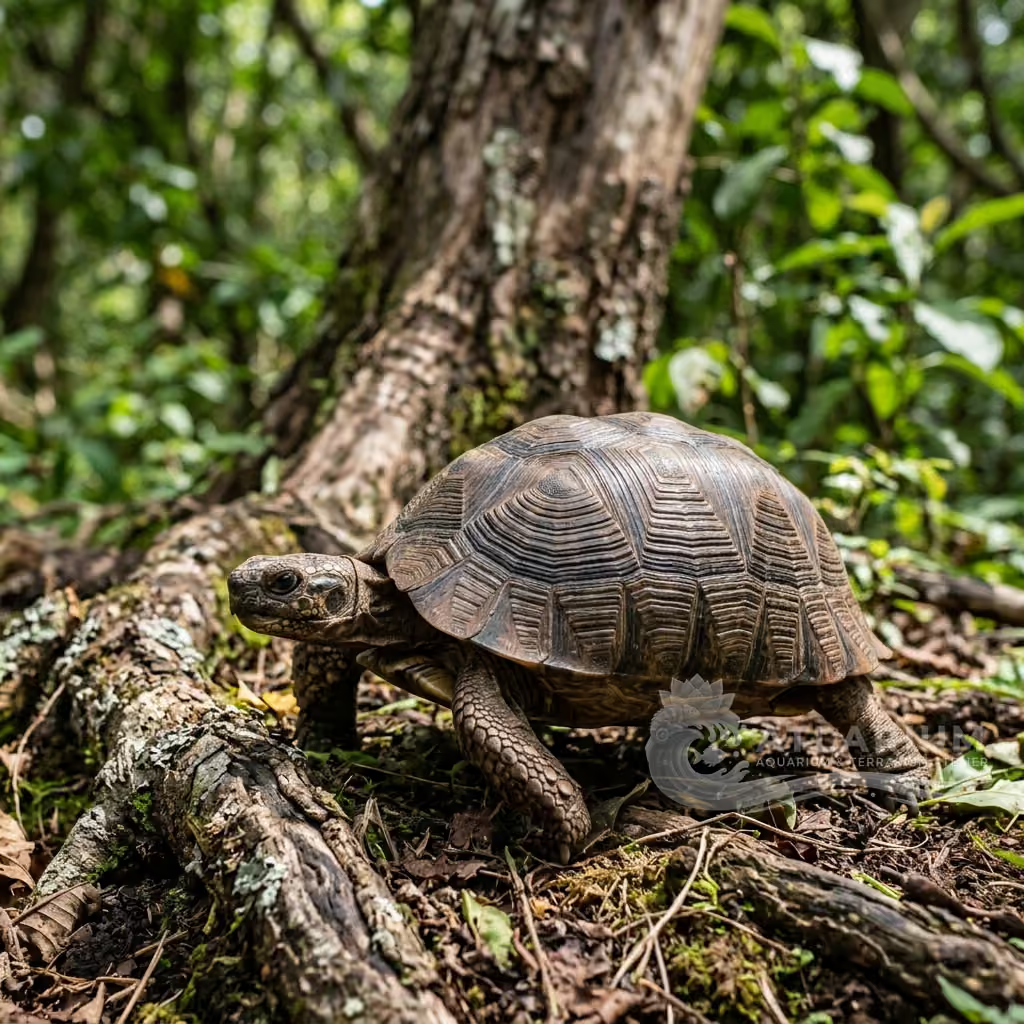
Morphology: The carapace is relatively flattened and depressed, with concave or 'impressed' dorsal scutes (giving the species its common name) that feature prominent, serrated edges on both the anterior and posterior margins. Coloration ranges from light brown to golden-orange with darker radial streaking. Adults reach a shell length of approximately 30-35 cm. Males are distinguished by longer tails and a flat to slightly concave plastron, while females tend to be larger and heavier.

Cuidado, criação e companheiros de tanque
Terrarium Setup: Requires an exceptionally large enclosure (minimum 200x100 cm for an adult) or, ideally, a dedicated indoor biotope room or climate-controlled greenhouse. The substrate must replicate the mountain forest floor, consisting of at least 15 cm of organic peat moss, coco coir, and leaf mold, topped with a thick layer of sterilized leaves and live moss. Provide numerous dark, secure hiding spots throughout the enclosure.
Lighting and Heating: As a forest dweller, it does not tolerate bright light or high heat. Use low-output linear UVB bulbs (5% or lower) positioned to leave plenty of shaded areas. Maintain cool temperatures: 20-24°C (68-75°F) during the day, with a localized basking spot of no more than 25-26°C (77-79°F). Nighttime temperatures must drop to 16-18°C (60-64°F). Temperatures above 28°C (82°F) cause fatal thermal stress.
Humidity and Hydration: Relative humidity must be kept extremely high, between 85% and 95% at all times. An automatic misting system or cool-mist humidifier is essential to maintain high atmospheric moisture. Provide a large, shallow water dish filled with fresh, cool water daily. Misting the tortoise directly often stimulates active movement and drinking behavior.
Feeding and Supplementation: Highly specialized and challenging diet. It is primarily mycophagous (mushroom-eating) in the wild. In captivity, the diet must consist of 50% fresh cultivated mushrooms (button, oyster, shiitake) mixed with leafy greens, dandelion, and mulberry leaves. Offer ripe fruits (figs, papaya, mango) and a small portion of animal protein (earthworms). Supplement with calcium carbonate once a week.
Compatibility: Strictly solitary and easily stressed. Cohabitation is not recommended unless a very large greenhouse-sized space is available. Males can be aggressive during courtship. Active tankmates or other reptile species should be avoided entirely to prevent the tortoise from retreating into its shell and refusing to feed.
Health and Common Diseases: Widely considered one of the most difficult tortoises to maintain in captivity. Stress-induced anorexia is highly common, leading to rapid dehydration and kidney failure. Upper respiratory infections due to low humidity or drafts and severe parasitic infections in wild-caught specimens are also common. Any new specimen requires a strict quarantine and specialist veterinary screening.

Origem e distribuição geográfica
This species is native to the high-altitude, mountainous forest regions of Southeast Asia, distributed across Myanmar, Thailand, Laos, Vietnam, Cambodia, western Malaysia, and southern China (provinces of Hainan, Guangxi, and Yunnan). It inhabits evergreen coniferous and broadleaf forests at elevations ranging from 600 to 2,000 meters above sea level, characterized by cool temperatures, high rainfall, and persistent fog. It lives among damp leaf litter on the forest floor, often far from permanent water bodies but within high atmospheric humidity zones.
Origem
Sul e Sudeste AsiáticoLeste Asiático

Perfil de réptil
- Dieta
- Herbivore
- The Impressed Tortoise is well known for its highly specialized diet consisting largely of mushrooms and fungi. In their native bamboo forests, they forage for damp vegetation, bamboo shoots, and fallen fruits. Replicating this diet in captivity is notoriously difficult, often requiring a mix of safe edible mushrooms, dark greens, and occasional fruits. High humidity is essential for them to properly digest their unique meals.
- Tamanho adulto
- 28 cm
- Estilo de vida/Microhabitat
- Terrestrial
- The Impressed Tortoise is a terrestrial species adapted strictly to high-elevation, moist forests in Southeast Asia. They require a cool, highly humid environment and will quickly decline in dry or hot conditions. Their flat, beautifully marked shells help them camouflage perfectly among fallen leaves. Keeping them in captivity requires significant expertise to maintain their precise environmental needs.
- Ciclo de atividades
- Crepuscular
- They are crepuscular, showing peak activity during the twilight hours of dawn and dusk. During the day, they remain hidden in cool, damp spots to avoid heat and dehydration. Rain showers heavily stimulate their activity, encouraging them to forage for fresh fungi. They rarely bask in direct sunlight, preferring the dappled shade of the forest canopy.
- Socialidade
- Solitary
- This tortoise is generally shy and highly secretive, spending much of its time buried under thick leaf litter. They do not dig extensive burrows, relying instead on the dense forest floor for concealment. They are easily stressed by bright lights and open spaces. In captivity, they must be provided with numerous hiding spots and deep, moist substrate to feel secure.
- Reprodução
- Oviparous
- Reproduction in this species is poorly documented in the wild. Females are known to lay clutches of up to 15 eggs in shallow depressions covered with leaf litter. Unlike many tortoises, the female may guard the nest briefly before abandoning it. Incubation requires high humidity and moderate temperatures, taking several months to complete.
- Tolerância de tratamento
- Expert only
- They are exceptionally prone to stress and should be handled as little as possible. When handling is unavoidable, support them gently from beneath and avoid sudden movements. Being lifted off the ground can panic them, causing them to flail or retreat tightly into their shell. Routine handling is strongly discouraged for the long-term health of this sensitive species.
- Brumação
- Não obrigatório
- This species does not undergo a true brumation, as their native habitats do not reach freezing temperatures. However, they may experience periods of reduced activity during the cooler, drier months of the year. In captivity, temperatures should be kept relatively stable, avoiding extreme drops. Providing a constant, high-humidity environment is more critical than creating a brumation cycle.
- Muda
- Periodic
- Shedding is minimal and gradual, heavily dependent on the high humidity of their environment. Skin may flake subtly around the neck and limbs, but this is rarely obvious to the observer. If retained shedding is noticed, it usually indicates that the enclosure is far too dry. Regular misting and access to shallow water puddles will naturally resolve any minor shedding issues.

Espécies relacionadas
Recomendações agrupadas por parentes próximos, escolhas de acompanhantes e cuidados semelhantes.