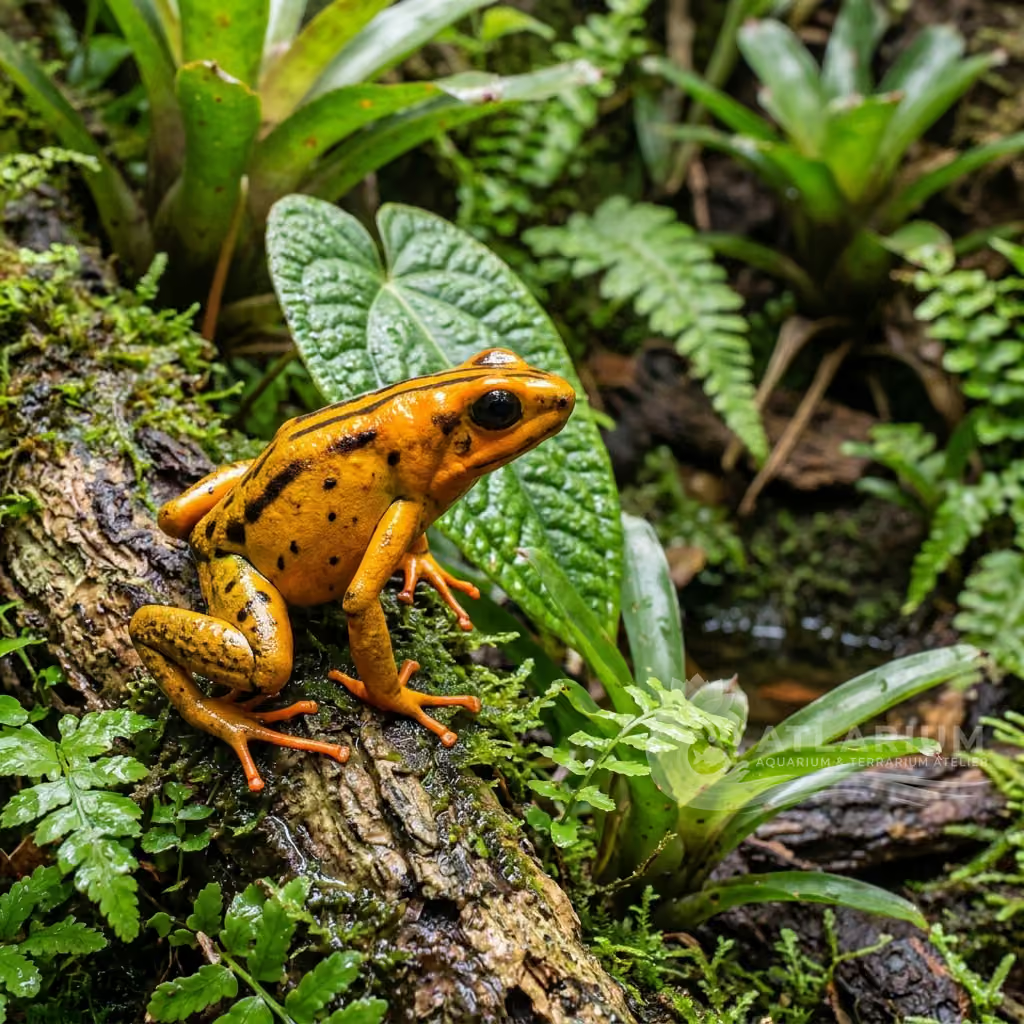
Fire Salamander
Salamandra salamandra
The mythological amphibian born of fire. One of the most iconic and legendary amphibians of Europe, draped in velvet pitch-black skin heavily striped or spotted with blinding egg-yolk yellow or neon orange. A strictly terrestrial, peaceful, and nocturnal animal, it absolutely demands extremely cool, chilly terrariums (violently intolerant of summer heat) and almost never requires deep water pools, except to drop live aquatic larvae.
Ambiente
Terrestre
Umidade
75 - 90 %
Temperatura diurna
15 - 18 °C
Temperatura noturna
14 - 18 °C
Temperatura ambiente
15 - 18 °C
Gabinete mínimo
>= 60 L
UVB
Ferguson 1
UVI
0 - 0,7 UVI

Descrição da espécie
Geographical Origin and Habitat: Widely distributed and heavily protected across continental European deciduous and hilly forests, from Portugal stretching through to the Carpathian Mountains. It lives exclusively in the cold, damp, completely dark underbrush of beech and oak forests, hiding deeply under rotting logs, waterlogged moss, or wet rocky crevices. It is absolutely NOT an aquatic animal as an adult, only entering shallow muddy puddles or slow forest streams to give birth.
Taxonomy and Genetics: Salamandridae family. Its common name stems from an ancient medieval myth that they were 'born of fire' (because they hid deep inside damp firewood logs collected by peasants, and would frantically scurry out of the flames when the logs were thrown into a hearth fire). Europe boasts dozens of staggering local subspecies: the terrestris (featuring clean parallel yellow racing stripes), the gigliolii (an Italian variant almost completely yellow rather than black), and the incredibly rare fastuosa (neon orange and black stripes and splotches).
Behavior and Habits: Phlegmatic, entirely crepuscular, and nocturnal creatures boasting extremely slow, hypnotic, deliberate movements. If handled violently or attacked by a predator, they secrete a milky-white, highly toxic neurotoxin (samandarin) from the large pores behind their heads (parotoid glands) and along their back, which causes violent muscle spasms and hypertension in predators that bite them (harmless to humans if not ingested or rubbed into the eyes). They are incredibly long-lived pets, easily surpassing 20 to 30 years of age in captivity.
Morphology: They boast a massive, heavy, blocky, and velvety build, often looking like polished plastic or wet rubber, easily exceeding 8 to 10 inches (20-25 cm) in total length. The skin is glossy, blindingly pitch-black, violently interrupted by loud, asymmetrical spots, bands, or splashes of deep egg-yolk yellow, lemon yellow, or dark reddish-orange. Females are significantly wider, plumper, and larger overall. Males, especially during the autumn/winter breeding season, display a very visibly swollen and prominent cloacal (anal) region.

Cuidado, criação e companheiros de tanque
Terrarium Setup: Low, terrestrial enclosures completely dense with dark hiding spots (minimum 36x18 inches / 80x40 cm floor space for a pair). Paludariums or deep water setups are strictly forbidden: they are clumsy swimmers and will tragically drown. The substrate must be deep (4-5 inches / 10 cm) using rich, organic topsoil or coco-coir kept perpetually damp, thickly covered with sheets of live moss and garbage bags' worth of dry beech/oak leaf litter. Liberally bury curved cork bark tubes directly into the dirt to create freezing, dark, cavernous burrows. A very shallow water dish is all they need to drink from.
Lighting and Heating: HEAT IS THEIR ABSOLUTE DEATH SENTENCE. They are European creatures of freezing, dark woods: their optimal temperature zone sits firmly around 59-64°F (15-18°C). They DO NOT TOLERATE prolonged temperatures over 72-74°F (22-23°C), entering severe metabolic suffocation and distress. In summer, if your house hits 77°F (25°C), they MUST be moved to a cold basement, a wine cooler setup, or a room with dedicated A/C. In winter, they thrive in the cold and can easily undergo artificial hibernation (brumation) in a fridge at 41-46°F (5-8°C). Provide very weak LED lights solely for viewing; heavy UV lighting is not strictly required for them.
Humidity and Hydration: Being bound to the ground without protective scales, they require permanently high humidity (75-90%). The soil should feel like a wrung-out sponge, cool and wet to the touch (but not flooded into an asphyxiating mud soup). Gently spray or water one side of the terrarium twice a week, always ensuring there is a slightly drier gradient on the other side. A bone-dry terrarium will lock up their skin-shedding process and lethally mummify the salamander in a matter of days.
Feeding and Supplementation: Gluttonous, placid, but infallible devourers. They locate prey in pitch blackness by combining excellent night vision with a highly acute sense of smell. They will happily devour tons of live earthworms/nightcrawlers (their absolute supreme, perfect staple food), small shell-less slugs, isopods, calcium-dusted crickets, and soft roaches. They inexorably tend toward lethal clinical obesity in household captivity: once adult, they must be fed very sparingly, offering large earthworms via tongs no more than 1 or 2 times a week.
Compatibility: Perfect, peaceful tank mates. You can comfortably house large groups together in appropriately sized enclosures, as they are completely peaceful, show zero territorial aggression, and almost never bite each other—unless two accidentally strike at the exact same earthworm. Their reproduction is utterly unique: the mating amplexus is done completely on dry land (not in the water), and the female gestates the eggs internally for months, eventually backing her rear into a very shallow stream (or a plastic tub provided by the keeper) to drop dozens of fully formed, swimming, gilled larvae directly into the water.
Health and Common Diseases: Bsal (Batrachochytrium salamandrivorans): An apocalyptic, lethal Asian fungus currently wiping out wild European salamander populations, literally eating the animals' skin alive in necrotizing ulcers. Captive European stock must be strictly and fiercely isolated from any newly imported Asian newts to prevent catastrophic tank crashes. Thermal Intoxication (Heat Stress): If kept at typical 'summer apartment' temperatures (80°F / 27°C+), their immune system completely shuts down, they refuse all food, their shedding skin gets permanently stuck to them in choking rags, and they quickly die from massive multiple organ failure.

Origem e distribuição geográfica
Widely distributed and heavily protected across continental European deciduous and hilly forests, from Portugal stretching through to the Carpathian Mountains. It lives exclusively in the cold, damp, completely dark underbrush of beech and oak forests, hiding deeply under rotting logs, waterlogged moss, or wet rocky crevices. It is absolutely NOT an aquatic animal as an adult, only entering shallow muddy puddles or slow forest streams to give birth.
Origem
América do NorteEuropa, Mediterrâneo e Ásia Ocidental

Perfil anfíbio
- Dieta
- Carnivore
- The diet of Salamandra salamandra must be carefully managed to ensure optimal health and longevity. In its natural habitat, Salamandra salamandra typically consumes a variety of specific prey items or plant matter. Captive specimens require a similarly balanced intake, often supplemented with essential vitamins and calcium. It is important to offer food that is appropriately sized to avoid choking or digestive issues. Regular monitoring of their feeding response helps in identifying any potential health problems early.
- Expectativa de vida
- 10-24 years
- Tamanho adulto
- 20 cm
- Estilo de vida/Microhabitat
- Terrestrial
- The lifestyle of Salamandra salamandra varies greatly depending on whether they are terrestrial, arboreal, aquatic, or semi-aquatic. Designing an enclosure that accommodates their specific mode of living is essential for their physical and mental health. This includes providing the right substrate, climbing branches, or water features as needed. A proper setup allows Salamandra salamandra to exercise, hide, and thermoregulate effectively. Understanding their lifestyle choices helps in creating a thriving captive environment.
- Ciclo de atividades
- Nocturnal
- The activity pattern of Salamandra salamandra typically dictates when they feed, explore, and rest. Depending on their biology, they may be predominantly active during the day, night, or twilight hours. Replicating appropriate lighting and temperature cycles is crucial for maintaining their natural rhythm. Disruptions to this schedule can lead to stress and a decline in the health of Salamandra salamandra. Keepers should try to interact with them during their most active periods to minimize disturbance.
- Socialidade
- Solitary
- The behavior of Salamandra salamandra is deeply influenced by its natural instincts and environment. These creatures exhibit unique social and territorial behaviors that must be respected in captivity. Providing a habitat that mimics their wild surroundings can greatly reduce stress and encourage natural activities. Salamandra salamandra may show specific defensive or communicative displays when interacting with its environment. Observing these behaviors is key to understanding their overall well-being and comfort.
- Reprodução
- Ovoviviparous
- Reproduction in Salamandra salamandra requires specific environmental triggers such as temperature and humidity changes. Breeding these animals in captivity can be challenging and often demands a dedicated setup. Once successful mating occurs, careful attention must be given to the incubation of eggs or the care of live young. The offspring of Salamandra salamandra are usually fragile and require highly specific conditions to thrive. Keepers must thoroughly research their reproductive cycle to achieve positive breeding results.
- Toxicidade
- Mildly toxic
- When threatened, this salamander can exude a potent neurotoxin called samandarin from distinct parotoid glands behind its head and along its back. This toxin is highly effective at deterring predators and can cause muscle convulsions or high blood pressure in small animals. Humans should wash their hands thoroughly after contact, as the toxin can irritate mucous membranes.
- Estágio de vida
- Metamorphosis
- The aquatic larvae are born with fully functional external gills and four limbs, completely ready to hunt small aquatic prey. They remain in the water for several months, growing and developing their lungs while their gills slowly regress. Upon metamorphosis, they transform into miniature, brightly colored adults and leave the water permanently for a terrestrial life.
- Tolerância de tratamento
- Display only
- Handling is highly discouraged. When threatened, they secrete samandarin, a potent neurotoxic alkaloid, from prominent poison glands located behind their eyes.
- Brumação
- They require a distinct winter brumation period (around 40-50°F) in deep, frost-free leaf litter or burrows to maintain long-term health and stimulate reproduction.
- Muda
- Periodic
- They shed their skin regularly in highly humid conditions, typically eating the shed. A dry environment will quickly lead to fatal desiccation.

Espécies relacionadas
Recomendações agrupadas por parentes próximos, escolhas de acompanhantes e cuidados semelhantes.