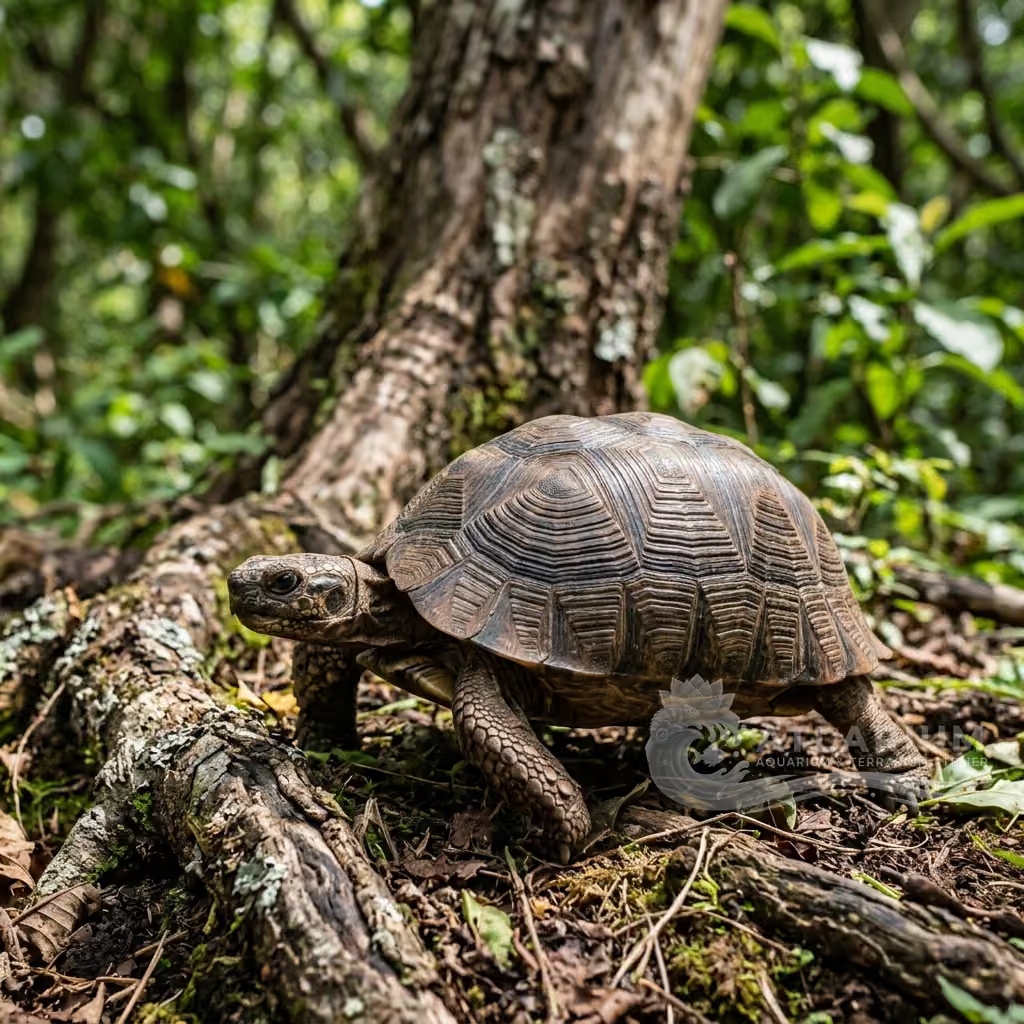
East African Leopard Tortoise — East African leopard tortoise — historical ‘babcocki’ concept
Stigmochelys pardalis
A beautiful and large African tortoise, known for its high-domed shell with leopard-like patterns. Requires large warm enclosures and fiber-rich grasses.
Ambiente
Terrestre
Umidade
40 - 60 %
Temperatura diurna
28 - 35 °C
Temperatura noturna
20 - 25 °C
Tamanho adulto
45 cm

Descrição da espécie
Geographical Origin and Habitat: This subspecies is native to East and South Africa, widely distributed across Kenya, Tanzania, Ethiopia, Somalia, and South Africa. It inhabits dry savannas, semi-desert grasslands, thorn scrub forests, and arid plains. It avoids rainforests and cold mountain areas, preferring warm, sunny climates with pronounced dry seasons where it can forage on wild grasses.
Taxonomy and Genetics: Belongs to the family Testudinidae, genus Stigmochelys (formerly classified under Geochelone). Stigmochelys pardalis babcocki is the most common subspecies in captivity; it differs from the nominate form (S. p. pardalis) by its generally smaller size, higher and more domed shell, and a distinct genetic lineage linked to equatorial Africa.
Behavior and Habits: Diurnal, terrestrial, and slow-moving. It spends the early morning hours basking in the sun to raise its body temperature before foraging. During the hottest hours of the day, it retreats under thick bushes or into abandoned mammal burrows to prevent dehydration. It does not undergo true hibernation but reduces activity during cool or dry periods.
Morphology: A large tortoise, with adults averaging between 35 and 45 centimeters (14-18 inches) in shell length, and weighing between 10 and 15 kilograms (22-33 lbs) (though giant specimens exist). The carapace is highly arched and domed. The coloration features a creamy-yellow or golden base adorned with irregular black spots and streaks resembling leopard fur.

Cuidado, criação e companheiros de tanque
Terrarium Setup: Juveniles can be housed in large indoor enclosures (minimum 150x80 cm / 5x2.6 feet), but adults require spacious outdoor enclosures in a sunny yard during summer and heated indoor rooms in winter. The substrate should be a mix of topsoil, peat moss, and play sand, at least 10 cm deep. Avoid dusty or overly wet substrates. Provide dry shelters filled with hay.
Lighting and Heating: Requires powerful heating and intense light. Create a basking spot of 35-38°C (95°F - 100.4°F) using heat lamps or radiant emitters, with a daytime ambient temperature of 26-28°C (78.8°F - 82.4°F) and a cool area of 22-24°C (71.6°F - 75.2°F). Night temperature must not drop below 18-20°C (64.4°F - 68°F). High-output (10.0%) UVB lighting is mandatory for 12 hours daily.
Humidity and Hydration: Ambient humidity should be kept low, around 40-50%. However, hatchlings benefit from light daily misting of their hides to prevent shell pyramiding. Provide a very shallow, wide water dish for drinking and soaking, with water replaced daily; the water level must not exceed the tortoise's plastron height.
Feeding and Supplementation: Strictly herbivorous and graminivorous. The diet must be very high in fiber and low in protein and sugars: 90% wild grasses and weeds (dandelion, plantain, clover, alfalfa, dried hay) and 10% dark leafy greens (chicory, endive). Avoid fruit, bread, and animal protein. Dust food with calcium carbonate three times a week.
Compatibility: Can be kept in small harems consisting of one male and two or three females in very large spaces. Avoid housing multiple males together, as they will fight constantly during the breeding season, leading to stress, injuries, or dangerous flipping. Do not cohabitate with tortoises from other continents.
Health and Common Diseases: Common illnesses include shell pyramiding (caused by a poor diet, low humidity in hatchlings, or calcium deficiency), respiratory infections due to cold drafts or excessive dampness, and intestinal parasites. Perform annual fecal exams and ensure the enclosure remains dry and clean.

Origem e distribuição geográfica
This subspecies is native to East and South Africa, widely distributed across Kenya, Tanzania, Ethiopia, Somalia, and South Africa. It inhabits dry savannas, semi-desert grasslands, thorn scrub forests, and arid plains. It avoids rainforests and cold mountain areas, preferring warm, sunny climates with pronounced dry seasons where it can forage on wild grasses.
Origem
Cosmopolita ou apresentadoAmérica do NorteÁfrica e Madagascar

Perfil de réptil
- Dieta
- Herbivore
- The East African Leopard Tortoise maintains an identical strict herbivorous dietary profile to its southern counterpart. To thrive, it demands a massive intake of dry grasses, weeds, and occasionally non-toxic succulent plants. Overfeeding with moisture-rich or sugary foods inevitably disrupts their delicate gut flora, causing diarrhea and catastrophic shell malformations over time.
- Tamanho adulto
- 45 cm
- Estilo de vida/Microhabitat
- Terrestrial
- This animal leads a terrestrial lifestyle, predominantly dwelling on the ground rather than climbing trees or spending time in the water. It traverses the forest floor, grasslands, or desert terrain in search of food, mates, and secure hiding spots beneath rocks, logs, or dense underbrush. In a terrarium setting, providing a large horizontal footprint is essential, along with a deep, appropriate substrate that allows for natural foraging and resting behaviors. While they may occasionally climb low-lying obstacles, their enclosure should be designed to maximize usable floor space.
- Ciclo de atividades
- Diurnal
- This species exhibits a predominantly diurnal activity pattern, meaning it is most active during the daylight hours. Throughout the day, it is frequently observed exploring its enclosure, foraging for food, and actively seeking out basking spots to thermoregulate its body temperature. Providing appropriate full-spectrum lighting and adequate heat gradients during the day is critical to simulate its natural solar cycle. As evening approaches and temperatures drop, the animal will typically retreat to a secure hide or burrow to rest and conserve energy until the next morning.
- Socialidade
- Solitary
- These tortoises are solitary wanderers across the East African landscape, avoiding prolonged interactions with conspecifics outside of breeding. Males will occasionally ram one another during disputes over females but generally lack the lethal territoriality of other large species. Large, complex environments are critical for their psychological well-being if housed collectively.
- Reprodução
- Oviparous
- Reproduction remains oviparous, marked by significant maternal effort to excavate a suitable nest in hardened earth. A healthy female East African Leopard Tortoise will typically deposit between 6 to 20 spherical eggs, often relying on the brief rainy season to soften the ground for digging. Successful incubation relies purely on the sun and stable subterranean temperatures.
- Tolerância de tratamento
- Display only
- This animal is considered a display-only species, meaning it strongly dislikes being handled and becomes heavily stressed by human contact. They are either far too delicate to be handled safely or possess highly defensive traits that make interactions stressful and potentially harmful for both the animal and the keeper. Interaction should be strictly limited to visual observation through the enclosure glass, and physical handling should only occur during absolute emergencies or unavoidable health checkups. Appreciating their natural behaviors from a distance is the best approach to ensuring their well-being.
- Brumação
- Não obrigatório
- Originating from tropical or sub-tropical climates with stable year-round conditions, this species does not undergo brumation. It requires consistently warm temperatures and proper lighting schedules regardless of the external season. Subjecting this animal to a significant temperature drop in an attempt to induce a winter cooling period can severely compromise its immune system, leading to dangerous respiratory infections, digestive failures, and potentially fatal consequences. Heat sources and environmental parameters must be rigorously monitored and maintained consistently throughout the entire year.
- Muda
- Regular
- Shedding (or molting) occurs regularly as the animal grows, with frequency decreasing as it reaches adulthood. Under normal enclosure conditions, providing a standard, moderate humidity level alongside a designated humid hide—a small, enclosed space filled with damp sphagnum moss—is entirely sufficient to facilitate a clean, complete shed. Prior to shedding, the animal's colors will appear dull, and its eyes may turn a cloudy, opaque blue. During this phase, it is crucial not to handle or feed the animal, allowing it to rest and shed its skin naturally in one uninterrupted piece.

Espécies relacionadas
Recomendações agrupadas por parentes próximos, escolhas de acompanhantes e cuidados semelhantes.