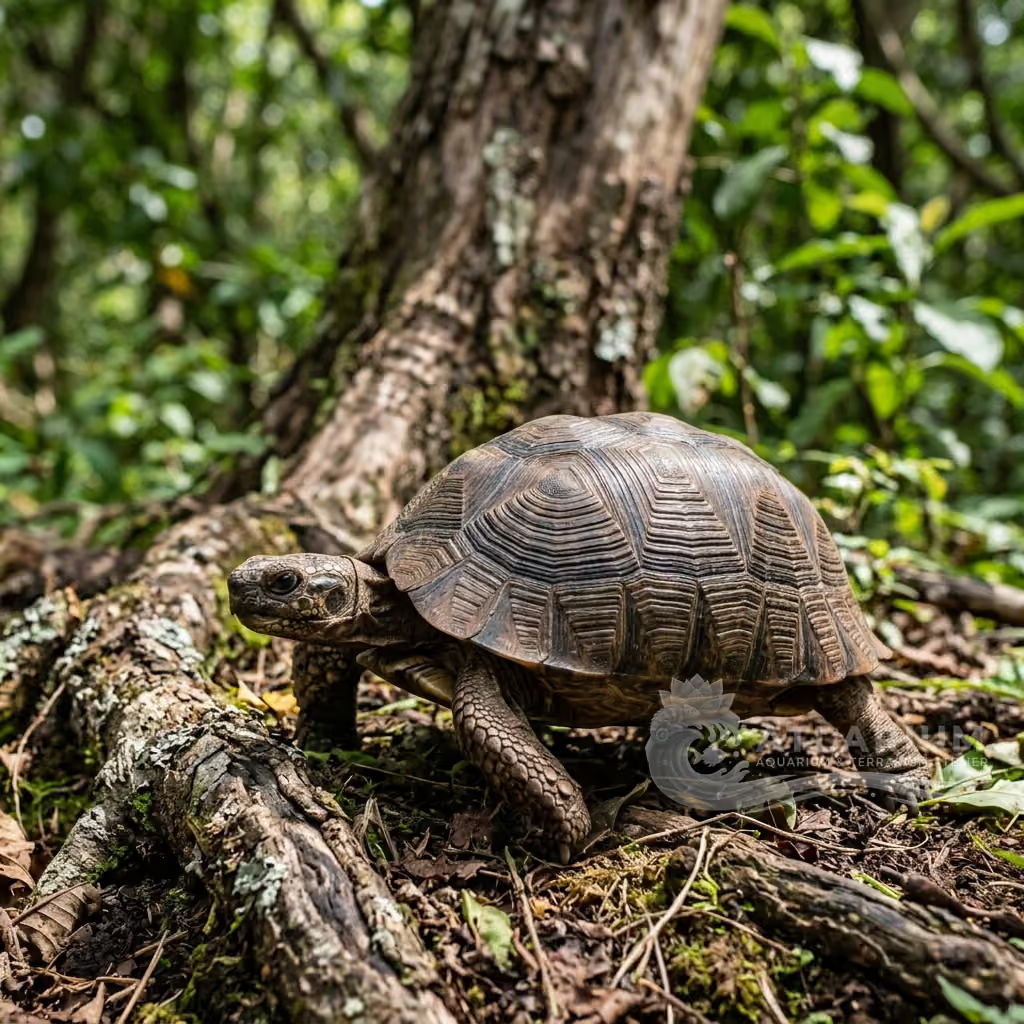
Western Hingeback Tortoise
Kinixys nogueyi
Distributed across West Africa, this species inhabits dry savannas and scrublands. Once a subspecies, it is recognized for its adaptation to transitional, semi-arid habitats.
Ambiente
Terrestre
Umidade
60 - 80 %
Temperatura diurna
20 - 32 °C
Temperatura ambiente
20 - 32 °C
Temperatura noturna
20,5 - 22,5 °C
Local para se aquecer
32 - 34 °C
Tamanho adulto
20 cm
Gabinete mínimo
>= 300 L

Descrição da espécie
Geographical Origin and Habitat: This species is widely distributed across West Africa, ranging from Senegal and southern Mauritania eastward to Cameroon and the Central African Republic. It primarily inhabits dry savannas, transitional scrublands, and the dry borders of deciduous forests.
Taxonomy and Genetics: Classified in the family Testudinidae and the genus Kinixys, scientific name Kinixys nogueyi. It was historically treated as a western subspecies of Kinixys belliana. Modern molecular genetic analyses have established it as a distinct species, isolated by evolutionary and geographical barriers.
Behavior and Habits: Terrestrial and diurnal. It is a highly secretive tortoise that is mostly active during the morning, evening, or during rain showers. During the intense dry season, it undergoes aestivation, burying itself under leaf litter or in shallow burrows to survive extreme heat and drought.
Morphology: Features a somewhat flattened, elongated carapace measuring 15-20 cm in length. The shell is typically yellowish-brown or olive-green. The posterior portion of the carapace features a specialized cartilaginous hinge, allowing it to close the rear of the shell to protect its hind legs.

Cuidado, criação e companheiros de tanque
Terrarium Setup: An adult specimen requires a minimum indoor enclosure size of 150x80 cm. The substrate should be a well-draining mixture of topsoil, peat moss, and coco coir, topped with a thick layer of leaf litter. Provide multiple hiding areas using cork bark tubes and broad-leaf plants.
Lighting and Heating: Provide high-output (10%) UVB lighting. Maintain a daytime thermal gradient: a cool zone at 26-28°C (79-82°F) and a localized basking spot at 32-34°C (90-93°F). Nighttime temperatures should drop to a stable 20-22°C (68-72°F) to ensure a healthy metabolic rest.
Humidity and Hydration: Maintain a relative humidity level of 50-70%. Lightly mist the enclosure daily with lukewarm water. A shallow, heavy water dish must be available at all times for drinking and soaking, as hydration is critical to prevent renal failure and dehydration.
Feeding and Supplementation: Omnivorous. Feed a diet of 70% leafy greens, weeds, dandelion, and high-fiber grasses, and 30% live invertebrates like earthworms, snails, and gut-loaded crickets. Dust food items with pure calcium at most feedings and a multivitamin with D3 weekly.
Compatibility: Best housed individually due to their timid nature. Multiple females can be housed together in a very large enclosure, but never house two males together as they will aggressively fight. Do not mix with other tortoise species to prevent disease transmission.
Health and Common Diseases: Wild-caught imports often carry heavy parasite loads and require immediate veterinary screening. Prone to respiratory infections if exposed to cold drafts. Shell rot can develop if they are kept on a perpetually wet and unhygienic substrate.

Origem e distribuição geográfica
This species is widely distributed across West Africa, ranging from Senegal and southern Mauritania eastward to Cameroon and the Central African Republic. It primarily inhabits dry savannas, transitional scrublands, and the dry borders of deciduous forests.
Origem
África e Madagascar

Perfil de réptil
- Dieta
- Herbivore
- The Western Hingeback is an omnivorous forest dweller, consuming a wide spectrum of plant and animal material. Their natural diet features a heavy emphasis on wild mushrooms, fallen tropical fruits, and various broadleaf plants. Additionally, they eagerly consume slugs, worms, and small insects encountered on the forest floor. A captive diet must balance fruit and dark greens with moderate amounts of animal protein to ensure proper growth and vitality.
- Tamanho adulto
- 20 cm
- Estilo de vida/Microhabitat
- Terrestrial
- A strictly terrestrial tortoise that inhabits savannas, dry woodlands, and grasslands. It relies heavily on natural debris and low bushes for hiding spots. Despite being terrestrial, it appreciates high humidity microclimates such as damp leaf litter.
- Ciclo de atividades
- Diurnal
- This species is primarily diurnal, being most active during the early morning and late afternoon hours. During the hottest part of the day, it seeks shelter under vegetation to avoid extreme heat. In the wild, its activity peaks during the rainy season.
- Socialidade
- Solitary
- Inhabiting moist savannas and forest edges, they are crepuscular, emerging during the twilight hours to forage. Their carapace features a functional hinge that allows the rear shell to drop down, sealing off their tail and hind legs from predators. They are notably shy tortoises that require dense cover, high humidity, and frequent soaking opportunities to feel secure. Due to their secretive nature, they rarely interact with conspecifics outside of breeding periods.
- Reprodução
- Oviparous
- Nesting activities generally coincide with the warm, wet monsoon months in their West African habitat. Females seek out soft, damp earth to excavate their nests, depositing small clutches of 2 to 4 elongated eggs. Incubation requires stable, high-humidity conditions to ensure the eggs do not desiccate. The hatchlings are independent upon emerging and instinctively seek out moist leaf litter where they begin hunting tiny invertebrates.
- Tolerância de tratamento
- Expert only
- They can be somewhat shy and easily stressed by excessive handling. When frightened, they utilize their hinged carapace to close off their posterior to protect themselves. Handling should be kept to an absolute minimum, particularly for newly acquired individuals.
- Brumação
- Não obrigatório
- In its natural habitat, it undergoes a period of aestivation during the dry season rather than a true winter brumation. In captivity, a distinct drop in temperature and humidity can trigger this resting state, though it is not strictly necessary for captive survival.
- Muda
- Regular
- Like other tortoises, they shed their skin continuously in small, flaky patches rather than in a single piece. Maintaining adequate ambient humidity and providing a shallow soaking dish ensures the shedding process occurs without complications such as retained skin on the limbs.

Espécies relacionadas
Recomendações agrupadas por parentes próximos, escolhas de acompanhantes e cuidados semelhantes.