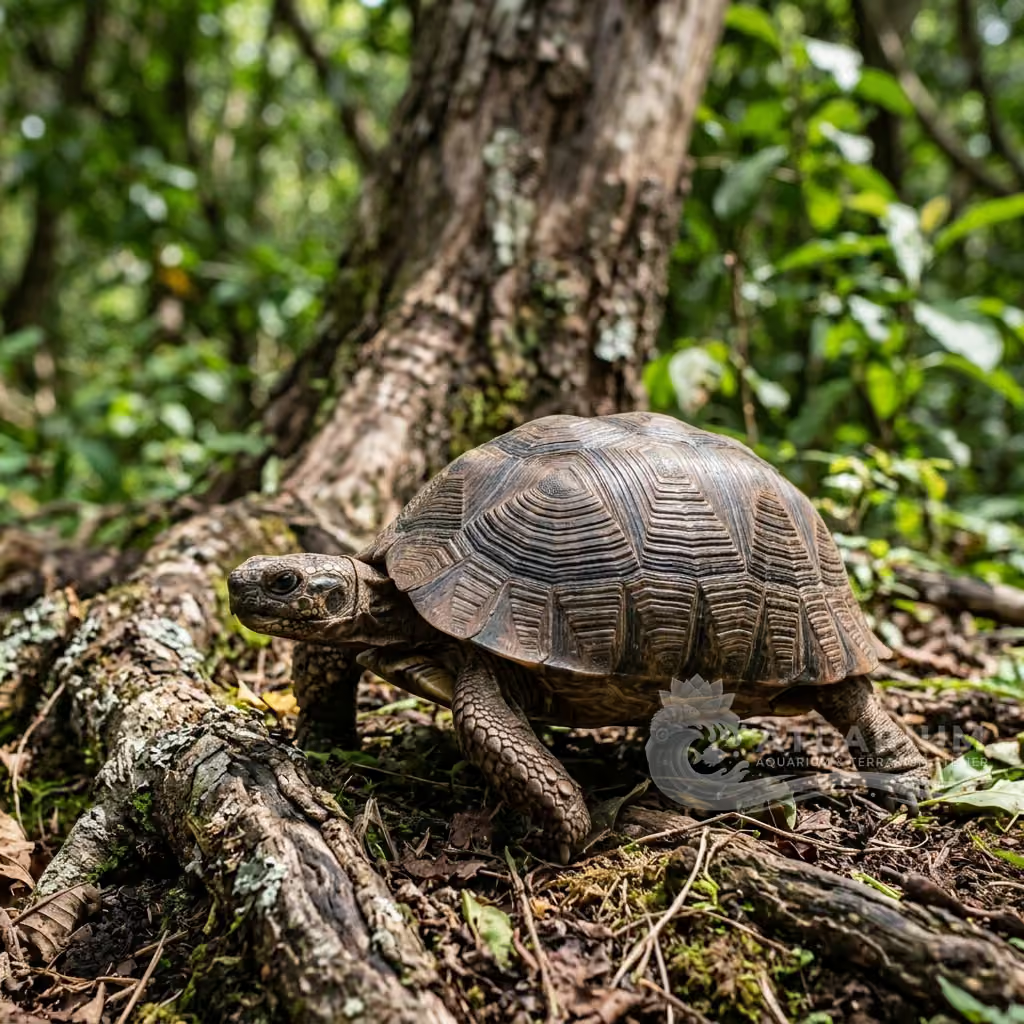
Florida gopher tortoise
Gopherus polyphemus
The gopher tortoise is a keystone species of the SE United States, renowned for its extensive deep burrows. It requires spacious, deep sandy soils for digging and shelter.
Ambiente
Terrestre
Umidade
50 - 70 %
Temperatura diurna
15 - 32 °C
Temperatura ambiente
15 - 32 °C
Temperatura noturna
21 - 23 °C
Local para se aquecer
32 - 35 °C
Tamanho adulto
30 cm
Gabinete mínimo
>= 800 L
Temperatura de brumação
6 - 12 °C

Descrição da espécie
Geographical Origin and Habitat: The gopher tortoise (Gopherus polyphemus) is native to the southeastern United States, with its largest populations residing in Florida, but also extending into southern Georgia, Alabama, Mississippi, and eastern Louisiana. It primarily inhabits dry, sandy upland ecosystems such as longleaf pine flatwoods, sandhills, coastal dunes, scrublands, and dry prairies. These habitats are characterized by deep, well-drained sandy soils that allow the tortoise to dig its extensive burrow systems, which are vital for surviving extreme temperatures and periodic natural wildfires.
Taxonomy and Genetics: Taxonomically, Gopherus polyphemus belongs to the family Testudinidae and is one of the few surviving species within the genus Gopherus. Genetic research reveals that this tortoise has ancient adaptations for a fossorial lifestyle in subtropical climates. Populations are increasingly fragmented due to urban development and habitat loss, leading to a loss of genetic diversity and making conservation efforts critical. It is protected under both state and federal laws as a threatened species.
Behavior and Habits: The life of the gopher tortoise revolves around its burrow, which can measure up to 15 meters in length and over 3 meters in depth. These burrows provide a stable microclimate, protecting the tortoise from cold winters, scorching summers, and predators. The tortoise is a diurnal herbivore, foraging close to its burrow entrance and retreating inside during the hottest parts of the day. It is generally a solitary animal, though multiple burrows may form loose neighborhoods in high-quality habitats.
Morphology: It possesses a strong, oblong, and somewhat flattened carapace that is dark brown, gray, or black in adult specimens. The forelimbs are heavily scaled and flattened into spade-like shapes with strong claws adapted for efficient digging. The hind limbs are stumpy and elephantine. Adults typically reach a shell length of 25 to 35 cm. Sexual dimorphism is present; adult males have a pronounced concave plastron to facilitate mating and a slightly longer tail than females.

Cuidado, criação e companheiros de tanque
Terrarium Setup: Due to its large size and burrowing instincts, keeping this species in a standard indoor terrarium is not feasible. They require large, secure outdoor enclosures (minimum 10 square meters per animal) with walls sunk at least 60-80 cm into the ground to prevent escape through burrowing. The substrate must consist of deep, sandy-loam soil that allows digging, and sturdy artificial shelters must be provided to mimic their natural burrows.
Lighting and Heating: If housed indoors temporarily, they require a powerful basking spot with temperatures reaching 32-35°C and an ambient temperature gradient of 24-28°C. A high-output UVB source (10% or higher) is mandatory to ensure proper vitamin D3 synthesis and calcium absorption, preventing severe bone deformities.
Humidity and Hydration: Humidity should be maintained between 50% and 70%. While they obtain most of their hydration from fresh forage, a shallow, wide water dish must be available at all times for drinking and soaking. The water depth must be very low to eliminate any risk of drowning.
Feeding and Supplementation: Their diet must be strictly herbivorous, high in fiber, and low in protein and sugar. It should consist primarily of wild grasses, weeds, dandelion, clover, hibiscus leaves, and grass hay. Avoid feeding fruit or commercial animal proteins. Supplement their food with pure calcium powder three times a week and a vitamin D3 supplement once a week.
Compatibility: They are territorial animals, and adult males must never be housed together as they will fight aggressively. A single male can be kept with one or two females, but only in a very spacious outdoor enclosure with plenty of visual barriers to prevent constant stress and harassment.
Health and Common Diseases: Common health issues include Metabolic Bone Disease (MBD) from poor lighting or diet, Upper Respiratory Tract Disease (URTD) caused by pathogens and exacerbated by drafts, and shell pyramiding from excess protein. Regular checkups with an exotic animal veterinarian are essential.

Origem e distribuição geográfica
The gopher tortoise (Gopherus polyphemus) is native to the southeastern United States, with its largest populations residing in Florida, but also extending into southern Georgia, Alabama, Mississippi, and eastern Louisiana. It primarily inhabits dry, sandy upland ecosystems such as longleaf pine flatwoods, sandhills, coastal dunes, scrublands, and dry prairies. These habitats are characterized by deep, well-drained sandy soils that allow the tortoise to dig its extensive burrow systems, which are vital for surviving extreme temperatures and periodic natural wildfires.
Origem
América do Norte

Perfil de réptil
- Dieta
- Herbivore
- The Gopher Tortoise is primarily an herbivore, feeding on a wide variety of low-growing plants, grasses, and legumes. They consume broadleaf grasses, wiregrass, and various berries when available in their habitat. In captivity, a diet rich in fibrous greens, timothy hay, and specialized tortoise pellets is essential. Overfeeding fruits and high-protein foods should be strictly avoided.
- Tamanho adulto
- 30 cm
- Estilo de vida/Microhabitat
- Fossorial
- They live a terrestrial and highly fossorial lifestyle in sandy, well-drained environments like longleaf pine ecosystems. Their physical adaptations, including flattened, shovel-like forelimbs, are perfectly suited for constant digging. They spend the vast majority of their lives within a short distance of their home burrow system. A stable, unchanging environment is critical to their long-term health and survival.
- Ciclo de atividades
- Diurnal
- Gopher Tortoises are diurnal, primarily active during the morning and late afternoon hours. They retreat to the safety and stable temperatures of their burrows during the hottest parts of the day. In cooler months, they may bask outside the burrow entrance to absorb necessary solar radiation. Their activity significantly decreases during extreme winter or summer conditions.
- Socialidade
- Gregarious
- This species is well known for its extensive burrowing behavior, creating deep tunnels that serve as crucial refuges from extreme weather. These burrows provide shelter for hundreds of other species, making the tortoise a keystone species in its ecosystem. They are generally solitary but will tolerate the presence of others in overlapping territories. Territorial disputes among males may occasionally involve ramming and flipping opponents.
- Reprodução
- Oviparous
- Gopher Tortoises reach sexual maturity at a relatively late age, usually between 10 to 15 years old. Females lay clutches of 5 to 9 spherical eggs in the sandy aprons outside their burrows during the late spring or early summer. Incubation lasts approximately 80 to 110 days, highly dependent on the ambient temperature. Hatchlings emerge fully formed and must immediately fend for themselves.
- Tolerância de tratamento
- Display only
- Handling should be kept to an absolute minimum to avoid causing severe stress to the animal. If lifting is necessary, use both hands to fully support the plastron and carapace. Ensure the tortoise is kept level, as tilting can cause distress and respiratory issues. Excessive handling can disrupt their natural behavior and lead to long-term health complications.
- Brumação
- Obrigatório
- In the northern parts of their range, Gopher Tortoises enter a period of brumation during the winter months. They remain deep inside their burrows where temperatures are relatively stable and above freezing. During this time, their metabolic rate slows dramatically, and they cease eating entirely. In southern, warmer regions, they may remain active year-round with only brief periods of inactivity.
- Muda
- Regular
- Unlike snakes or lizards, tortoises do not shed their skin in one complete piece. They slowly shed small flakes of skin from their neck, limbs, and head throughout the year. The scutes on their shell may also show signs of subtle growth and flaking over time. Providing access to a shallow soak can help facilitate this slow, ongoing shedding process safely.

Espécies relacionadas
Recomendações agrupadas por parentes próximos, escolhas de acompanhantes e cuidados semelhantes.