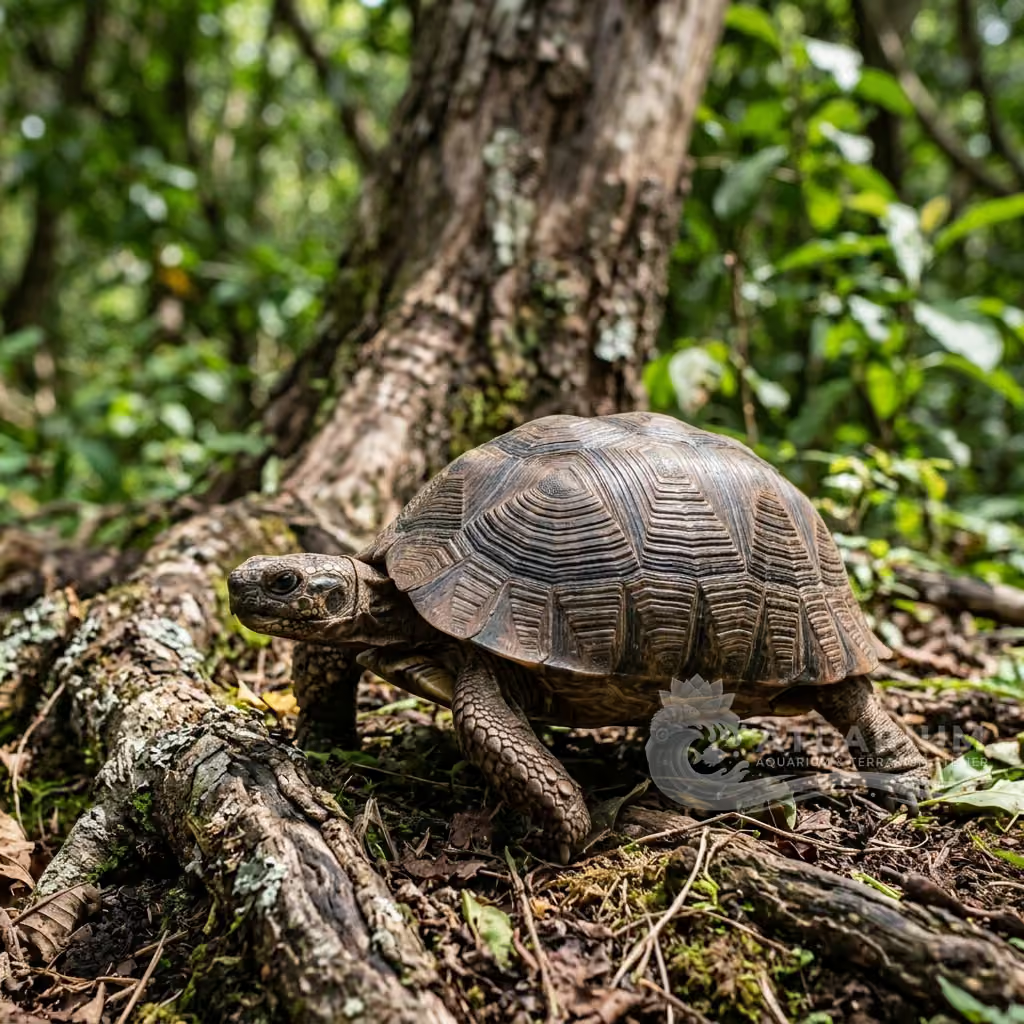
Indian Star Tortoise
Geochelone elegans
The Indian Star Tortoise is a highly sought-after terrestrial reptile, famous for its high-domed black shell covered in stunning yellow star-like patterns.
Ambiente
Terrestre
Umidade
50 - 80 %
Temperatura diurna
32 - 35 °C
Temperatura ambiente
30 °C
Temperatura noturna
20 - 22 °C
Local para se aquecer
32 - 35 °C
Tamanho adulto
25 cm
Gabinete mínimo
>= 1.000 L
UVB
Ferguson 3
UVI
1 - 2,6 UVI

Descrição da espécie
Geographical Origin and Habitat: The Indian Star Tortoise (Geochelone elegans) is native to dry forest areas, grasslands, semidesert scrubs, and agricultural margins of India, Pakistan, and Sri Lanka. It has evolved to survive in environments that go through prolonged dry seasons followed by heavy, seasonal monsoon rains, seeking shelter in thick undergrowth.
Taxonomy and Genetics: Belongs to the family Testudinidae. Genetically, there are three main geographic variants: the larger northern Indian form, the smaller southern Indian form, and the highly contrast-patterned Sri Lankan form. Its genetics allow it to tolerate moderate climate variations, though it remains sensitive to captive stressors.
Behavior and Habits: Diurnal, terrestrial, and non-burrowing. In hot weather, it is active in the early morning and late afternoon, spending midday resting under bushes. During monsoons, they show increased activity, walking and feeding during rainstorms. They do not dig deep burrows, relying on vegetation cover instead.
Morphology: A medium-sized tortoise. Females grow up to 25-30 cm, whereas males are smaller, usually around 15-20 cm. The carapace is highly domed, with individual scutes sometimes forming minor pyramidal bumps. The base shell color is dark brown or black, highlighted by radiating yellow or cream bands forming stars.

Cuidado, criação e companheiros de tanque
Terrarium Setup: Requires a very large horizontal enclosure. For a single adult indoors, the minimum dimensions are 150x80x50 cm, but outdoor pens are highly recommended during warm weather. The substrate should be a well-draining mixture of topsoil and sand (70/30) or dry coconut coir, topped with clean orchard hay. Provide large wooden shelter boxes.
Lighting and Heating: Requires high-intensity lighting and heat. Provide a high-output 10.0 UVB bulb or metal halide lamp to prevent metabolic bone disease. Maintain a basking area temperature of 32-35°C, a cool side of 24-26°C, and night temperatures not dropping below 20-22°C. Ceramic heat emitters are ideal for night heat.
Humidity and Hydration: While they tolerate dry day conditions (40-50% humidity), they need access to a localized humid hide (70% humidity using moist sphagnum) to prevent shell pyramiding. Weekly lukewarm baths for 15-20 minutes are critical to ensure hydration and assist in waste elimination. Provide a shallow water dish.
Feeding and Supplementation: Strictly herbivorous, high-fiber, low-protein diet. Feed grass weeds, dandelion greens, plantain weeds, timothy hay, and leafy greens like endive and escarole. Avoid fruit, cat/dog food, or excessive cruciferous vegetables. Dust food with pure calcium carbonate 3 times a week and calcium with D3 once a week.
Compatibility: Males can be territorial and stress females with continuous mating behavior. Best kept individually or in groups of one male with three or four females in a very large enclosure. Never house two males together, as they will fight, often flipping each other over.
Health and Common Diseases: Highly susceptible to Respiratory Tract Infections (RTI) if exposed to cold drafts or damp, cold conditions. Carapace pyramiding is a common developmental issue caused by dry air and low-fiber diets. Prone to bladder stones if dehydrated and internal parasites.

Origem e distribuição geográfica
The Indian Star Tortoise (Geochelone elegans) is native to dry forest areas, grasslands, semidesert scrubs, and agricultural margins of India, Pakistan, and Sri Lanka. It has evolved to survive in environments that go through prolonged dry seasons followed by heavy, seasonal monsoon rains, seeking shelter in thick undergrowth.
Origem
Europa, Mediterrâneo e Ásia OcidentalSul e Sudeste Asiático

Perfil de réptil
- Dieta
- Herbivore
- The Indian Star Tortoise is a strict herbivore that thrives on a varied, high-fiber, and low-protein diet. In their natural scrubland habitats, they graze heavily on diverse grasses, weeds, tough succulents, and seasonal blooms. In a captive environment, keepers must primarily offer coarse grasses, hay, and safe leafy weeds, strictly avoiding high-sugar fruits to prevent dangerous digestive complications.
- Tamanho adulto
- 25 cm
- Estilo de vida/Microhabitat
- Terrestrial
- This animal leads a terrestrial lifestyle, predominantly dwelling on the ground rather than climbing trees or spending time in the water. It traverses the forest floor, grasslands, or desert terrain in search of food, mates, and secure hiding spots beneath rocks, logs, or dense underbrush. In a terrarium setting, providing a large horizontal footprint is essential, along with a deep, appropriate substrate that allows for natural foraging and resting behaviors. While they may occasionally climb low-lying obstacles, their enclosure should be designed to maximize usable floor space.
- Ciclo de atividades
- Diurnal
- This species exhibits a predominantly diurnal activity pattern, meaning it is most active during the daylight hours. Throughout the day, it is frequently observed exploring its enclosure, foraging for food, and actively seeking out basking spots to thermoregulate its body temperature. Providing appropriate full-spectrum lighting and adequate heat gradients during the day is critical to simulate its natural solar cycle. As evening approaches and temperatures drop, the animal will typically retreat to a secure hide or burrow to rest and conserve energy until the next morning.
- Socialidade
- Solitary
- Recognized instantly by the stunning, star-like patterns on their carapace, these tortoises are shy and generally unaggressive creatures. They are largely inactive during the hottest parts of the day, retreating under dense brush or into shallow scrapes to conserve moisture. Unlike some outgoing tortoise species, they stress easily under excessive handling and are best appreciated visually within a quiet, appropriately heated enclosure.
- Reprodução
- Oviparous
- Breeding among Indian Star Tortoises is timed with the arrival of the monsoon season, which provides the soft ground necessary for nesting. Females lay multiple small clutches per year, typically containing 3 to 6 hard-shelled eggs each. The eggs are buried carefully and subjected to a long incubation process spanning 110 to 150 days, depending significantly on the fluctuating ambient soil temperatures.
- Tolerância de tratamento
- Display only
- This animal is considered a display-only species, meaning it strongly dislikes being handled and becomes heavily stressed by human contact. They are either far too delicate to be handled safely or possess highly defensive traits that make interactions stressful and potentially harmful for both the animal and the keeper. Interaction should be strictly limited to visual observation through the enclosure glass, and physical handling should only occur during absolute emergencies or unavoidable health checkups. Appreciating their natural behaviors from a distance is the best approach to ensuring their well-being.
- Brumação
- Originating from tropical or sub-tropical climates with stable year-round conditions, this species does not undergo brumation. It requires consistently warm temperatures and proper lighting schedules regardless of the external season. Subjecting this animal to a significant temperature drop in an attempt to induce a winter cooling period can severely compromise its immune system, leading to dangerous respiratory infections, digestive failures, and potentially fatal consequences. Heat sources and environmental parameters must be rigorously monitored and maintained consistently throughout the entire year.
- Muda
- Regular
- Shedding (or molting) occurs regularly as the animal grows, with frequency decreasing as it reaches adulthood. Under normal enclosure conditions, providing a standard, moderate humidity level alongside a designated humid hide—a small, enclosed space filled with damp sphagnum moss—is entirely sufficient to facilitate a clean, complete shed. Prior to shedding, the animal's colors will appear dull, and its eyes may turn a cloudy, opaque blue. During this phase, it is crucial not to handle or feed the animal, allowing it to rest and shed its skin naturally in one uninterrupted piece.

Espécies relacionadas
Recomendações agrupadas por parentes próximos, escolhas de acompanhantes e cuidados semelhantes.