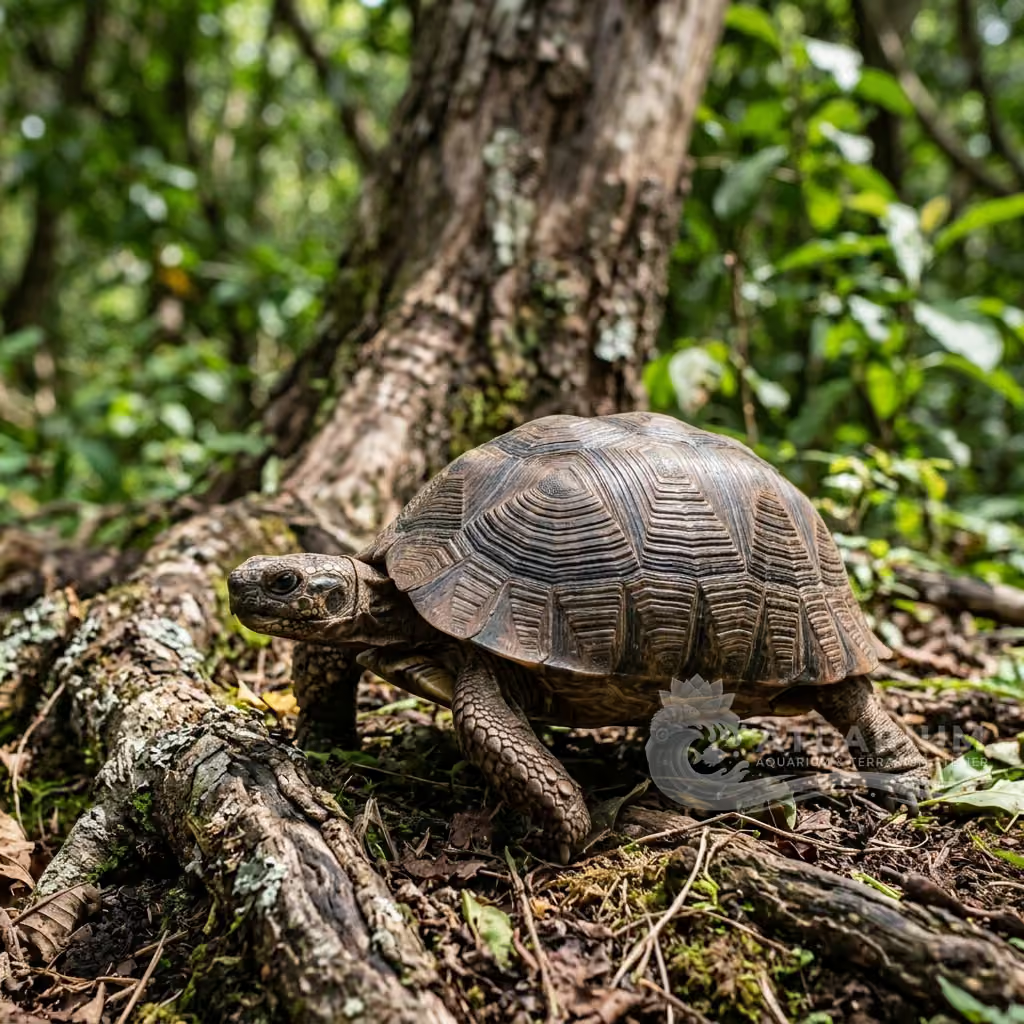
Red-footed tortoise
Chelonoidis carbonarius
The red-footed tortoise originates from South America's diverse forests. Requires a huge 2x1.5 meter indoor table or outdoor pen with deep, moisture-retaining substrate and a unique diet featuring fruit alongside vegetation and occasional protein.
Ambiente
Terrestre
Umidade
70 - 90 %
Temperatura diurna
26 - 28 °C
Temperatura ambiente
27 °C
Temperatura noturna
21 - 22 °C
Local para se aquecer
31 °C
Tamanho adulto
35 cm
Gabinete mínimo
>= 1.200 L

Descrição da espécie
Geographical Origin and Habitat: Chelonoidis carbonarius is native to South and Central America, ranging from Panama down to Paraguay and northern Argentina. It occupies a wide range of habitats, including tropical rainforests, dry deciduous forests, savannah edges (cerrado), and humid grasslands. Unlike many other tortoises, it is adapted to forest understories where it receives shade and high moisture levels, avoiding prolonged exposure to the intense sun of open, arid environments.
Taxonomy and Genetics: Belonging to the family Testudinidae and the genus Chelonoidis. Formally described by Spix in 1824, this species exhibits distinct geographic variations (such as the southern Brazilian 'Cherry Head' morph, known for its smaller size and bright red head). Genetic studies show a close relationship with the yellow-footed tortoise (Chelonoidis denticulatus), with which it shares much of its evolutionary history and range.
Behavior and Habits: Diurnal and terrestrial, showing peak activity in the cooler morning and late afternoon hours. During the heat of the day, it rests in leaf litter, hollow logs, or under dense scrub. Unlike temperate tortoises, it does not undergo winter hibernation (brumation) due to its tropical origin. It is a capable swimmer and enjoys soaking in shallow water bodies to thermoregulate and hydrate.
Morphology: Features an elongated, dark brown or black carapace with yellow or orange-yellow patches in the center of each scute. Adult specimens, particularly males, display a distinct waist-like constriction (hourglass shape) along the sides of the shell. The limbs and head are accented with vibrant orange, yellow, or cherry-red scales. Adult size typically ranges between 30 and 40 cm, with males growing larger than females.

Cuidado, criação e companheiros de tanque
Terrarium Setup: An adult requires a very large enclosure, preferably a secure outdoor pen in warm climates or a large indoor table measuring at least 2x1.5 meters. The substrate should be 15-20 cm deep and consist of moisture-retaining materials such as cypress mulch, coconut coir, and peat moss. Create sight barriers using non-toxic plants, cork logs, and provide large, dark hiding spots.
Lighting and Heating: Provide a daytime temperature gradient of 26-28°C (79-82°F) at the cool end and 31-33°C (88-91°F) at the warm end, with a focused basking spot of 35°C (95°F) using thermostatic heat sources. Night temperatures must not drop below 21-22°C (70-72°F). High-quality 10.0 UVB lighting is mandatory, operating 12 hours a day and placed at the manufacturer's recommended distance.
Humidity and Hydration: Maintain high relative humidity levels between 70% and 80% to prevent shell pyramiding and respiratory issues. Mist the substrate daily. Provide a large, shallow water dish (water depth should not exceed the lower shell line) that allows the tortoise to climb in and soak completely. Clean and replace the water daily, as they often defecate while soaking.
Feeding and Supplementation: Their diet must be omnivorous. Unlike desert species, they require fruit (20-30% of their diet, including melon, papaya, mango, berries) and animal protein (about 5%, such as earthworms, snails, and high-quality cat food) once a week. The staple diet (60-70%) must consist of dark leafy greens, weeds (dandelion, clover, plantain), and vegetables. Dust food with calcium and D3 weekly.
Compatibility: Can be kept individually or in small groups (one male and multiple females) in spacious setups. Do not house multiple males together, as they will fight aggressively, leading to physical injuries and extreme stress. Never house them with tortoises from other geographic regions (like Testudo or Centrochelys) to avoid cross-infection of pathogens.
Health and Common Diseases: Prone to shell pyramiding if raised in low humidity or on a poor diet lacking calcium. They are also vulnerable to respiratory infections (pneumonia) from cold drafts, intestinal parasites, and shell rot if the substrate is allowed to remain muddy and saturated rather than damp. Regular veterinary checkups and fecal exams are recommended.

Origem e distribuição geográfica
Chelonoidis carbonarius is native to South and Central America, ranging from Panama down to Paraguay and northern Argentina. It occupies a wide range of habitats, including tropical rainforests, dry deciduous forests, savannah edges (cerrado), and humid grasslands. Unlike many other tortoises, it is adapted to forest understories where it receives shade and high moisture levels, avoiding prolonged exposure to the intense sun of open, arid environments.
Origem
Extra-Amazônica América do SulAmérica Central e Caribe

Perfil de réptil
- Dieta
- Omnivore
- The Red-footed tortoise enjoys a highly omnivorous diet, which is distinct from many purely herbivorous tortoise species. In the wild, they forage for dark leafy greens, fallen fruits, colorful blossoms, and significant amounts of carrion or slow-moving invertebrates. Captive diets must carefully balance high-calcium greens, varied fruits, and occasional animal protein sources like moistened commercial diets or earthworms to replicate their natural omnivory.
- Tamanho adulto
- 35 cm
- Estilo de vida/Microhabitat
- Terrestrial
- This animal leads a terrestrial lifestyle, predominantly dwelling on the ground rather than climbing trees or spending time in the water. It traverses the forest floor, grasslands, or desert terrain in search of food, mates, and secure hiding spots beneath rocks, logs, or dense underbrush. In a terrarium setting, providing a large horizontal footprint is essential, along with a deep, appropriate substrate that allows for natural foraging and resting behaviors. While they may occasionally climb low-lying obstacles, their enclosure should be designed to maximize usable floor space.
- Ciclo de atividades
- Diurnal
- This species exhibits a predominantly diurnal activity pattern, meaning it is most active during the daylight hours. Throughout the day, it is frequently observed exploring its enclosure, foraging for food, and actively seeking out basking spots to thermoregulate its body temperature. Providing appropriate full-spectrum lighting and adequate heat gradients during the day is critical to simulate its natural solar cycle. As evening approaches and temperatures drop, the animal will typically retreat to a secure hide or burrow to rest and conserve energy until the next morning.
- Socialidade
- Solitary
- These moderate-sized tortoises are mostly active during the early morning and late afternoon, utilizing the humid jungle floor to forage while avoiding peak midday heat. They are exceptionally curious and intelligent, often learning to recognize their keepers and readily approaching for food and interaction. While they are not climbers, they demand large, heavily planted, and humid ground enclosures that allow for extensive daily roaming.
- Reprodução
- Oviparous
- Red-footed tortoises are oviparous reptiles that exhibit fascinating courtship behaviors, including distinct head-bobbing routines from the males. Females will painstakingly dig a shallow nest in soft, humid soil to lay a clutch of 2 to 15 spherical eggs. The eggs require incredibly long and warm incubation periods, often taking up to 150 days or more before the precocial hatchlings dig their way out.
- Tolerância de tratamento
- Display only
- This animal is considered a display-only species, meaning it strongly dislikes being handled and becomes heavily stressed by human contact. They are either far too delicate to be handled safely or possess highly defensive traits that make interactions stressful and potentially harmful for both the animal and the keeper. Interaction should be strictly limited to visual observation through the enclosure glass, and physical handling should only occur during absolute emergencies or unavoidable health checkups. Appreciating their natural behaviors from a distance is the best approach to ensuring their well-being.
- Brumação
- Originating from tropical or sub-tropical climates with stable year-round conditions, this species does not undergo brumation. It requires consistently warm temperatures and proper lighting schedules regardless of the external season. Subjecting this animal to a significant temperature drop in an attempt to induce a winter cooling period can severely compromise its immune system, leading to dangerous respiratory infections, digestive failures, and potentially fatal consequences. Heat sources and environmental parameters must be rigorously monitored and maintained consistently throughout the entire year.
- Muda
- Periodic
- Because this species naturally inhabits humid, tropical environments, successful shedding requires maintaining consistently elevated humidity levels within the enclosure. When the pre-shed cycle begins—indicated by dulled coloration and cloudy 'blue' eyes—the keeper must actively boost the ambient humidity by heavily misting the enclosure daily and ensuring the substrate remains damp but not saturated. A failure to provide this specialized high-humidity environment will likely result in a problematic 'stuck shed,' which can cause severe constriction injuries to the tail tip, toes, and eyes if not manually addressed.

Espécies relacionadas
Recomendações agrupadas por parentes próximos, escolhas de acompanhantes e cuidados semelhantes.