Poison dart frog Citronella
Dendrobates tinctorius
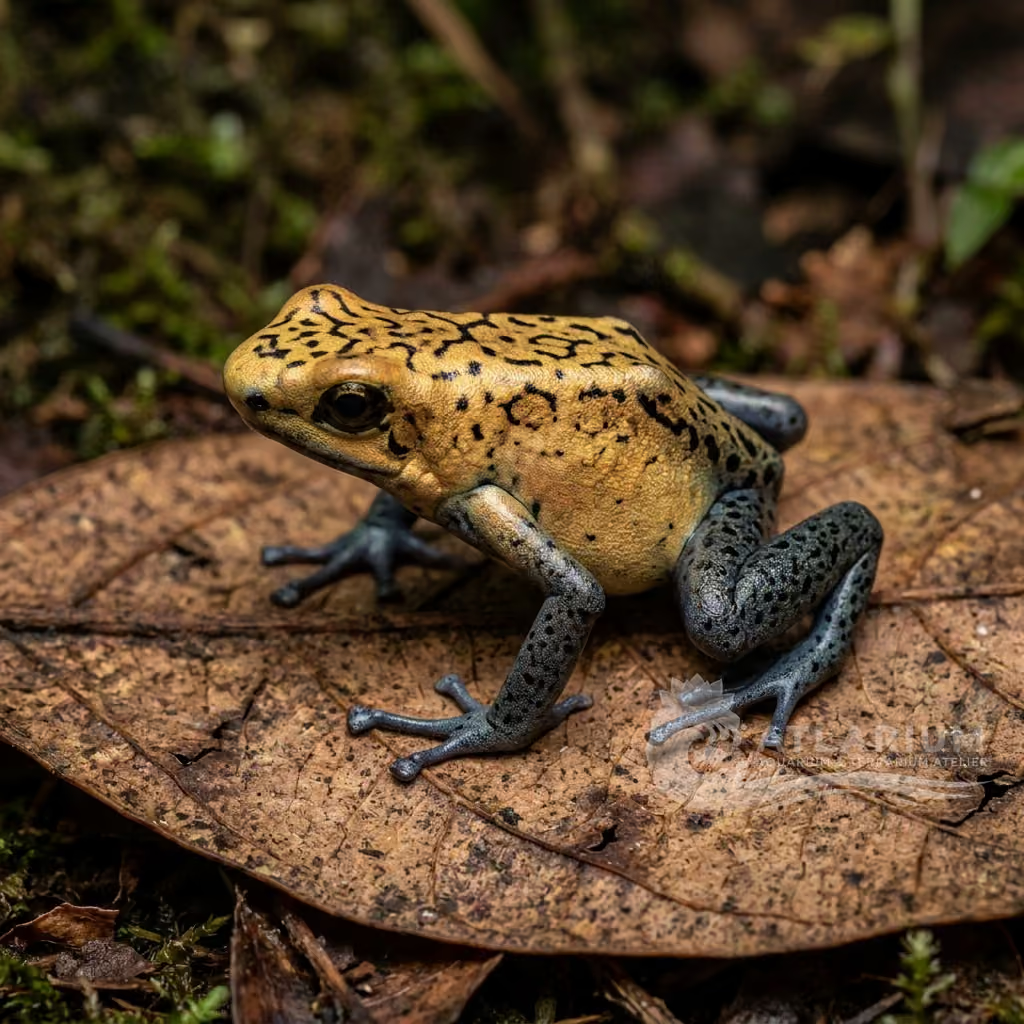
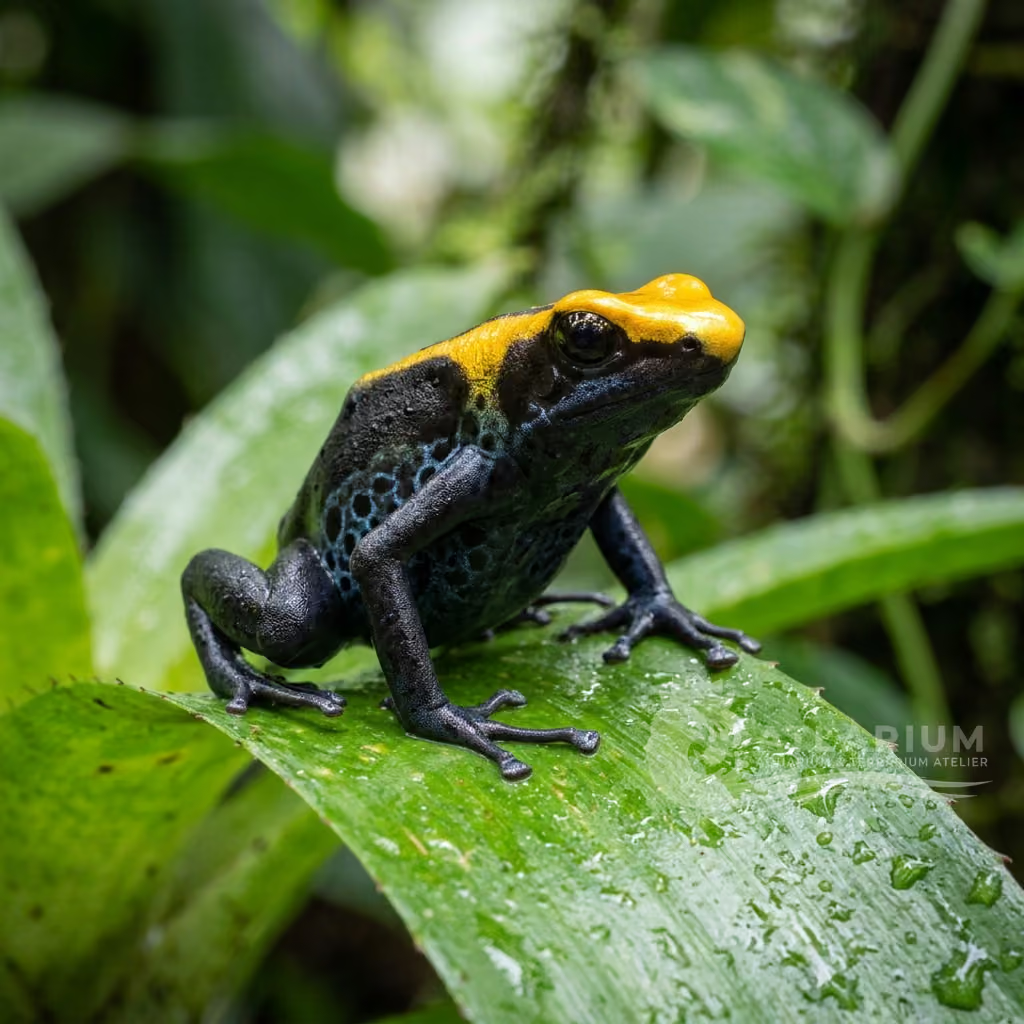
One of the largest tinctorius morphs, displaying a bright lemon-yellow back and deep metallic blue limbs. Terrestrial and bold, it thrives in a humid, heavily planted setup.
Ambiente
Terrestre
Umidade
80 - 100 %
Temperatura diurna
22 - 26 °C
Temperatura noturna
19 - 21 °C
UVB
Ferguson 1-2
UVI
0 - 1 UVI

Descrição da espécie
Geographical Origin and Habitat: Dendrobates tinctorius "Citronella" is native to the primary tropical rainforests of southern Suriname, near the border with Brazil. It inhabits the damp and shaded forest floor, living among wet leaf litter, buttress roots of large trees, and mossy rock formations near streams. These primary forests experience stable temperatures and high relative humidity throughout the year, with little seasonal variation.
Taxonomy and Genetics: Belonging to the family Dendrobatidae, genus Dendrobates, and species Dendrobates tinctorius. "Citronella" is a distinct geographic color morph that evolved in isolation. In captivity, breeders preserve the genetic purity of this morph by avoiding cross-breeding with other Dendrobates tinctorius varieties to prevent muddying the distinct yellow-and-blue pattern.
Behavior and Habits: Strictly diurnal and terrestrial. It is a bold, active, and curious frog that shows little fear, spending much of the day exploring the terrarium in search of food. Males are territorial and call using a soft buzzing sound to attract females. Females of this species are surprisingly aggressive towards one another, fighting for access to dominant males.
Morphology: This is one of the largest morphs of the species, with adult females reaching lengths of 5.5 to 6.0 cm, while males are slightly smaller (around 5.0 cm). The dorsum and flanks are covered in a solid, bright lemon-yellow coloration, while the front and hind limbs are a contrasting deep metallic blue, often speckled with black spots. The toes feature small suction pads for climbing.

Cuidado, criação e companheiros de tanque
Terrarium Setup: Requires a bioactive tropical rainforest terrarium measuring at least 50x50x50 cm for a pair. The substrate must feature a drainage layer of clay balls, covered by a mesh barrier and a damp soil-peat mix, topped with a thick layer of oak or magnolia leaf litter and sphagnum moss. Plant heavily with bromeliads, ferns, and climbing vines, and include cork bark logs.
Lighting and Heating: The ideal daytime temperature range is between 22°C and 26°C (72-79°F). Temperatures exceeding 28°C (82°F) are rapidly fatal to this species. Night temperatures should drop to 20-21°C (68-70°F). Use LED lights for plant growth and a low-output (2.0 or 5.0) UVB bulb to support calcium absorption and prevent skeletal issues.
Humidity and Hydration: Maintain relative humidity between 80% and 95% at all times. Mist the enclosure 2-3 times daily using reverse osmosis (RO) or distilled water, as tap water chemicals can damage their permeable skin. Avoid deep pools of water since these frogs cannot swim well and can drown; a shallow petri dish or bromeliad axils are sufficient.
Feeding and Supplementation: Feed exclusively on live micro-insects. The staple diet consists of flightless fruit flies (Drosophila melanogaster and D. hydei), springtails, dwarf isopods, and pinhead crickets. Dust the insects at every feeding with a high-quality powder supplement containing calcium, vitamin D3, and vitamin A to prevent spindly leg syndrome.
Compatibility: Best housed as a single male-female pair. Do not house multiple females together, as they will fight aggressively, often leading to the death of the submissive female due to stress and physical trauma. Do not mix with other frog species or other color morphs of D. tinctorius to avoid hybridization.
Health and Common Diseases: Susceptible to chytridiomycosis (a fatal fungal infection), toxic shock syndrome from organic waste buildup, and metabolic bone disease (MBD) due to calcium deficiencies. Always use purified water for misting, and ensure the terrarium drainage layer prevents the substrate from becoming waterlogged.

Origem e distribuição geográfica
Dendrobates tinctorius "Citronella" is native to the primary tropical rainforests of southern Suriname, near the border with Brazil. It inhabits the damp and shaded forest floor, living among wet leaf litter, buttress roots of large trees, and mossy rock formations near streams. These primary forests experience stable temperatures and high relative humidity throughout the year, with little seasonal variation.
Origem
Melhoramento seletivo e cultivaresAmazônia, Orinoco e Guianas

Perfil anfíbio
- Dieta
- Insectivore
- The Poison dart frog Citronella is a dedicated insectivore, historically reliant on an array of micro-fauna found within the neotropical leaf litter. In the wild, their diet consists predominantly of ants, termites, mites, and springtails, which provide the essential alkaloid precursors necessary for the synthesis of their characteristic dermal toxins. In a terrarium environment, they rapidly adapt to a staple diet of cultured flightless fruit flies (Drosophila melanogaster and D. hydei), springtails, and dwarf isopods, which must be systematically dusted with a high-quality vitamin and calcium supplement to ensure optimal skeletal health and vibrant coloration.
- Expectativa de vida
- 10-15 years
- Tamanho adulto
- 7 cm
- Estilo de vida/Microhabitat
- Terrestrial
- A heavily built, terrestrial dart frog. They require extensive leaf litter over a drainage substrate to mimic the South American rainforest floor.
- Ciclo de atividades
- Diurnal
- Highly diurnal. They are confident daytime foragers, using their bright warning colors to deter predators while they hunt for tiny insects.
- Socialidade
- Gregarious
- Characterized by a surprisingly bold and inquisitive disposition, the Poison dart frog Citronella is highly active and diurnal, frequently foraging openly across the terrarium floor. However, they are intensely territorial, particularly among females, who will aggressively wrestle and establish dominance hierarchies that can suppress the reproduction or compromise the health of subordinates. Consequently, expert keepers strongly advise housing them either as bonded pairs or in carefully monitored groups with a significant male-biased ratio to mitigate conspecific aggression and ensure a harmonious captive environment.
- Reprodução
- Oviparous
- This species exhibits a complex, oviparous reproductive strategy that heavily involves biparental, but predominantly male, investment. Females deposit small clutches of 4 to 10 gelatinous eggs on smooth, sheltered surfaces, such as broad leaves or within phytotelmata, which the male then fastidiously guards, hydrates, and monitors. Upon hatching, the male performs the remarkable task of transporting the tadpoles on his back to small, isolated pools of water—often in bromeliad axils or seed pods—where they will complete their metamorphosis over the course of 60 to 80 days.
- Toxicidade
- Toxic
- Non-toxic in captivity due to a diet lacking alkaloids.
- Estágio de vida
- Neotenic
- Tadpoles are aquatic and often cannibalistic, requiring separate rearing.
- Tolerância de tratamento
- Display only
- Display species. Amphibian skin is incredibly sensitive to the oils and salts naturally present on human hands; handling should be strictly avoided.
- Brumação
- Não obrigatório
- Brumation is not required or recommended. They require year-round tropical temperatures and high humidity.
- Muda
- Periodic
- Dart frogs shed their skin regularly and eat it. A constantly wet and highly humid environment (80-100%) is mandatory for their survival and shedding.

Espécies relacionadas
Recomendações agrupadas por parentes próximos, escolhas de acompanhantes e cuidados semelhantes.