Super Blue poison dart frog
Dendrobates auratus
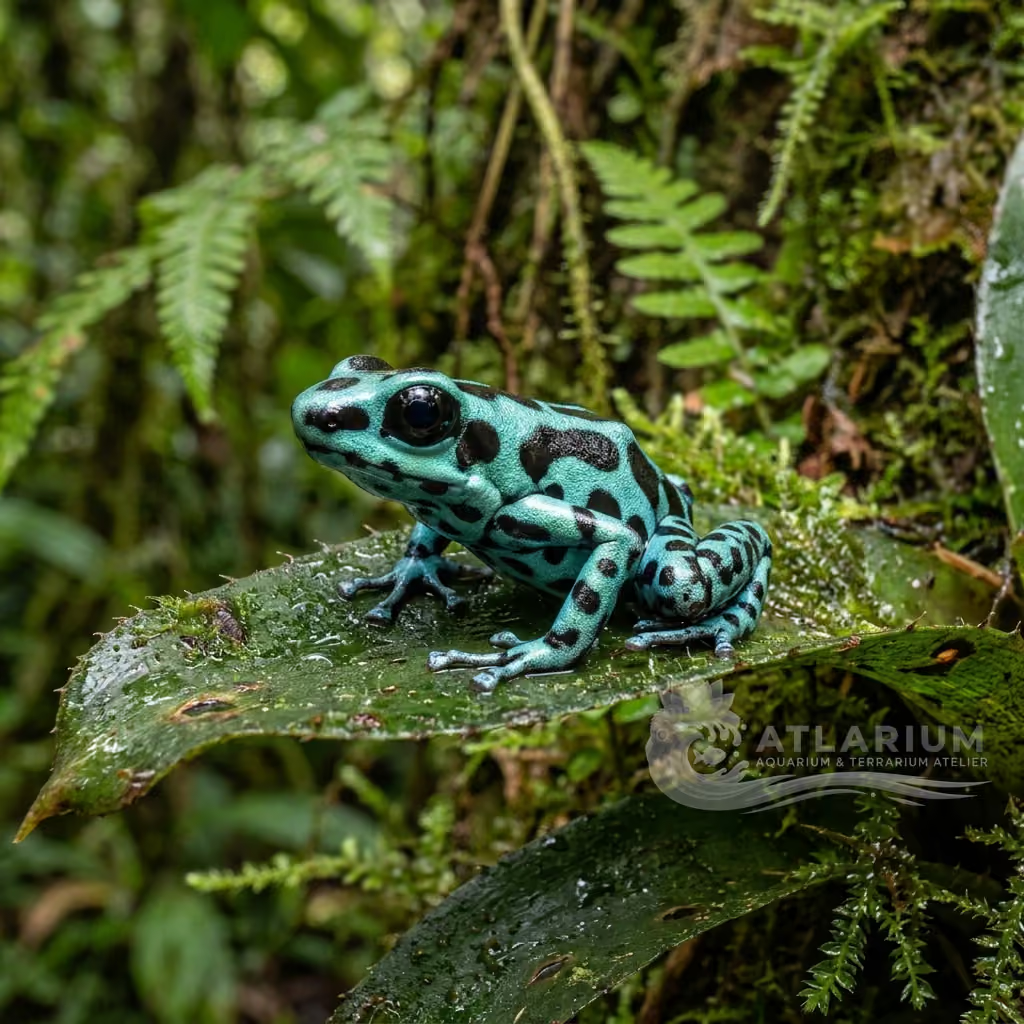
A stunning color morph of the green and black poison dart frog featuring intense cobalt blue and black patterning, popular in humid forest terrariums.
Ambiente
Terrestre
Umidade
80 - 100 %
Temperatura diurna
22 - 26 °C
Temperatura noturna
19 - 21 °C
UVB
Ferguson 1-2
UVI
0 - 1 UVI

Descrição da espécie
Geographical Origin and Habitat:
Dendrobates auratus is native to the wet tropical rainforests of Central America and northwestern South America. The specific "Super Blue" color morph originates from localized populations in Panama, where it inhabits the humid forest floor. These frogs live within damp leaf litter, around buttress roots, and near streams where ambient humidity remains high year-round.
Taxonomy and Genetics:
As a member of the Dendrobatidae family, Dendrobates auratus is one of the most widely recognized dart frogs. The "Super Blue" line is a selectively bred and stabilized genetic morph exhibiting brilliant metallic blue instead of the typical green. In the wild, their toxicity is synthesized from alkaloids in their diet of wild ants and mites, a trait lost in captive-bred individuals.
Behavior and Habits:
These frogs are diurnal, active, and primarily terrestrial, though they can climb low branches and plants. They show complex social behaviors, including male territorial defense through vocal buzzing and wrestling matches. Females may compete for breeding access to males. Once acclimated, they are bold and active foragers, spending hours hunting.
Morphology:
Adults possess a robust build, measuring between 3.5 and 4.2 centimeters, with females typically larger and rounder than males. The "Super Blue" morph is defined by a pattern of striking cobalt or metallic sky-blue splotches and bands contrasting against a solid velvet-black background. Their smooth skin contains poison glands utilized for defense in nature.

Cuidado, criação e companheiros de tanque
Terrarium Setup:
Requires a well-designed forest terrarium (minimum 50x40x40 cm for a pair). The substrate must consist of a drainage layer (hydroton), covered by a barrier, tropical soil, moss, and a thick layer of oak or Indian almond leaves. Provide live plants, especially Bromeliads (crucial for tadpole deposition), Pothos, cork bark tubes, and coco huts for shelter.
Lighting and Heating:
Bright LED lighting is necessary to maintain live tropical plants. A 12-hour light/dark cycle is standard. A low-output UVB light (2.0% or 5.0%) is highly recommended to prevent metabolic bone disease. Temperatures must be kept between 24°C and 27°C (75°F to 80°F) during the day, with a nighttime drop to around 20°C (68°F).
Humidity and Hydration:
Relative humidity must remain high, ideally between 80% and 95%. Daily misting using RO water is required to keep the environment damp without accumulating minerals on the glass. A very shallow water dish (no deeper than 1 cm) should be provided, as these frogs are poor swimmers and can easily drown in deep water.
Feeding and Supplementation:
Feed daily on a diet of live micro-insects. Flightless fruit flies (Drosophila melanogaster and D. hydei) serve as the staple food, supplemented by springtails, tropical isopods, and pinhead crickets. All feeder insects must be dusted with calcium and D3 at every feeding, and a comprehensive vitamin supplement containing preformed Vitamin A weekly.
Compatibility:
Can be kept in pairs or small groups in spacious enclosures. Keep in mind that multiple females may fight over males, resulting in dominant behavior that stresses submissive individuals. Never house different color morphs or other dart frog species together to prevent cross-hybridization and territorial stress.
Health and Common Diseases:
Common issues include Vitamin A deficiency (spindly leg syndrome in tadpoles), Metabolic Bone Disease (MBD) due to lack of calcium/D3, and fungal infections like chytridiomycosis. Ensuring a clean terrarium, removing waste regularly, and providing adequate dual-ventilation to avoid stagnant air are key preventive steps.

Origem e distribuição geográfica
Dendrobates auratus is native to the wet tropical rainforests of Central America and northwestern South America. The specific "Super Blue" color morph originates from localized populations in Panama, where it inhabits the humid forest floor. These frogs live within damp leaf litter, around buttress roots, and near streams where ambient humidity remains high year-round.
Origem
Melhoramento seletivo e cultivaresExtra-Amazônica América do SulAmérica Central e Caribe

Perfil anfíbio
- Dieta
- Insectivore
- This species primarily feeds on small invertebrates such as fruit flies, springtails, and dwarf isopods. It is essential to dust their food with high-quality vitamin and calcium supplements at nearly every feeding. Offering a varied diet ensures optimal health and coloration. In captivity, they eagerly hunt down actively moving prey items.
- Expectativa de vida
- 10-20 years
- Tamanho adulto
- 3.8 cm
- Estilo de vida/Microhabitat
- Terrestrial
- Primarily terrestrial, they spend most of their time dwelling in the leaf litter of the forest floor. However, they will also occasionally climb low-lying branches and vegetation to explore. A terrarium with a thick layer of magnolia or oak leaves best replicates their natural habitat. They thrive in highly humid environments that simulate tropical rainforest floors.
- Ciclo de atividades
- Diurnal
- They are strictly diurnal, meaning they are most active during daylight hours. Throughout the morning and late afternoon, they actively hunt for prey across the terrarium floor. During the hottest parts of the day, they may retreat to cooler, shaded areas. A proper day-night lighting cycle is important for regulating their natural circadian rhythms.
- Socialidade
- Gregarious
- These frogs are known for their relatively bold and active nature in a well-planted vivarium. They can be territorial, especially males, though they can often be kept in small groups if enough space is provided. They spend a large portion of their day actively foraging and exploring the leaf litter. Providing ample hiding spots will encourage them to be more visible and reduce stress.
- Reprodução
- Oviparous
- Breeding often occurs after a period of heavy misting simulating the rainy season. Females typically lay small clutches of eggs on smooth leaves or in specialized breeding huts. Once tadpoles hatch, males often transport them to small water pockets such as bromeliad axils. Proper humidity and temperature are critical to encourage successful mating behavior.
- Toxicidade
- Toxic
- Non-toxic in captivity due to an alkaloid-free diet.
- Estágio de vida
- Neotenic
- Tadpoles are aquatic and often cannibalistic, requiring separate rearing.
- Tolerância de tratamento
- Display only
- These frogs should be considered a display-only species. Their highly permeable skin is incredibly sensitive to the natural oils, salts, and any chemicals present on human hands. Handling causes severe stress and can easily compromise their health.
- Brumação
- Não obrigatório
- This tropical species does not undergo true brumation. They require consistently warm and highly humid conditions year-round. While breeders may slightly reduce misting to simulate a dry season and trigger breeding, temperatures should remain stable.
- Muda
- Periodic
- Shedding occurs regularly and is heavily dependent on maintaining high humidity levels (80-100%). The frog will perform stretching motions to loosen the old skin and will typically consume it entirely to recycle nutrients. Low humidity can lead to stuck shed and fatal dehydration.

Espécies relacionadas
Recomendações agrupadas por parentes próximos, escolhas de acompanhantes e cuidados semelhantes.