Kokoe Poison Frog
Phyllobates aurotaenia
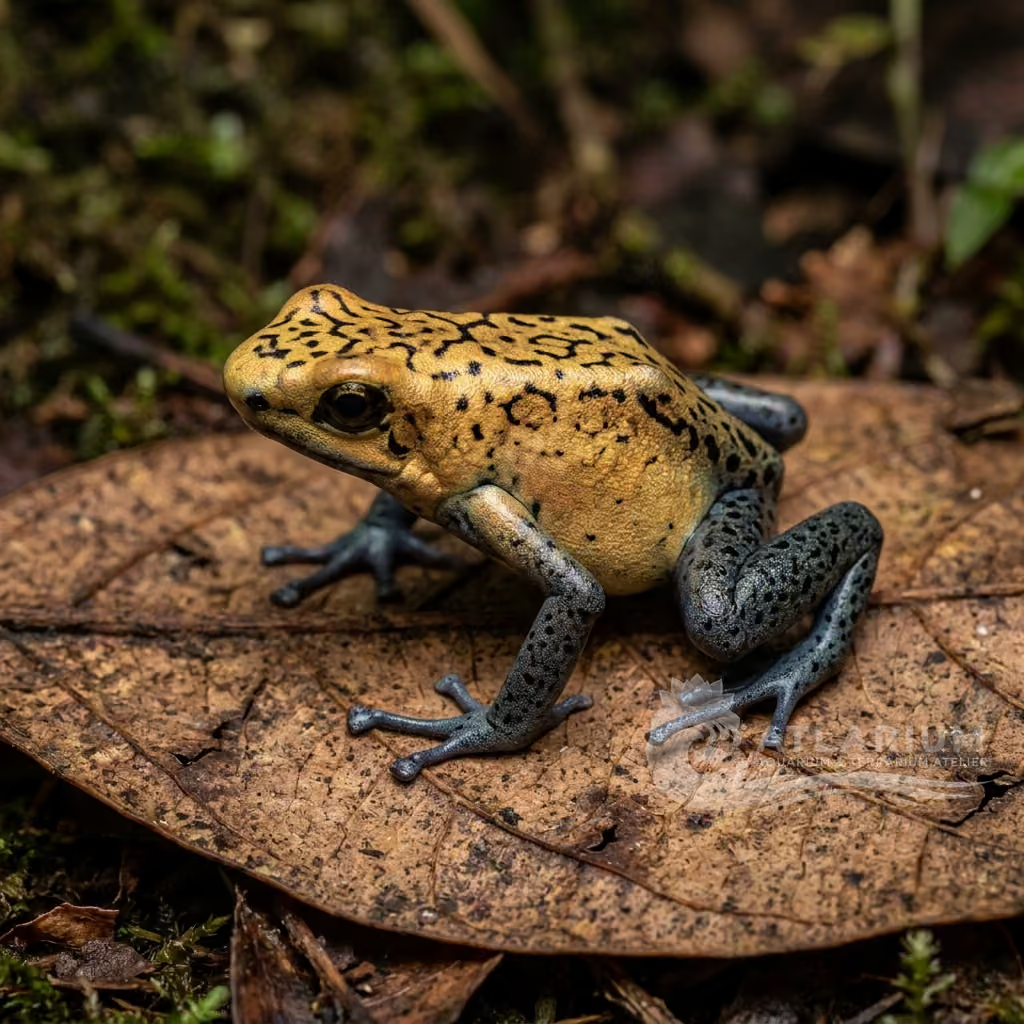
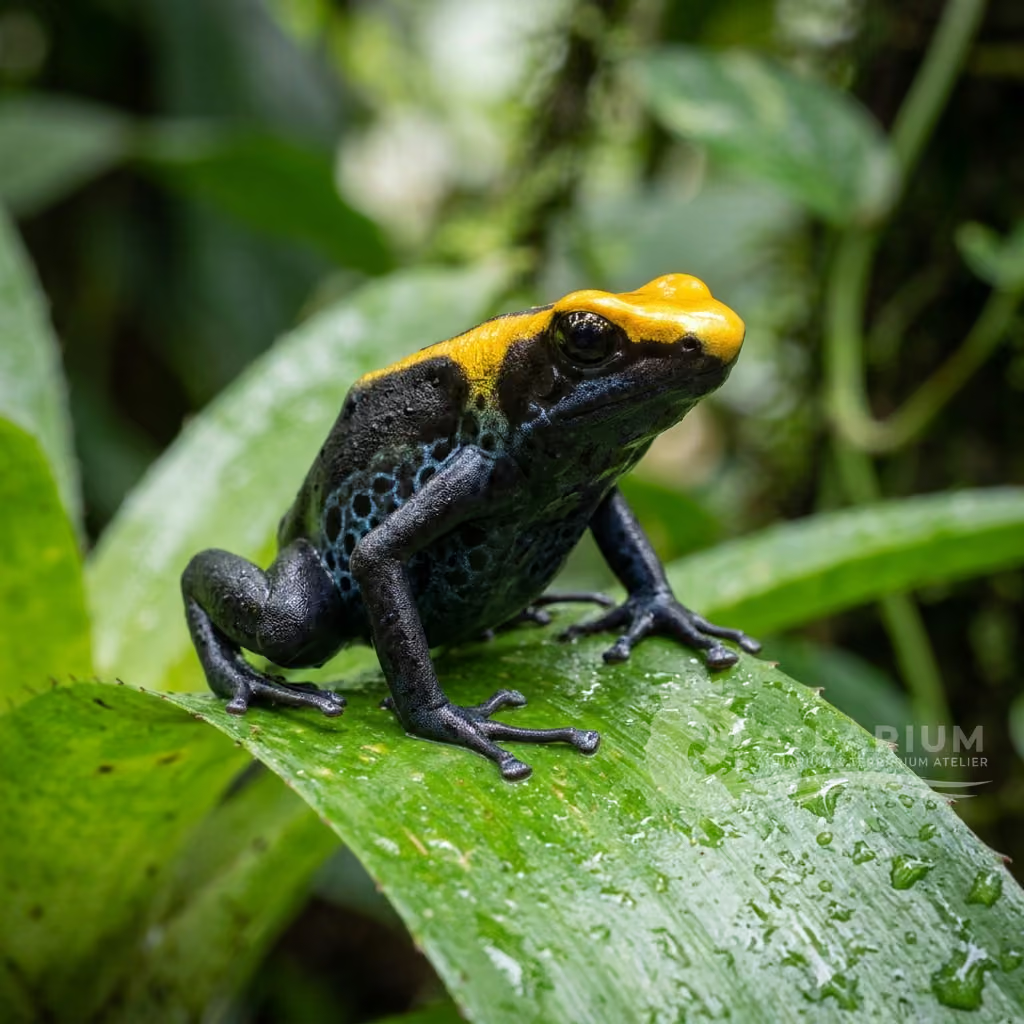
A robust, terrestrial frog of the family Phyllobates. It is known for its thick gold or greenish-gold dorsolateral stripes and its loud, trilling mating call.
Ambiente
Terrestre
Umidade
80 - 100 %
Temperatura diurna
24 - 28 °C
Temperatura noturna
21 - 24 °C

Descrição da espécie
Geographical Origin and Habitat: Endemic to the humid, dense, and lowland rainforests of the Chocó region in western Colombia, one of the wettest environments on Earth. It is a strictly terrestrial frog, inhabiting the leaf litter of the forest floor, hiding under fallen leaves, rotten seed pods, and low vegetation.
Taxonomy and Genetics: A medium-sized poison frog, reaching 3 to 3.5 cm in length. The body is robust and stocky. The base color is a glossy pitch-black or very dark brown, accented by two bright dorsolateral stripes that can be gold, yellow, orange, or green depending on the population (morph). These stripes run continuously from the snout down to the thighs. Like other species in the genus Phyllobates, they possess a highly toxic skin secretion (batrachotoxin) in the wild, though captive-bred individuals are entirely non-toxic.
Behavior and Habits: Primarily terrestrial, diurnal, and active. They are bold frogs that spend their time foraging in the open leaf litter. Instead of jumping, they typically move with slow, crawling steps. Males are renowned for their loud, bird-like trilling call ("chic-chic-chic") used to defend territories and attract mates.
Morphology: Sexual dimorphism is mainly reflected in size and body shape. Mature females are larger and visibly wider and rounder when carrying eggs. Males are smaller, more slender, and are the only ones that vocalize, possessing a vocal sac that is visible when singing.

Cuidado, criação e companheiros de tanque
Terrarium Setup: A spacious, horizontally oriented terrarium is required, with a minimum floor area of 60x45 cm for a small group. Use a moist, bio-active substrate with a drainage layer (false bottom) of clay balls. Cover the substrate with a thick layer of dried leaf litter (such as oak or ketapang leaves) to provide hiding spots, and decorate with coconut hides, smooth stones, and low mosses.
Lighting and Heating: Prefers cool, stable temperatures between 24-26°C (75-79°F) during the day, with a night drop to 20-22°C (68-71°F). Temperatures above 28-30°C (82-86°F) can be quickly fatal due to heat stress. Provide low-intensity, plant-growth LED lighting and a 2-5% UVB source, which is highly beneficial for preventing metabolic bone disease.
Humidity and Hydration: Extremely high humidity (80-90%) is required, achieved through daily misting. However, proper cross-ventilation (using fine mesh strips) is vital to prevent stagnant air, which promotes bacterial diseases like red leg syndrome. Always use dechlorinated or reverse osmosis water to protect their highly permeable skin.
Feeding and Supplementation: Insectivorous and voracious feeders. They eat fruit flies (Drosophila melanogaster and D. hydei), pinhead crickets, and small springtails or isopods. Dust all prey insects at every feeding with a high-quality calcium and vitamin D3 supplement, along with vitamin A, to ensure proper bone development and prevent spindly leg syndrome.
Compatibility: Very peaceful and highly social frogs. They can be housed in small groups or harems (one male and multiple females). Unlike some other dendrobatids, males are generally tolerant of one another, and physical fights are rare. However, they should be kept in a species-specific setup to prevent hybridization or stress from larger species.
Health and Common Diseases: They are highly sensitive to chemical exposure (soaps, insect sprays, smoke) and should never be handled with bare hands. Common diseases include metabolic bone disease (from insufficient calcium/UVB) and bacterial infections (red leg) from poor terrarium hygiene. Spot-clean and monitor the setup regularly.

Origem e distribuição geográfica
Endemic to the humid, dense, and lowland rainforests of the Chocó region in western Colombia, one of the wettest environments on Earth. It is a strictly terrestrial frog, inhabiting the leaf litter of the forest floor, hiding under fallen leaves, rotten seed pods, and low vegetation.
Origem
Extra-Amazônica América do Sul

Perfil anfíbio
- Dieta
- Insectivore
- Eat bugs. Feed daily. Add vitamins.
- Expectativa de vida
- 8-15 years
- Tamanho adulto
- 3.3 cm
- Estilo de vida/Microhabitat
- Terrestrial
- Need high humidity. Forage constantly. Stable temps.
- Ciclo de atividades
- Diurnal
- Strictly diurnal. Morning peaks. 12h cycle.
- Socialidade
- Gregarious
- Very active. Males defend. Add barriers.
- Reprodução
- Oviparous
- Breed in rain. Males call. Tads swim.
- Toxicidade
- Harmless
- In the wild, they are one of the most toxic frogs on Earth, secreting lethal batrachotoxins derived from a highly specialized diet. However, captive-bred specimens raised entirely on domestic insects possess zero toxins and are completely safe to keep. The distinct green or yellow racing stripes on their dark bodies serve as a visual warning to predators.
- Estágio de vida
- Metamorphosis
- Tadpoles are aquatic and can occasionally be raised communally in large water bodies if well-fed, though individual rearing is safer. Newly morphed froglets are surprisingly large compared to other dart frogs and mature rapidly into robust adults. Adults are sturdy, long-lived, and display complex, highly social behaviors in group settings.
- Tolerância de tratamento
- Display only
- Handling should be strictly avoided; human skin contains oils and salts that can easily damage their highly permeable skin. Despite their lack of captive toxicity, they are fast, easily stressed, and prone to injury if restrained. Safely relocating them involves gently coaxing them into a clean, smooth plastic container.
- Brumação
- Não obrigatório
- This tropical Colombian species does not experience a brumation period in the wild or in captivity. They require a completely stable, warm, and humid environment year-round to thrive. Attempting to artificially cool them will result in severe immune suppression and likely death.
- Muda
- Periodic
- Like all dart frogs, they shed their skin frequently to maintain hygiene and moisture permeability. The frog contorts and uses its legs to pull the dead skin forward, eating it entirely in a matter of minutes. This process is rarely witnessed as it usually happens quickly and in secluded areas.

Espécies relacionadas
Recomendações agrupadas por parentes próximos, escolhas de acompanhantes e cuidados semelhantes.