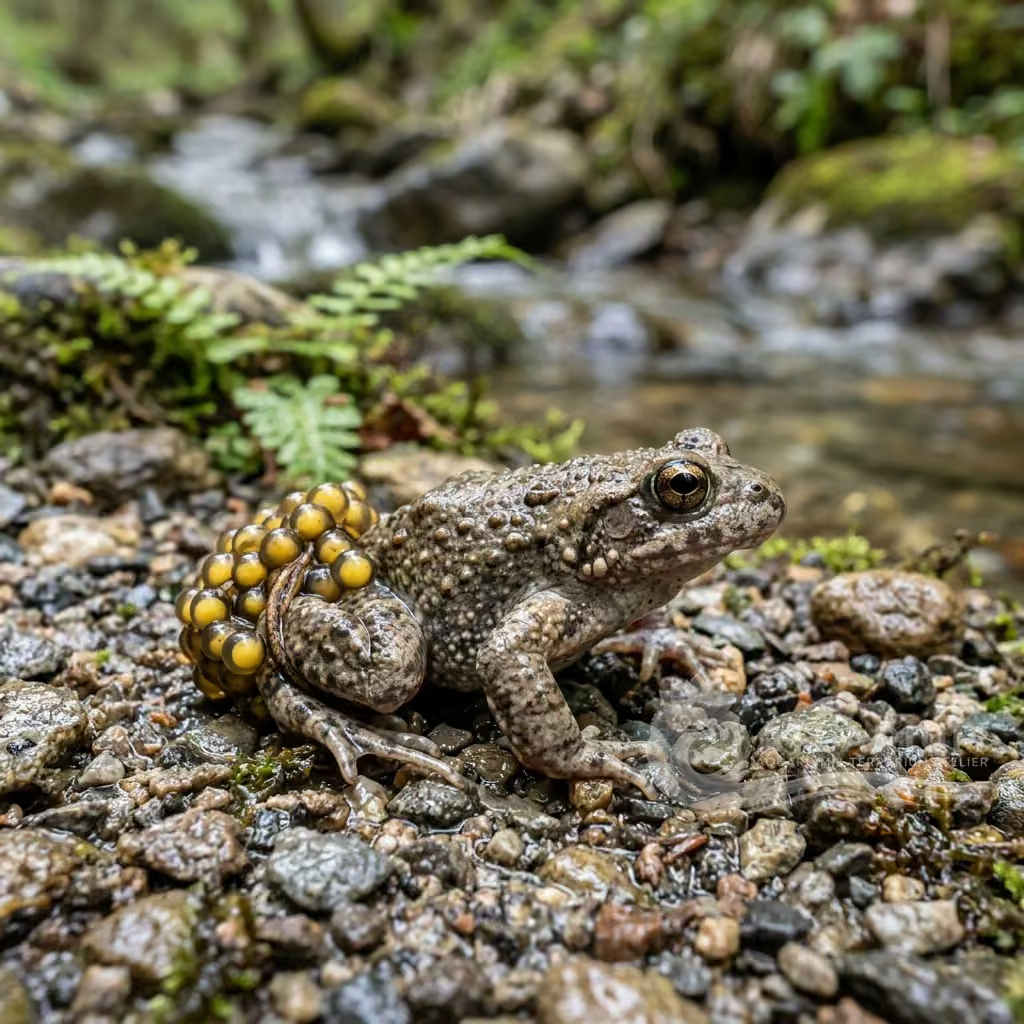
Mediterranean tree frog
Hyla meridionalis
Hyla meridionalis is a medium-sized tree frog native to southwestern Europe and North Africa. Highly robust and straightforward to keep, it requires a humid, well-ventilated terrarium.
Ambiente
Terrestre
Umidade
50 - 80 %
Temperatura diurna
24 °C
Temperatura noturna
16 - 18 °C
Temperatura ambiente
24 °C
Gabinete mínimo
>= 45 L

Descrição da espécie
Geographical Origin and Habitat:
Hyla meridionalis, commonly known as the Mediterranean tree frog, is native to the coastal regions of southwestern Europe, including southern France, the Iberian Peninsula, northwestern Italy (Liguria), and the Balearic Islands, as well as coastal North Africa and the Canary Islands. It inhabits humid environments such as reed beds, pond margins, slow-flowing streams, wet gardens, and orchards. It is highly arboreal, climbing trees, bushes, and riparian vegetation up to moderate altitudes.
Taxonomy and Genetics:
Belonging to the family Hylidae, it is closely related to the European tree frog (Hyla arborea). It genetically diverged due to geographic isolation and is distinguished by its dark lateral stripe, which starts at the nostril and stops abruptly behind the eye, never continuing down the flanks. No consolidated subspecies are recognized, though the Canary Islands populations show minor genetic divergence.
Behavior and Habits:
This amphibian is primarily crepuscular and nocturnal. During the day, it remains completely motionless and camouflaged on the underside of large leaves to minimize skin moisture loss. During the spring breeding season, males congregate near water bodies and call with a very loud, low-pitched croaking sound produced by a large vocal sac under the throat, which is audible from great distances.
Morphology:
It features a slender body with smooth skin that is typically a uniform, vibrant bright green on the back, though it can change to gray or brown depending on temperature and humidity. The belly is white or cream. The fingers and toes end in specialized adhesive discs that allow for exceptional climbing on smooth surfaces like glass. Adults measure between 5 and 6 centimeters in length.

Cuidado, criação e companheiros de tanque
Terrarium Setup:
Requires a vertically oriented terrarium of at least 45x45x60 cm for a small group. The enclosure should be heavily planted with broad-leaved live plants (such as Philodendron or Ficus) and furnished with climbing branches of various diameters. The ideal substrate is damp coconut fiber or peat moss topped with sphagnum moss to retain moisture. A shallow, clean water dish is mandatory.
Lighting and Heating:
Prefers moderate temperatures between 20°C and 24°C during the day, with a nighttime drop to 16-18°C. No intense heating is required; during winter, they can tolerate cooler temperatures (10-12°C) to simulate a natural winter rest. A low-output UVB lamp (2.0% or 5.0% UVB) turned on for 10 hours a day is recommended to support bone health.
Humidity and Hydration:
Relative humidity must be kept between 60% and 80% by misting the enclosure daily with dechlorinated or reverse osmosis water, preferably in the morning and evening. Amphibians absorb water through their highly permeable skin, making a clean water bowl (changed daily with chlorine-free water) vital for proper hydration.
Feeding and Supplementation:
An opportunistic insectivorous predator. The diet should consist of small live insects such as crickets, flies, small roaches, and occasionally mealworms. All prey items must be dusted with pure calcium at every feeding and with calcium + vitamin D3 twice a week. Feed in the evening when the frogs are active.
Compatibility:
Can be housed in small groups of the same species, provided all individuals are of similar size to prevent cannibalism. Do not house with other amphibian or reptile species to prevent pathogen transmission and territorial stress. Note that males can call very loudly during the night, especially in spring.
Health and Common Diseases:
Amphibians have highly sensitive skin that easily absorbs chemical contaminants; never use soap or household disinfectants inside the enclosure. Metabolic Bone Disease (MBD) is a risk if calcium or UVB lighting is neglected. Poor hygiene or water logging can lead to bacterial or fungal skin infections (such as chytridiomycosis).

Origem e distribuição geográfica
Hyla meridionalis, commonly known as the Mediterranean tree frog, is native to the coastal regions of southwestern Europe, including southern France, the Iberian Peninsula, northwestern Italy (Liguria), and the Balearic Islands, as well as coastal North Africa and the Canary Islands. It inhabits humid environments such as reed beds, pond margins, slow-flowing streams, wet gardens, and orchards. It is highly arboreal, climbing trees, bushes, and riparian vegetation up to moderate altitudes.
Origem
América do NorteÁfrica e MadagascarEuropa, Mediterrâneo e Ásia Ocidental

Perfil anfíbio
- Dieta
- Insectivore
- The Mediterranean tree frog primarily feeds on a variety of small invertebrates. Its diet consists mainly of insects such as flies, mosquitoes, small beetles, and spiders. In captivity, they can be offered appropriately sized crickets, fruit flies, and small mealworms. Providing a diverse diet dusted with calcium and vitamin supplements ensures optimal health.
- Expectativa de vida
- 8-12 years
- Tamanho adulto
- 5 cm
- Estilo de vida/Microhabitat
- Arboreal
- The Mediterranean tree frog leads a predominantly arboreal lifestyle, spending most of its time in shrubs, bushes, and trees. They prefer habitats with dense vegetation situated close to freshwater bodies. Despite their arboreal nature, they descend to the water to breed and may forage in lower vegetation. They are adept at jumping and catching prey mid-air.
- Ciclo de atividades
- Nocturnal
- They are primarily nocturnal and crepuscular, becoming most active during the evening and night. During the hot daylight hours, they typically seek shelter in shaded, moist areas to prevent dehydration. Activity levels peak during the breeding season and on warm, humid, or rainy nights. In cooler periods, their activity significantly decreases.
- Socialidade
- Gregarious
- This species is known for its excellent climbing abilities, utilizing adhesive toe pads to navigate vegetation. They are often found resting on leaves, stems, or branches near water sources. While generally peaceful, males can become territorial during the breeding season. They rely heavily on their green coloration for camouflage among the foliage.
- Reprodução
- Oviparous
- Reproduction typically occurs in temporary pools, ponds, or slow-moving streams during the spring. Males call loudly at night to attract females, producing a distinctive, slow croak. Females lay small clutches of eggs that attach to submerged vegetation. The aquatic tadpoles develop over several months before metamorphosing into small froglets.
- Toxicidade
- Harmless
- The Mediterranean tree frog is non-toxic and lacks harmful skin secretions. Their primary method of defense is to remain perfectly still and blend in with surroundings. If discovered, they rely on quick, erratic jumps to escape predators like birds and snakes. Handling should be avoided to prevent the transfer of harmful substances.
- Estágio de vida
- Metamorphosis
- The life cycle involves an aquatic larval stage following the hatching of eggs. Tadpoles graze on algae and microscopic organisms, growing steadily in their environment. Metamorphosis typically occurs in late summer, resulting in miniature versions of adults. They reach sexual maturity in their second year.
- Tolerância de tratamento
- Display only
- Due to their delicate, permeable skin, handling must be kept to an absolute bare minimum. Human skin oils and salts can cause significant stress and toxicity to the frog. If moving them is required, keepers should wear powder-free, moistened gloves to protect the amphibian's protective slime coat.
- Brumação
- Native to temperate regions, this species naturally undergoes a period of winter brumation to survive freezing temperatures. In captivity, simulating a cooling down period (often around 40-50°F or 4-10°C) for several weeks is highly recommended to mimic natural seasonal cycles and stimulate proper breeding behavior.
- Muda
- Periodic
- Shedding is a frequent and normal occurrence, with the frog typically crouching down, pulling the old skin off with its mouth, and consuming it to recycle nutrients. Providing localized areas of higher humidity within the terrarium is essential during this process, as dry conditions can cause the skin to stick and restrict blood flow.

Espécies relacionadas
Recomendações agrupadas por parentes próximos, escolhas de acompanhantes e cuidados semelhantes.