Red-backed poison frog
Ranitomeya reticulata
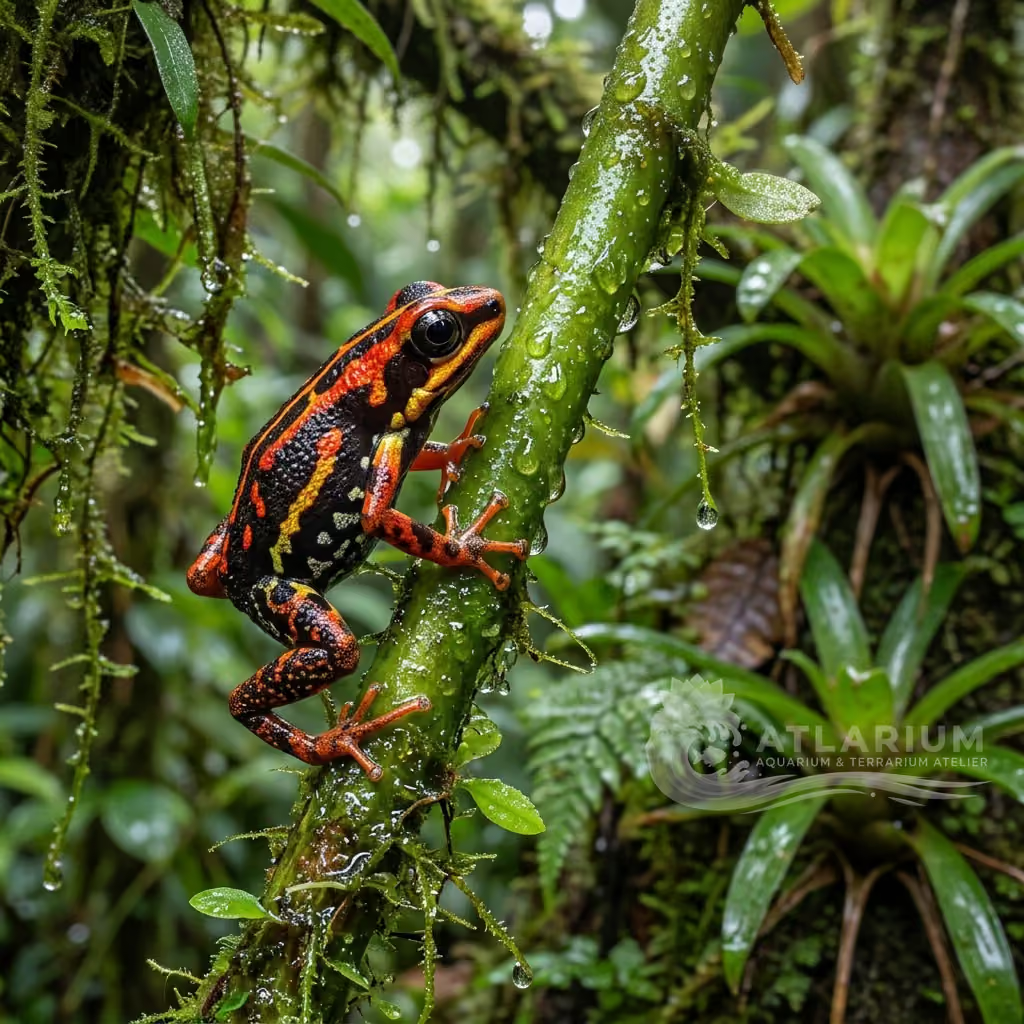
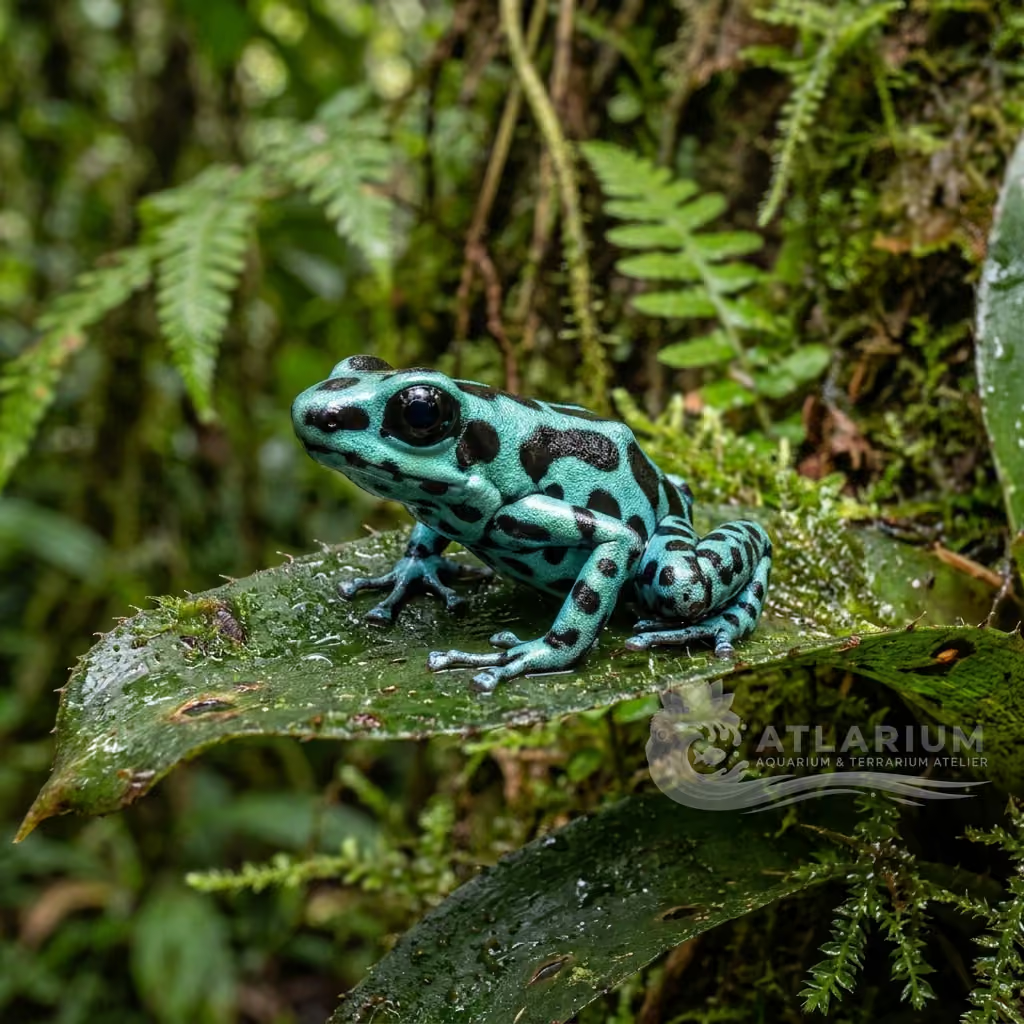
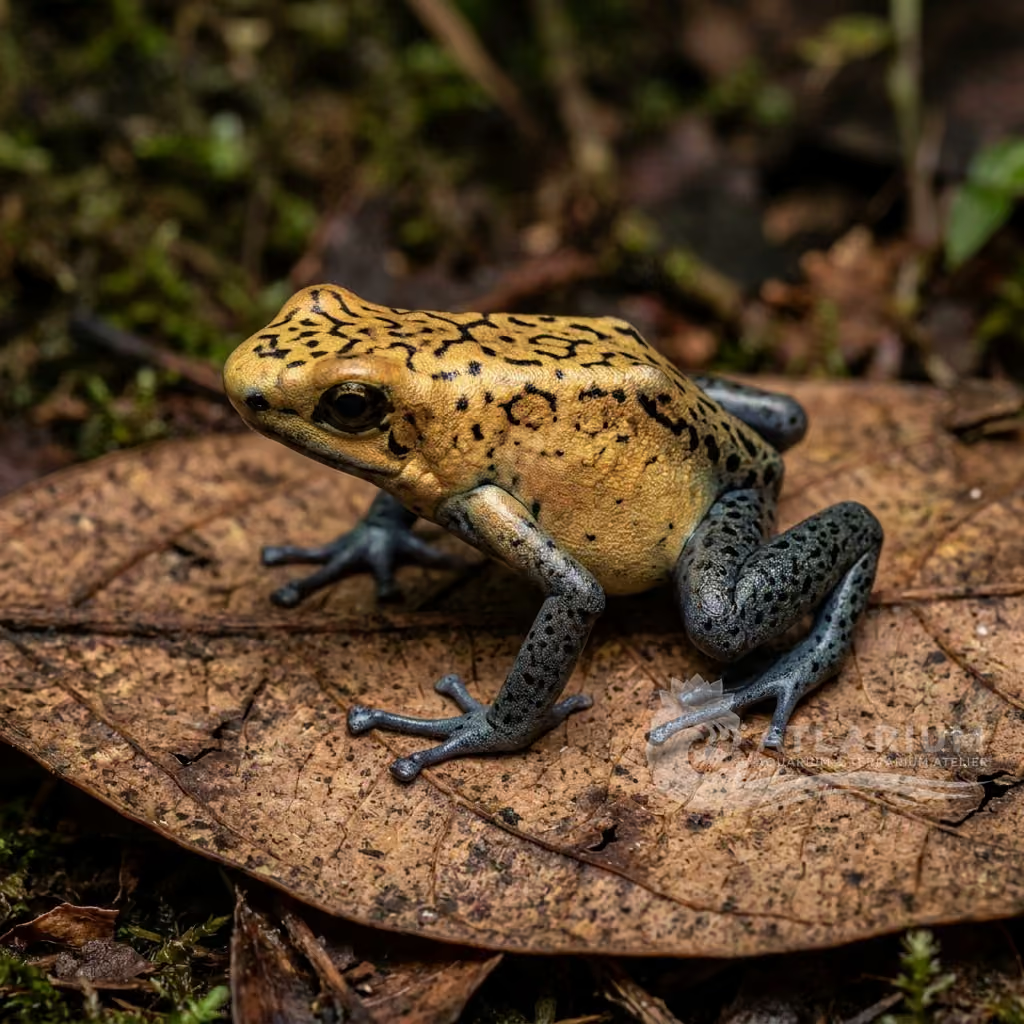
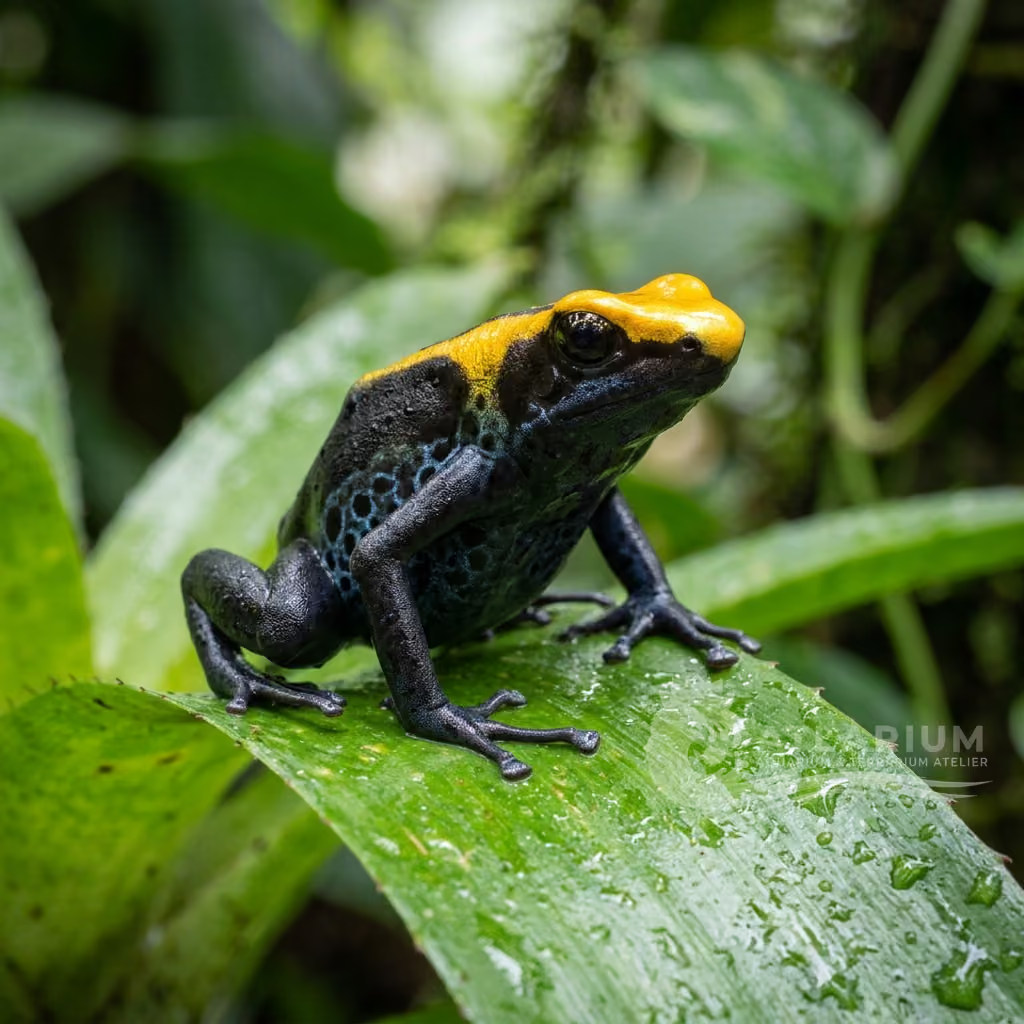
Ranitomeya reticulata is a tiny poison dart frog native to the Amazon rainforest. Famous for its brilliant red back and reticulated legs, it requires a specialized humid terrarium.
Ambiente
Terrestre
Umidade
80 - 100 %
Temperatura diurna
22 - 26 °C
Temperatura noturna
20 - 22 °C
UVB
Ferguson 2
UVI
0,7 - 1 UVI

Descrição da espécie
Geographical Origin and Habitat:
This tiny species is native to the upper Amazon basin, primarily distributed in the primary rainforests of northern Peru (Loreto region) and southern Colombia. It inhabits the lower layers of the forest, living in the damp leaf litter of the forest floor and climbing onto epiphytic plants of the family Bromeliaceae, where it finds the water necessary for survival and tadpole rearing at elevations below 300 meters.
Taxonomy and Genetics:
Belonging to the family Dendrobatidae and the genus Ranitomeya, it was previously classified as Dendrobates reticulatus. It was reclassified following phylogenetic analyses that confirmed its placement within the group of dwarf, arboreal poison frogs of the Amazon. It is closely related to Ranitomeya fantastica and Ranitomeya benedicta, sharing a strong ecological specialization for phytotelmata.
Behavior and Habits:
It is a diurnal, highly active, shy, and territorial frog. It spends the day exploring vegetation for tiny insects. Males defend their reproductive territories by emitting a soft, buzzing call from bromeliad leaves. They display complex parental care, including carrying tadpoles on their backs one by one to deposit them into water-filled bromeliad leaf axils.
Morphology:
One of the smallest species in the genus, with adults measuring only 12 to 15 millimeters in snout-vent length. It features a striking aposematic coloration: the back is a solid, brilliant orange-red to bright scarlet, while the flanks, belly, and legs are covered in an intricate blue-black or gray-black reticulation. The skin is smooth and secretes alkaloid toxins in the wild.

Cuidado, criação e companheiros de tanque
Terrarium Setup:
Requires a vertically oriented terrarium of at least 30x30x45 cm for a pair or small group. The enclosure must be heavily planted with live Neoregelia species (bromeliads) that feature water-holding leaf axils. The substrate should be a bio-active mix covered with sphagnum moss and leaf litter. Vertical walls covered in cork bark or coconut fiber will increase climbing space.
Lighting and Heating:
Requires stable temperatures between 23°C and 26°C during the day, with a slight nighttime drop to 20°C. Avoid temperatures exceeding 28°C, which can cause fatal heat stress. Lighting should support live plant growth, and a low-output UVB light (2.0% UVB) for 10-12 hours a day is highly recommended for vitamin D3 synthesis.
Humidity and Hydration:
Relative humidity must be kept constantly high, between 80% and 100%. This is achieved using an automatic misting system or manual spraying two to three times daily with reverse osmosis water. The leaf axils of the bromeliads must always be filled with clean water. Avoid waterlogged substrate to prevent bacterial growth.
Feeding and Supplementation:
Due to its tiny size, it must be fed exclusively with very small live insects, such as flightless fruit flies (Drosophila melanogaster), springtails, aphids, and pinhead crickets. Prey items must be dusted with pure calcium at every feeding, and with a calcium + vitamin D3 + vitamin A supplement twice a week to prevent nutritional deficiencies.
Compatibility:
Can be kept in pairs or small groups (usually one male and multiple females). Males can show minor territorial behavior, but rarely harm each other if the enclosure is spacious and well-planted. Do not house with other poison dart frog species to prevent hybridization and pathogen transmission. Handling should be avoided.
Health and Common Diseases:
A delicate species highly sensitive to fluctuations in temperature and humidity. The primary risk is rapid dehydration if humidity drops. They are susceptible to bacterial skin infections, intestinal parasites, and spindle leg syndrome in developing froglets, which is often caused by poor nutrition or water quality in the bromeliad axils.

Origem e distribuição geográfica
This tiny species is native to the upper Amazon basin, primarily distributed in the primary rainforests of northern Peru (Loreto region) and southern Colombia. It inhabits the lower layers of the forest, living in the damp leaf litter of the forest floor and climbing onto epiphytic plants of the family Bromeliaceae, where it finds the water necessary for survival and tadpole rearing at elevations below 300 meters.
Origem
Amazônia, Orinoco e Guianas

Perfil anfíbio
- Dieta
- Insectivore
- Due to their diminutive size, Red-backed Poison Frogs require an abundance of tiny live prey, primarily springtails and dwarf isopods. Flightless fruit flies (D. melanogaster) can be offered to adults, but froglets strictly rely on springtails. Consistent vitamin and calcium supplementation is crucial to prevent rapid nutritional deficiencies.
- Expectativa de vida
- 10-15 years
- Tamanho adulto
- 1.5 cm
- Estilo de vida/Microhabitat
- Arboreal
- This strictly arboreal species requires vertically oriented vivariums densely packed with epiphytic plants and climbing vines. They demand incredibly high humidity (85-100%) and moderate temperatures (70-76°F) to mimic the Peruvian Amazon. A bioactive setup with a robust micro-fauna population is mandatory for their survival.
- Ciclo de atividades
- Diurnal
- Activity is strictly governed by the light cycle, peaking in the morning and late afternoon hours. They retreat to the cooler, shaded areas of the vivarium during midday to avoid overheating. At night, they seek complete safety by wedging themselves deep into leaf axils to sleep.
- Socialidade
- Solitary
- They are fast, active, and diurnal, spending their days thoroughly investigating every leaf and crevice for food. Males are fiercely territorial and will vocalize and physically wrestle other males to defend prime bromeliads. Despite their bright warning colors, they are somewhat shy and prefer dense foliage cover.
- Reprodução
- Oviparous
- Breeding occurs entirely in the canopy, with males calling softly to guide females to suitable bromeliad leaves for egg deposition. The male is primarily responsible for parental care, transporting hatched tadpoles individually on his back to separate water axils. Unfertilized "feeder" eggs may be provided by the female to sustain the developing tadpoles.
- Toxicidade
- Harmless
- In the wild, their diet consists of specific toxic mites, rendering their skin highly poisonous to predators. Captive-bred individuals fed a standard hobbyist diet do not accumulate these toxins and are entirely safe. Their striking red backs and patterned legs remain a bright, harmless bluff in the terrarium.
- Estágio de vida
- Metamorphosis
- Tadpoles develop in tiny arboreal water pockets and are generally cannibalistic, requiring isolation if reared artificially. Morphing froglets are astonishingly small, susceptible to instant desiccation if humidity drops, and need constant access to micro-fauna. Adults max out around 15mm, remaining active and spry throughout their 5-10 year lifespan.
- Tolerância de tratamento
- Display only
- Under no circumstances should these delicate frogs be handled directly. The oils, salts, and even the natural warmth of human hands can cause fatal stress and skin degradation. Safe relocation is exclusively done by ushering the frog into a clean, smooth container.
- Brumação
- Não obrigatório
- They do not undergo brumation or tolerate any form of winter cooling. They require stable tropical parameters entirely devoid of cold drafts or prolonged dry spells. Breeders may utilize slight, carefully controlled dry/wet cycles to stimulate reproduction, but this is not true brumation.
- Muda
- Periodic
- Like other thumbnail dart frogs, they shed rapidly and discreetly, usually early in the morning before becoming active. The old skin is sloughed off through bodily contortions and promptly ingested to recycle nutrients. This process is entirely normal and ensures their skin remains highly permeable.

Espécies relacionadas
Recomendações agrupadas por parentes próximos, escolhas de acompanhantes e cuidados semelhantes.