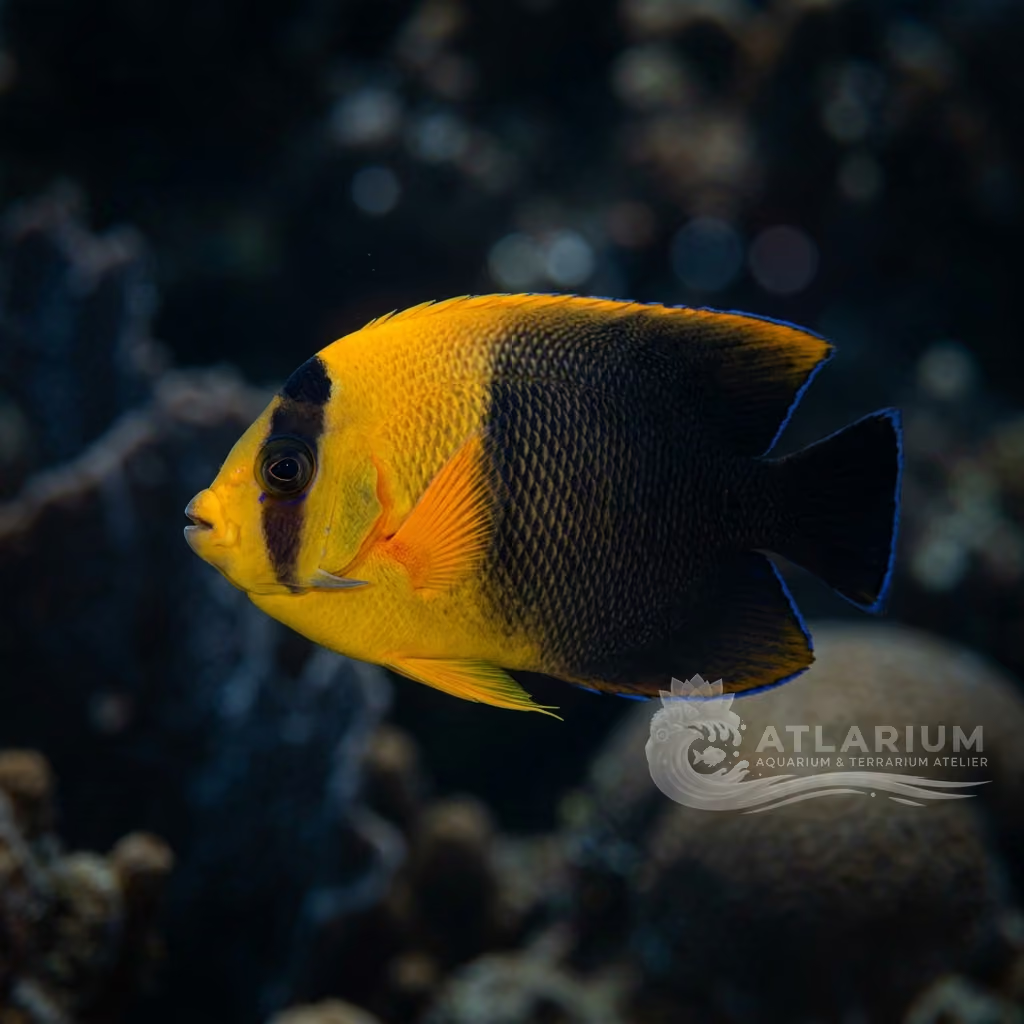
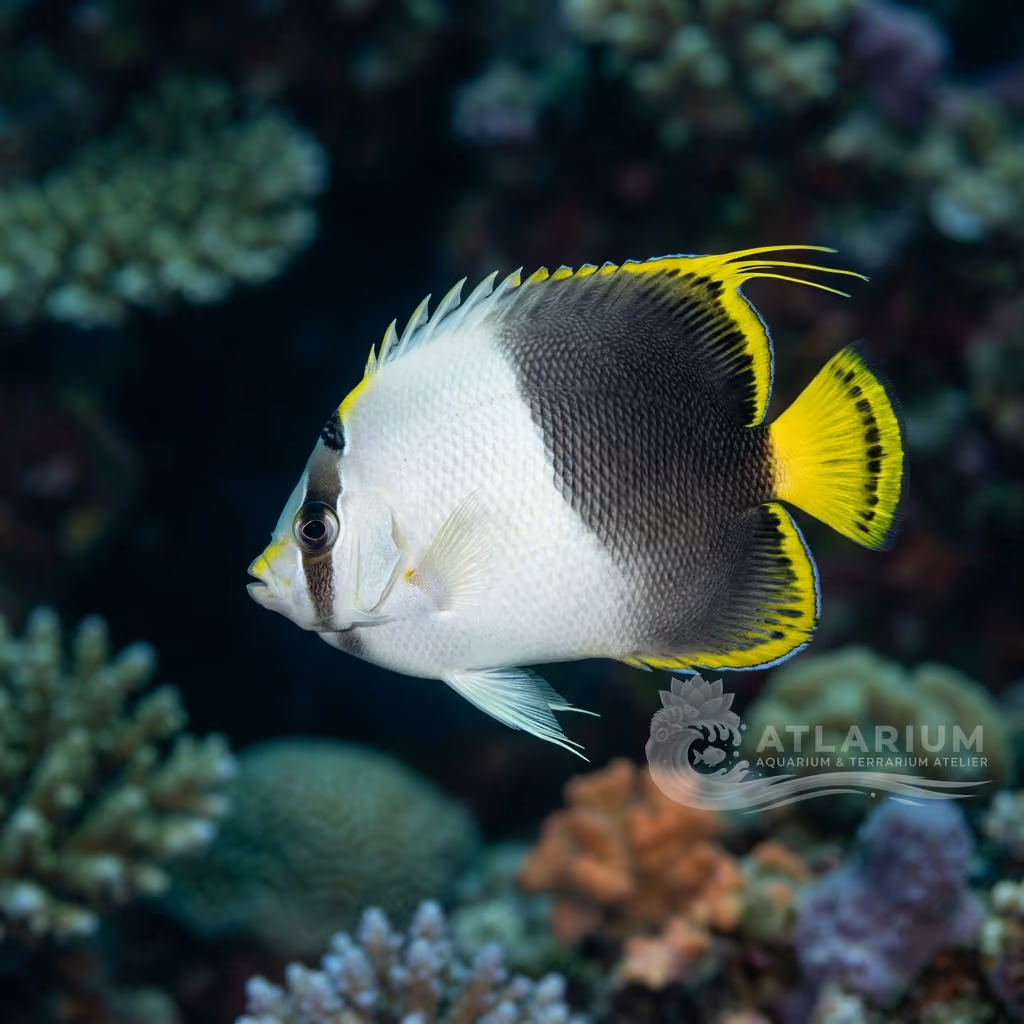
Japanese swallowtail angelfish
Genicanthus semifasciatus
This stunning, swallow-tailed angelfish dwells along deep Pacific walls. Displaying remarkable color differences between sexes, it is a tireless swimmer requiring immense open space and subdued lighting.
Temperatura da água
20 - 25 °C
Valor de pH
8.1 - 8.4
Tipo de água
Marinho
Nível do tanque
Todos os níveis
Tamanho adulto
21 cm
Volume mínimo do tanque
>= 500 L
Grupo mínimo
>= 1
KH
8 - 12 dKH

Descrição da espécie
Geographical Origin and Habitat: Genicanthus semifasciatus is native to the tropical Western Pacific. It inhabits the coasts of southern Japan, Taiwan, and extends to the Philippines and parts of northern Indonesia. It primarily populates seaward reef slopes, deep drop-offs (vertical walls dropping into deep water), and reef edges exposed to open ocean currents. It is found at significant depths, typically ranging between 15 and 100 meters, where the water is clear, cool, and rich in zooplankton carried by currents.
Taxonomy and Morphology: It belongs to the class Actinopterygii, order Perciformes, family Pomacanthidae. Like other members of the genus Genicanthus, it features an elongated, hydrodynamic body characterized by a lyre-shaped caudal fin (with the outer lobes extending into long filaments resembling a swallowtail). It reaches a maximum adult length of about 21 centimeters. The mouth is small, terminal, and protractile, specialized for catching small planktonic organisms in open water.
Social Behavior: It is a gregarious, diurnal fish that in the wild lives in small harems consisting of a single dominant male and several females. It swims constantly in the open water column, well above coral formations, to intercept food. It has a peaceful temperament toward other fish species and, unlike most angelfish, is considered completely reef-safe because it does not graze on coral polyps or sessile invertebrates.
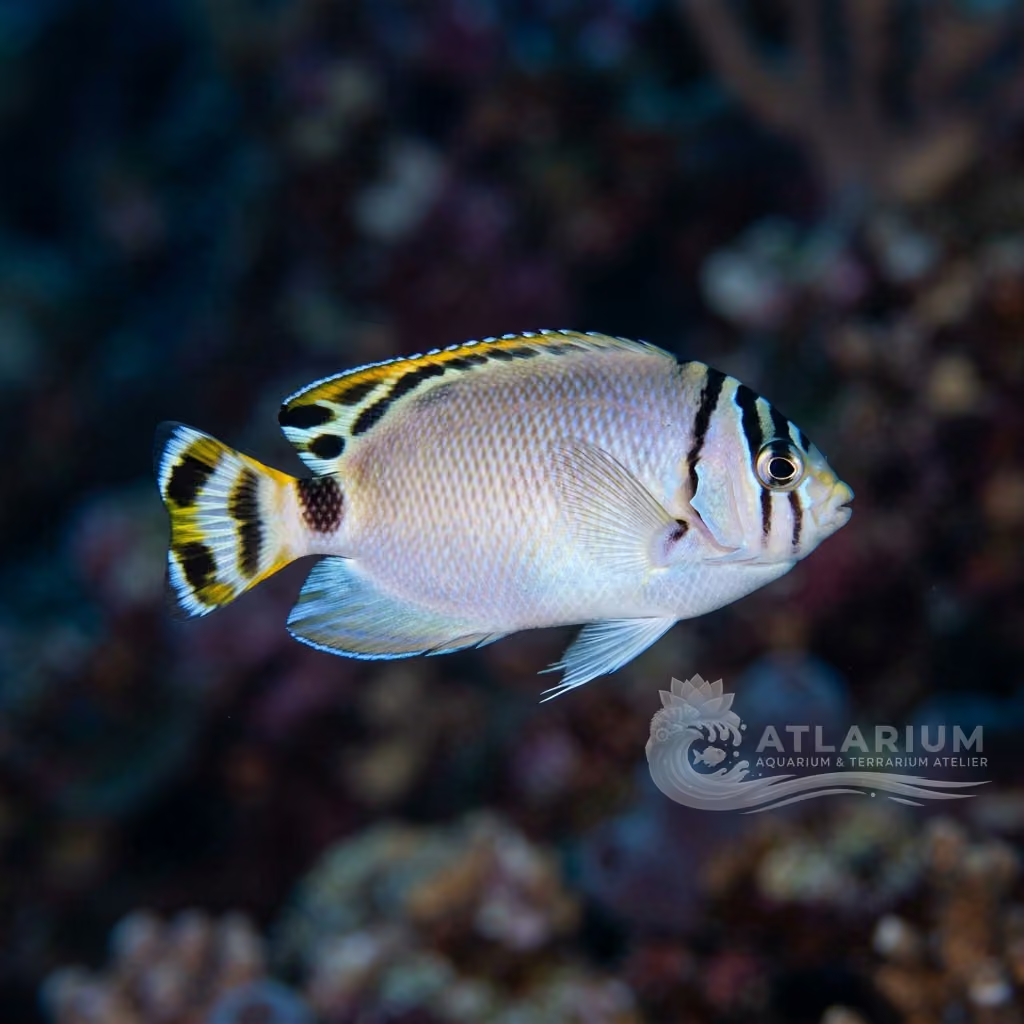
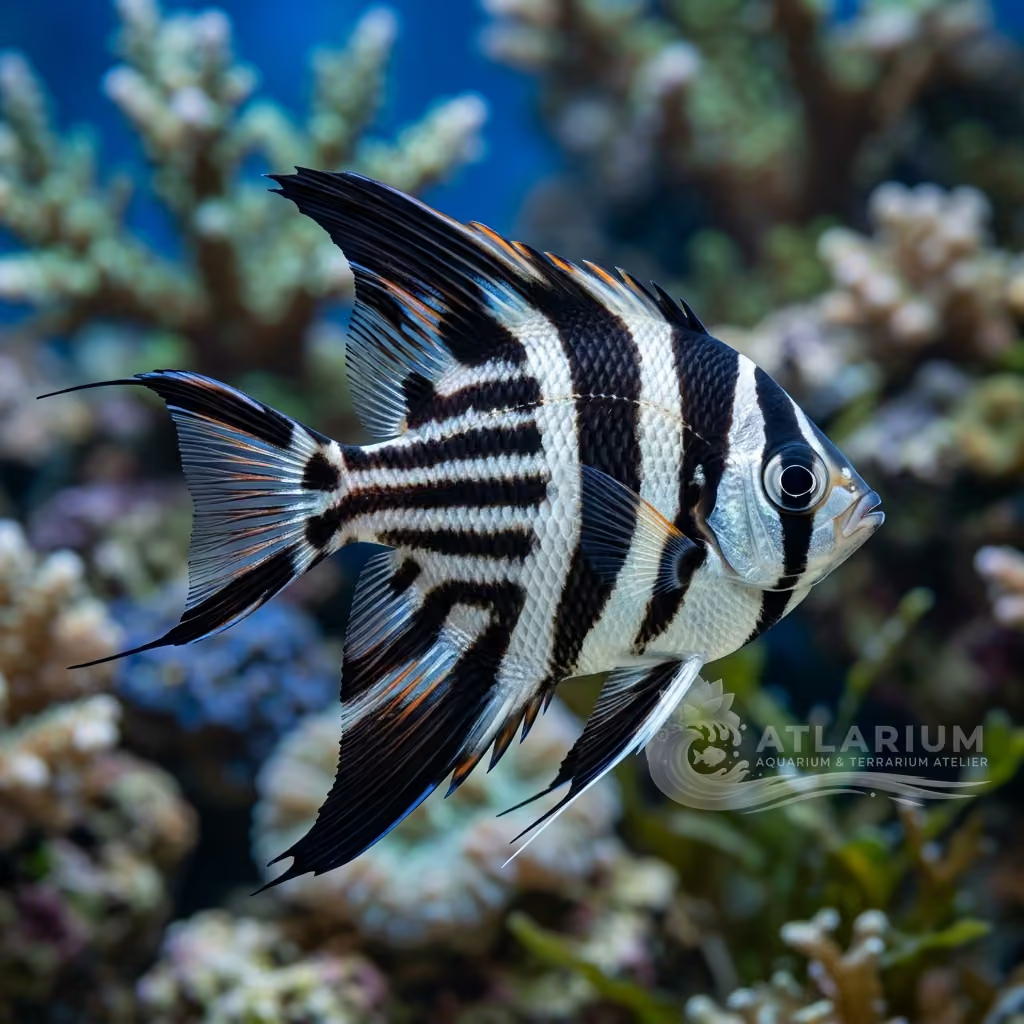
Coloration and Sexual Dimorphism: Sexual dimorphism is extraordinarily pronounced. Males feature a yellow-orange coloration on the back and upper body, vertically crossed by numerous thin black zebra-like stripes, while the belly is whitish. Females have a pale greyish-blue back with a yellow longitudinal band running below the dorsal fin, a white belly, and a distinct black line running through the eye and operculum.

Cuidado, criação e companheiros de tanque
Aquarium Setup: It requires a long-established marine aquarium with a minimum volume of 400 liters. The tank must provide a large, open swimming area in the middle and upper sections, as this species is a tireless swimmer. The arrangement of live rock should recreate steep slopes with overhangs and large shaded caves to simulate deep-water zones and offer secure resting areas. Because it is a deep-water fish, the tank's lighting should be moderate or dimmed during the initial acclimation phases.
Diet and Feeding: It is a specialized planktivore. In the aquarium, it must be fed multiple times a day (at least 3-4 times) with small portions of food due to its fast metabolism. The diet should include high-quality frozen foods such as mysis, brine shrimp, copepods, fish eggs, and chopped krill. It also readily accepts dry flakes and pellets enriched with spirulina and vitamins. Providing a diet rich in fats and proteins is crucial to prevent wasting and to maintain the health of the tail filaments.
Water Quality: It needs clean, highly oxygenated water with vigorous current flows. Recommended parameters are: temperature between 22°C and 26°C (it prefers slightly cooler temperatures compared to other tropical fish), stable pH between 8.1 and 8.4, specific gravity between 1.021 and 1.025, and extremely low nitrates and phosphates. Using an efficient protein skimmer, powerful powerheads, and regular partial water changes are essential.
Compatibility and Cohabitation: It is ideal for mixed reef aquariums (completely reef-safe). It coexists peacefully with most reef fish such as surgeonfish, clownfish, damselfish, and gobies. It is possible to keep a group consisting of one male and one or more females, provided the females are introduced first or all specimens are introduced simultaneously. Avoid housing two males in the same tank, as they will engage in violent and potentially lethal fights.
Aquarium Breeding: Breeding in home aquariums is extremely complex and has not yet been documented successfully in the hobby. It is a protogynous hermaphrodite: all specimens are born female, and within a group, the dominant individual transforms into a male. In the wild, spawning occurs in open water, releasing pelagic eggs that follow planktonic currents.
Risks and Diseases: It is vulnerable to parasitic skin infestations such as Marine Ich (Cryptocaryon) and Velvet (Oodinium), especially during transport and dietary acclimation. Preventive quarantine is highly recommended. It is also sensitive to Head and Lateral Line Erosion (HLLE) if its diet is vitamin-deficient or if water quality is poor. Specimens harvested from great depths may suffer swim bladder damage if decompression was not handled correctly.

Origem e distribuição geográfica
Genicanthus semifasciatus is native to the tropical Western Pacific. It inhabits the coasts of southern Japan, Taiwan, and extends to the Philippines and parts of northern Indonesia. It primarily populates seaward reef slopes, deep drop-offs (vertical walls dropping into deep water), and reef edges exposed to open ocean currents. It is found at significant depths, typically ranging between 15 and 100 meters, where the water is clear, cool, and rich in zooplankton carried by currents.
Origem
Oceanos tropicais e recifesSul e Sudeste AsiáticoLeste Asiático

Perfil de peixe
- Temperamento
- Peaceful
- It is peaceful and sociable. It rarely bothers other fish. It becomes bold over time.
- Dieta
- Carnivore
- It is a planktivore. Feed a varied diet of mysis shrimp. Offer high-quality pellets daily.
- Expectativa de vida
- 10-15 years
- Tamanho adulto
- 21 cm
- Proporção sexual
- Harem
- They form natural harems. Keep one male with multiple females. Multiple males will fight aggressively.
- Frequência de alimentação
- Twice daily
- It is very active. It needs multiple daily feedings. Feed small portions three times daily.
- Carga biológica
- Medium to High
- The bioload is moderate. Efficient biological filtration is required. Regular water changes keep nitrates low.
- Fluxo
- Strong
- It is an open-water swimmer. It appreciates strong water flow. Good circulation simulates ocean currents.
- Risco de salto
- Yes
- It is easily startled. There is a high jump risk. A tight lid is necessary.
- Reprodução
- Oviparous
- It is a pelagic spawner. Captive breeding is exceptionally rare. Fry require specialized live foods.
- Compatibilidade e companheiros de tanque
- Reef safe
- It is very peaceful. This fish is completely reef safe. Avoid overly aggressive tank mates.
- Nível do tanque
- All levels
- It is an active swimmer. It uses the upper tank levels. Open swimming space is required.

Modelos e parâmetros científicos
FishBase
Acesso aos dados científicos oficiais da espécie
FishBase v25.04Dados sincronizados em: 15/06/2026
- Nível trófico
- 3,4 ± 0,45 se
- Resiliência
- Média (1,4 - 4,4 anos)
- Unicidade filogenética (PD50)
- 0.501
- Relação bayesiana comprimento-peso
- a = 0.0302, b = 2.89
- VulnerabilidadeVulnerabilidade baixa (11 / 100)

Espécies relacionadas
Recomendações agrupadas por parentes próximos, escolhas de acompanhantes e cuidados semelhantes.