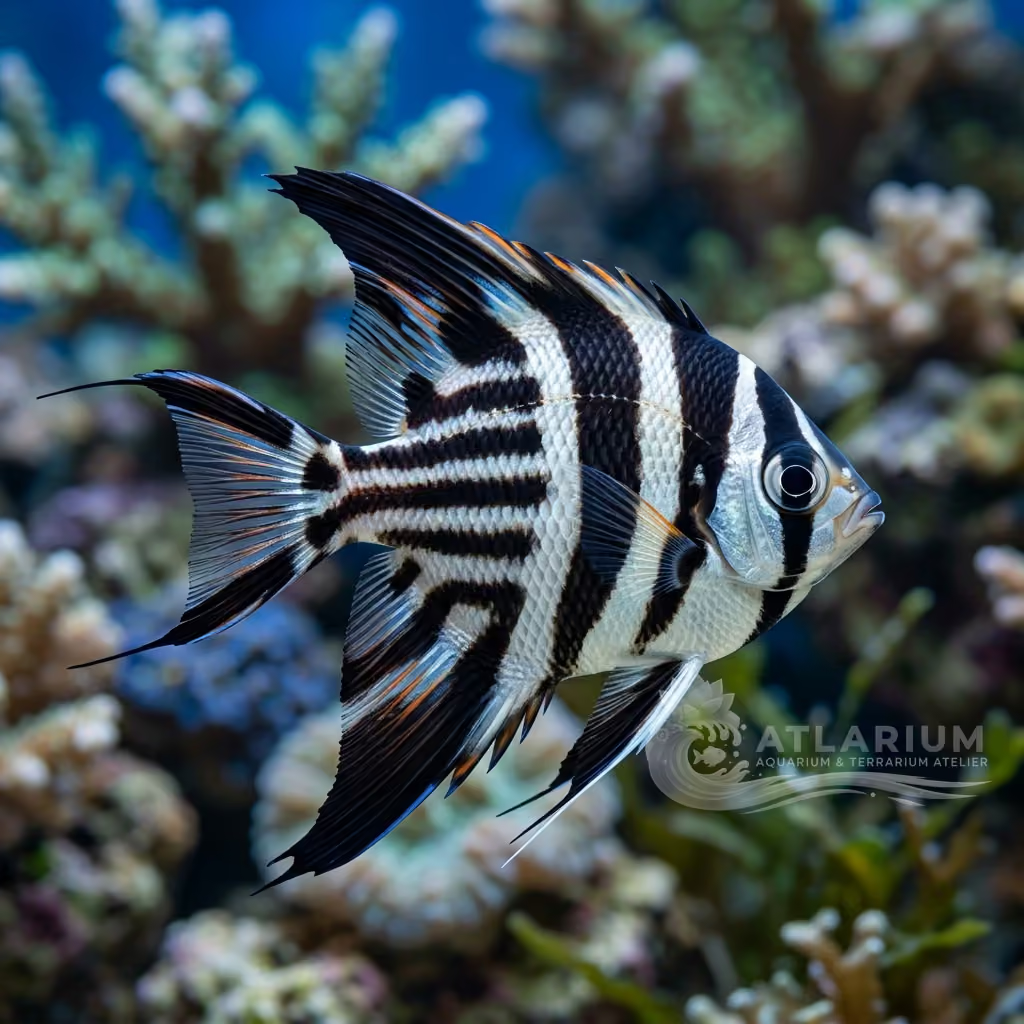
Flameback Angelfish
Centropyge aurantonotus
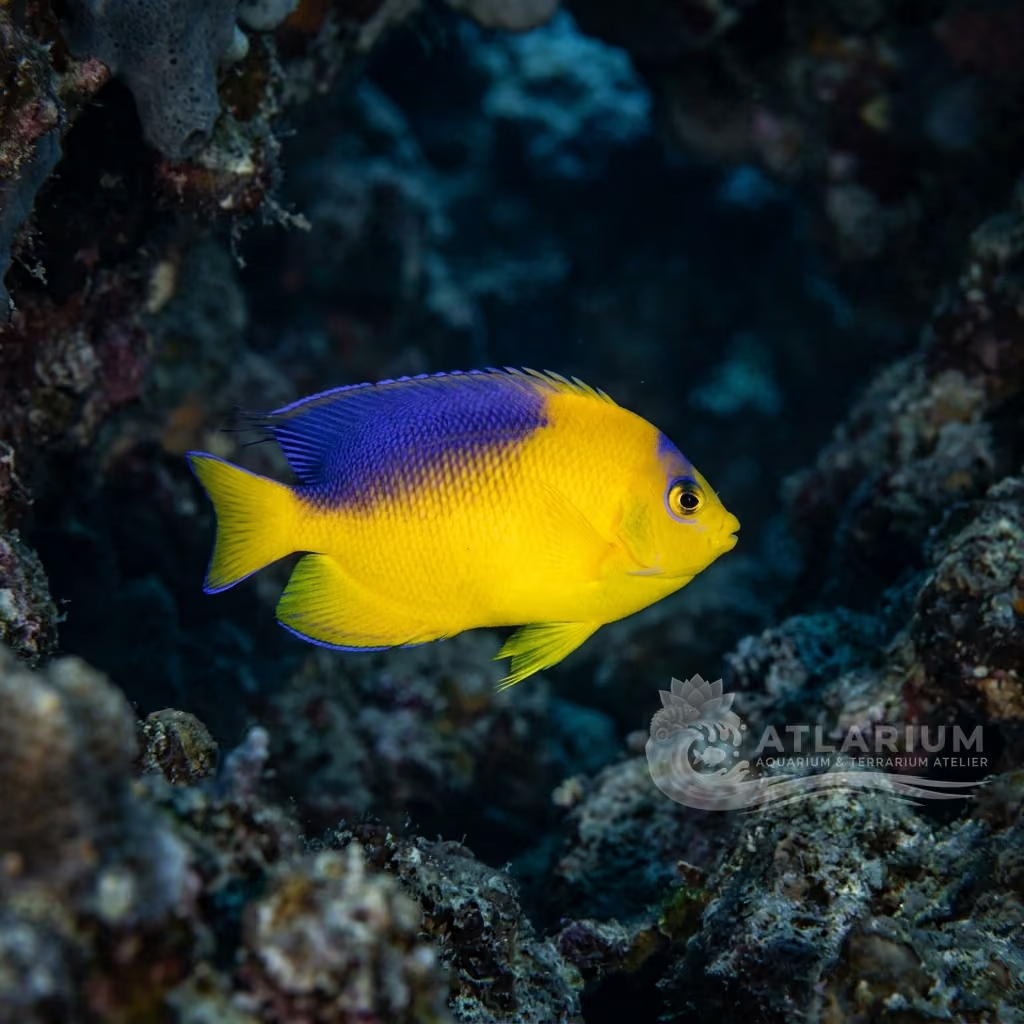
This small yet striking pygmy angelfish features a brilliant yellow-orange back that sharply contrasts with a deep blue body, providing a spectacular visual display.
Temperatura da água
22 - 26 °C
Valor de pH
8.1 - 8.4
Tipo de água
Marinho
Nível do tanque
Parte inferior e intermediária
Tamanho adulto
8 cm
Volume mínimo do tanque
>= 120 L
Grupo mínimo
>= 1
KH
8 - 12 dKH

Descrição da espécie
Geographical Origin and Habitat: Centropyge aurantonotus, commonly known as the flameback pygmy angelfish or Brazilian flameback angelfish, is native to the tropical Western Atlantic. Its range extends from the southern Caribbean Sea (specifically the Lesser Antilles and the Venezuelan coast) southwards to southern Brazil. It primarily inhabits deep seaward coral reefs, rocky rubble zones, and coastal reef slopes at depths ranging from 15 to 200 meters, preferring areas with dense microalgae growth and abundant natural hiding spots.
Taxonomy and Morphology: Classified within the family Pomacanthidae and the genus Centropyge. This dwarf angelfish is quite small, reaching a maximum adult length of only 7.5 centimeters. It exhibits the typical oval, highly compressed body shape characteristic of the family. A prominent feature is the sharp, prominent spine located on the lower edge of the preopercle margin, which is used for defense and can easily get tangled in aquarium nets.
Social Behavior: It is a territorial and semi-aggressive species, particularly towards other dwarf angelfish of similar size or coloration. In the wild, they are typically found living singly or in small harems consisting of one dominant male and two to three females. They spend their active daylight hours darting in and out of rock crevices, constantly grazing on reef structures and exhibiting a curious and bold temperament.
Coloration and Sexual Dimorphism: The coloration is striking and highly contrasting. The main body is a deep, rich sapphire-blue, while a brilliant, fire-like orange-yellow band runs from the snout, over the head, and along the entire back to the tip of the dorsal fin. Pectoral and anal fins remain dark blue. There is no visible external sexual dimorphism, although mature males are generally slightly larger than females.

Cuidado, criação e companheiros de tanque
Aquarium Setup: A minimum tank volume of 150 liters is recommended for a single specimen. The aquarium must be styled with a large amount of established live rock. Arrange the rocks to create an intricate network of caves, tunnels, and vertical structures, which allows the fish to hide when threatened and establish its territory. Ensure ample open water is left in the front for active swimming.
Diet and Feeding: An omnivore with a strong herbivorous preference. In the wild, it feeds on filamentous algae, microalgae, detritus, and small benthic invertebrates. In captivity, feed a varied diet including spirulina, dried nori seaweed, commercial angelfish formulas containing sponge, and frozen foods like mysis shrimp, brine shrimp, and finely chopped krill. Offer multiple small feedings daily.
Water Quality: Requires clean, stable reef conditions: temperature between 22 °C and 26 °C, pH of 8.1 to 8.4, specific gravity of 1.022-1.025, and a dKH of 8-12. Strong filtration, efficient protein skimming, and regular partial water changes are essential to keep nitrate and phosphate levels low, as they do not tolerate poor water quality.
Compatibility and Cohabitation: Reef compatibility is classified as caution. While they are generally safe, they may nip at the polyps of stony corals (SPS and LPS) and clam mantles, particularly if underfed. Excellent tankmates include semi-aggressive species like damselfishes, wrasses, chromis, and small tangs. Do not house with other Centropyge species unless the tank is exceptionally large.
Aquarium Breeding: Breeding is extremely difficult in home aquariums. They are protogynous hermaphrodites, where the dominant female changes sex to male. Spawning involves a vertical mating dance in the water column where pelagic eggs are released. Culturing the tiny, delicate larvae requires specialized live foods like copepods, making successful captive breeding very rare.
Risks and Diseases: Pygmy angelfish are prone to parasitic infections such as marine ich (Cryptocaryon irritans) and Lymphocystis. Malnutrition or lack of vitamins can trigger Head and Lateral Line Erosion (HLLE). To minimize risks, ensure a stress-free environment, use a quarantine tank for new arrivals, and supplement all food with marine-grade vitamins and HUFAs.

Origem e distribuição geográfica
Centropyge aurantonotus, commonly known as the flameback pygmy angelfish or Brazilian flameback angelfish, is native to the tropical Western Atlantic. Its range extends from the southern Caribbean Sea (specifically the Lesser Antilles and the Venezuelan coast) southwards to southern Brazil. It primarily inhabits deep seaward coral reefs, rocky rubble zones, and coastal reef slopes at depths ranging from 15 to 200 meters, preferring areas with dense microalgae growth and abundant natural hiding spots.
Origem
Oceanos tropicais e recifesExtra-Amazônica América do SulAmérica Central e Caribe

Perfil de peixe
- Temperamento
- Semi-aggressive
- This dwarf angelfish is classified as semi-aggressive and can become highly territorial, especially in smaller aquariums. They are known to exhibit aggression toward other dwarf angelfish, as well as fish of similar shape, size, or coloration. While they are generally peaceful toward unrelated tank mates like clownfish, wrasses, and gobies, they may chase newcomers during introduction. Additionally, they are considered reef-safe with caution, as they may occasionally nip at stony and soft corals or clam mantles.
- Dieta
- Omnivore
- The Flameback Angelfish is an omnivore with a strong herbivorous inclination, requiring a diverse and balanced diet. In the wild, they feed on microalgae, detritus, sponges, and small benthic invertebrates. In captivity, they should be offered high-quality marine algae, Spirulina-based flakes or pellets, and frozen foods like mysis shrimp, brine shrimp, and finely chopped seafood. Providing specialized foods containing sponge material is also beneficial for their health and coloration.
- Expectativa de vida
- 8-15 years
- Tamanho adulto
- 8 cm
- Proporção sexual
- Harem
- In their natural habitat, Flameback Angelfish form haremic groups consisting of one dominant male and several females. In captivity, they are most commonly kept as single specimens to avoid severe territorial aggression. If you wish to keep them in groups, a large tank is required, and they should be introduced as a harem of one male to multiple females, or as a established mated pair. Since they are protogynous hermaphrodites, keeping a group of small juveniles together will allow the largest and most dominant individual to eventually transition into a male.
- Frequência de alimentação
- Twice daily
- To replicate their natural foraging behavior, the Flameback Angelfish should be fed small amounts two to three times daily. Continuous grazing on live rock is also crucial, so a well-established aquarium with natural microalgae growth is highly beneficial. If the tank lacks natural algae, offering dried nori sheets on a veggie clip can keep them occupied between feedings. Frequent, smaller feedings also help reduce territorial behavior and lessen the likelihood of them nipping at corals.
- Carga biológica
- Low to Medium
- The Flameback Angelfish is a small species, reaching only about 3 inches (7.5 cm) in length, which translates to a low-medium biological waste production. However, because they require frequent feeding and a mature, algae-rich environment, a high-quality filtration system is essential to maintain stable water parameters. A protein skimmer and regular water changes are highly recommended to handle the organic waste from their varied diet. Maintaining low nitrate and phosphate levels is crucial for their long-term health and immune system.
- Fluxo
- Strong
- This species prefers moderate water flow, which closely mimics the currents of their native Western Atlantic reefs. Moderate circulation helps to keep the water well-oxygenated and suspended food particles within their reach. Extremely strong, direct flow should be avoided, as it can exhaust the fish and prevent them from swimming comfortably. Providing areas of lower flow within caves and rock structures allows them to rest and feel secure.
- Risco de salto
- Yes
- The Flameback Angelfish presents a moderate to high risk of jumping out of the aquarium, particularly when startled or chased by territorial tank mates. This behavior is especially common during the initial acclimation period or when lights are suddenly turned on or off. To prevent tragic accidents, a tight-fitting lid or a secure mesh screen cover is absolutely mandatory. Additionally, providing ample hiding spaces and caves will help the fish feel secure and reduce the urge to leap when frightened.
- Reprodução
- Oviparous
- Reproduction in the Flameback Angelfish is complex, as they are protogynous hermaphrodites that spawn in the water column at dusk. The male performs a courtship ritual of encircling and displaying to the female before they rise together to release eggs and sperm. While spawning in home aquariums is occasionally observed, raising the larvae is extremely difficult. The pelagic larvae are tiny, require specialized microscopic live foods, and are highly sensitive to water quality, making successful captive breeding a rare achievement.
- Compatibilidade e companheiros de tanque
- With caution
- They are compatible with a wide range of peaceful to moderately active marine fish, provided they are not closely related or similar in appearance. Good tank mates include marine gobies, clownfish, firefish, and larger wrasses, while aggressive species or other dwarf angelfish should generally be avoided. They are reef-safe with caution, meaning they may cohabit with corals but require close monitoring. Keeping them well-fed is one of the best ways to minimize the risk of them nipping at corals or clams.
- Nível do tanque
- Middle/Bottom
- This species is primarily a bottom-to-middle dweller, spending the majority of its time hovering close to live rock structures. They are active swimmers that constantly dart in and out of caves, crevices, and overhangs to graze on microalgae and search for food. While they may occasionally venture into the upper levels of the tank, they rarely stray far from the safety of the rockwork. Designing the aquascape with multiple rock formations will encourage them to utilize the lower and middle zones of the aquarium.

Modelos e parâmetros científicos
FishBase
Acesso aos dados científicos oficiais da espécie
FishBase v25.04Dados sincronizados em: 15/06/2026
- Nível trófico
- 2,5 ± 0 se
- Resiliência
- Alta (menos de 15 meses)
- Unicidade filogenética (PD50)
- 0.5
- Relação bayesiana comprimento-peso
- a = 0.0302, b = 2.89
- VulnerabilidadeVulnerabilidade baixa (10 / 100)

Espécies relacionadas
Recomendações agrupadas por parentes próximos, escolhas de acompanhantes e cuidados semelhantes.