Debelius' angelfish
Centropyge debelius
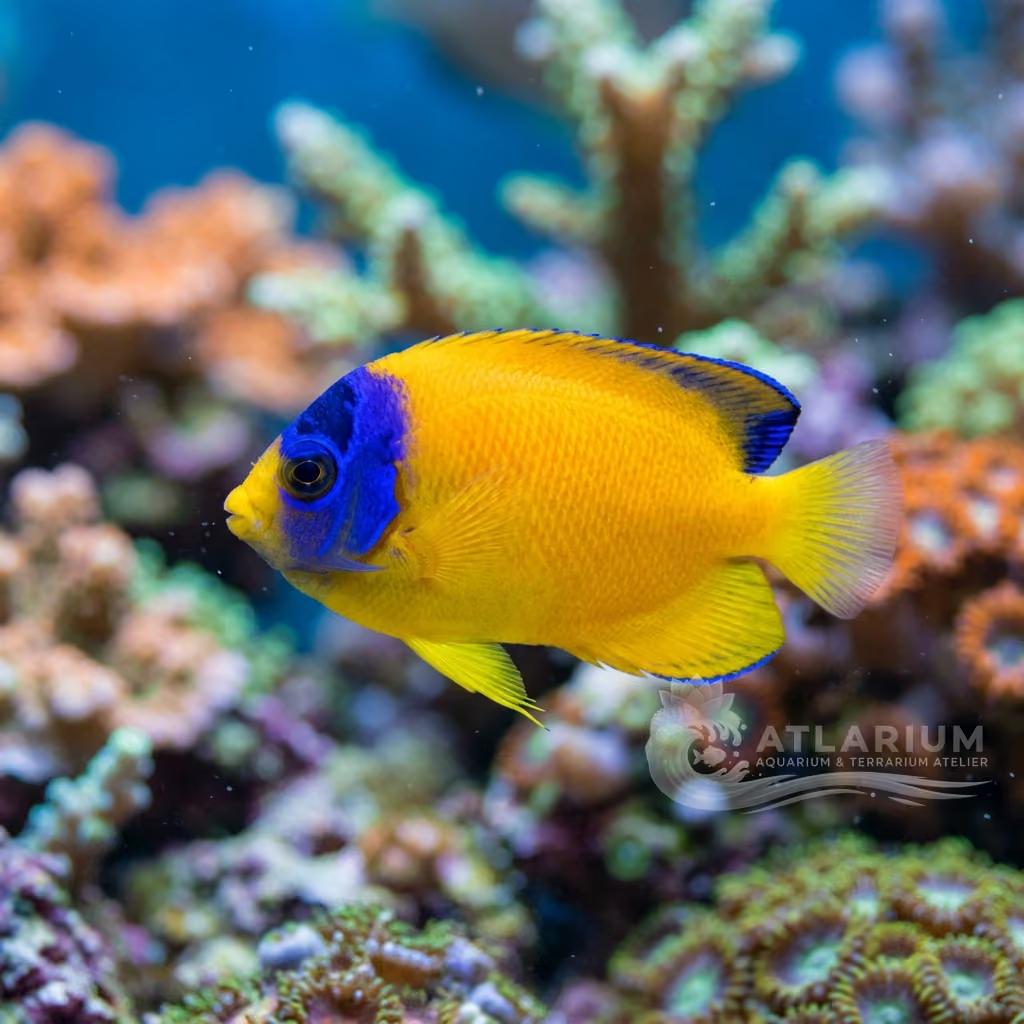
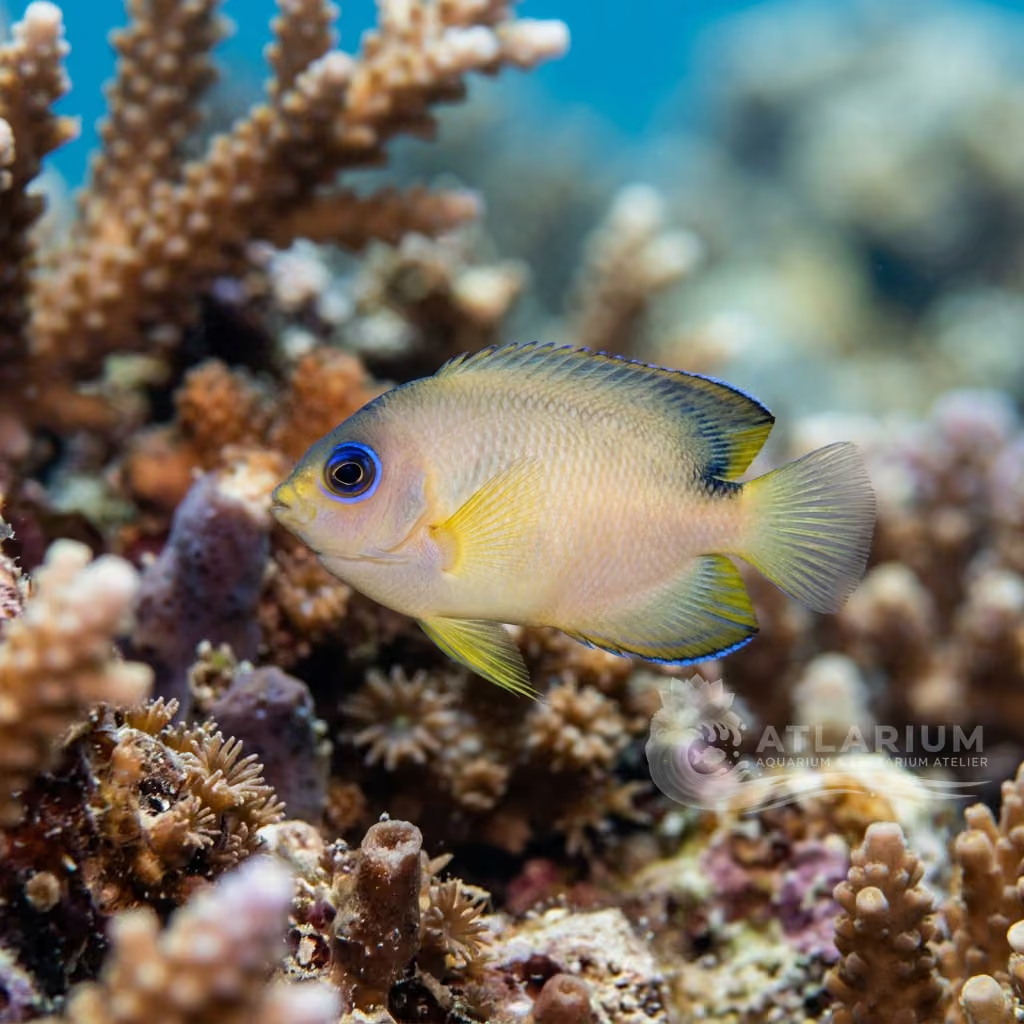
The Centropyge debelius is a rare, deep-water dwarf angelfish from the Indian Ocean, prized for its striking blue-purple body and yellow-orange head.
Temperatura da água
22 - 24 °C
Valor de pH
8.1 - 8.4
Tipo de água
Marinho
Nível do tanque
Parte inferior e intermediária
Tamanho adulto
9 cm
Volume mínimo do tanque
>= 300 L
Grupo mínimo
>= 1
KH
8 - 12 dKH

Descrição da espécie
Geographical Origin and Habitat: Centropyge debelius is native to the tropical waters of the southwestern Indian Ocean, with sightings and collections concentrated mainly around Mauritius, Réunion, and the Seychelles. It is a deep-water species inhabiting outer reef slopes and drop-offs, typically found at depths ranging from 50 to 90 meters, in areas rich in caves, rocky crevices, and ledges where sunlight is highly attenuated.
Taxonomy and Morphology: It belongs to the family Pomacanthidae and the genus Centropyge. It features the typical laterally compressed oval body of dwarf angelfish, with a characteristic preopercolar spine on the lower edge of the cheek, common to all members of the family. It reaches a small maximum size, generally around 8-9 centimeters in length for adult specimens.
Social Behavior: It is an extremely shy, cryptic fish and highly territorial towards conspecifics. In the wild, it lives solitarily or in small harems consisting of one dominant male and a few females. It spends most of its time inside rocky caves or dark passages, rarely venturing out into the open, a behavior that makes it particularly difficult to observe and acclimate in standard home aquariums.
Coloration and Sexual Dimorphism: The coloration is of extraordinary beauty: most of the body is a deep, dark blue-purplish color, which contrasts sharply with the head, chest, and anterior portion of the back which take on intense yellow-orange or golden hues. The outer margins of the dorsal, anal, and caudal fins are trimmed with a thin line of bright neon blue. There is no marked visual sexual dimorphism in color, but males are usually larger than females.

Cuidado, criação e companheiros de tanque
Aquarium Setup: Requires a tank of at least 150 liters for a single specimen, featuring plenty of live rock arranged to create a complex network of caves, tunnels, and shaded areas. The rocks must be mature and stable. It is essential to have a dimmable lighting system so as not to frighten the fish with overly intense lights and to simulate the dim environment of deep waters.
Diet and Feeding: Feeding in the aquarium is one of the main challenges. It must be fed high-quality frozen food such as mysis, brine shrimp, and chopped krill, supplemented with preparations containing marine sponges and algae (spirulina and nori). Being a constant grazer, it is ideal to feed the fish three or four times a day in small quantities to promote acclimation and prevent wasting.
Water Quality: Being a deep-water species, it prefers slightly cooler temperatures than typical reef fish, between 21 and 24 °C. Chemical parameters must be excellent and stable: pH 8.1-8.4, specific gravity 1.022-1.025, KH 8-10, and nitrate and phosphate levels close to zero. Strong water movement and excellent oxygenation via an efficient protein skimmer are indispensable requirements.
Compatibility and Cohabitation: It can be kept in reef aquariums with small-polyp stony corals (SPS) and soft corals, although there is always a risk that it may nip at the polyps of large-polyp stony corals (LPS) and clam mantles. Tankmates should be peaceful, non-aggressive deep-water fish such as gobies, anthias, or small wrasses, avoiding other angelfish.
Aquarium Breeding: There are no documented cases of successful breeding in home aquariums. In the wild, they are protogynous hermaphrodites and pelagic spawners, releasing eggs and sperm into the water column at dusk. Managing the planktonic larvae requires extremely sophisticated protocols and microscopic live foods that are not easily reproduced outside of specialized laboratories.
Risks and Diseases: It is highly sensitive to parasitic infections such as marine velvet (Oodinium) and marine ich (Cryptocaryon irritans). Imported specimens may suffer from swim bladder damage due to inadequate decompression during capture at deep depths. A quarantine period in a quiet tank is strongly recommended before introducing it to the display aquarium.

Origem e distribuição geográfica
Centropyge debelius is native to the tropical waters of the southwestern Indian Ocean, with sightings and collections concentrated mainly around Mauritius, Réunion, and the Seychelles. It is a deep-water species inhabiting outer reef slopes and drop-offs, typically found at depths ranging from 50 to 90 meters, in areas rich in caves, rocky crevices, and ledges where sunlight is highly attenuated.
Origem
Oceanos tropicais e recifesÁfrica e MadagascarSul e Sudeste Asiático

Perfil de peixe
- Temperamento
- Semi-aggressive
- Centropyge debelius exhibits a semi-aggressive temperament, typical of dwarf angelfish species. It tends to be territorial toward other angelfish, especially those of similar size, shape, or coloration, and other cave-dwelling species. In a peaceful community reef setup, it generally behaves well if introduced last and provided with ample hiding spots to claim.
- Dieta
- Omnivore
- This species is an omnivore and requires a balanced diet in captivity to replicate its natural grazing habits. In the wild, they feed primarily on microalgae, marine sponges, detritus, and small benthic crustaceans. Their captive diet should consist of high-quality pellets or flakes enriched with spirulina and sponges, supplemented regularly with frozen mysis and brine shrimp.
- Expectativa de vida
- 8-15 years
- Tamanho adulto
- 9 cm
- Proporção sexual
- Harem
- As protogynous hermaphrodites, Centropyge debelius are best kept individually or, in very large aquariums, as a mated pair or harem consisting of one male and multiple females. Within a harem, the largest and dominant female will transition into a male if the resident male is lost. Caution is highly advised when attempting to pair them, and they should ideally be introduced to the aquarium simultaneously.
- Frequência de alimentação
- Twice daily
- To satisfy their active metabolism and natural grazing behavior, Centropyge debelius should be fed 2 to 3 times daily. Offering small portions that can be consumed entirely within a few minutes helps prevent water pollution. The presence of mature live rock in the aquarium allows them to forage for natural microfoods between scheduled feedings.
- Carga biológica
- Low to Medium
- The biological load of Centropyge debelius is considered low-medium due to its small size, though it demands a highly efficient filtration system. Being a deep-water species, it is particularly sensitive to the accumulation of organic waste, nitrates, and phosphates. Frequent water changes, a high-quality protein skimmer, and active carbon filtration are highly recommended to maintain pristine water quality.
- Fluxo
- Strong
- This species prefers moderate to strong water flow, mimicking the active currents of the deep ocean reef walls they inhabit. Good water movement supports oxygenation and keeps the rocky areas clean from organic debris accumulation. However, it is important to ensure there are caves and shaded areas with gentler flow where the fish can rest comfortably.
- Risco de salto
- Yes
- This species presents a moderate to high jumping risk, especially when startled, stressed, or chased by aggressive tankmates. It is essential to secure the aquarium with a tight-fitting lid or a fine mesh cover to prevent accidental escapes. Any small gaps around pipes or cables should be sealed, as these agile fish can easily jump through tight spaces.
- Reprodução
- Rare / not documented
- Captive reproduction of Centropyge debelius is extremely difficult and has only been achieved by specialized research hatcheries. They are pelagic spawners that release buoyant eggs into the water column following a courtship ritual at dusk. The larval development phase is exceptionally long and complex, lasting over a hundred days and requiring live copepods as first foods.
- Compatibilidade e companheiros de tanque
- Territorial
- Centropyge debelius is compatible with peaceful or semi-aggressive reef fish of similar size, such as blennies, gobies, and clownfish. Keeping them with other dwarf angelfish should be avoided unless the aquarium is exceptionally large. Regarding corals, they may occasionally nip at the polyps of soft and LPS corals, requiring caution in reef aquariums.
- Nível do tanque
- Middle/Bottom
- Centropyge debelius prefers to inhabit the bottom-middle zones of the aquarium, constantly darting in and out of the crevices of live rock. In the wild, they occupy deep reef walls, a behavior they replicate in captivity by staying close to rock structures. They spend most of their time exploring caves and cracks in search of food, rarely venturing into open water or near the surface.

Modelos e parâmetros científicos
FishBase
Acesso aos dados científicos oficiais da espécie
FishBase v25.04Dados sincronizados em: 15/06/2026
- Nível trófico
- 2,8 ± 0,3 se
- Resiliência
- Alta (menos de 15 meses)
- Unicidade filogenética (PD50)
- 0.5
- Relação bayesiana comprimento-peso
- a = 0.0302, b = 2.89
- VulnerabilidadeVulnerabilidade baixa (10 / 100)

Espécies relacionadas
Recomendações agrupadas por parentes próximos, escolhas de acompanhantes e cuidados semelhantes.