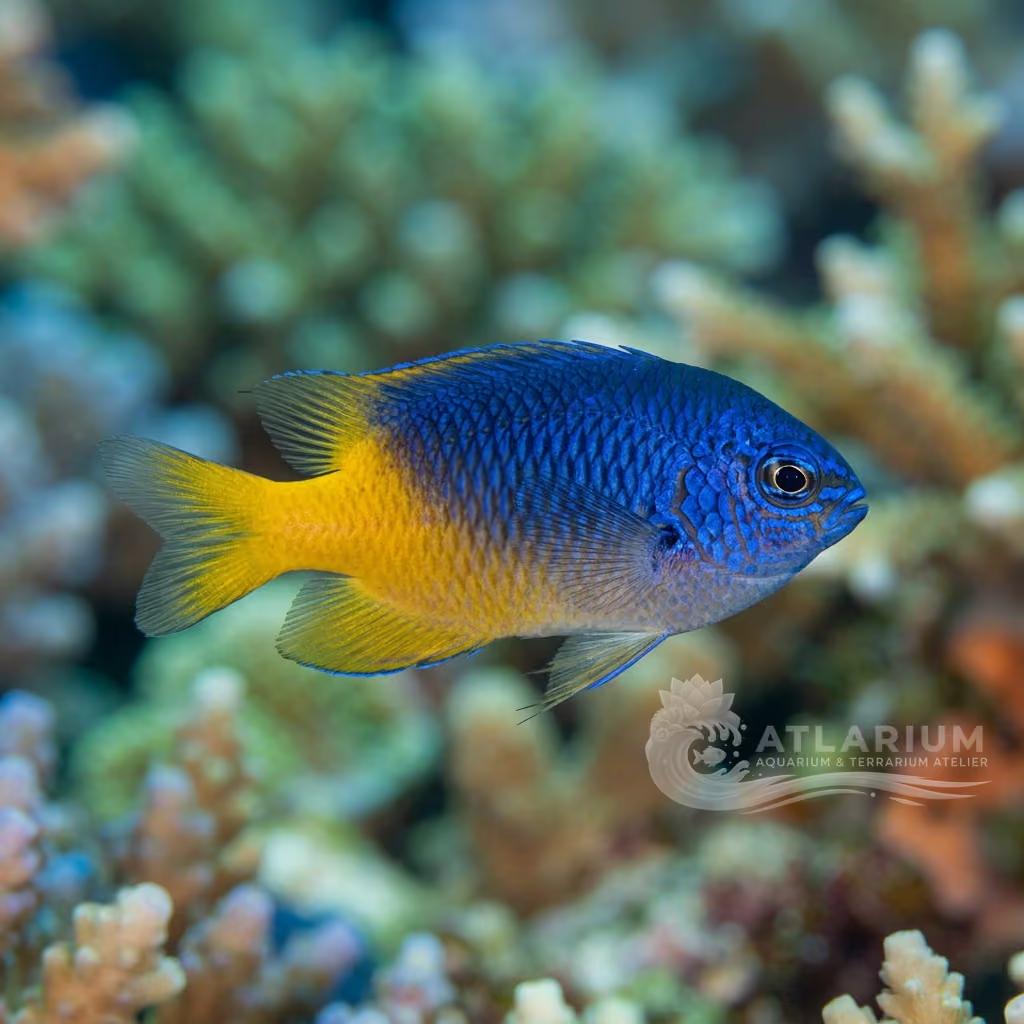
Multicolor Angelfish
Centropyge multicolor
A stunning dwarf angelfish from the deep central Pacific, featuring vibrant blue, yellow, and white hues. It needs rocky caves and is reef safe with caution.
Temperatura da água
23 - 27 °C
Valor de pH
8.1 - 8.4
Tipo de água
Marinho
Nível do tanque
Parte inferior e intermediária
Tamanho adulto
9 cm
Volume mínimo do tanque
>= 150 L
Grupo mínimo
>= 1
KH
8 - 12 dKH

Descrição da espécie
Geographical Origin and Habitat: This species is distributed throughout the Central Pacific Ocean, including the Marshall Islands, Caroline Islands, Society Islands, and Johnston Atoll. It primarily inhabits deep outer reef slopes, drop-offs, and rubble areas at significant depths ranging from 20 to 115 meters, where water is highly oxygenated and temperatures are cooler than at the surface.
Taxonomy and Morphology: Belonging to the family Pomacanthidae and the genus Centropyge, which comprises the dwarf or pygmy angelfish. It features an oval, laterally compressed body with a sharp preoperculum spine. Adults reach a maximum length of approximately 9 centimeters (3.5 inches), making them suitable for medium-sized home aquariums.
Social Behavior: Active and moderately territorial. In the wild, it lives in small haremic groups consisting of one dominant male and two to seven females. They establish a strict linear dominance hierarchy. In captivity, it will defend its territory against similar-shaped species and newly introduced tankmates.
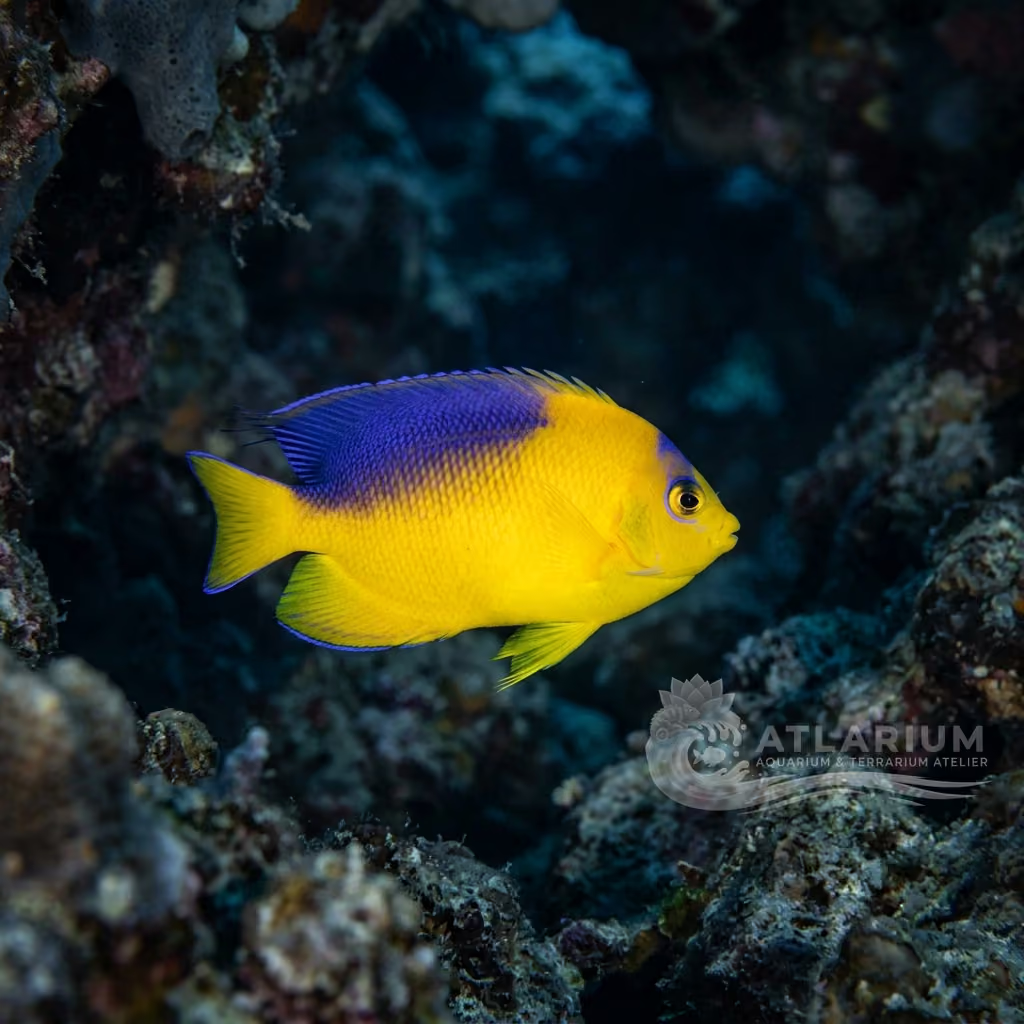
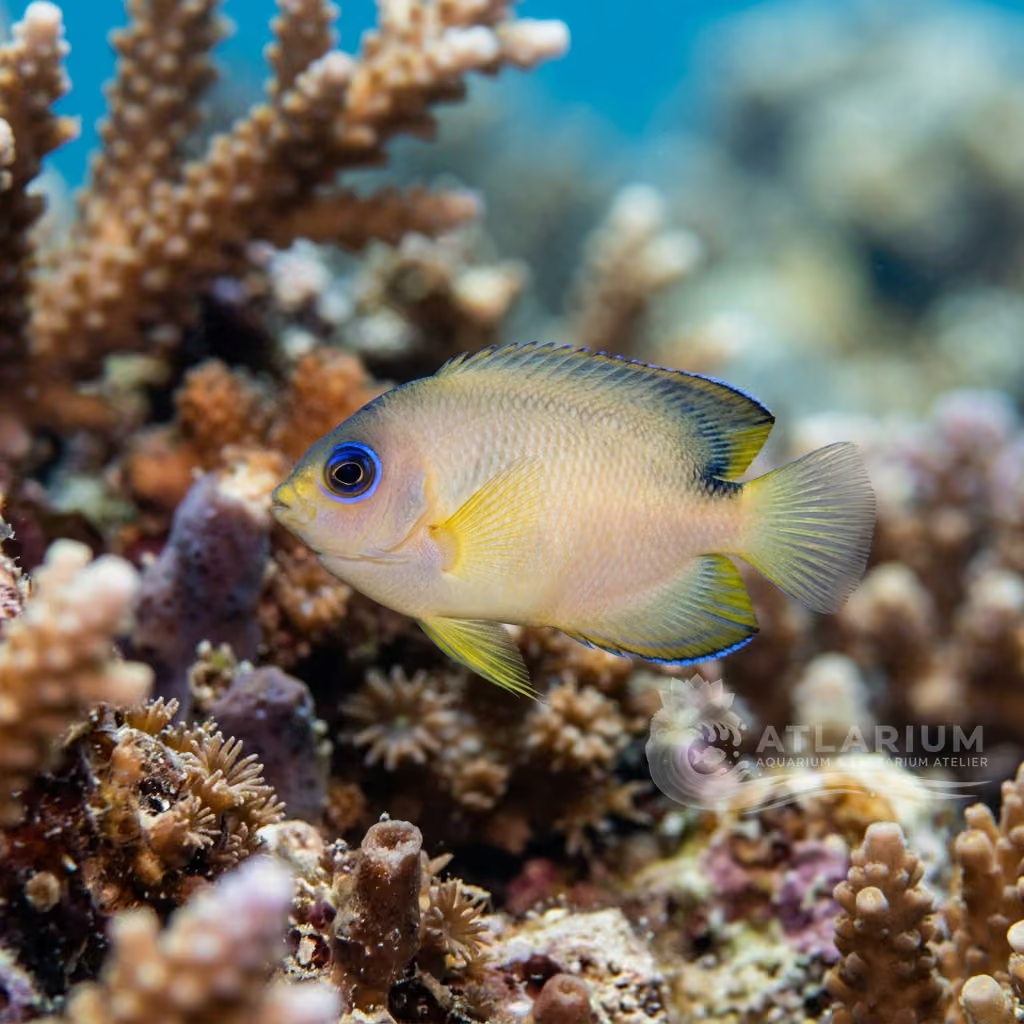
Coloration and Sexual Dimorphism: The coloration is striking, featuring a creamy-white body shaded with yellow or gold along the lower flanks, a black patch highlighted with bright blue stripes on the crown behind the eye, and deep electric-blue dorsal and anal fins bordered in black. The caudal fin is bright yellow. There is no obvious external sexual dimorphism.

Cuidado, criação e companheiros de tanque
Aquarium Setup: Requires a well-established marine aquarium of at least 40-50 gallons (approx. 150-200 liters). The aquascape must feature a substantial amount of live rock arranged to create numerous caves, archways, and shaded areas. This allows the fish to hide when threatened and browse the rock surfaces for food.
Diet and Feeding: An omnivore that feeds on algae, detritus, and small benthic invertebrates in nature. In captivity, offer a varied diet containing commercial angelfish preparations containing sponge matter, nori, spirulina, and high-quality frozen foods like mysis, brine shrimp, and chopped seafood. Feed multiple small portions daily.
Water Quality: Demands pristine and stable reef parameters: temperature 23-26°C (prefers slightly cooler water than shallow-water species), pH 8.1-8.4, specific gravity (SG) 1.021-1.025, and low levels of nitrates and phosphates. Efficient filtration, a protein skimmer, and high dissolved oxygen are critical.
Compatibility and Cohabitation: Reef-safe with caution. It may nip at large-polyp stony (LPS) corals, soft corals, and clam mantles if underfed. Do not house with other dwarf angelfish species unless the tank is very large, as territorial battles will occur. Good tankmates include anthias, wrasses, and gobies.
Aquarium Breeding: Breeding in home aquaria is exceptionally difficult. They are protogynous hermaphrodites, meaning they are all born female and the dominant individual in a group will transition into a male. Spawning occurs in the water column at dusk, releasing pelagic eggs. Raising the larvae requires microscopic live foods.
Risks and Diseases: Susceptible to common marine parasites like Cryptocaryon irritans and Amyloodinium ocellatum, especially during acclimation. Prone to Head and Lateral Line Erosion (HLLE) if water quality is poor or diet lacks vitamins. A quarantine period is highly recommended before introduction.

Origem e distribuição geográfica
This species is distributed throughout the Central Pacific Ocean, including the Marshall Islands, Caroline Islands, Society Islands, and Johnston Atoll. It primarily inhabits deep outer reef slopes, drop-offs, and rubble areas at significant depths ranging from 20 to 115 meters, where water is highly oxygenated and temperatures are cooler than at the surface.
Origem
Oceanos tropicais e recifes

Perfil de peixe
- Temperamento
- Semi-aggressive
- The Multicolor Angelfish is generally semi-aggressive and exhibits strong territorial behavior, especially toward other dwarf angelfish. It is usually peaceful toward unrelated, non-similar species, but will defend its established territory vigorously. Keeping it as the last addition to the aquarium can help reduce territorial disputes with other inhabitants. Providing a large environment with visual barriers is key to managing its temperament and maintaining harmony in the tank.
- Dieta
- Omnivore
- This species is an omnivore that feeds on microalgae, detritus, and small benthic invertebrates in its natural habitat. In the home aquarium, they should be offered a varied diet consisting of high-quality spirulina, marine algae, and commercial angelfish preparations containing sponge material. These vegetable components should be supplemented with meaty frozen foods like mysis shrimp, brine shrimp, and chopped krill. A diverse diet is essential to maintain their vibrant coloration and support their overall immune system.
- Expectativa de vida
- 5-10 years
- Tamanho adulto
- 9 cm
- Proporção sexual
- Harem
- In captivity, the Multicolor Angelfish is best kept as a single specimen unless the aquarium is exceptionally large. They are protogynous hermaphrodites, meaning they can change sex from female to male, and naturally form harems consisting of one dominant male and several females. If a pair or harem is desired, it is crucial to introduce one larger specimen and one or more smaller individuals simultaneously. This stocking strategy minimizes aggressive behavior and allows a clear hierarchy to establish naturally.
- Frequência de alimentação
- 2-3 times daily
- To satisfy its high metabolic rate and natural grazing behavior, the Multicolor Angelfish should be fed multiple times a day. Ideally, offering small portions two to three times daily is recommended rather than a single large feeding. This frequent schedule prevents them from nipping at corals out of hunger and mimics their constant foraging in the wild. If the aquarium has a mature growth of live rock and microalgae, they can supplement their diet by grazing between feedings.
- Carga biológica
- Medium
- The Multicolor Angelfish generates a moderate biological load in a closed aquarium system due to its active nature and frequent dietary requirements. A robust filtration system, including a high-quality protein skimmer and efficient mechanical media, is essential to keep nutrient levels low. Regular water changes of 10% to 15% biweekly are highly recommended to prevent the accumulation of nitrates and phosphates. Providing sufficient water movement also helps keep organic debris suspended so that it can be processed by filters.
- Fluxo
- Strong
- Originating from deeper reef slopes, the Multicolor Angelfish prefers moderate to strong water flow. Adequate water movement replicates their natural habitat and ensures high oxygenation levels, which are crucial for their health. Stronger currents also help keep the water column clean by preventing detritus from settling in their preferred swimming zones. However, there should always be low-flow areas and caves where the fish can rest without constantly battling the current.
- Risco de salto
- Yes
- The Multicolor Angelfish presents a moderate to high jump risk, particularly when startled or chased by territorial tankmates. It is highly recommended to equip the aquarium with a tight-fitting lid or a fine mesh cover to prevent accidental escapes. Stress during initial acclimation or sudden lighting changes can trigger escape responses that lead to jumping. Ensuring there are ample hiding places within the rockwork can greatly reduce their anxiety and minimize the likelihood of them jumping.
- Reprodução
- Oviparous
- Reproduction in captivity is extremely difficult and rarely achieved by hobbyists. The Multicolor Angelfish is a harem-spawner that performs elaborate courtship rituals culminating in pelagic spawning in the water column at dusk. While pairs may spawn in large domestic systems, rearing the microscopic larvae is highly challenging due to their specialized feeding requirements. Success typically requires specialized rearing setups and a steady supply of live, ultra-small plankton like copepod nauplii.
- Compatibilidade e companheiros de tanque
- Territorial
- This species is reef safe with caution, as it may nip at large polyp stony (LPS) corals, soft corals, and clam mantles. It is compatible with a wide range of active reef fish, such as wrasses, damselfish, and larger peaceful species. However, it should not be housed with passive fish, similar-looking species, or other dwarf angelfish unless the aquarium is very large. Adequate space and plenty of hiding spots are critical to ensuring peaceful coexistence with its tankmates.
- Nível do tanque
- Middle/Bottom
- This dwarf angelfish is primarily a bottom-to-middle dweller, spending most of its time weaving through live rock structures. It utilizes the crevices, caves, and overhangs of the reef for shelter and foraging, rarely venturing into the open upper water column. A tank layout with extensive aquascaping is necessary to replicate this natural habitat and make the fish feel secure. Providing plenty of shaded areas is also beneficial, as this species naturally inhabits deeper reef zones.

Modelos e parâmetros científicos
FishBase
Acesso aos dados científicos oficiais da espécie
FishBase v25.04Dados sincronizados em: 15/06/2026
- Nível trófico
- 2,8 ± 0,31 se
- Resiliência
- Alta (menos de 15 meses)
- Unicidade filogenética (PD50)
- 0.5
- Relação bayesiana comprimento-peso
- a = 0.0302, b = 2.89
- VulnerabilidadeVulnerabilidade baixa (10 / 100)

Espécies relacionadas
Recomendações agrupadas por parentes próximos, escolhas de acompanhantes e cuidados semelhantes.