Goldspotted Angelfish
Apolemichthys xanthopunctatus
The Yellow-brown Angelfish is a rare deep-water species from the central Pacific. An omnivorous sponge-feeder, it requires a very large tank with spacious caves to mimic its habitat.
Temperatura da água
23 - 28 °C
Valor de pH
8.1 - 8.4
Tipo de água
Marinho
Nível do tanque
Todos os níveis
Tamanho adulto
25 cm
Volume mínimo do tanque
>= 450 L
Grupo mínimo
>= 1
KH
8 - 12 dKH

Descrição da espécie
Geographical Origin and Habitat: Apolemichthys xanthoprunion is native to the waters of the central Pacific Ocean, specifically recorded in the Line Islands and Phoenix Islands (Kiribati). It inhabits deep outer reef slopes, coral-rich drop-offs, and vertical walls exposed to strong oceanic currents, typically at depths ranging from 20 to 60 meters.
Taxonomy and Morphology: Belonging to the family Pomacanthidae and the genus Apolemichthys, it is closely related to (and sometimes synonymized with) Apolemichthys xanthopunctatus. It features a laterally compressed, oval body with a sharp preopercular spine on each cheek. Adults can grow to a maximum length of approximately 25 cm.
Social Behavior: In the wild, it is typically observed solitary or in stable monogamous pairs patrolling large territories. In captivity, it exhibits semi-aggressive behavior as it matures, becoming territorial towards other angelfish and species with similar ecological requirements. It requires cave retreats and open swimming areas.
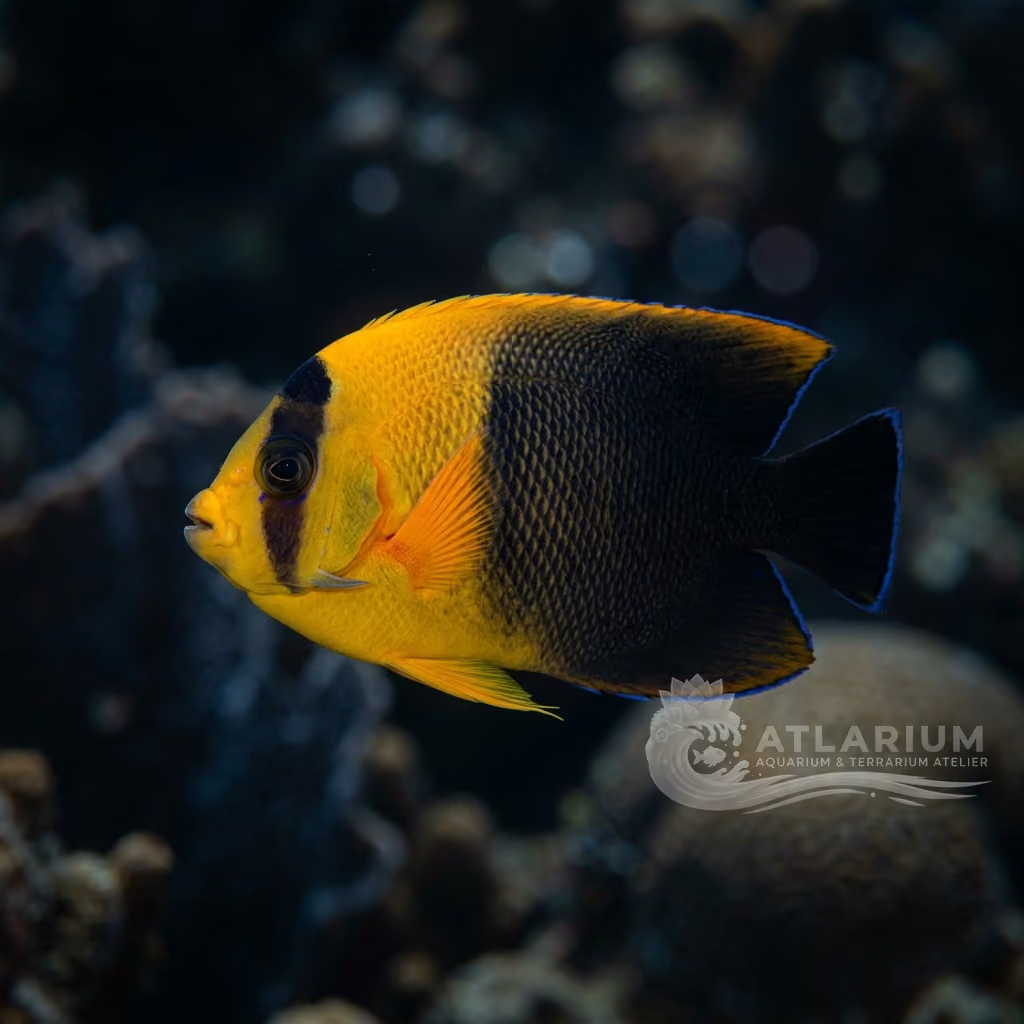
Coloration and Sexual Dimorphism: The color pattern is striking: the body features a golden-yellow background covered with numerous brilliant gold spots. The dorsal, anal, and caudal fins are deep black, edged with a thin, vibrant iridescent electric blue margin. A dark spot is present near the eyes. No external sexual dimorphism is visible.

Cuidado, criação e companheiros de tanque
Aquarium Setup: Requires a very large aquarium of at least 450 liters for a single specimen. The aquascape must include a sturdy live rock structure with spacious caves, overhangs, and shaded zones to mimic its deep-water habitat, while still leaving ample open space in the front for active swimming.
Diet and Feeding: Omnivorous sponge-feeder. In the wild, its diet consists of sponges, tunicates, and benthic algae. In captivity, feed high-quality frozen foods (mysis, krill, brine shrimp) and specialized commercial angelfish preparations containing sponge matter. Supplement daily with marine algae and spirulina.
Water Quality: Pristine water quality is essential: temperature 23-28°C (73-82°F), specific gravity 1.020-1.025, and pH 8.1-8.4. A powerful filtration system with a high-capacity protein skimmer is required. Keep nitrates below 15 ppm, and ammonia/nitrites at zero. Moderate to high water flow is recommended.
Compatibility and Cohabitation: Semi-aggressive. Can be housed with active, medium-sized reef fish such as tangs, wrasses, and damsels. It is not fully reef-safe, as it may nip at LPS and SPS corals, zoanthids, and clam mantles, particularly if it is underfed. Avoid housing with other Apolemichthys species.
Aquarium Breeding: Spawning in captivity is undocumented and highly challenging. They are broadcast pelagic spawners, releasing eggs and sperm into the water column. Replicating the depth, currents, and courtship behaviors in home aquariums is currently unviable, and rearing the larvae has not been achieved.
Risks and Diseases: A delicate and expensive species. It is sensitive to shipping stress and acclimation issues. Prone to marine ich (Cryptocaryon irritans), marine velvet, and Head and Lateral Line Erosion (HLLE) if its diet is deficient in sponge material and essential vitamins, or if water conditions are poor.

Origem e distribuição geográfica
Apolemichthys xanthoprunion is native to the waters of the central Pacific Ocean, specifically recorded in the Line Islands and Phoenix Islands (Kiribati). It inhabits deep outer reef slopes, coral-rich drop-offs, and vertical walls exposed to strong oceanic currents, typically at depths ranging from 20 to 60 meters.
Origem
Oceanos tropicais e recifes

Perfil de peixe
- Temperamento
- Semi-aggressive
- The Goldspotted Angelfish is generally classified as semi-aggressive, showing a mix of territoriality and active behavior. While it is usually peaceful toward unrelated tankmates, it can be aggressive toward other angelfish or similarly shaped species. Establishing territories early on can lead to defensive aggression, so adding them as one of the last inhabitants is recommended. Providing plenty of caves and visual barriers helps minimize territorial disputes.
- Dieta
- Omnivore
- This species is a benthic omnivore that feeds heavily on sponges, tunicates, and algae in the wild. In captivity, their diet must include specialized angelfish preparations containing sponge material. This should be supplemented with high-quality marine algae, spirulina, and frozen foods like mysis and brine shrimp. A mature aquarium with live rock allows them to engage in natural grazing behavior between feedings.
- Expectativa de vida
- 10-15 years
- Tamanho adulto
- 25 cm
- Proporção sexual
- Harem
- In their natural habitat, these angelfish live in harems consisting of a single dominant male and several females. In a home aquarium, it is usually best to keep them individually unless a known mated pair is acquired. Introducing multiple individuals of this species into the same tank can lead to severe territorial aggression. If attempting a harem, a very large tank with numerous physical barriers and hiding spots is absolutely necessary.
- Frequência de alimentação
- Twice daily
- To replicate their natural grazing behavior, this species should be fed small portions two to three times a day. Frequent feedings help satisfy their high energy requirements and reduce the urge to nip at corals. Providing dried seaweed on a veggie clip is an excellent way to allow continuous grazing throughout the day. Consistent feeding schedules also promote overall health and color retention.
- Carga biológica
- Medium to High
- The Goldspotted Angelfish produces a medium-high biological load due to its size and active metabolism. A robust filtration system, including a high-performance protein skimmer, is essential to manage waste levels. Regular water changes and carbon filtration are also highly recommended to maintain low nitrate and phosphate levels. Proper waste management helps prevent the growth of nuisance algae and ensures optimal fish health.
- Fluxo
- Strong
- They prefer moderate to strong water flow, which mimics the currents of their native outer reef slopes. Good water circulation is important for oxygenation and maintaining high water quality in the aquarium. However, there should also be calmer areas within the rockwork where the fish can rest without fighting the current. A combination of wavemakers and return outlets can create the ideal dynamic flow pattern.
- Risco de salto
- Yes
- Like many active marine angelfish, this species presents a moderate risk of jumping, especially when startled or stressed. They can easily leap out of an open-top aquarium during acclimation or when lights are turned off. A tight-fitting lid or a secure mesh cover is highly recommended to prevent accidental escapes. Providing adequate hiding spaces can also help reduce the anxiety that triggers jumping behavior.
- Reprodução
- Oviparous
- Reproduction in captivity is extremely difficult and rarely documented for this species. They are protogynous hermaphrodites, meaning they can change sex from female to male based on social cues. In the wild, they are pelagic spawners, releasing eggs and sperm into the water column during twilight. The complex requirements for rearing the pelagic larvae make successful aquarium breeding a significant challenge.
- Compatibilidade e companheiros de tanque
- Reef safe
- This species is considered reef-safe with caution, as it may nip at stony corals, soft corals, and clam mantles. They are compatible with other semi-aggressive marine fish of a similar size, such as tangs, wrasses, and clownfish. However, they should not be housed with other large angelfish unless the aquarium is exceptionally spacious. Peaceful, passive tankmates may be intimidated by their active nature and should be selected carefully.
- Nível do tanque
- All levels
- This species is an active, open-water swimmer that will utilize all levels of the aquarium. They spend a significant portion of their time grazing on the surfaces of live rock in the lower and middle zones. However, they will also swim to the upper levels when feeding or exploring. Aquarists should provide plenty of open swimming space alongside structured rockwork.

Espécies relacionadas
Recomendações agrupadas por parentes próximos, escolhas de acompanhantes e cuidados semelhantes.