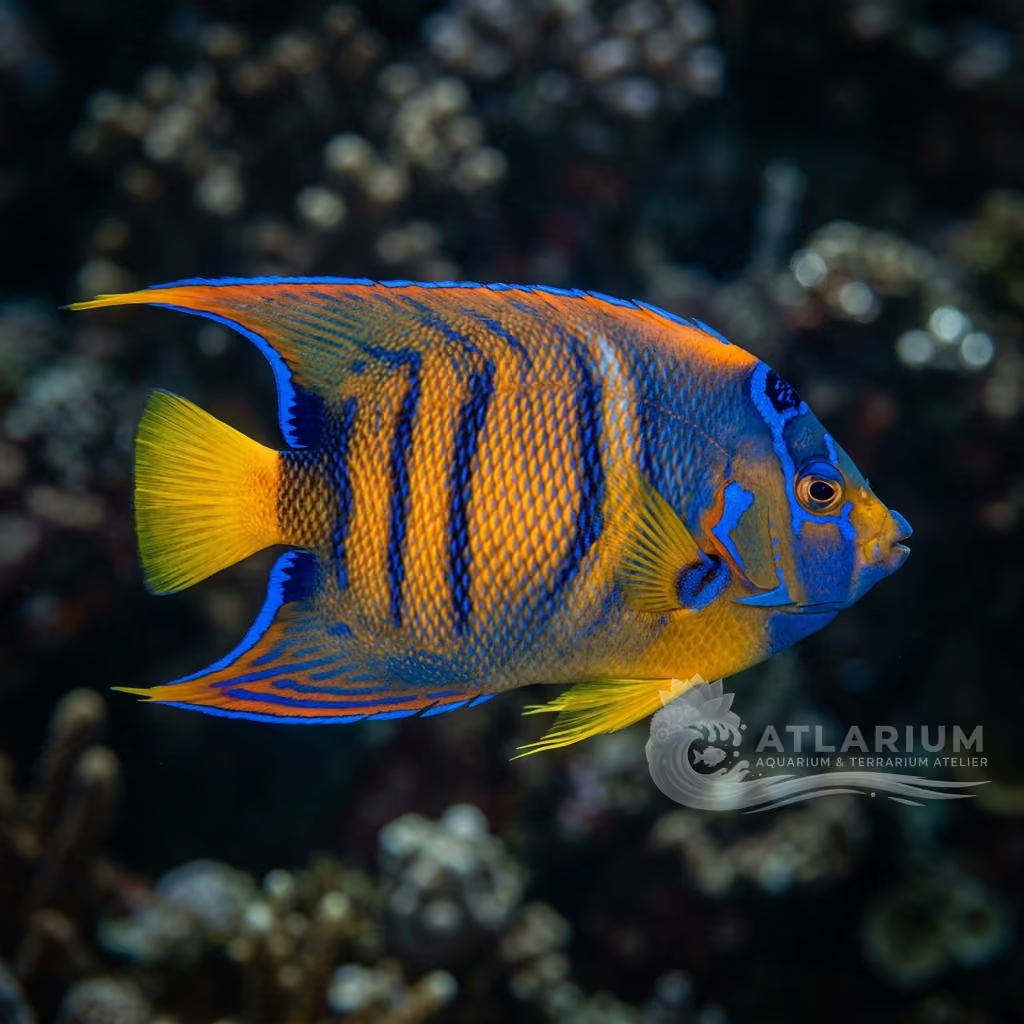
Koran Angelfish (Semicircle)
Pomacanthus semicirculatus
The Wallet Shredder (16 inches / 40 cm). Babies are jet black with glowing neon blue arcs. Adults turn a speckled greenish-yellow and become aggressive bulldozers.
Temperatura da água
24 - 28 °C
Valor de pH
8.1 - 8.4
Tipo de água
Marinho
Nível do tanque
Todos os níveis
Tamanho adulto
35 cm
Volume mínimo do tanque
>= 300 L
Grupo mínimo
>= 1
KH
4 - 6 dKH

Descrição da espécie
Geographical Origin and Habitat: A very widespread species in the Indo-Pacific: from the Red Sea and East Africa to Fiji, Samoa, and Japan. It is an iconic inhabitant of vegetation-rich coastal coral reefs, deep lagoons with growing corals, and marine wrecks, from 1 to 40 meters in depth.
Taxonomy and Morphology: Known as the Koran Angelfish or Semicircle Angelfish. It is a large pomacanthid, reaching up to 35-40 cm (14-16 inches) in captivity (with the correct tank). Possesses the classic massive, elliptical, strongly compressed body and the lethal backward-facing "spine" on the preopercular cheek.
Social Behavior: Has a very strong and expansive personality, is highly interactive with its owner but brutally aggressive with fish that share its habitus (colors, shapes). Adults patrol large coastal territories alone to defend their food resources. Juveniles are shy and live holed up in shallow waters.
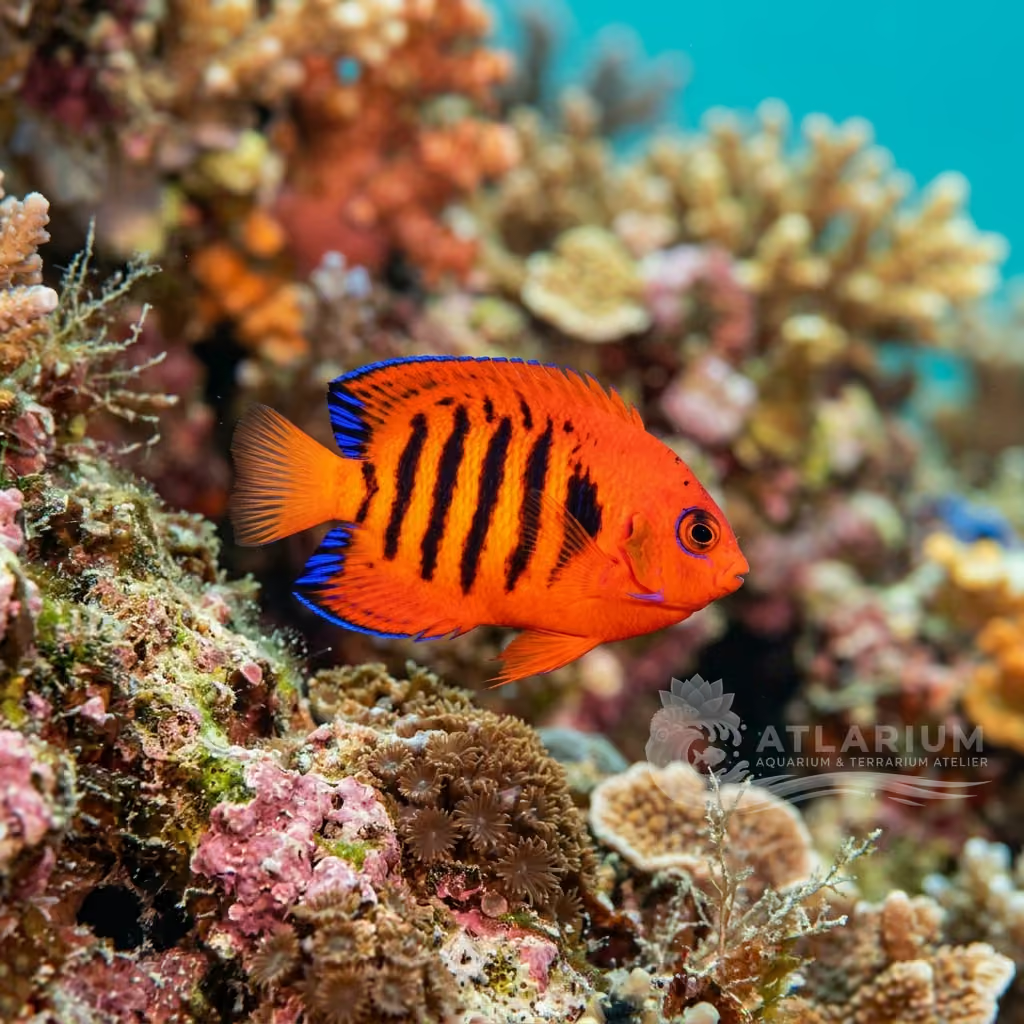
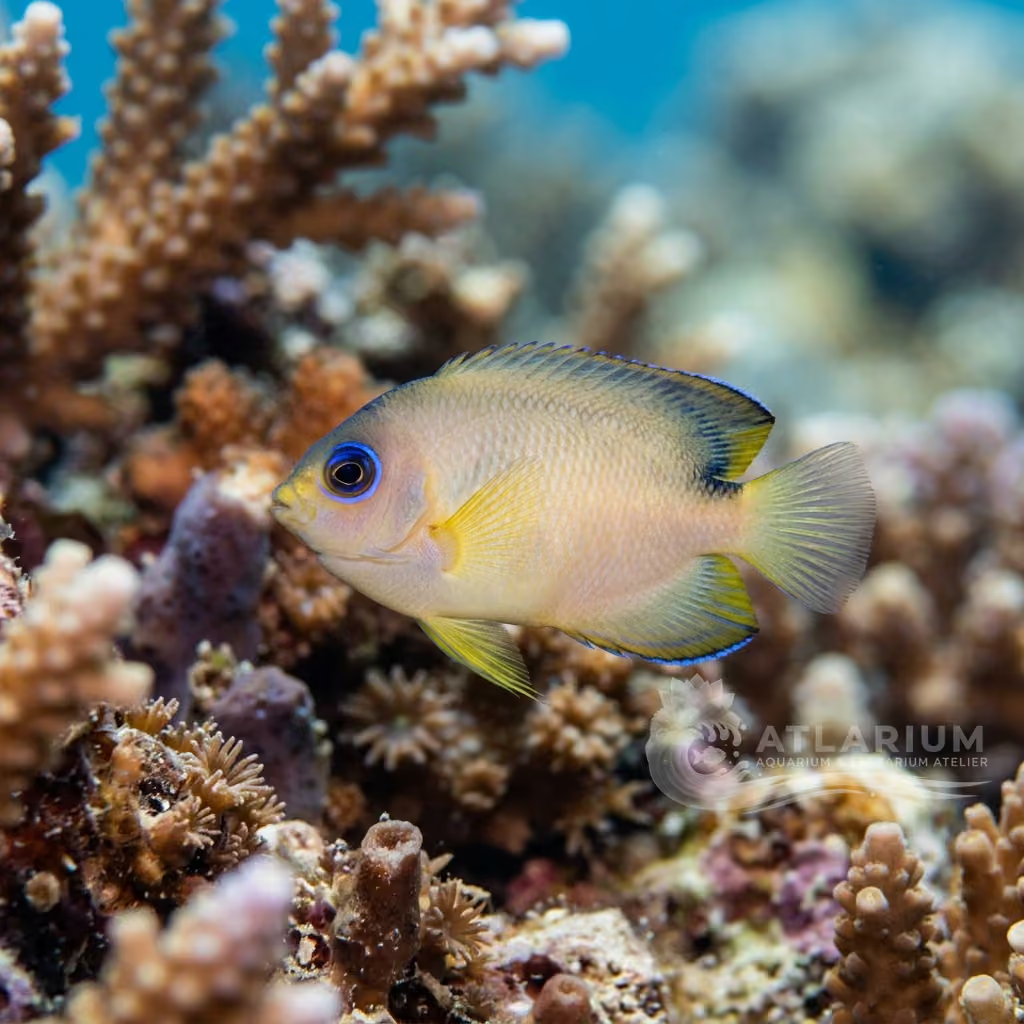
Coloration and Sexual Dimorphism: Like others of its genus, it drastically changes livery. Juveniles (up to 10 cm) are spectacular: blue-black with "semicircle" arched white and light blue stripes (hence the name). Adults turn a crazy yellowish-green sprinkled with endless neon blue dots, with fin edges outlined in brilliant blue. No dimorphism.

Cuidado, criação e companheiros de tanque
Aquarium Setup: Needs no less than 800 liters (210 gallons). Smaller tanks permanently halt its color change to the adult one (a sign of induced stunting and inescapable stress). Enormous rockworks, deep caves, and vast frontal space to cut through the water. Oversized filtration is indispensable to stem the heavy organic load.
Diet and Feeding: Omnivore predominantly grazing on sessile invertebrates. On the reef, it devours sponges, tunicates, and algae. In the aquarium hobby, it is perhaps the least fussy eater of the large angels: voraciously eats granular feeds, spirulina-enriched flakes, Nori, open clams, and mysis. Needs 50% greens to avoid intestinal blockages.
Water Quality: Very resistant to non-ideal chemical conditions (which is why it is often the first large angelfish tried by hobbyists). Tropical marine temperature: 24-28 °C (75-82 °F). pH: 8.1-8.4, specific gravity: 1.020-1.025. Prefers a high Redox potential and plenty of surface current.
Compatibility and Cohabitation: Reef demolisher. Will tear to pieces soft corals, brain corals (LPS), zoanthids, and Tridacna clams. Should be kept in large FOWLR tanks with equally bold and large tankmates (Moray eels, Triggerfish, groupers, large tangs). Intolerant of conspecific angelfish or similarly colored juveniles.
Aquarium Breeding: Never succeeded. Evening pelagic release of tiny, floating eggs. The larval stages in the sea feed for months on microscopic phytoplankton that cannot be reproduced in commercial quantities. Store availability relies entirely on wild collection from immense juvenile stocks in the Pacific.
Risks and Diseases: Extremely sensitive to high doses of copper, which compromises the intestinal microbiome crucial for sponge digestion. Sensitive to HLLE (Head and Lateral Line Erosion) if not fed with fresh vitamins and Nori. Can scratch itself severely on sharp edges if forced into cramped tanks.

Origem e distribuição geográfica
A very widespread species in the Indo-Pacific: from the Red Sea and East Africa to Fiji, Samoa, and Japan. It is an iconic inhabitant of vegetation-rich coastal coral reefs, deep lagoons with growing corals, and marine wrecks, from 1 to 40 meters in depth.
Origem
Oceanos tropicais e recifesÁfrica e MadagascarEuropa, Mediterrâneo e Ásia OcidentalLeste Asiático

Perfil de peixe
- Temperamento
- Semi-aggressive
- The Semicircle Angelfish is a remarkably bold, highly territorial fish that will aggressively assert dominance over the aquarium. It is notoriously intolerant of other angelfish and any species exhibiting similar colors or body shapes. To mitigate severe tank-wide conflict, it is strongly advised to add this dominant fish as the absolute final resident.
- Dieta
- Omnivore
- Their natural diet consists heavily of marine sponges, tunicates, and a variety of benthic algae. In captivity, it is imperative to feed them specialized commercial angelfish diets containing real marine sponge extract. This strict requirement should be supplemented with frequent feedings of spirulina, marine nori, and high-quality meaty foods like mysis shrimp.
- Expectativa de vida
- 15-20 years
- Tamanho adulto
- 35 cm
- Proporção sexual
- Solitary
- There are no highly apparent external sexual dimorphisms to reliably distinguish male and female Semicircle Angelfish. Due to their extreme, uncompromising intraspecific aggression, keeping more than one specimen per tank is strictly prohibited. Co-housing multiple adults is a highly dangerous endeavor only possible in massive public aquarium settings.
- Frequência de alimentação
- Twice daily
- To properly satiate their high metabolism and constant grazing behavior, they must be fed two to three times daily. Providing frequent, small meals significantly helps to naturally reduce their aggression towards other tank inhabitants. Offering a daily supply of seaweed on a clip closely simulates their natural foraging patterns.
- Carga biológica
- Extreme
- The Semicircle Angelfish is a rapidly growing, heavy-eating marine fish that introduces a very high bioload to the aquarium. It requires extremely powerful mechanical and biological filtration, alongside a highly rated protein skimmer. Consistent, large-volume water changes are absolutely vital to control nitrate accumulation and maintain optimum water clarity.
- Fluxo
- Strong
- Pomacanthus semicirculatus needs brisk, oxygen-rich circulation, with the strongest return flow spread through open water rather than aimed continuously at one refuge. Needs no less than 800 liters (210 gallons). Smaller tanks permanently halt its color change to the adult one (a sign of induced stunting and inescapable stress). Keep solid cover available so the fish can leave the fastest water whenever it chooses.
- Risco de salto
- Yes
- While their heavy bodies make them unlikely jumpers, any sudden scare or extreme territorial dispute can cause them to explosively breach the surface. A tightly fitted, strong mesh lid or heavy canopy is a strongly required safety precaution. This reliably eliminates the completely preventable risk of fatal jumping incidents.
- Reprodução
- Oviparous
- Breeding the Semicircle Angelfish in a home aquarium is considered effectively impossible due to their pelagic broadcasting reproductive strategy. In nature, pairs quickly ascend to the surface at dusk, releasing massive clouds of eggs into the ocean currents. Rearing the microscopic larvae requires highly sophisticated commercial aquaculture facilities and meticulously cultured live foods.
- Compatibilidade e companheiros de tanque
- With caution
- As they mature, Semicircle Angelfish transition from peaceful juveniles to highly aggressive and territorial adults. They should only be kept with other large, robust, and assertive species like triggerfish, large wrasses, and sturdy tangs. They are entirely destructive in a reef environment, eagerly consuming most corals, sponges, and delicate invertebrates.
- Nível do tanque
- All levels
- This highly active species freely utilizes the entire water column, aggressively patrolling its established territory from top to bottom. They require an enormous aquarium offering vast, open swimming spaces alongside substantial, intricate rockwork. Large, cavernous hiding spots are absolutely necessary for them to sleep and securely retreat from perceived threats.

Modelos e parâmetros científicos
FishBase
Acesso aos dados científicos oficiais da espécie
FishBase v25.04Dados sincronizados em: 15/06/2026
- Nível trófico
- 2,7 ± 0 se
- Resiliência
- Baixa (4,5 - 14 anos)
- Unicidade filogenética (PD50)
- 0.5001
- Relação bayesiana comprimento-peso
- a = 0.02754, b = 2.89
- VulnerabilidadeVulnerabilidade moderada (39 / 100)

Espécies relacionadas
Recomendações agrupadas por parentes próximos, escolhas de acompanhantes e cuidados semelhantes.