Blue Angelfish
Holacanthus bermudensis
An impressive Western Atlantic angelfish that grows large and aggressive. It requires an 800L fish-only aquarium and a specialized diet rich in marine sponges.
Temperatura da água
22 - 27 °C
Valor de pH
8.1 - 8.4
Tipo de água
Marinho
Nível do tanque
Todos os níveis
Tamanho adulto
45 cm
Volume mínimo do tanque
>= 800 L
Grupo mínimo
>= 1
KH
8 - 12 dKH

Descrição da espécie
Geographical Origin and Habitat: Common in the subtropical Western Atlantic, including Bermuda, Florida, the Bahamas, and the Gulf of Mexico. Found on coral reefs and rocky slopes down to 90 meters. This large angelfish is native to the Western Atlantic, ranging from Bermuda and Florida to the Bahamas.
Taxonomy and Morphology: Member of the family Pomacanthidae. Features a deep, disc-shaped body that can reach 45 cm in length. Equipped with stout opercular spines. It has a deep, compressed body with long filaments extending from the soft portions of the dorsal and anal fins.
Social Behavior: Strongly territorial and aggressive, especially as adults. Lives a solitary or paired lifestyle, actively defending feeding territories. A solitary species, it spends its time foraging on benthic substrates, especially feeding on marine sponges.
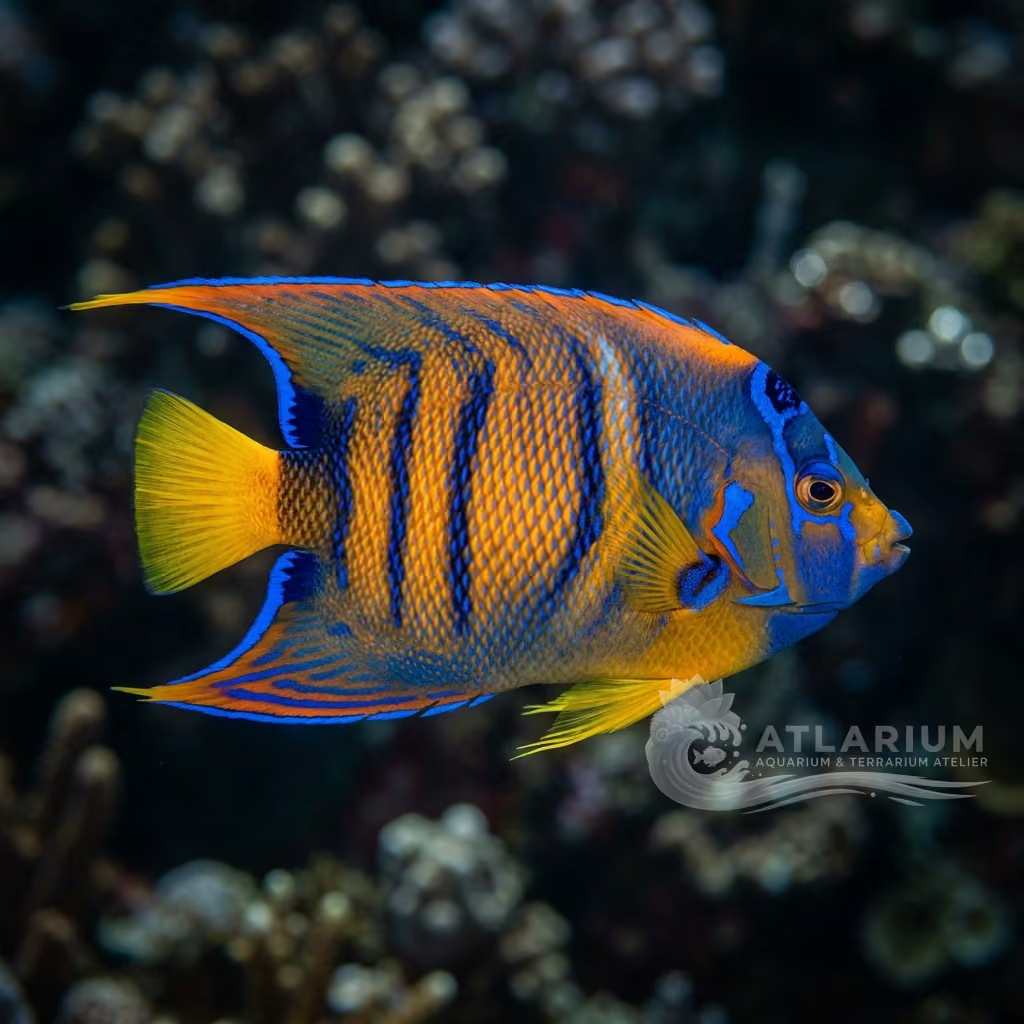
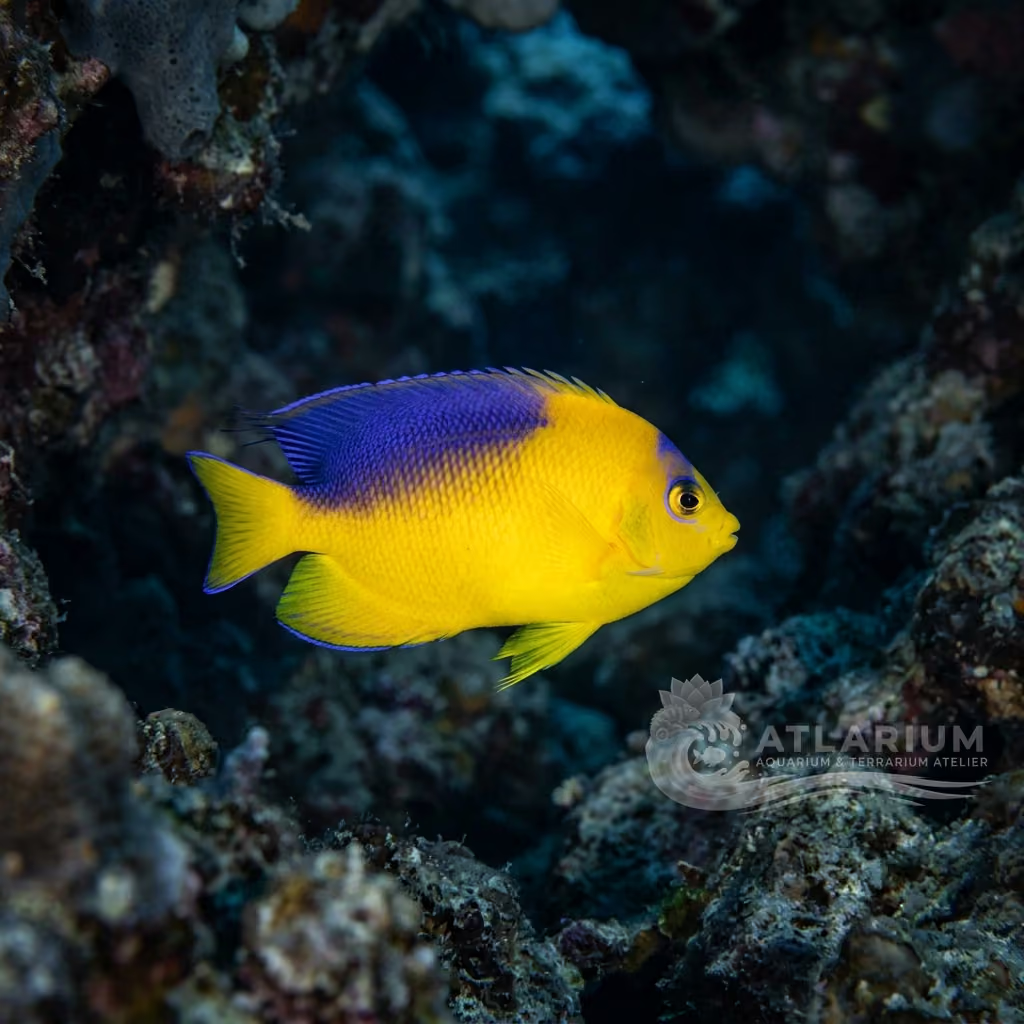
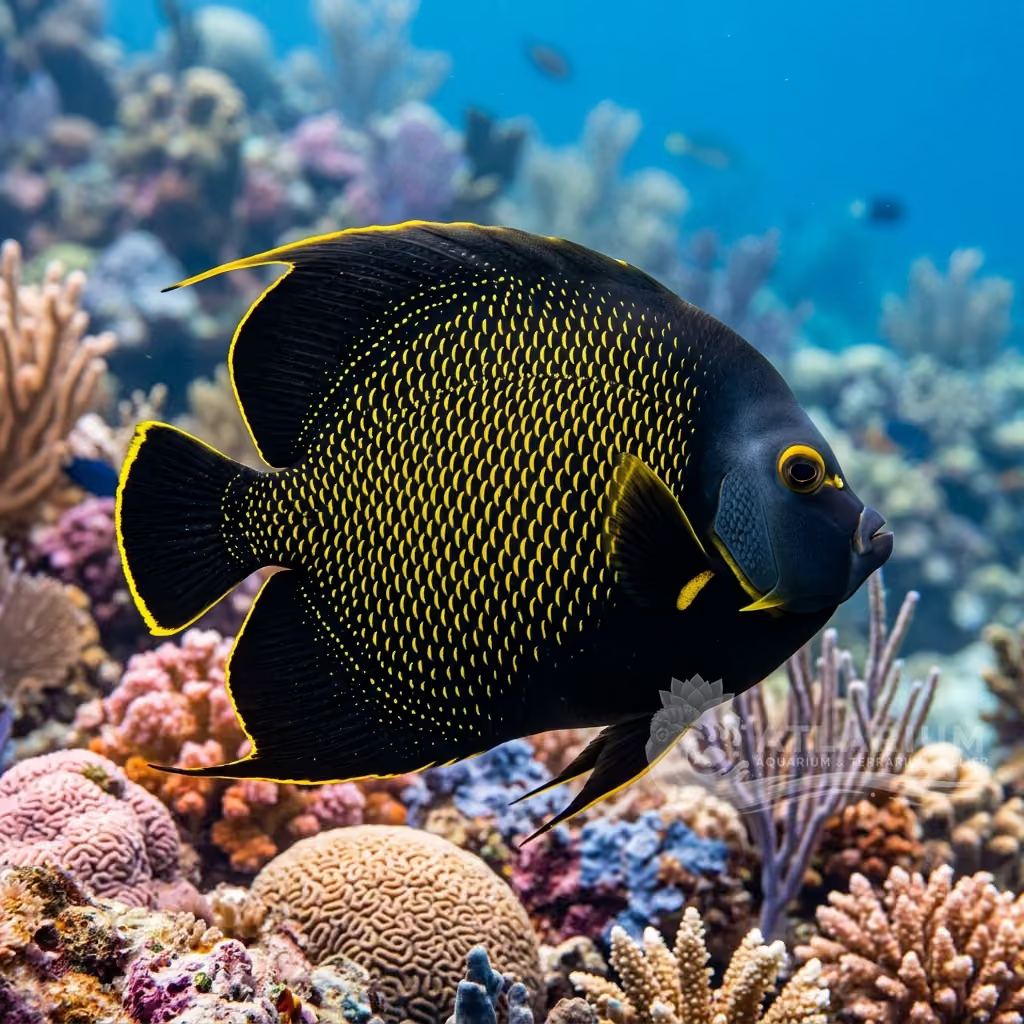
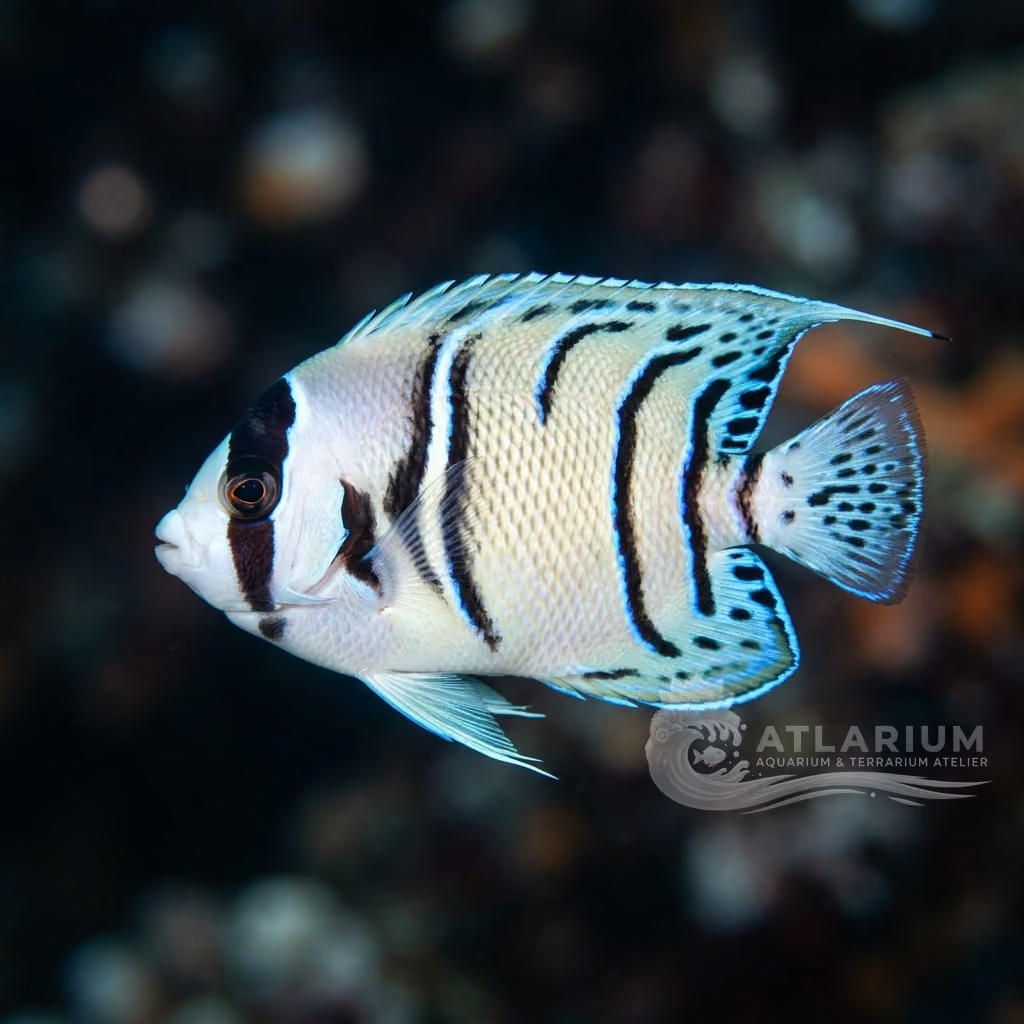
Coloration and Sexual Dimorphism: Adult body color is bluish-grey with brown shades, highlighted by yellow-rimmed fins and electric blue edges. Juveniles are dark blue with curved light-blue vertical bars. No sexual dimorphism. Displays a blue-brown base color with bright yellow margins on the scales, pectoral fins, and tail borders.

Cuidado, criação e companheiros de tanque
Aquarium Setup: Requires a massive tank of at least 800 liters. Rockwork must be stable and secure, with plenty of open swimming channels. A very large tank of at least 700 liters is required to house this species at adult size and allow swimming.
Diet and Feeding: Specialized omnivore. Sponges make up over 70% of its wild diet. Must be offered angelfish preparations containing sponge material, along with spirulina, chopped clams, and mysis. Feed a specialized diet containing marine sponges, spirulina, frozen mysis, and high-quality pellets.
Water Quality: Maintain stable marine conditions: temperature 22-27 °C, pH 8.1-8.4, salinity SG 1.020-1.025. Strong filtration and high-performance skimming are mandatory. High water quality, stable pH, and efficient protein skimming are essential to maintain its long-term health.
Compatibility and Cohabitation: Not Reef Safe. Nips and feeds on soft/hard corals and clam mantles. Best housed in large fish-only setups with robust companions. Not reef-safe; it will nip at stony and soft corals, zoanthids, and clam mantles. Keep in FOWLR tanks.
Aquarium Breeding: Broadcast pelagic spawners. No captive breeding records exist in home aquariums. Spawning is pelagic and has not been successfully achieved or reared in home aquariums.
Risks and Diseases: Prone to Head and Lateral Line Erosion (HLLE) if dietary needs (sponges/vitamins) are not met. Susceptible to ectoparasites under stress. Prone to Head and Lateral Line Erosion (HLLE) and marine ich; provide vitamin supplements on food to prevent HLLE.

Origem e distribuição geográfica
Common in the subtropical Western Atlantic, including Bermuda, Florida, the Bahamas, and the Gulf of Mexico. Found on coral reefs and rocky slopes down to 90 meters. This large angelfish is native to the Western Atlantic, ranging from Bermuda and Florida to the Bahamas.
Origem
Oceanos tropicais e recifesAmérica Central e CaribeAmérica do Norte

Perfil de peixe
- Temperamento
- Territorial
- They exhibit a bold, dominant, and semi-aggressive temperament as they mature. They will quickly establish themselves as the definitive ruler of the aquarium. Despite their aggression towards other angels, they often interact intelligently with their owners.
- Dieta
- Omnivore
- They are omnivores requiring a highly specialized diet rich in marine sponges. Formulated angelfish preparations containing sponge material are completely essential for their long-term survival. Supplement with nori, spirulina, and high-quality meaty foods like mysis shrimp.
- Expectativa de vida
- 15-20 years
- Tamanho adulto
- 45 cm
- Proporção sexual
- Solitary
- They should strictly be kept as a single specimen per aquarium. Adding two males, or even two females, will almost certainly result in lethal combat. They demand vast territories and will not share space with conspecifics.
- Frequência de alimentação
- 2-3 times daily
- Adults should be fed generously two to three times a day. Grazing opportunities on live rock should be available between their scheduled meals. Juveniles may need up to four smaller meals daily to develop properly.
- Carga biológica
- High
- The Blue angelfish creates a significantly high bioload due to its large size. Heavy filtration and an oversized protein skimmer are strongly advised. Frequent, substantial water changes are necessary to keep nitrates very low.
- Fluxo
- Strong
- They prefer moderate to strong water currents across their large swimming areas. Excellent water movement ensures high oxygenation required for such a massive fish. It also helps rapidly export the large amount of waste they produce.
- Risco de salto
- No
- Reprodução
- Oviparous
- Captive breeding is entirely unheard of within standard home aquaria. They are broadcast spawners that release their gametes high in the open water column. The specific larval dietary requirements make rearing them virtually impossible at home.
- Compatibilidade e companheiros de tanque
- Reef safe
- It can be highly aggressive towards other large angelfish and similarly shaped species. It is definitely not considered reef safe, as it will decimate stony and soft corals. Keep it in a large fish-only system with other robust, semi-aggressive companions.
- Nível do tanque
- All levels
- They utilize all levels of the aquarium, frequently patrolling from top to bottom. They require massive amounts of open swimming space to prevent psychological stress. Ample rockwork with large, accommodating caves should also be provided.

Modelos e parâmetros científicos
FishBase
Acesso aos dados científicos oficiais da espécie
FishBase v25.04Dados sincronizados em: 15/06/2026
- Nível trófico
- 3 ± 0 se
- Resiliência
- Baixa (4,5 - 14 anos)
- Unicidade filogenética (PD50)
- 0.5078
- Relação bayesiana comprimento-peso
- a = 0.0302, b = 2.89
- VulnerabilidadeVulnerabilidade de baixa a moderada (35 / 100)

Espécies relacionadas
Recomendações agrupadas por parentes próximos, escolhas de acompanhantes e cuidados semelhantes.