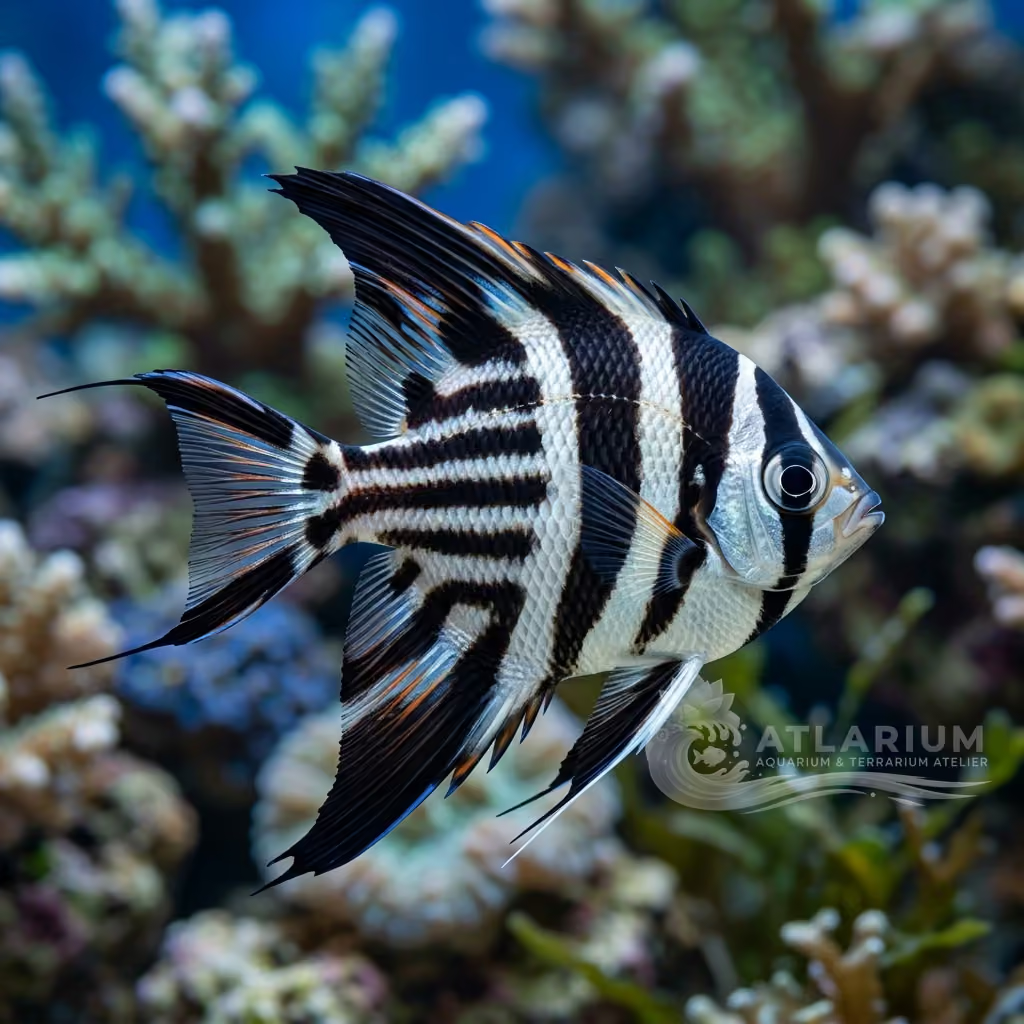
Colin's Angelfish
Centropyge colini
Colin's Angelfish is a rare, delicate deep-water pygmy angelfish. Prefers subdued lighting and heavily structured rockwork with dark caves, feeding primarily on sponges and algae.
Temperatura da água
21 - 25 °C
Valor de pH
8.1 - 8.4
Tipo de água
Marinho
Nível do tanque
Parte inferior
Tamanho adulto
9 cm
Volume mínimo do tanque
>= 150 L
Grupo mínimo
>= 1
KH
8 - 12 dKH

Descrição da espécie
Geographical Origin and Habitat: Western Indo-Pacific, including Cocos-Keeling Islands, Indonesia, Philippines, Papua New Guinea, Palau, Guam, and Fiji. Inhabits steep drop-offs and outer reef slopes at depths of 20 to over 110 meters, living in deep caves and crevices.
Taxonomy and Morphology: Member of the family Pomacanthidae. A small pygmy angelfish with a laterally compressed oval body, reaching a maximum length of 9 cm. Features the characteristic preopercular spine.
Social Behavior: Highly cryptic and diurnal. Lives in small harems consisting of one dominant male and 2–6 females within coral caves. Often swims upside down along cave ceilings.
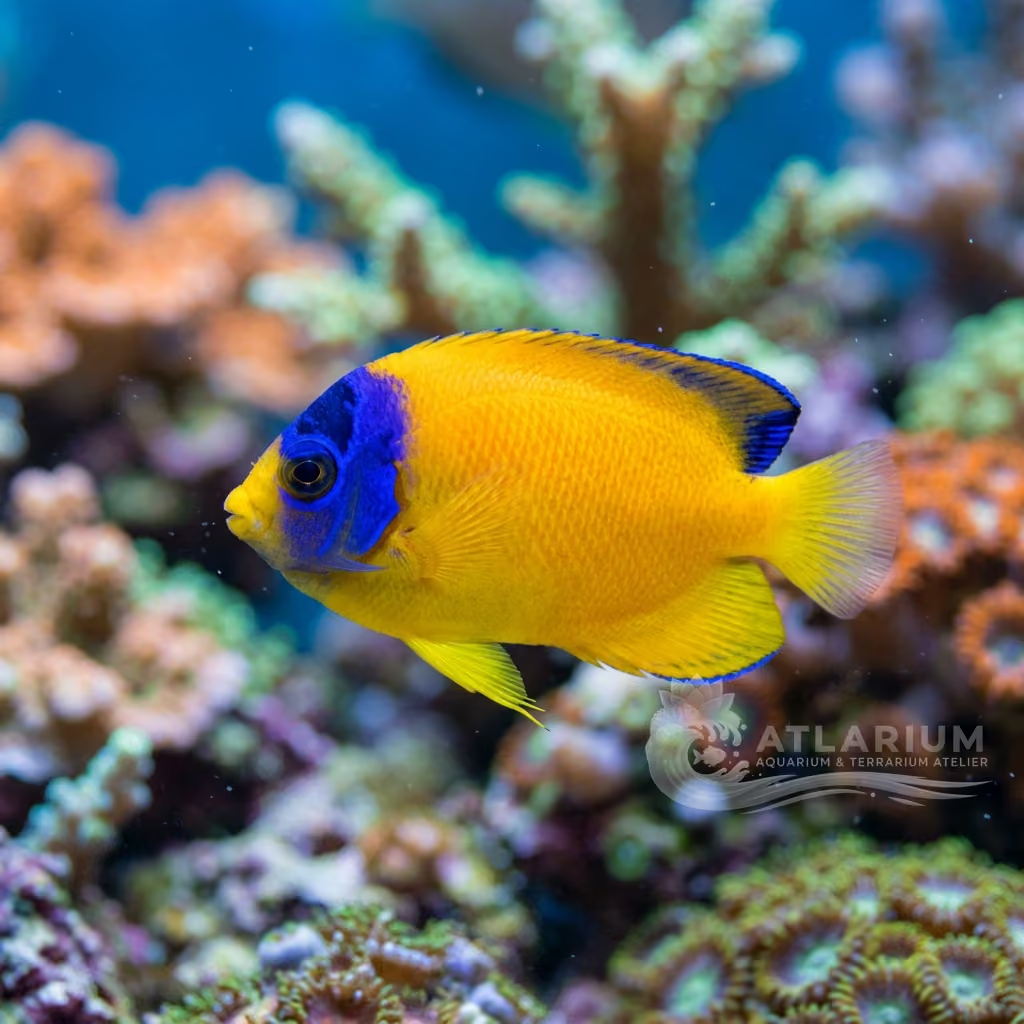
Coloration and Sexual Dimorphism: Body and head are a vivid lemon-yellow, contrasted by a prominent dark purplish-blue saddle running along the back and dorsal fin. A thin purple ring outlines the eye. No obvious sexual dimorphism except size.

Cuidado, criação e companheiros de tanque
Aquarium Setup: Requires an aquarium of at least 150 liters with extensive live rock arranged to create dark caves and overhangs. Prefers subdued lighting to mimic its deep-water habitat. A tight-fitting lid is recommended.
Diet and Feeding: Omnivore. Primarily feeds on sponges, tunicates, and algae in the wild. In aquariums, it must be offered sponge-based angelfish preparations, mysis, brine shrimp, and spirulina several times daily.
Water Quality: Demands cool, clean water and stable parameters. Temperature 21–25°C (70–77°F), pH 8.1–8.4, salinity SG 1.020–1.025, GH 15–25, and KH 8–12. Sensitive to high nitrates.
Compatibility and Cohabitation: Best kept with peaceful, non-aggressive tankmates. Avoid active, boisterous feeders that may scare it. Reef-safe with caution: may nip at LPS corals and clam mantles if underfed.
Aquarium Breeding: Extremely difficult and undocumented in home aquariums. Professional facilities have recently achieved success in raising captive-bred specimens.
Risks and Diseases: High risk of starvation if it refuses food due to stress. Susceptible to decompression issues if wild-caught, and highly prone to marine ich (Cryptocaryon) if water conditions fluctuate.

Origem e distribuição geográfica
Western Indo-Pacific, including Cocos-Keeling Islands, Indonesia, Philippines, Papua New Guinea, Palau, Guam, and Fiji. Inhabits steep drop-offs and outer reef slopes at depths of 20 to over 110 meters, living in deep caves and crevices.
Origem
Oceanos tropicais e recifesÁfrica e MadagascarSul e Sudeste AsiáticoAustrália, Nova Guiné e Oceania

Perfil de peixe
- Temperamento
- Territorial
- They are highly secretive and easily stressed. Acclimation takes significant time and extreme patience. They are peaceful but extremely timid centerpieces.
- Dieta
- Omnivore
- They naturally graze on sponges and tunicates. High-quality frozen sponge diets are necessary. Mysis shrimp provide excellent supplementary protein.
- Expectativa de vida
- 5-15 years
- Tamanho adulto
- 9 cm
- Proporção sexual
- Harem
- They function as protogynous hermaphrodites naturally. Keeping a single specimen is usually best. Bonded pairs require very large, quiet setups.
- Frequência de alimentação
- 3-4 times daily
- Multiple small feedings daily are required. Consistent food availability helps them acclimate. Mature live rock provides essential grazing material.
- Carga biológica
- Low
- Colin's angelfish produce a standard moderate bioload. They require pristine deep-water quality conditions. Highly efficient biological filtration is completely vital.
- Fluxo
- Strong
- They prefer gentle to moderate deep-water currents. Overly turbulent wavemakers cause them severe stress. Steady flow replicates their calm natural habitat.
- Risco de salto
- Yes
- Colin's angelfish carries a moderate jump risk, comparable to other dwarf angelfish species, particularly when newly introduced to a system. Because they naturally inhabit deep-water, dimly lit reef slopes, brightly illuminated or high-traffic aquariums can easily spook them into a panicky, upward dart. If harassed by larger or more dominant reef inhabitants, their flight response may culminate in them breaching the water's surface. Equipping the aquarium with a custom-fitted mesh lid is a necessary precaution to protect these rare and sensitive fish.
- Reprodução
- Oviparous
- They spawn pelagically in the evening hours. Captive breeding is incredibly rare and demanding. Larvae need highly specialized microscopic live foods.
- Compatibilidade e companheiros de tanque
- With caution
- They are incredibly shy and delicate. Only house them with extremely peaceful mates. Aggressive fish will force them into hiding.
- Nível do tanque
- Bottom
- They hug the lowest rocky sections tightly. They rarely venture into the open column. Expansive caves are critical for their security.

Modelos e parâmetros científicos
FishBase
Acesso aos dados científicos oficiais da espécie
FishBase v25.04Dados sincronizados em: 15/06/2026
- Nível trófico
- 2,8 ± 0,3 se
- Resiliência
- Alta (menos de 15 meses)
- Unicidade filogenética (PD50)
- 0.5
- Relação bayesiana comprimento-peso
- a = 0.0302, b = 2.89
- VulnerabilidadeVulnerabilidade baixa (10 / 100)

Espécies relacionadas
Recomendações agrupadas por parentes próximos, escolhas de acompanhantes e cuidados semelhantes.