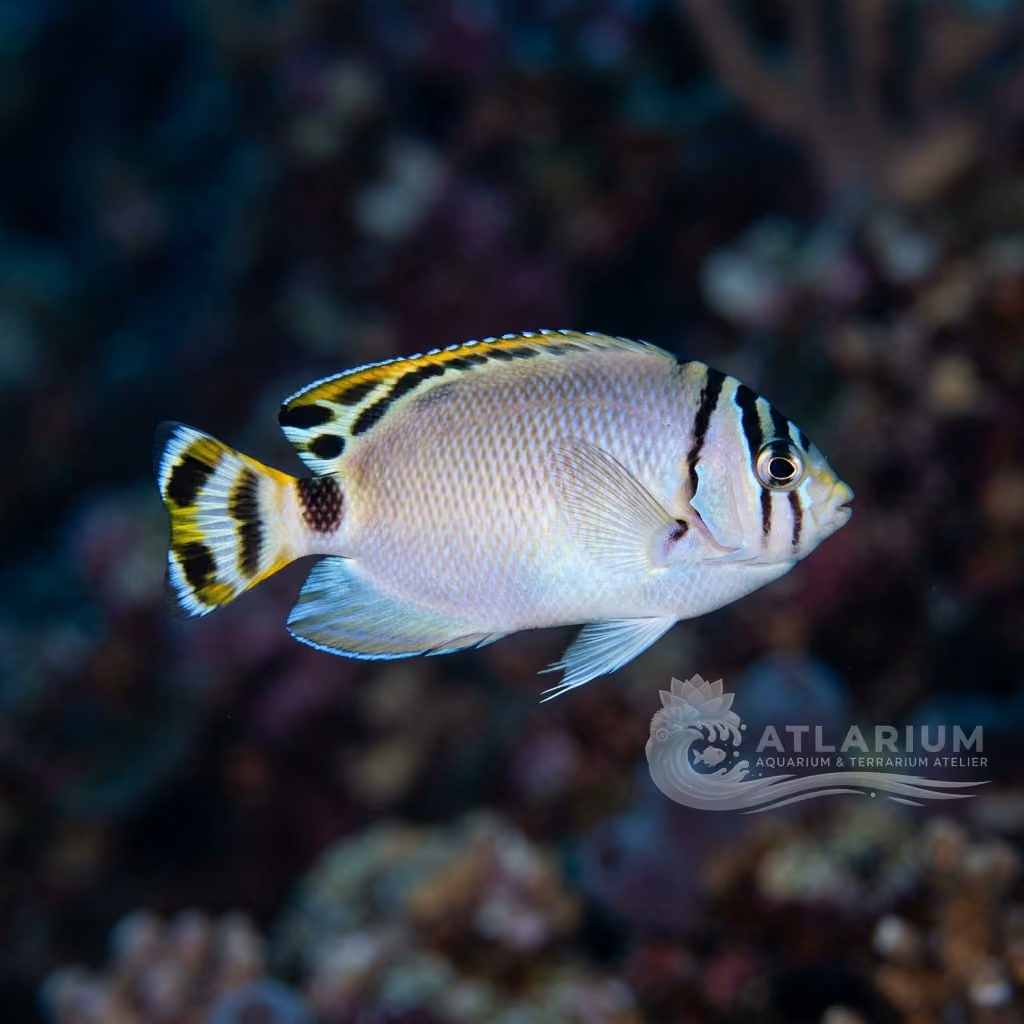
Barred Angelfish
Centropyge multifasciata
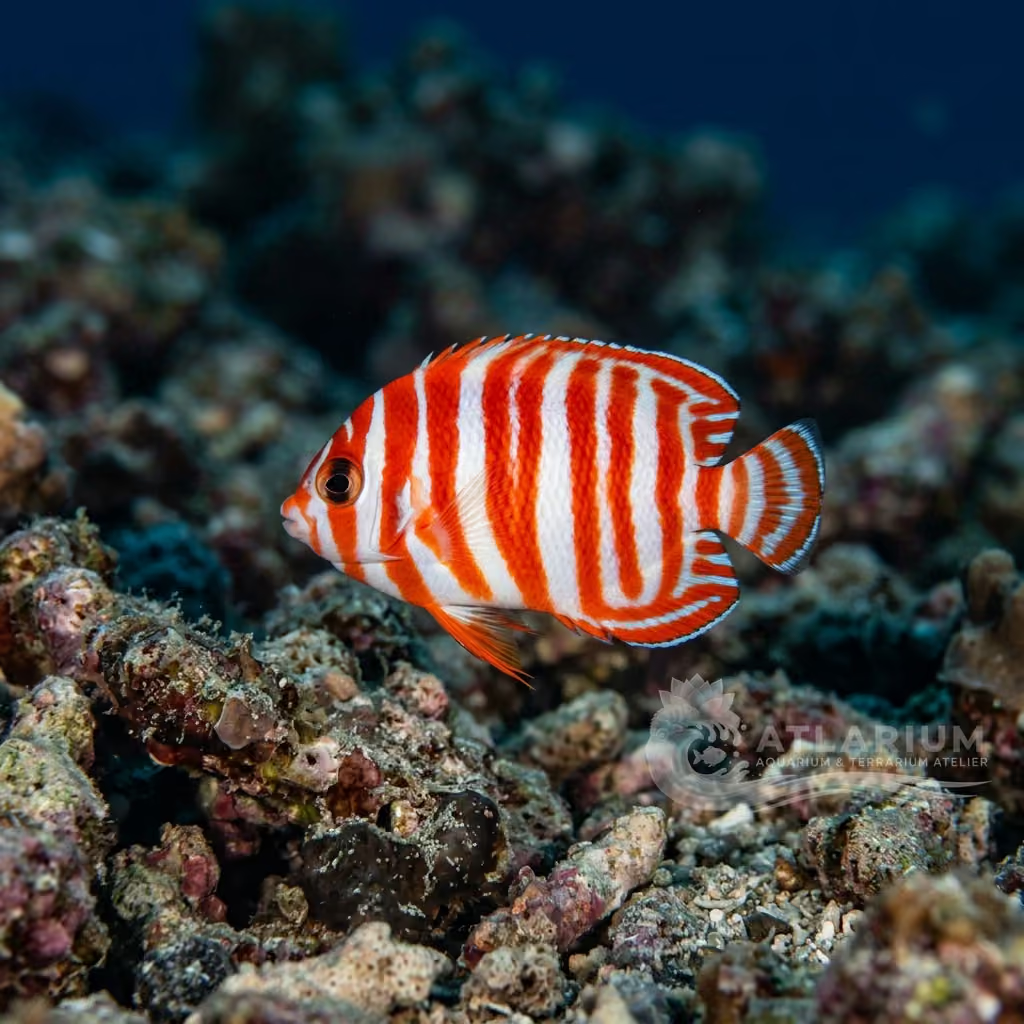
The Barred Angelfish is an elegant, deep-water species featuring striking black and white vertical bars, requiring an established tank and peaceful tankmates.
Temperatura da água
22 - 26 °C
Valor de pH
8.1 - 8.4
Tipo de água
Marinho
Nível do tanque
Parte inferior e intermediária
Tamanho adulto
12 cm
Volume mínimo do tanque
>= 200 L
Grupo mínimo
>= 1
KH
8 - 12 dKH

Descrição da espécie
Geographical Origin and Habitat: Centropyge multifasciata, also scientifically known as Centropyge multifasciata or the Barred Angelfish, is native to the tropical Indo-Pacific. Its range extends from the Cocos-Keeling Islands and Indonesia eastward to the Society Islands, reaching the Ryukyu Islands to the north and the Great Barrier Reef to the south. It is a typical inhabitant of deep seaward reef slopes and steep drop-offs, colonizing shaded caves, undercuts, and crevices at depths usually between 20 and 70 meters, where sunlight is highly attenuated.
Taxonomy and Morphology: It belongs to the class Actinopterygii, order Perciformes, family Pomacanthidae. Often classified by scientists in either the Paracentropyge or Centropyge genus, this fish features a laterally compressed and relatively high body shape compared to other dwarf angelfish. Adults reach a maximum length of about 10-12 centimeters. It has a small mouth equipped with tiny teeth adapted for grazing sponges and algae from rocky surfaces, and possesses the classic opercular spine characteristic of all angelfish.
Social Behavior: This is a shy, secretive species that is closely associated with rocky substrates. It spends much of its time swimming upside down inside caves and crevices, hovering close to rocky walls. In the wild, it lives singly or in small haremic groups consisting of a dominant male and a few females. It exhibits strong intolerance toward other dwarf angelfish of the same or closely related species, especially in confined spaces.
Coloration and Sexual Dimorphism: The coloration is highly elegant and distinct. It features a creamy-white or yellowish background highlighted by numerous vertical black or dark brown bars (usually 8 to 10) that cross the entire body, extending onto the dorsal and anal fins. The pelvic fins and the posterior portion of the body often show bright yellow highlights. Juveniles display a light-ringed dark blue ocellus on the posterior dorsal fin, which disappears in adults. External sexual dimorphism is absent, although adult males tend to be slightly larger than females.

Cuidado, criação e companheiros de tanque
Aquarium Setup: Requires a mature, well-established reef aquarium of at least 250-300 liters, running for at least 6-12 months to ensure rich microfauna and natural algal films. The aquascape is critical: it must recreate a labyrinth of live rock with numerous caves, dark crevices, and covered passages where the fish can feel secure and swim in its typical vertically oriented or inverted style. The lighting should include shaded areas. A bare tank will cause severe stress and lead to premature death.
Diet and Feeding: Extremely difficult to feed in captivity; malnutrition is the primary cause of mortality. It is a specialized grazer feeding on sponges, tunicates, algae, and small crustaceans. In captivity, it should first be stimulated with live rock rich in natural food, and then offered high-quality frozen foods (mysis, finely chopped krill, brine shrimp) enriched with vitamins and specific angelfish preparations containing sponge material and spirulina. Feed in small portions multiple times per day.
Water Quality: Requires pristine, stable water conditions: temperature between 23°C and 26°C (preferring cooler temperatures due to its deep-water origin), stable pH 8.1-8.4, and a constant specific gravity of 1.022-1.025. Nitrate and phosphate levels must be kept close to zero, supported by an excellent protein skimmer and frequent water changes. It is sensitive to organic waste buildup.
Compatibility and Cohabitation: Suitable only for aquariums populated by very peaceful and quiet tankmates. The presence of fast, aggressive, or boisterous fish (such as large tangs or damselfish) will frighten it, preventing it from feeding. It is not completely reef-safe: it may nip at the polyps of large-polyp stony (LPS) corals, soft corals, and giant clam mantles. Avoid housing it with other Centropyge species.
Aquarium Breeding: Breeding in captivity is exceptionally difficult and has not been reliably achieved in home aquariums. They are protogynous hermaphrodites. Spawning occurs in the wild within the open water column during twilight hours, with the release of pelagic eggs.
Risks and Diseases: Highly sensitive to common external parasites such as Cryptocaryon irritans and Amyloodinium during the critical acclimation phase. Transport stress and reluctance to accept prepared dry or frozen foods are the highest risks. The use of a quiet acclimation box or quarantine tank is highly recommended before introducing it to the main display.

Origem e distribuição geográfica
Centropyge multifasciata, also scientifically known as Centropyge multifasciata or the Barred Angelfish, is native to the tropical Indo-Pacific. Its range extends from the Cocos-Keeling Islands and Indonesia eastward to the Society Islands, reaching the Ryukyu Islands to the north and the Great Barrier Reef to the south. It is a typical inhabitant of deep seaward reef slopes and steep drop-offs, colonizing shaded caves, undercuts, and crevices at depths usually between 20 and 70 meters, where sunlight is highly attenuated.
Origem
Oceanos tropicais e recifesSul e Sudeste AsiáticoLeste Asiático

Perfil de peixe
- Temperamento
- Territorial
- This species is generally peaceful, shy, and secretive, making it easily intimidated by larger or more active tankmates. It is territorial toward other dwarf angelfish, particularly those with similar barred patterns or colors, and should not be housed with them. In a quiet, low-stress environment with plenty of hiding places, it will feel secure enough to explore the rockwork. It may display mild territorial behavior once established but remains peaceful toward non-related fish.
- Dieta
- Omnivore
- The Multibarred Angelfish is an omnivore that feeds on algae, detritus, sponges, tunicates, and small benthic invertebrates in the wild. In the home aquarium, providing a varied diet that includes high-quality marine algae, spirulina, and sponge-based angelfish preparations is essential. Offering frozen foods like mysis shrimp, brine shrimp, and finely chopped seafood helps meet its nutritional needs. Wild-caught specimens are notoriously difficult to feed, so offering live foods initially may be required to stimulate their appetite.
- Expectativa de vida
- 10-15 years
- Tamanho adulto
- 12 cm
- Proporção sexual
- 1:1 ratio
- In their natural habitat, these fish live in pairs or small harems consisting of a single dominant male and several females. In a home aquarium, it is highly recommended to keep them singly unless a confirmed mated pair can be acquired. Attempting to group multiple individuals without a clear social hierarchy in a small tank will lead to intense territorial aggression. If keeping a harem, a very large tank with extensive visual barriers and multiple rock structures is necessary.
- Frequência de alimentação
- 3-4 times daily
- Due to its high metabolism and natural grazing behavior, this species should be fed small amounts two to three times daily. During the initial acclimation phase, more frequent feedings of live or highly tempting foods may be necessary to encourage eating. Establishing a steady growth of natural microalgae and microfauna on the live rock allows the fish to graze continuously between feedings. Consistent, frequent meals help prevent the progressive wasting and starvation to which wild-caught individuals are prone.
- Carga biológica
- Low to Medium
- The Multibarred Angelfish has a low-to-medium biological waste production due to its relatively small size of about 12 cm. However, because it is highly sensitive to fluctuations in water chemistry, a robust and efficient filtration system is essential. Regular water changes and a well-established protein skimmer are required to maintain pristine water conditions. Keeping organic waste levels (nitrates and phosphates) as close to zero as possible is crucial for its long-term health.
- Fluxo
- Strong
- Originating from deeper reef slopes, the Multibarred Angelfish prefers weak to moderate water movement in the aquarium. While it requires clean, well-oxygenated water, turbulent or high-velocity powerheads can stress this shy fish and force it to remain hidden. Creating diverse flow zones, including low-current sanctuaries inside caves and behind large rock structures, is ideal. This allows the fish to swim comfortably and graze on rock surfaces without fighting strong currents.
- Risco de salto
- Yes
- Although the Multibarred Angelfish is a secretive, cave-dwelling species that rarely swims in open water, it still poses a moderate risk of jumping. When startled by sudden light changes, maintenance, or aggressive tankmates, it may bolt toward the surface and jump out of the tank. Therefore, a secure, tight-fitting lid or mesh cover is highly recommended. Adequate hiding spots will also reduce its stress levels, minimizing the urge to flee upward.
- Reprodução
- Oviparous
- Like other pomacanthids, this species is a protogynous hermaphrodite, with the dominant female transitioning into a male when necessary. Spawning involves a complex courtship ritual followed by a synchronized upward swim to release pelagic eggs into the water column. Breeding in the home aquarium is exceptionally difficult due to their specific spawning requirements and the tiny size of the larvae, which require specialized microscopic live foods. However, commercial breeders have successfully raised them in captivity using advanced aquaculture techniques.
- Compatibilidade e companheiros de tanque
- With caution
- This species is compatible with peaceful, non-aggressive tankmates such as gobies, firefish, and peaceful wrasses. It should not be kept with aggressive or fast-swimming species that might outcompete it for food or cause it stress. It is considered reef-safe with caution, as it may nip at large-polyp stony (LPS) corals, soft corals, and clam mantles, especially if underfed. However, it generally coexists well with small-polyp stony (SPS) corals and most non-sessile invertebrates.
- Nível do tanque
- Middle/Bottom
- This species is highly cryptic and spends almost all of its time in the bottom and middle zones of the aquarium. It prefers to stay near the substrate, weaving through live rock, caves, crevices, and overhangs. It rarely swims in open water and will quickly retreat to its designated escape hole when startled. Providing a complex aquascape with numerous dark caves is essential to mimic its natural deep-reef slope habitat.

Modelos e parâmetros científicos
FishBase
Acesso aos dados científicos oficiais da espécie
FishBase v25.04Dados sincronizados em: 15/06/2026
- Nível trófico
- 2,8 ± 0,33 se
- Resiliência
- Alta (menos de 15 meses)
- Unicidade filogenética (PD50)
- 1
- Relação bayesiana comprimento-peso
- a = 0.0302, b = 2.89
- VulnerabilidadeVulnerabilidade baixa (10 / 100)

Espécies relacionadas
Recomendações agrupadas por parentes próximos, escolhas de acompanhantes e cuidados semelhantes.