Limbaugh's angelfish
Holacanthus limbaughi
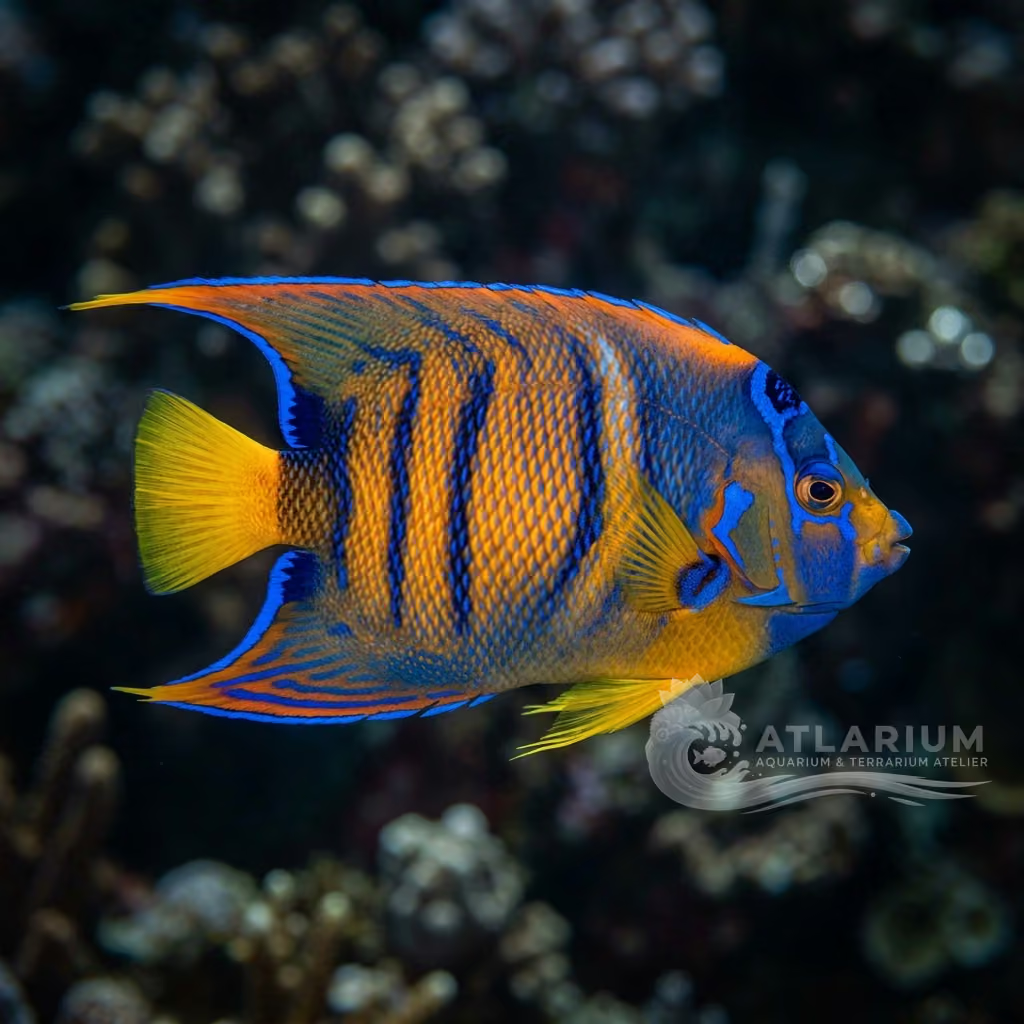
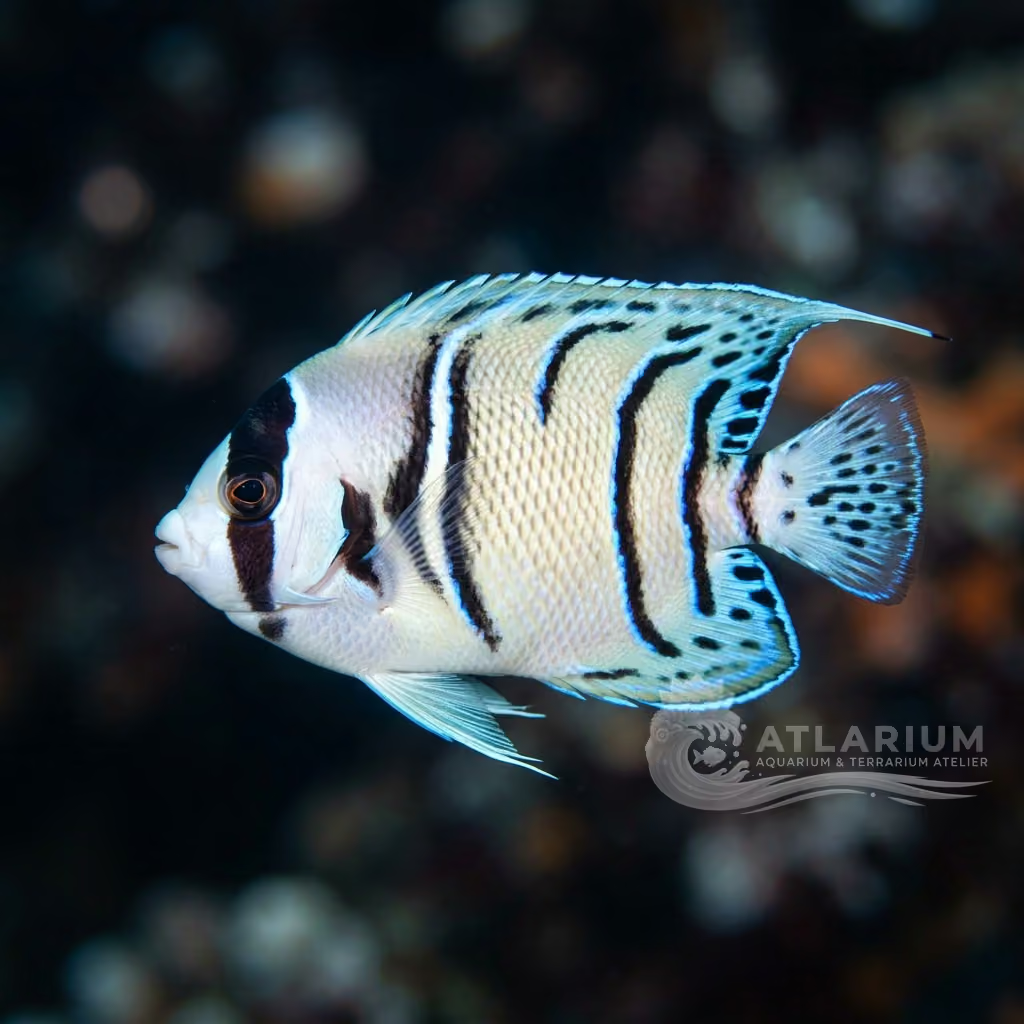
An extremely rare and prized marine angelfish, endemic to Clipperton Island, featuring a magnificent royal blue color and a distinctive white side spot.
Temperatura da água
22 - 26 °C
Valor de pH
8.1 - 8.4
Tipo de água
Marinho
Nível do tanque
Todos os níveis
Tamanho adulto
25 cm
Volume mínimo do tanque
>= 600 L
Grupo mínimo
>= 1
KH
8 - 12 dKH

Descrição da espécie
Geographical Origin and Habitat: Holacanthus limbaughi has one of the most restricted geographic ranges of any marine fish, being strictly endemic to the isolated Clipperton Atoll in the eastern tropical Pacific Ocean. This species is found on rocky and coral reefs surrounding the island, at depths ranging from 10 meters down to over 100 meters on deep reef walls. Its habitat is characterized by pristine oceanic waters, high surge, and steep rock faces covered with sponges, tunicates, and encrusting algae.
Taxonomy and Morphology: It belongs to the family Pomacanthidae and the genus Holacanthus. It has a robust, deep, oval-shaped body that is strongly compressed laterally. Like all angelfish in its genus, it possesses a prominent, sharp preopercular spine located at the base of the gill cover, pointing backward, which it uses as a defensive weapon. The dorsal and anal fins are large and sweep backward, becoming slightly elongated in mature specimens.
Social Behavior: This is a territorial and solitary fish that constantly patrols large areas of the reef in search of food. It exhibits intense intraspecific aggression towards members of its own species and other similarly sized angelfish, especially if they are kept within the same limited space. Although curious, it is cautious and will quickly retreat into caves or rocky crevices if it senses sudden movements or vibrations in the water.
Coloration and Sexual Dimorphism: Adults display a spectacular royal blue to deep purple body, which is highlighted by a bright, oval-shaped white spot on the side just above the pectoral fin. The caudal fin is bright yellow-orange, creating a sharp contrast with the dark blue body. There is no visible sexual dimorphism between males and females, though adult males can grow slightly larger than their female counterparts.

Cuidado, criação e companheiros de tanque
Aquarium Setup: Requires an exceptionally large marine aquarium, with a minimum recommended volume of 500 liters for a single specimen, due to its size and active swimming behavior. The tank must feature a massive rockwork structure (reefscape) with large caves, swim-through tunnels, and stable crevices that provide secure hiding spots. A large, open swimming area in the front of the aquarium is necessary.
Diet and Feeding: It is a dietary specialist that feeds primarily on marine sponges, tunicates, and benthic algae in the wild. Feeding in captivity is a major challenge; it requires high-quality commercial foods formulated specifically for angelfish containing natural sponge, supplemented with spirulina, fresh nori sheets, and frozen foods like mysis, krill, and chopped clams. Feed small portions multiple times daily.
Water Quality: Being a deep-water oceanic fish, it requires pristine and stable water parameters: temperature 23-27 °C, pH 8.1-8.4, specific gravity 1.022-1.025, and KH 8-12. An efficient protein skimmer and strong water movement are crucial to maintain high oxygen saturation levels and keep organic nutrients (nitrates and phosphates) near zero.
Compatibility and Cohabitation: This species is not reef-safe, as it will nip at and consume large and small polyp stony corals (LPS and SPS), soft corals, and clam mantles. It should be housed in a fish-only-with-live-rock (FOWLR) tank with other robust, semi-aggressive tankmates like large tangs, triggerfish, large wrasses, and damsels. Never house it with other Holacanthus species.
Aquarium Breeding: There are no documented cases of successful breeding in home aquariums. In the wild, they are pelagic spawners, releasing eggs and sperm into the open water column at dusk. The eggs float with oceanic currents, and the planktonic larval phase is extremely long, making commercial or hobbyist captive breeding unfeasible with current technology.
Risks and Diseases: It is highly susceptible to head and lateral line erosion (HLLE), which is often triggered by nutritional deficiencies (lack of vitamins and sponge matter) or the use of cheap activated carbon. It is also vulnerable to marine ich (Cryptocaryon) and velvet. A strict quarantine protocol is mandatory to ensure the fish is healthy and eating prepared foods before introduction.

Origem e distribuição geográfica
Holacanthus limbaughi has one of the most restricted geographic ranges of any marine fish, being strictly endemic to the isolated Clipperton Atoll in the eastern tropical Pacific Ocean. This species is found on rocky and coral reefs surrounding the island, at depths ranging from 10 meters down to over 100 meters on deep reef walls. Its habitat is characterized by pristine oceanic waters, high surge, and steep rock faces covered with sponges, tunicates, and encrusting algae.
Origem
Oceanos tropicais e recifes

Perfil de peixe
- Temperamento
- Aggressive
- Semi-aggressive and territorial. Establish them as the last addition. They will dominate smaller timid fish.
- Dieta
- Omnivore
- Requires a specialized diet including sponges and algae. Offer high-quality frozen angelfish preparations. Supplement with nori.
- Expectativa de vida
- 15-20 years
- Tamanho adulto
- 25 cm
- Proporção sexual
- Solitary
- Usually kept as a single specimen. Pairs can be attempted in very large tanks. Two males will fight to the death.
- Frequência de alimentação
- Twice daily
- Feed at least two to three times daily. Small frequent meals are best. Ensure food contains marine sponges.
- Carga biológica
- High
- Angelfish produce a high bioload due to their size and diet. A strong protein skimmer is highly recommended. Regular maintenance is key.
- Fluxo
- Strong
- Moderate to strong flow is preferred. This simulates their natural reef environment. Allow some calm areas behind rocks.
- Risco de salto
- Yes
- They are not prone to jumping. However, a covered tank is always safer. Avoid startling them with sudden lights.
- Reprodução
- Oviparous
- Captive breeding is very difficult. They release eggs and sperm into the water column. Larvae are challenging to raise.
- Compatibilidade e companheiros de tanque
- Reef safe
- They can nip at corals and clams. Best kept in FOWLR tanks. Avoid keeping with other large angelfish.
- Nível do tanque
- All levels
- They roam across all levels of the aquarium. They need plenty of live rock for grazing. Adequate swimming space is essential.

Modelos e parâmetros científicos
FishBase
Acesso aos dados científicos oficiais da espécie
FishBase v25.04Dados sincronizados em: 15/06/2026
- Resiliência
- Média (1,4 - 4,4 anos)
- Unicidade filogenética (PD50)
- 0.5078
- Relação bayesiana comprimento-peso
- a = 0.0302, b = 2.89
- VulnerabilidadeVulnerabilidade baixa (15 / 100)

Espécies relacionadas
Recomendações agrupadas por parentes próximos, escolhas de acompanhantes e cuidados semelhantes.