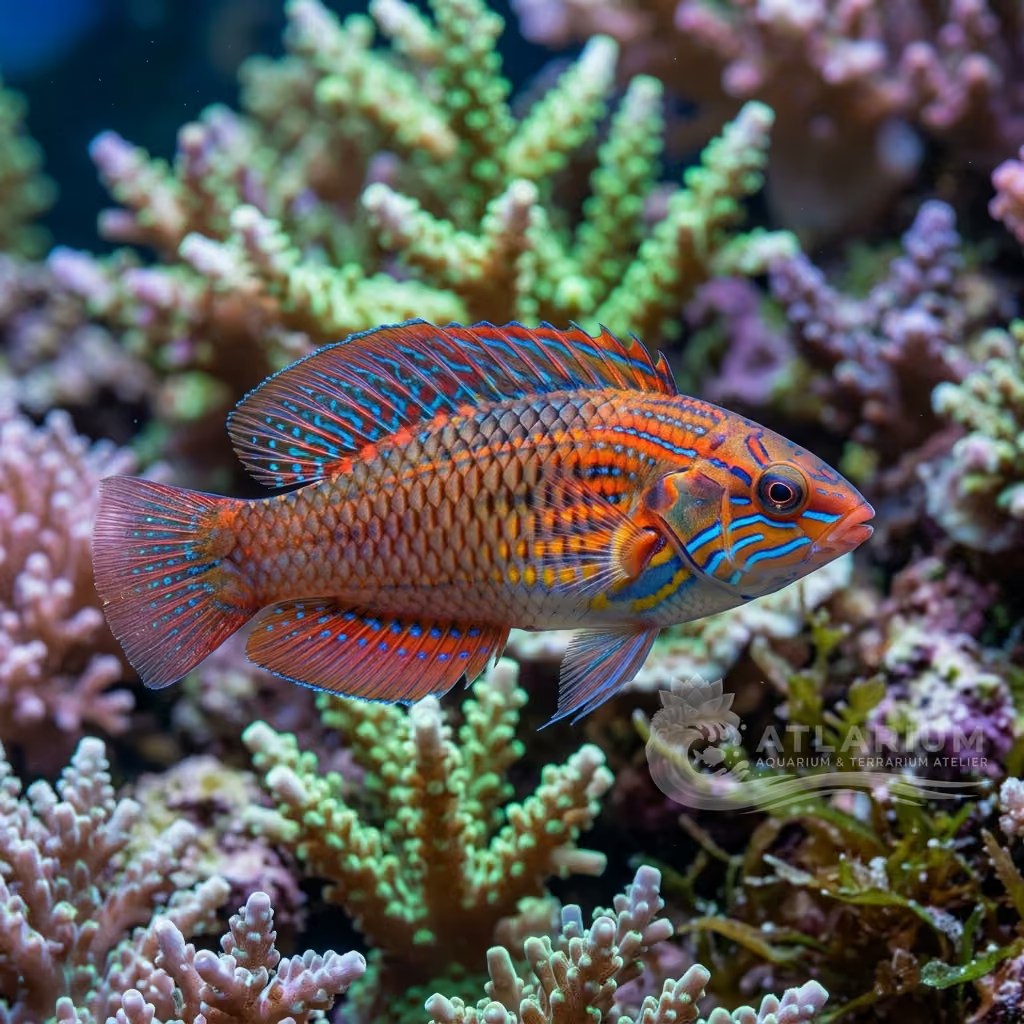
Sunset wrasse
Thalassoma lutescens
A vibrant, neon-green wrasse famous for its ceaseless swimming and inquisitive nature. It demands sprawling aquariums with a deep sand bed to burrow into at night, plus a tightly fitting cover.
Temperatura da água
23 - 28 °C
Valor de pH
8.1 - 8.4
Tipo de água
Marinho
Nível do tanque
Todos os níveis
Tamanho adulto
30 cm
Volume mínimo do tanque
>= 500 L
Grupo mínimo
>= 1
KH
8 - 12 dKH

Descrição da espécie
Geographical Origin and Habitat: Thalassoma lutescens is widely distributed in the tropical waters of the Indo-Pacific, ranging from the Red Sea and East Africa to Easter Island, the Hawaiian Islands, and as far east as the Gulf of California. It inhabits seaward reefs, outer slopes, and surge zones exposed to strong currents and wave action, at depths ranging from 1 to 30 meters.
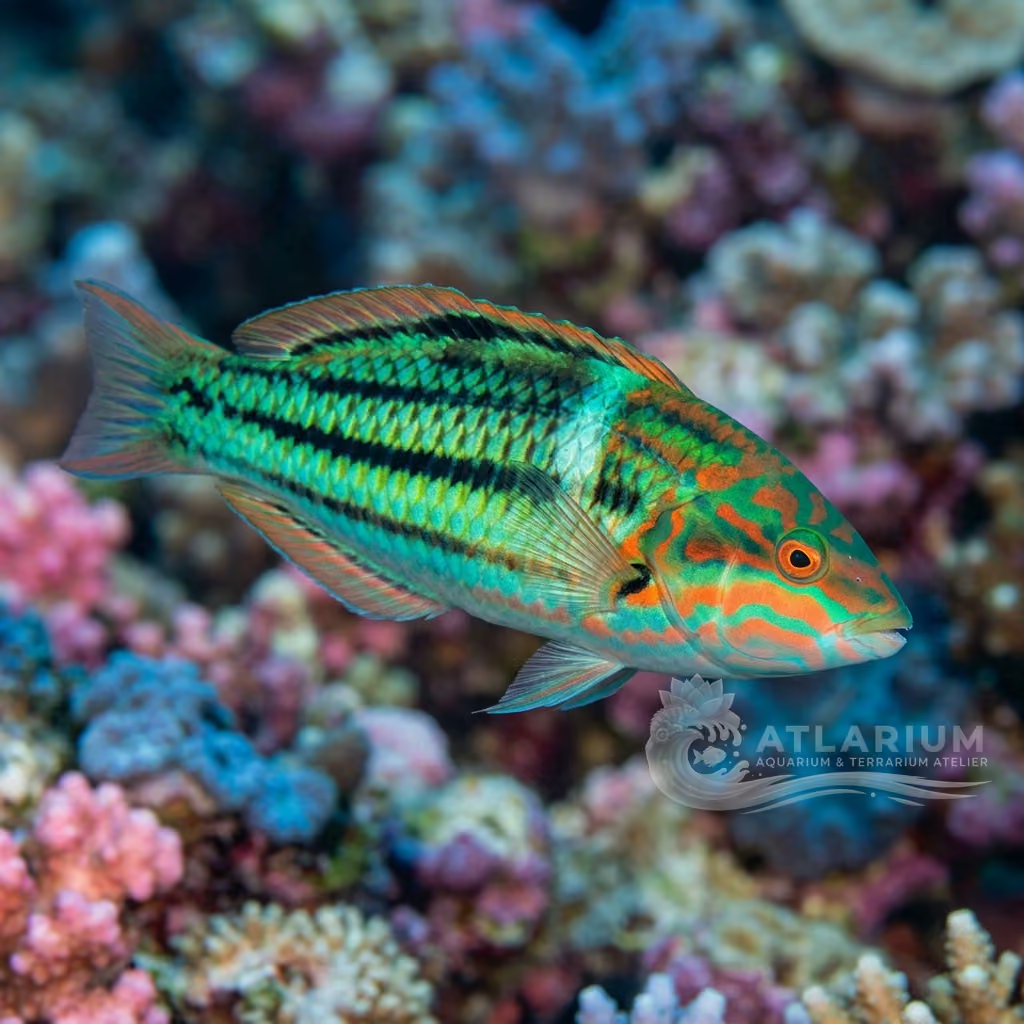
Taxonomy and Morphology: Belonging to the family Labridae. It features an elongated, hydrodynamic, and laterally compressed body designed for fast and efficient swimming in turbulent reef waters. It can reach a maximum length of 30 centimeters in the wild, though it typically remains slightly smaller in aquarium environments.
Social Behavior: Bold, highly energetic, and in constant motion during daylight hours. It establishes territorial dominance and can be aggressive toward other wrasses of similar shape or color, as well as smaller, peaceful tankmates. At night or when threatened, it quickly dives and buries itself completely in the sandy substrate.
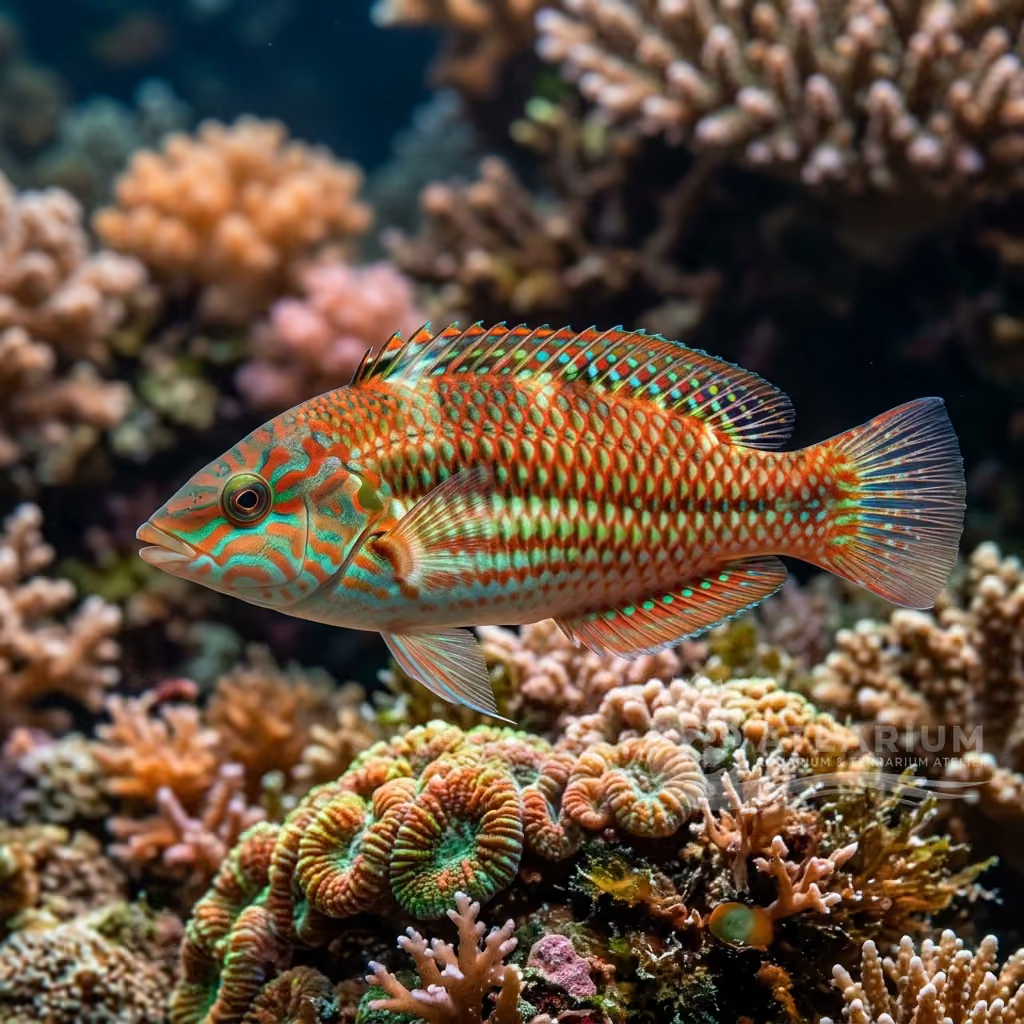
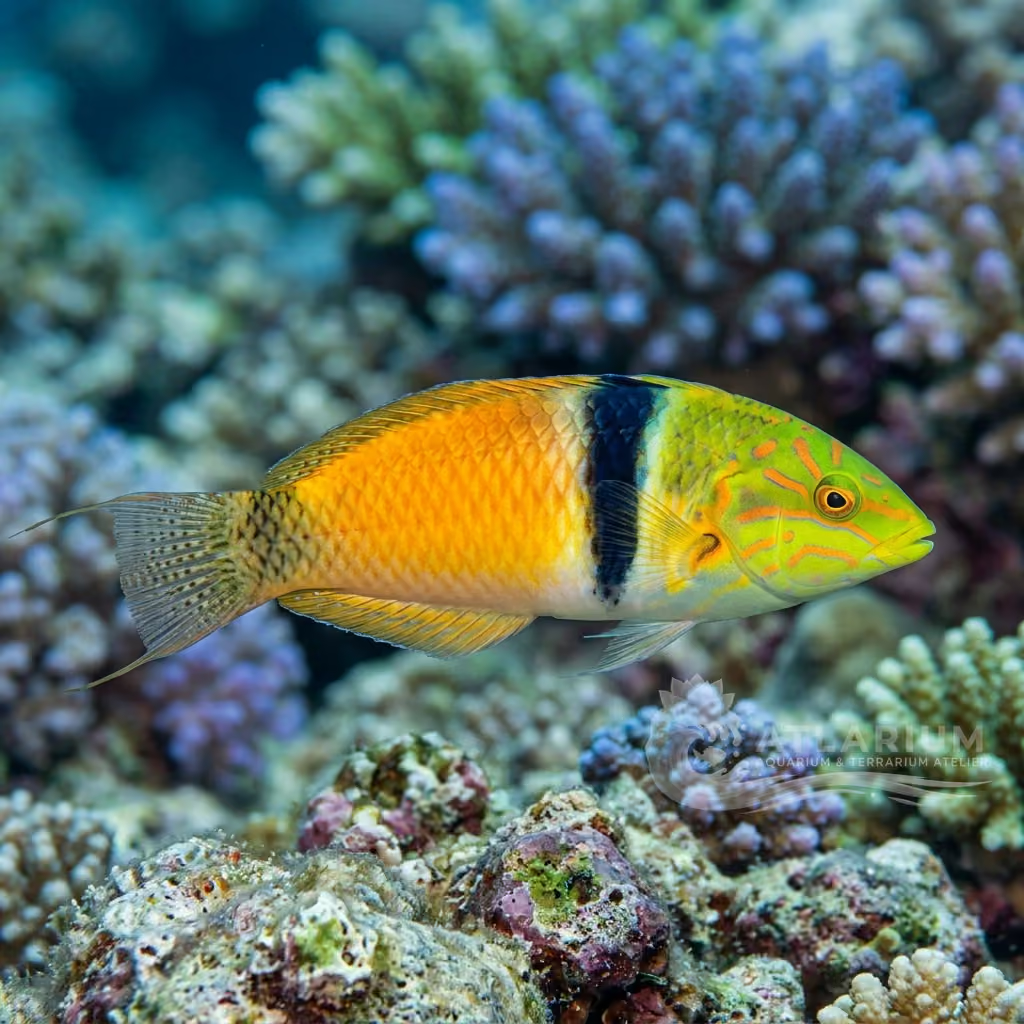
Coloration and Sexual Dimorphism: A protogynous hermaphrodite. Juveniles and initial phase females are uniform lemon-yellow. Terminal phase dominant males develop a striking yellow-green to olive-green body with blue-green stripes along the scales, contrasted by vibrant pinkish-red facial bands radiating from the eyes.

Cuidado, criação e companheiros de tanque
Aquarium Setup: Demands a large tank of at least 400-500 liters to accommodate its active, open-water swimming habits. A deep sand bed (5-8 cm) of fine, non-sharp aragonite sand is crucial to allow the wrasse to bury itself to sleep at night. The tank must have a tightly fitting lid, as they are notorious jumpers.
Diet and Feeding: A voracious carnivore. In the wild, it feeds on benthic invertebrates, including small crabs, shrimps, sea urchins, ophiuroids, and fish eggs. In captivity, feed 2-3 times daily with a variety of meaty frozen or fresh foods (mysis, krill, chopped clam, shrimp) alongside high-quality sinking pellets.
Water Quality: High water flow and robust filtration are necessary to mimic their natural high-energy surge habitats. Maintain water temperature at 23-28 °C, pH at 8.1-8.4, and salinity at SG 1.020-1.025. An efficient protein skimmer is highly recommended to manage the waste produced by their active feeding.
Compatibility and Cohabitation: Not reef-safe with small invertebrates; it will eagerly consume ornamental shrimps, crabs, small urchins, and snails. Keep only with robust, active tankmates such as large tangs, triggerfish, large angelfish, and groupers. Do not house with slow-feeding or nervous fish.
Aquarium Breeding: Breeding in home aquariums is exceptionally difficult and rarely achieved. They are pelagic broadcast spawners that release eggs and sperm into the water column during rapid spawning rushes toward the surface; the floating eggs are then carried away by oceanic currents.
Risks and Diseases: Jumping out of the tank is a major cause of death, requiring a secure mesh or solid cover. Keeping this fish in a bare-bottom tank or with coarse gravel will cause severe skin damage, stress, and eventual death due to their inability to bury themselves. Generally hardy but susceptible to internal parasites.

Origem e distribuição geográfica
Thalassoma lutescens is widely distributed in the tropical waters of the Indo-Pacific, ranging from the Red Sea and East Africa to Easter Island, the Hawaiian Islands, and as far east as the Gulf of California. It inhabits seaward reefs, outer slopes, and surge zones exposed to strong currents and wave action, at depths ranging from 1 to 30 meters.
Origem
Oceanos tropicais e recifesAmérica do NorteÁfrica e Madagascar

Perfil de peixe
- Temperamento
- Aggressive
- Semi-aggressive and very active. Can outcompete slow fish for food. May harass passive species.
- Dieta
- Carnivore
- Carnivorous diet consisting of meaty foods. Feed mysis shrimp, chopped seafood, and high-quality pellets. Variety is essential for color maintenance.
- Expectativa de vida
- 5-10 years
- Tamanho adulto
- 30 cm
- Proporção sexual
- Solitary
- Keep one male per tank. Multiple females can be kept in large systems. They can change sex from female to male.
- Frequência de alimentação
- Twice daily
- Feed them two to three times daily. They are aggressive eaters. Ensure shy tank mates get enough food.
- Carga biológica
- High
- These wrasses have a moderate to high bioload. They are very active and eat constantly. Efficient mechanical and biological filtration is needed.
- Fluxo
- Strong
- They enjoy strong water currents. Good flow helps keep the water well oxygenated. This mimics their natural surge zones.
- Risco de salto
- Yes
- They are notorious jumpers when startled. A tight-fitting mesh lid is absolutely mandatory. Any small gap can lead to escape.
- Reprodução
- Oviparous
- Rarely bred in the home aquarium. They are pelagic spawners. Males are often terminal phase females.
- Compatibilidade e companheiros de tanque
- Reef safe
- Can be aggressive towards small invertebrates. May flip over snails and crabs. Larger species will eat ornamental shrimp.
- Nível do tanque
- All levels
- Very active in the middle and lower levels. They require a deep sand bed to bury themselves at night. They will constantly patrol the rockwork.

Modelos e parâmetros científicos
FishBase
Acesso aos dados científicos oficiais da espécie
FishBase v25.04Dados sincronizados em: 15/06/2026
- Nível trófico
- 3,7 ± 0,4 se
- Resiliência
- Média (1,4 - 4,4 anos)
- Unicidade filogenética (PD50)
- 0.5
- Relação bayesiana comprimento-peso
- a = 0.01, b = 3.05
- VulnerabilidadeVulnerabilidade baixa (20 / 100)

Espécies relacionadas
Recomendações agrupadas por parentes próximos, escolhas de acompanhantes e cuidados semelhantes.