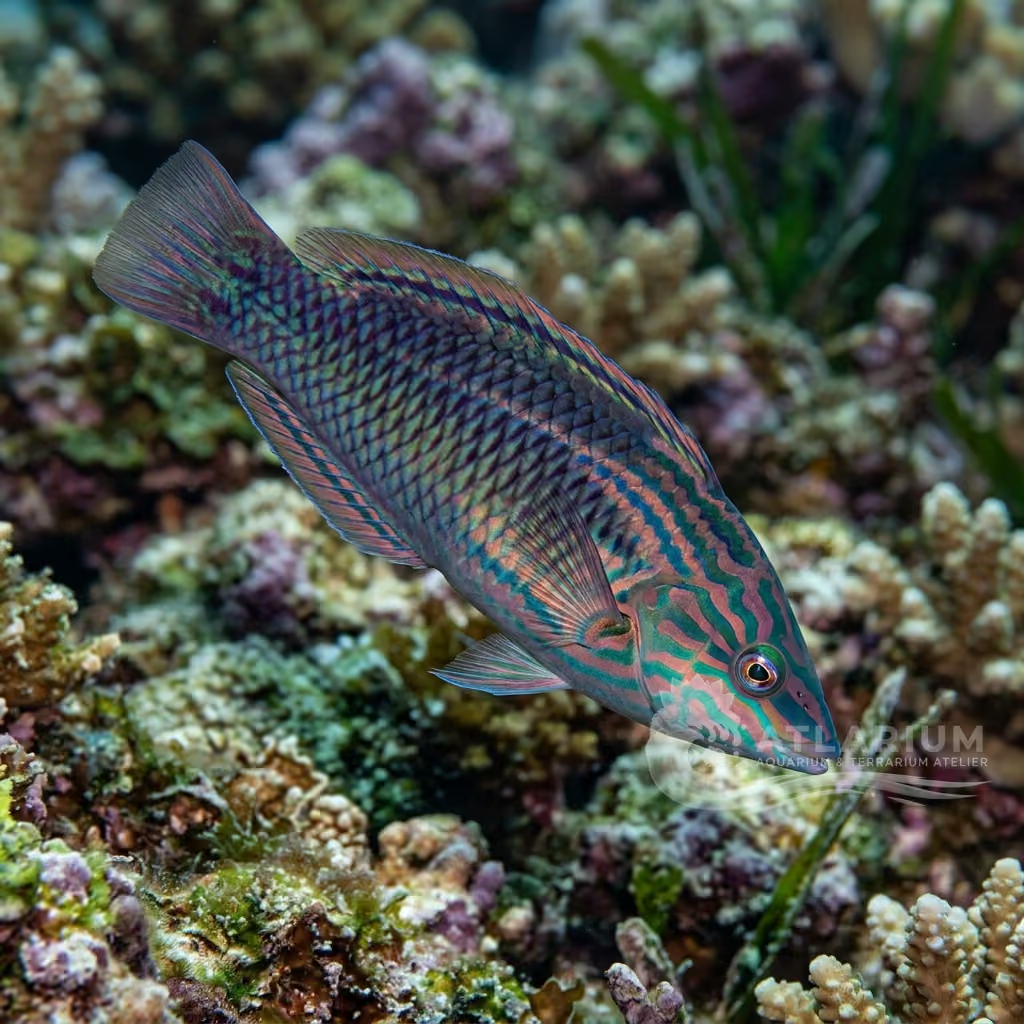
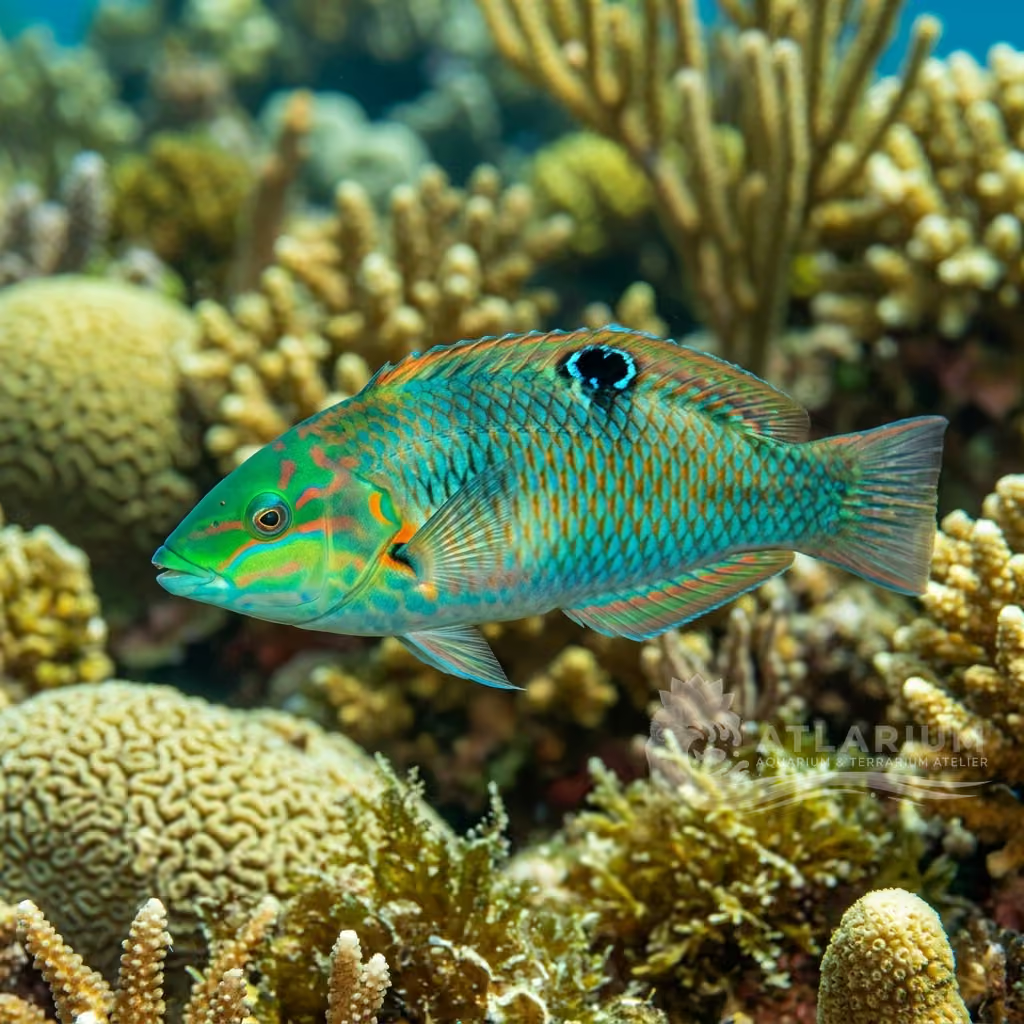
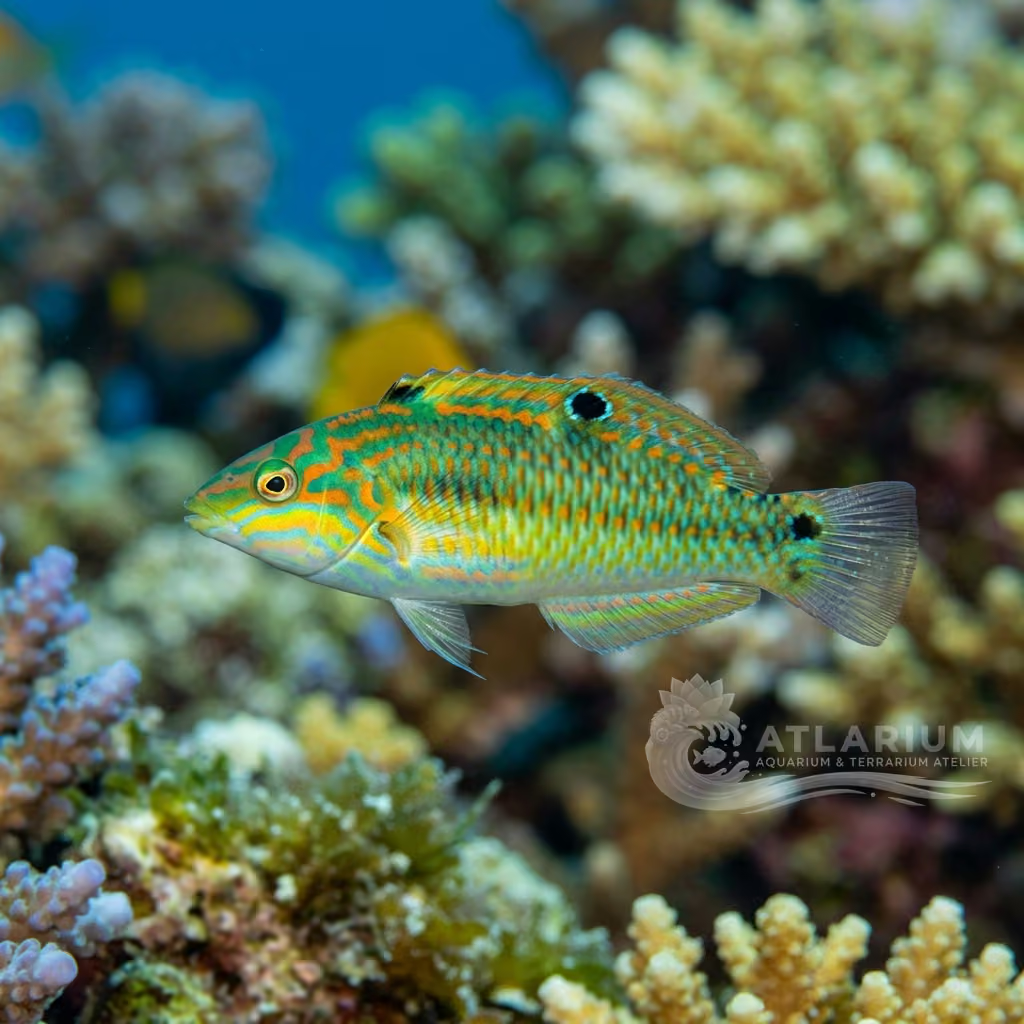
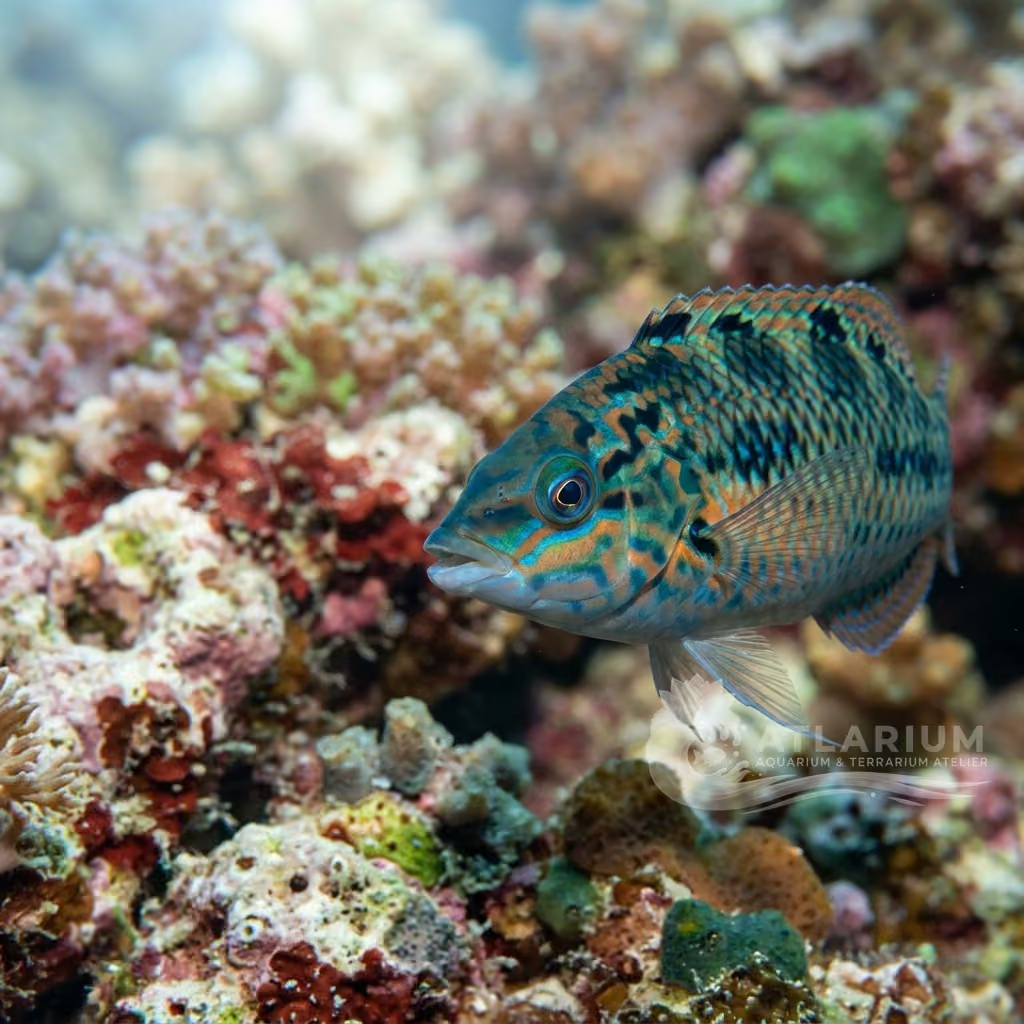
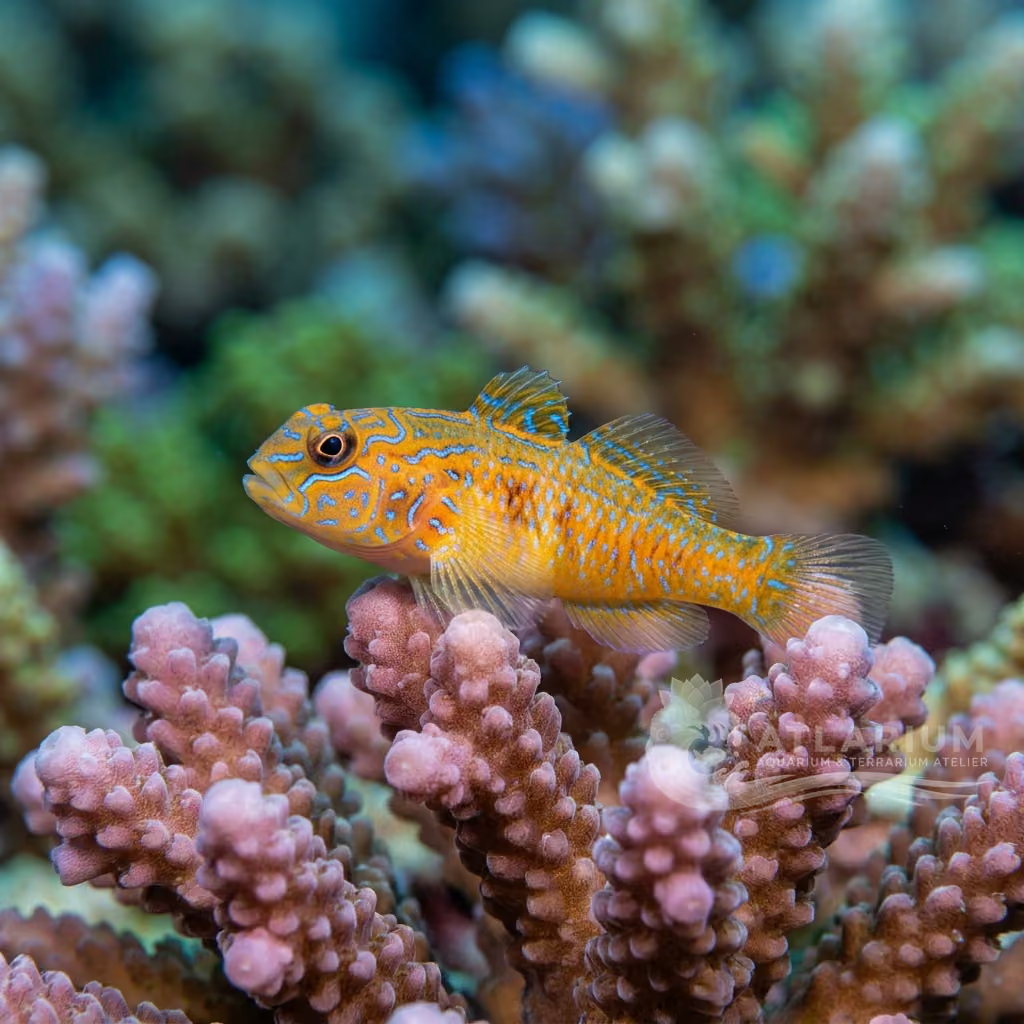
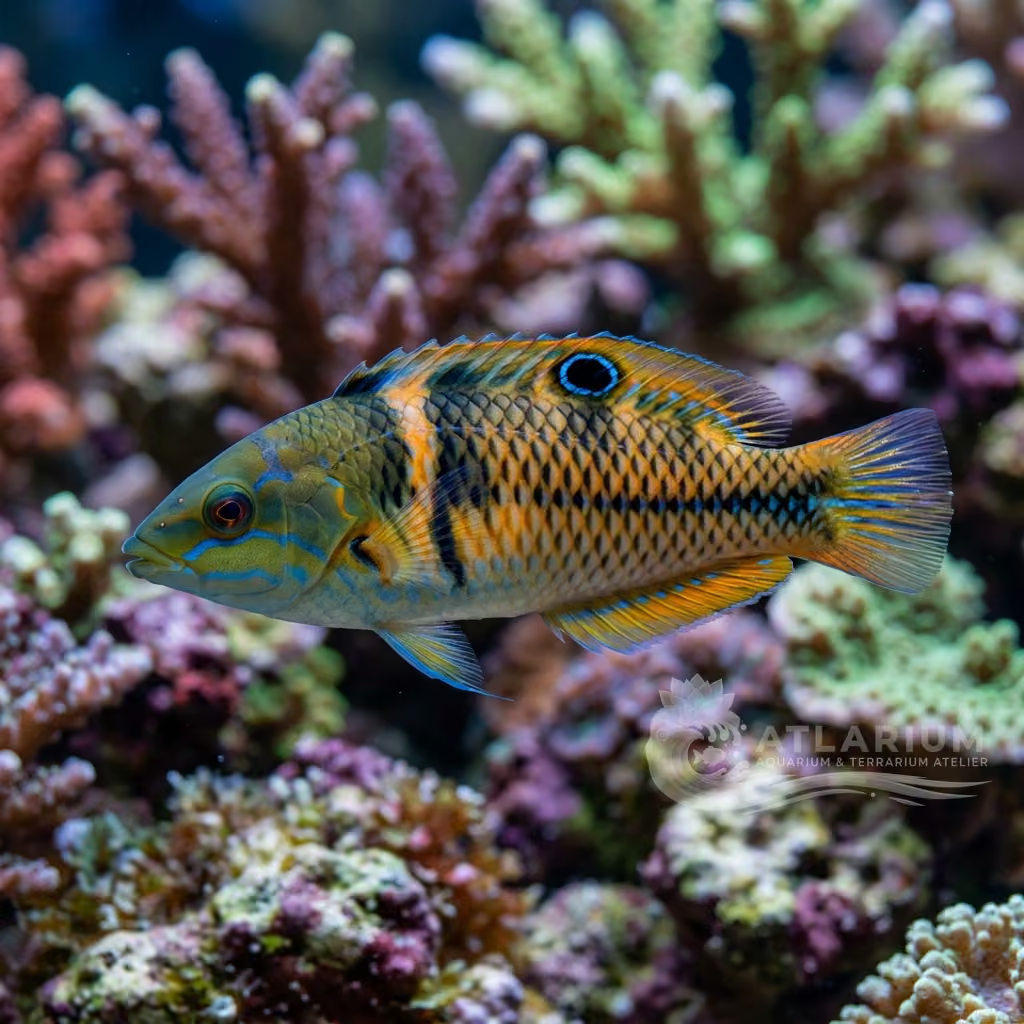
Humphead Wrasse
Cheilinus undulatus
This majestic giant wrasse reaches massive proportions and demands a 5000L aquarium. As an apex predator of toxic invertebrates, it is not suitable for reefs.
Temperatura da água
24 - 28 °C
Valor de pH
8.1 - 8.4
Tipo de água
Marinho
Nível do tanque
Todos os níveis
Tamanho adulto
200 cm
Volume mínimo do tanque
>= 5.000 L
Grupo mínimo
>= 1
KH
8 - 12 dKH

Descrição da espécie
Geographical Origin and Habitat: Broadly distributed in the tropical Indo-Pacific, from the Red Sea and East Africa to the Tuamotu Islands, north to Japan, and south to New Caledonia. Inhabits outer reef slopes and deep channels. They inhabit outer reef slopes, channel walls, and deep lagoons with high water clarity.
Taxonomy and Morphology: Member of the family Labridae. It is the largest wrasse species, reaching lengths of over 2 meters. Characterized by a large humped forehead in adults and thick lips. As they mature, they develop a prominent hump on their forehead and thick, fleshy lips.
Social Behavior: Solitary, diurnal, and highly resident. Known for its curious and interactive behavior. Peaceful with large fish but a voracious predator of small reef life. They are generally solitary predators, roaming large territories on the reef to hunt for food.
Coloration and Sexual Dimorphism: Body has a complex maze-like blue, green, and yellow pattern. Two black lines extend behind the eyes. Large dominant terminal males display a prominent hump and intense green-blue hues. Their intricate scale patterns feature shades of green, blue, and yellow that change with age.

Cuidado, criação e companheiros de tanque
Aquarium Setup: Suitable only for giant systems of at least 5000 liters. Decor must consist of massive, secured rock formations. Requires immense open swimming zones. Due to their massive size, they can only be housed in public aquariums or mega-tanks.
Diet and Feeding: Carnivorous. Feeds on toxic animals like sea hares, boxfishes, crown-of-thorns starfish, and mollusks. In captivity, requires whole fresh seafood including shrimp, squid, clams, and fish. Feed a diet of whole fish, crabs, clams, and sea urchins to satisfy their predatory needs.
Water Quality: Maintain standard marine values: temperature 24-28 °C, pH 8.1-8.4, salinity SG 1.020-1.025. Industrial-grade filtration and heavy protein skimming are required. Massive filtration systems are required to maintain water parameters suitable for this giant fish.
Compatibility and Cohabitation: Not Reef Safe. Will consume any crab, shrimp, sea urchin, or fish small enough to fit in its mouth. Keep only with massive tankmates. Totally incompatible with standard home reef systems due to physical size and diet.
Aquarium Breeding: Protogynous hermaphrodite. Broadcast spawners forming pelagic aggregations. Captive breeding is undocumented due to the huge scale required. Breeding is not possible in home aquaria due to the vast areas needed for pelagic spawning.
Risks and Diseases: Listed as Endangered on the IUCN Red List and protected under CITES. Prone to head and mouth injuries, which require veterinary attention. Classified as endangered; ownership is subject to international CITES regulations and permit checks.

Origem e distribuição geográfica
Broadly distributed in the tropical Indo-Pacific, from the Red Sea and East Africa to the Tuamotu Islands, north to Japan, and south to New Caledonia. Inhabits outer reef slopes and deep channels. They inhabit outer reef slopes, channel walls, and deep lagoons with high water clarity.
Origem
Oceanos tropicais e recifesÁfrica e MadagascarLeste AsiáticoAustrália, Nova Guiné e Oceania

Perfil de peixe
- Temperamento
- Peaceful
- They are surprisingly docile and gentle for their massive, intimidating size. They can become quite tame and even recognize their individual owners. However, their sheer bulk can accidentally knock over unattached corals.
- Dieta
- Carnivore
- It is primarily carnivorous and requires a heavy, meaty diet. Provide a varied selection of fresh seafood like shrimp, clams, and squid. Hard-shelled prey helps keep their continuously growing teeth worn down.
- Expectativa de vida
- 30 years
- Tamanho adulto
- 200 cm
- Proporção sexual
- Solitary
- It is best kept as a single specimen in captive environments. They are protogynous hermaphrodites, natively changing from female to male. Males can be highly territorial toward other conspecific males.
- Frequência de alimentação
- 2-3 times daily
- Feed adult specimens about two to three times a week. Juveniles may require daily feedings to properly support their rapid growth. Avoid overfeeding to maintain optimal water quality in the system.
- Carga biológica
- Extreme
- The bioload of this fish is exceptionally high. It produces a massive amount of waste due to its massive adult size. Strong filtration systems and frequent water changes are strictly necessary.
- Fluxo
- Strong
- This massive fish appreciates moderate to strong water flow. Good circulation helps oxygenate the extremely large volume of water it requires. It closely mimics their natural reef current environment.
- Risco de salto
- No
- Reprodução
- Oviparous
- Breeding in home aquariums is practically impossible at this time. They require vast pelagic spaces for their natural spawning rituals. All captive specimens are generally wild-caught from the ocean.
- Compatibilidade e companheiros de tanque
- Peaceful
- This species is generally peaceful but will readily eat much smaller fish. It should be kept with large, robust tankmates to avoid predation. Crustaceans and mollusks will likely become an expensive meal.
- Nível do tanque
- All levels
- This wrasse typically swims in the middle to lower levels of the water column. They constantly patrol the rockwork searching for hiding prey. Ample swimming space is absolutely essential for their physical well-being.

Modelos e parâmetros científicos
FishBase
Acesso aos dados científicos oficiais da espécie
FishBase v25.04Dados sincronizados em: 15/06/2026
- Nível trófico
- 4 ± 0,61 se
- Resiliência
- Baixa (4,5 - 14 anos)
- Tempo de geração
- 27,5 anos
- Unicidade filogenética (PD50)
- 0.5156
- Relação bayesiana comprimento-peso
- a = 0.01479, b = 2.98
- VulnerabilidadeVulnerabilidade de alta a muito alta (74 / 100)

Espécies relacionadas
Recomendações agrupadas por parentes próximos, escolhas de acompanhantes e cuidados semelhantes.