Boggess' Peppermint Shrimp
Lysmata boggessi
A gregarious marine detritivorous shrimp from the Gulf of Mexico, highly sought after for its ability to control pest Aiptasia anemones. Geographical Origin and Habitat: Lysmata boggessi is...
Temperatura da água
22 - 28 °C
Valor de pH
8.1 - 8.4
Tipo de água
Marinho
Tipo invertebrado
Marine shrimp
Tamanho adulto
5 cm
Grupo mínimo
>= 1
KH
8 - 12 dKH
Papel ecológico
Pest control
Sensibilidade ao cobre
High

Descrição da espécie
Geographical Origin and Habitat: Lysmata boggessi is native to the subtropical waters of the Western Atlantic Ocean, widely distributed in the Gulf of Mexico and along the coasts of Florida. This species inhabits shallow coastal waters, sheltered estuaries, and coral reefs at depths between 1 and 15 meters. It is commonly found in large groups sheltering inside rocky crevices, sponges, seagrass beds, and around coral rubble during the day to avoid visual predators.
Taxonomy: Belonging to the class Malacostraca, order Decapoda, infraorder Caridea, family Lysmatidae, and genus Lysmata. Long confused with other members of the peppermint shrimp complex (such as Lysmata wurdemanni), it was described as a distinct species based on genetic and morphological differences. It is a simultaneous hermaphrodite, meaning each mature individual functions as both male and female, mating pairwise.
Social Behavior: It is a peaceful, gregarious species that is primarily nocturnal. It spends daylight hours hidden in rock crevices, emerging at night to scavenge for food. It plays a useful role in the aquarium by consuming organic detritus and leftover food. While less active as a cleaner than some other Lysmata, it may occasionally clean visiting fish.
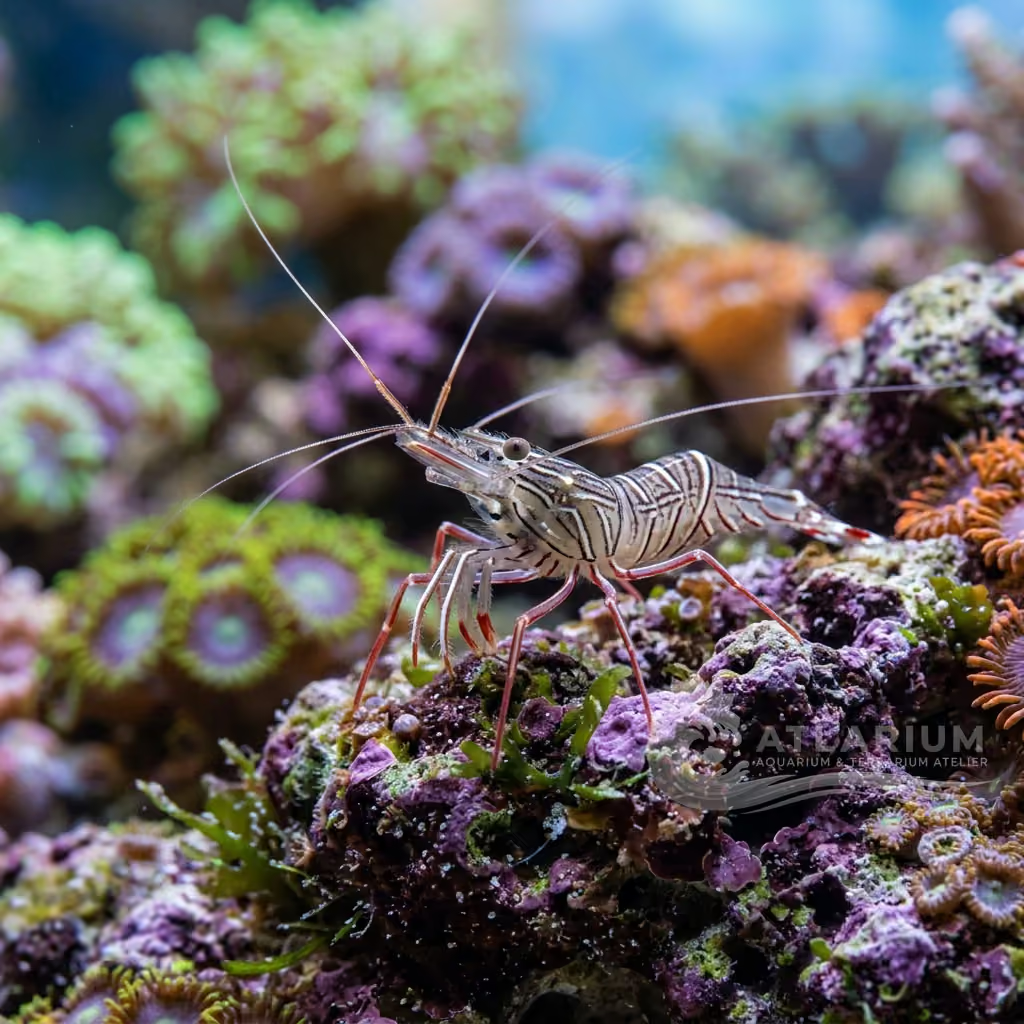
Coloration and Sexual Dimorphism: The body is translucent with a detailed pattern of bright red or pinkish-orange longitudinal and transverse stripes, forming a network or grid-like pattern. Due to its simultaneous hermaphroditic nature, there is no external sexual dimorphism; egg-bearing individuals are easily identified by the green or yellow egg mass under their abdomen.

Cuidado, criação e companheiros de tanque
Tank Setup: Well-suited for nano aquariums of 40 liters or larger. It requires live rock arranged to create dark caves and crevices where it can shelter during the day. Water movement should be moderate. Protect powerhead intakes with sponge covers or guards to prevent the shrimp from being drawn in and injured.
Diet and Feeding: Omnivorous and detritivorous. Highly valued in the aquarium hobby for its willingness to consume pest Aiptasia anemones. It readily accepts frozen foods (mysis, brine shrimp, krill), sinking pellets, and flakes. Feed regularly to prevent hungry shrimp from nipping at the polyps of stony corals (LPS).
Water Quality: Maintain stable marine conditions: temperature between 22 °C and 27 °C, pH 8.1 to 8.4, specific gravity (SG) 1.020 to 1.025, and carbonate hardness (KH) of 8 to 12 dKH. Copper must be completely absent. Monitor calcium and iodine levels regularly to ensure successful molting of the exoskeleton.
Compatibility and Tankmates: Very peaceful. Compatible with small to medium reef fish. Do not house with predatory species that feed on crustaceans, such as hawkfish, puffers, triggerfish, wrasses, or groupers. It can be kept in small groups of the same species without any territorial issues.
Aquarium Breeding: Spawns frequently in home aquariums, carrying eggs under the abdomen after mating. Larvae are released at night. Rearing them is highly challenging due to their extended pelagic larval stages, which require specialized rearing tanks (kreisel) and micro-plankton cultures.
Risks and Diseases: Extremely sensitive to osmotic shock; slow drip acclimation is mandatory when introducing them to a new tank. The molting period is a critical phase where the shrimp is vulnerable; lack of iodine or harassment by active fish can result in molting failure or death. Do not use copper treatments.

Origem e distribuição geográfica
Lysmata boggessi is native to the subtropical waters of the Western Atlantic Ocean, widely distributed in the Gulf of Mexico and along the coasts of Florida. This species inhabits shallow coastal waters, sheltered estuaries, and coral reefs at depths between 1 and 15 meters. It is commonly found in large groups sheltering inside rocky crevices, sponges, seagrass beds, and around coral rubble during the day to avoid visual predators.
Origem
Oceanos tropicais e recifesAmérica Central e CaribeAmérica do Norte

Perfil de invertebrados
- Dieta
- Omnivore
- Lysmata boggessi is primarily an omnivorous scavenger that constantly forages for detritus, biofilm, and leftover food among the substrate. In captivity, their diet should be supplemented with high-quality sinking pellets, frozen mysis, and occasional vegetable matter. A diverse and rich diet ensures robust molting and brilliant coloration.
- Papel ecológico
- Pest control
- Playing a critical role in the aquatic food web, Lysmata boggessi acts as a macro-detritivore that breaks down organic materials. Their constant scavenging significantly reduces the accumulation of decaying matter, thereby improving overall water quality. In reef or planted tanks, they often act as meticulous cleaners of the aquascape.
- Tamanho adulto
- 5 cm
- Risco de salto
- Yes
- When startled by a sudden movement, bright light, or aggressive tank mate, Lysmata boggessi possesses a powerful tail-flick reflex that can launch them entirely out of the water. This jumping behavior makes an unsecured aquarium a severe hazard. A tight-fitting lid or mesh top is absolutely mandatory to prevent them from becoming desiccated on the floor.
- Sensibilidade ao choque
- Medium
- Lysmata boggessi is highly susceptible to osmotic shock caused by rapid shifts in specific gravity, temperature, and pH. Sudden changes can compromise their delicate osmoregulatory systems, often leading to immediate fatalities or failed molts. A diligent drip acclimation process taking at least one to two hours is vital for successful introductions.
- Cálcio e minerais
- High
- To successfully regenerate their chitinous exoskeleton during a molt, Lysmata boggessi requires consistent availability of dissolved calcium, magnesium, and trace iodine. Poor mineral content in the water column can result in "white ring of death" or the inability to fully shed their old shell. Regular water changes and appropriate mineral supplementation are essential for their survival.
- Muda
- Yes
- Molting is the most precarious time in the life cycle of Lysmata boggessi, during which it will hide until its new exoskeleton hardens. Aquarists will often find complete, transparent molts in the tank, which should be left in the water as the shrimp will consume it to reclaim lost minerals. Never disturb or force a shrimp out of hiding during this vulnerable phase.
- Reprodução
- Oviparous
- Under optimal water conditions and with plenty of food, Lysmata boggessi can readily breed in captivity. Females can often be seen carrying clutches of eggs (berried) beneath their pleopods until they hatch into miniature shrimp or planktonic larvae. Providing dense moss or hiding spaces greatly increases the survival rate of the offspring.
- Compatibilidade e companheiros de tanque
- Peaceful
- Lysmata boggessi is best kept in dedicated invertebrate setups or alongside small, peaceful nano fish. They are at high risk of predation from cichlids, larger wrasses, hawkfish, and puffers, which will readily hunt them. When kept with appropriate tank mates, they will confidently display their active and engaging behaviors.

Espécies relacionadas
Recomendações agrupadas por parentes próximos, escolhas de acompanhantes e cuidados semelhantes.